크리에이터가 뉴스룸을 바꾸다: NBC 뉴스·조안나 스턴 파트너십으로 본 레거시 미디어의 생존 전략
by
2026년 3월 17일
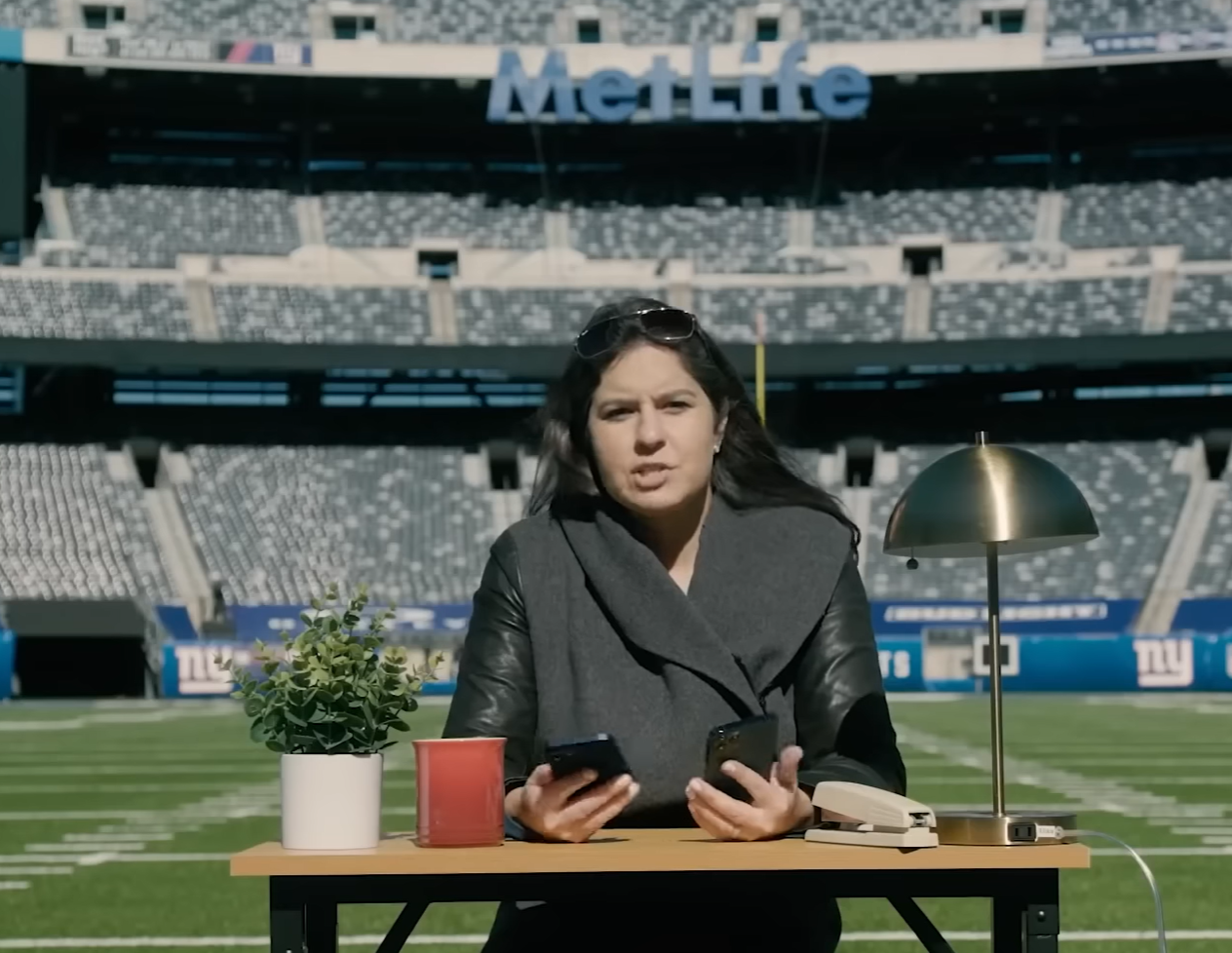
Grammys and Golden Globes Also Fall, Marking a Sweeping Decline Across All Three Major Awards Shows
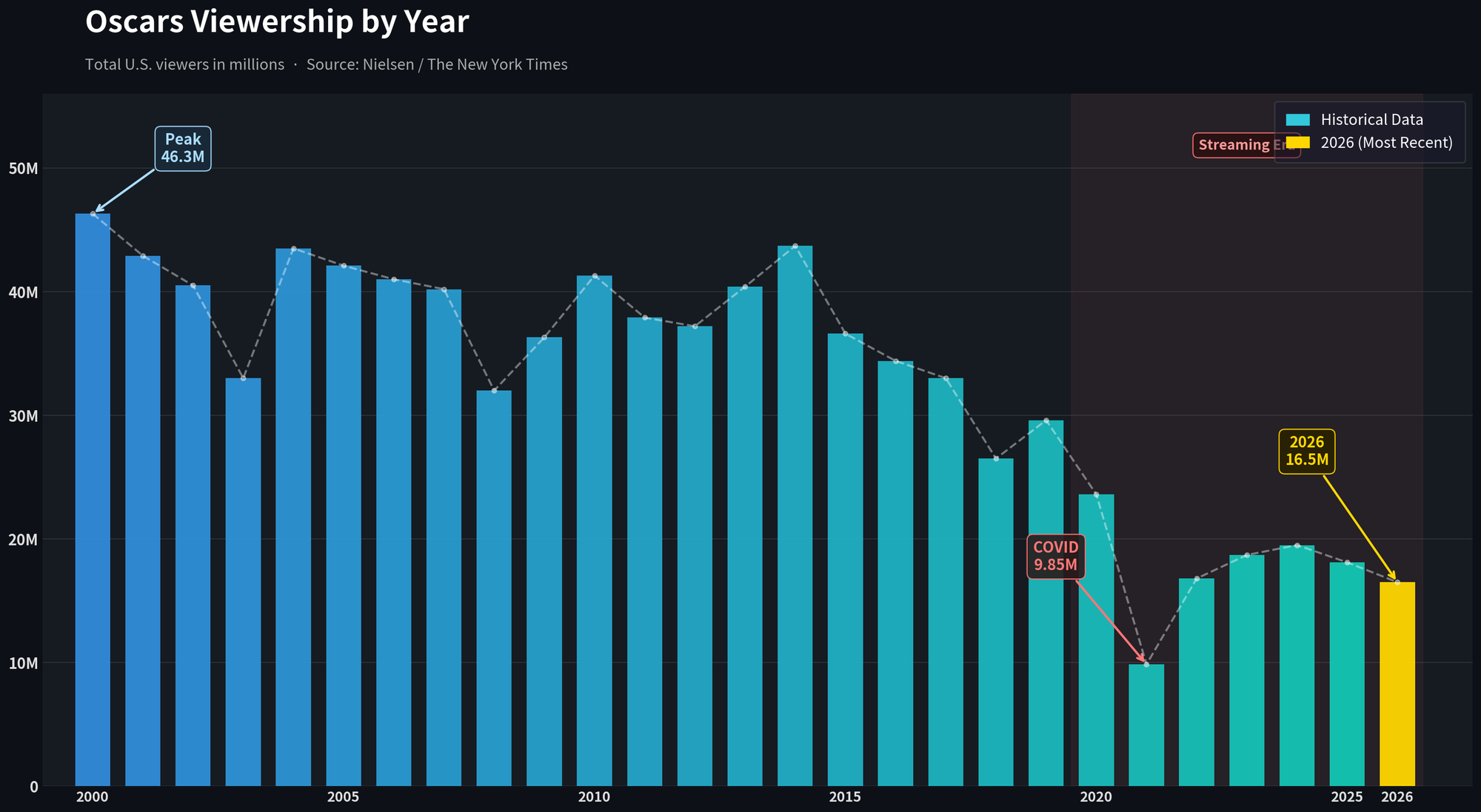
According to Nielsen, the Academy Awards drew 17.9 million viewers on Sunday night, a 9 percent decline from last year's telecast — snapping a four-year streak of growth.
 Jung Han
With the Grammys and Golden Globes already having posted drops earlier this season, this marks the first time in years that all three major awards shows have fallen together, signaling a deepening structural shift in how audiences engage with Hollywood's biggest night.
The telecast itself was well received. Host Conan O'Brien's return to the stage earned largely positive notices, with critics praising his sharp wit and relaxed command of the room. "One Battle After Another" took home Best Picture, while box office hit "Sinners" was the night's biggest winner, claiming four Oscars including Best Actor for Michael B. Jordan — his first Academy Award. The fact that viewership declined despite an absence of major controversy suggests the drop reflects something broader than the quality of any single ceremony.
Oscars organizers had deliberately pushed the ceremony to a later date this year to avoid a scheduling conflict with the Winter Olympics. But a different sporting event moved in to fill the void. The World Baseball Classic — a tournament held every few years that is rapidly becoming baseball's answer to the World Cup — staged a high-stakes semifinal between the United States and the Dominican Republic on the same night. Airing on Fox Sports 1 and the Spanish-language Fox Deportes, the game drew 7.4 million viewers, a striking number for cable, fueled in large part by intense interest from Hispanic communities across the country.
A decade or two ago, when the Oscars reliably attracted 30 to 40 million viewers, no media company would dare program a major event opposite the show. The night was, in effect, sacred ground. That is no longer the case. Today, the Super Bowl stands alone as the one event the industry still takes pains to avoid. The fact that a WBC semifinal could pull 7.4 million viewers on cable — directly competing with the Oscars — illustrates precisely how much has changed.
The broader awards season scorecard makes the trend hard to ignore. The Grammys fell to 14.4 million viewers this year, down from nearly 17 million just two years ago. The Golden Globes drew only 8.7 million. Once commanding fixtures of the American television calendar, all three shows are now grappling with an audience that has quietly moved on.
Paradoxically, the Academy of Motion Picture Arts and Sciences may have less reason to panic than it once would have. Its half-century partnership with ABC comes to a close after 2028, and beginning in 2029, the Oscars will move to YouTube as an exclusive streaming event. The traditional broadcast ratings game, in other words, is almost over.
The shift to YouTube represents a strategic bet that the Oscars can reach a younger, more global audience on a platform where prestige and virality can coexist. Whether YouTube's global reach can compensate for the loss of linear television's mass audience — and how viewership will even be measured in that new environment — remains an open question.
Nielsen's figures for Sunday's telecast include viewers who watched both on ABC and via streaming on Hulu.

![[SXSW2026] ‘수렴(Convergence)’의 시대, K-엔터테크를 덮칠 세 폭풍](https://cdn.media.bluedot.so/bluedot.kentertechhub/2026/03/pg648c_202603152304.png)

![[SXSW2026]에이미 웹 트렌드 리포트(Convergence
Outlook 2026)](https://cdn.media.bluedot.so/bluedot.kentertechhub/2026/03/kty3s8_202603152312.png)






![[보고서]전통 언론사의 크리에이터 전략 대전환](https://cdn.media.bluedot.so/bluedot.kentertechhub/2026/02/0nwc9z_202602100212.png)