
2026 midterm winners made nearly three times as many podcast appearances as losers, and 96% of House winners appeared; of Trump's 196 media appearances in the 2024 general election, about 22 were podcasts or streaming
Winning 2026 midterm candidates made nearly three times as many podcast appearances as their opponents. In 2024, only about 22 of Trump's 196 general-election media appearances were podcasts or streaming. In Korea, where broadcast appearances stop 90 days out, YouTube fills the gap.
Winning congressional candidates in the 2026 U.S. midterms made nearly three times as many podcast appearances as the opponents they defeated. The finding comes from Spotify, which tracked guest appearances by House and Senate candidates from Jan. 1, 2025, through Election Day on Nov. 3, 2026. Axios published the data exclusively on Nov. 10.
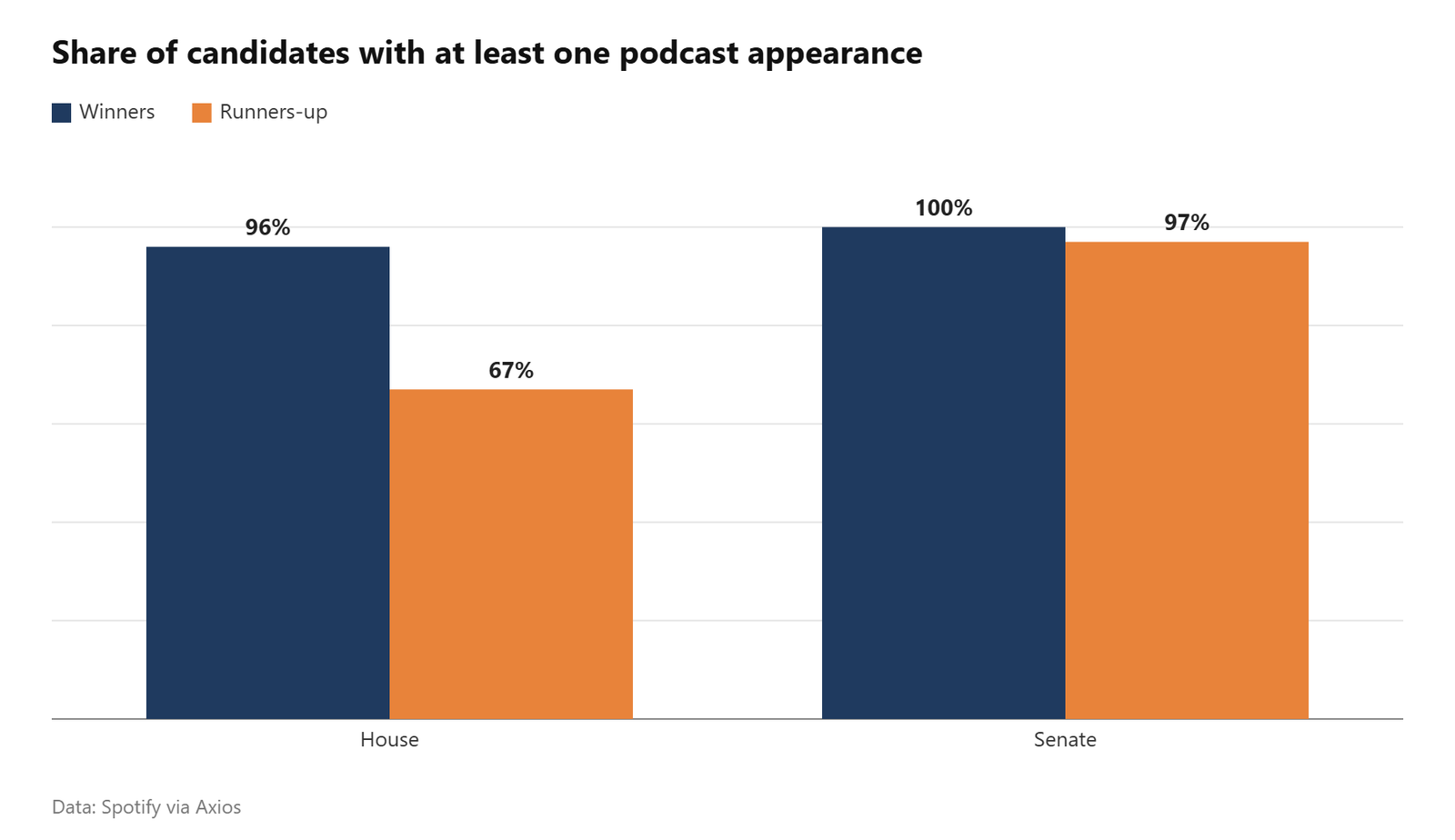
Some 82.6% of House and Senate candidates appeared on at least one podcast during the cycle. Among House winners the figure was 96%; among runners-up, 67%. Nine of the ten candidates with the most appearances won their races.
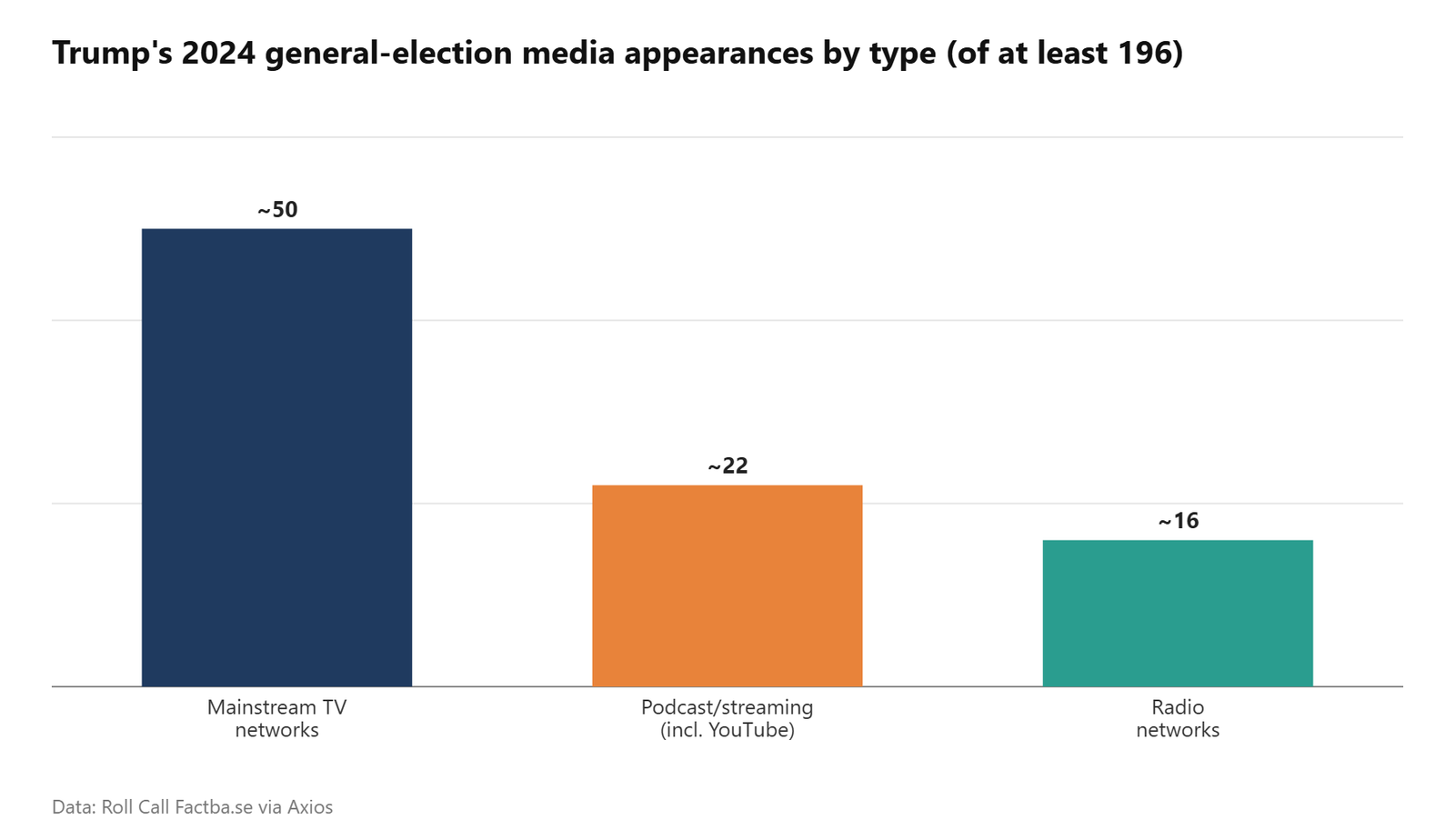
The presidential race looked different. 2024 was called the podcast election, but an Axios analysis of Roll Call Factba.se data, published May 9, found that Donald Trump made at least 196 media appearances during the general election and only about 22 of them were on podcast or streaming platforms. He made roughly 50 appearances on mainstream TV networks and around 16 on radio. Kamala Harris made more than three dozen mainstream TV and radio appearances and fewer than a dozen podcast and streaming appearances.
Taken together, the two datasets show podcasts became a standard stop in congressional races before they did in the presidential race. For House candidates with few chances at national airtime, a podcast is an easy booking. The Spotify numbers describe a correlation, not proof that appearances won races. But the heaviest bookings came in the most competitive contests and from incumbents, which suggests campaigns now schedule podcasts alongside debates and local rallies. Korea works differently: broadcasters may not feature candidates outside news and debate programming in the 90 days before a vote, and that demand flows to YouTube.
96% of House winners appeared — versus 67% of runners-up
The participation gap was widest in the House, where 96% of winners appeared on at least one podcast compared with 67% of second-place finishers. In the Senate, every winner appeared, as did 97% of runners-up.
Spotify's count covers stand-alone podcasts and excludes TV news programs redistributed as podcasts. Including those raises overall participation only from 82.6% to 83.1%. The growth in bookings came from independently hosted shows rather than repackaged broadcast content.
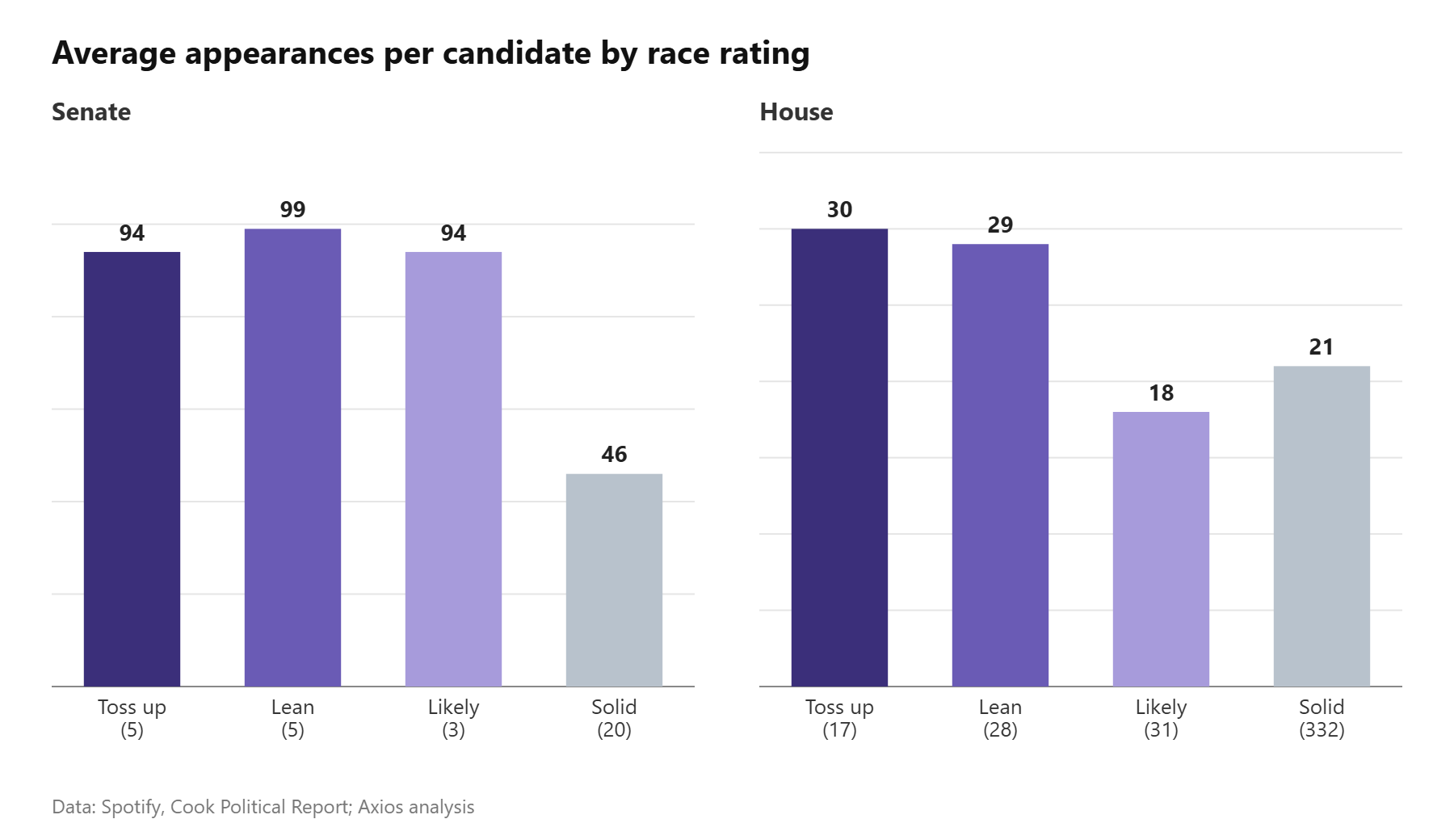
Senate toss-up, lean and likely races averaged 94–99 appearances; solid races, 46
Axios mapped the Spotify data against the Cook Political Report's four-tier race ratings. In the Senate, candidates in the five toss-up races averaged 94 appearances, while the five lean races averaged 99, the highest of any tier. The three likely races also averaged 94. The 20 solid races averaged 46, about half as many.
In the House, the 17 toss-up races averaged 30 appearances, the 28 lean races 29, the 31 likely races 18 and the 332 solid races 21. House candidates appeared most in toss-up and lean districts, and likely districts trailed even solid ones. In the Senate, every tier except solid topped 90.
Close races are decided by voters without a fixed party loyalty, and many of them are not listening to politics. In Sounds Profitable's Podcast Landscape 2026, a nationally representative survey of 5,473 U.S. adults, 70% of likely-voting monthly podcast consumers said they do not listen to political talk. That is why candidates book sports, lifestyle and comedy shows. In the same research, one in four podcast listeners said a candidate's appearance could influence their vote.
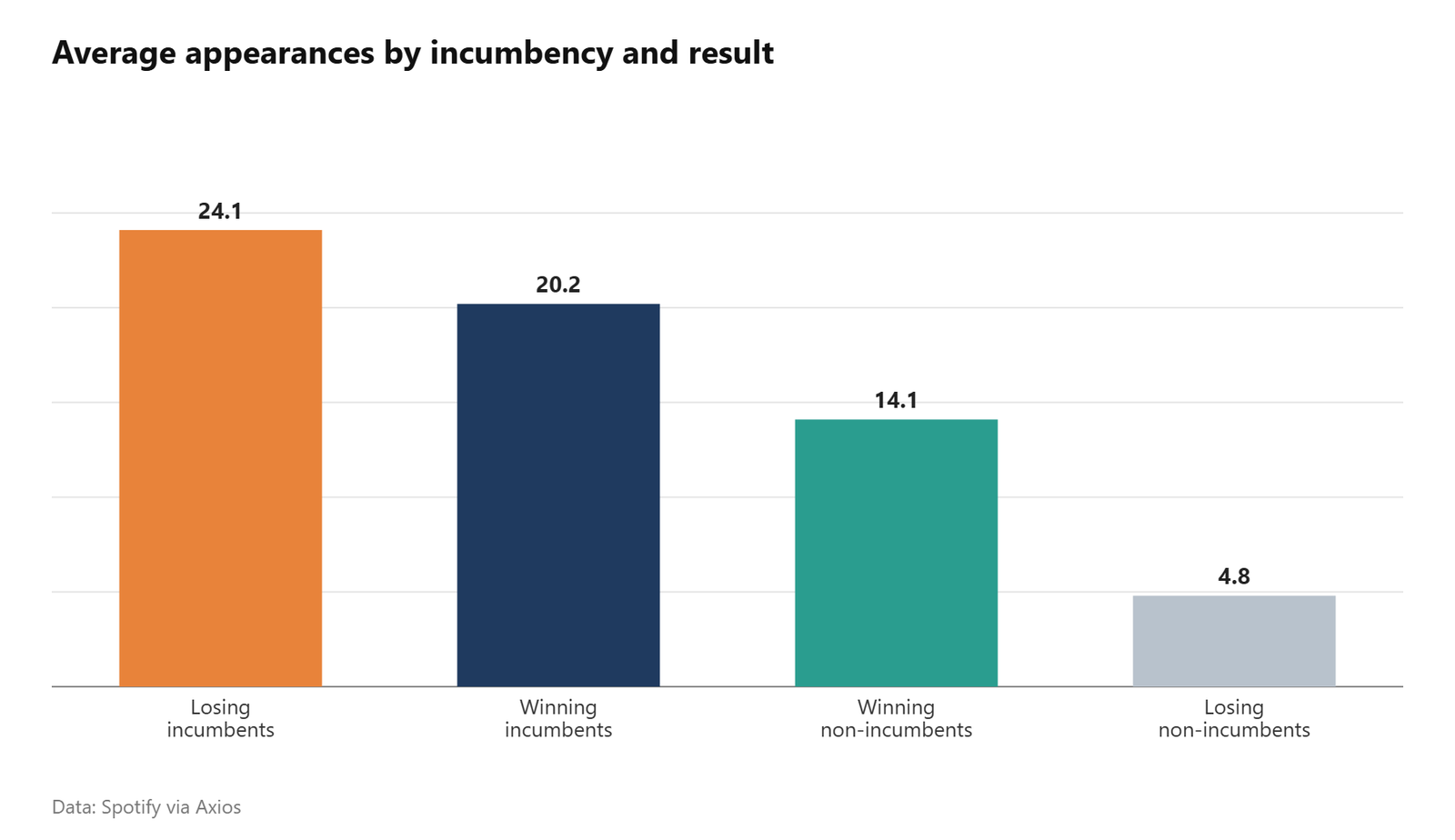
Incumbents who lost averaged 24.1 appearances, the most of any group
The group that showed up most was incumbents who lost reelection, at an average of 24.1 appearances, ahead of winning incumbents at 20.2. Among non-incumbents the gap was wider: winners averaged 14.1 appearances, losers 4.8. In open-seat races, winners made about 50% more appearances than the candidates they beat.
Sitting members get booked first because they have legislative work to talk about. That losing incumbents led the field suggests some stepped up appearances in races they were trailing, and it is a reminder that volume alone did not decide outcomes.
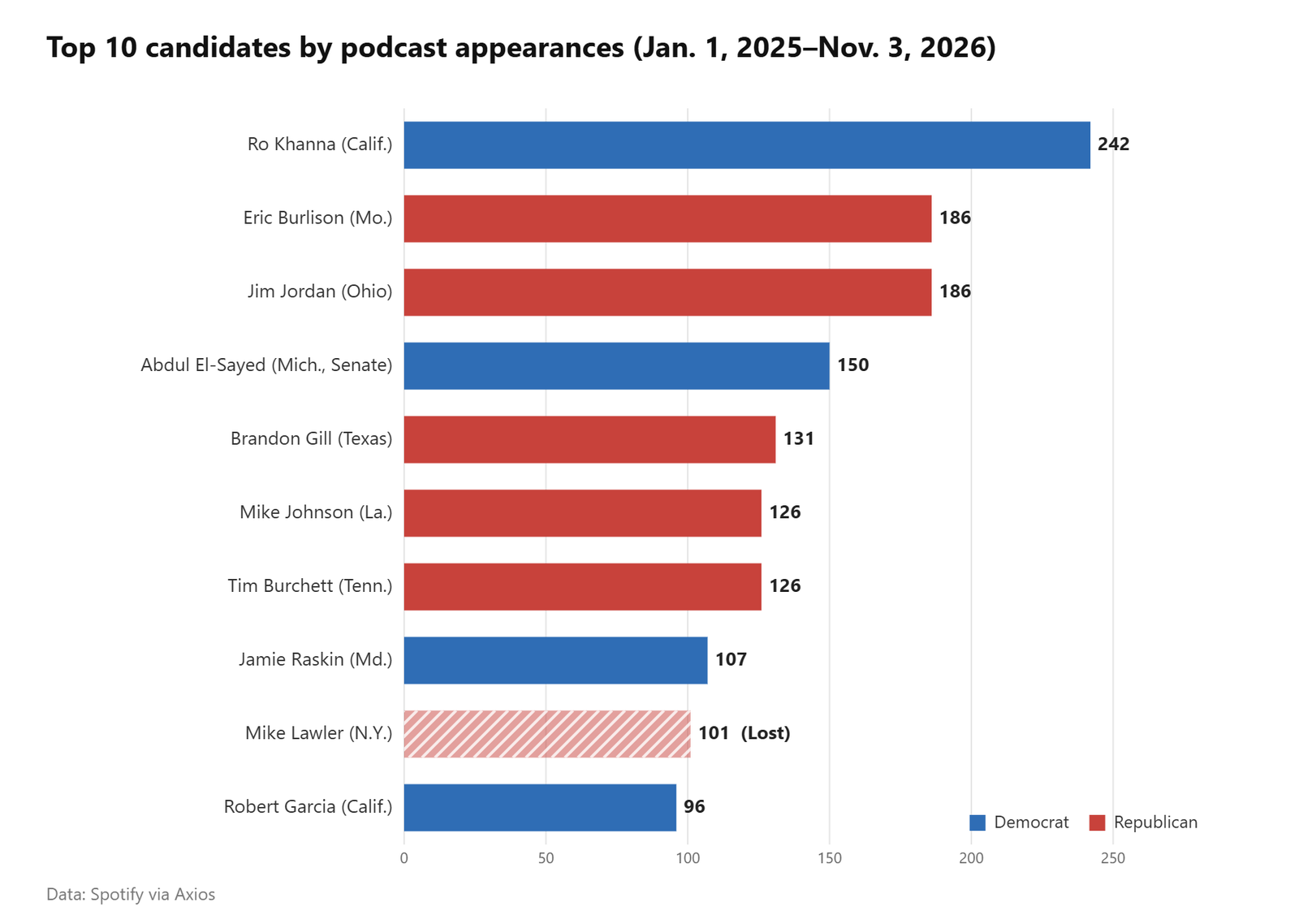
Khanna at 242, El-Sayed at 150 — nine of the top ten won
Across both chambers, Rep. Ro Khanna (D-Calif.) made the most appearances, 242 across 175 shows. Reps. Eric Burlison (R-Mo.) and Jim Jordan (R-Ohio) followed with 186 each. Among Senate candidates, Michigan Sen.-elect Abdul El-Sayed (D) led with 150 appearances across 119 shows.
The rest of the top ten were Rep. Brandon Gill (R-Texas) with 131, House Speaker Mike Johnson (R-La.) and Rep. Tim Burchett (R-Tenn.) with 126 each, Rep. Jamie Raskin (D-Md.) with 107, Rep. Mike Lawler (R-N.Y.) with 101 and Rep. Robert Garcia (D-Calif.) with 96. Six are Republicans and four Democrats. Lawler was the only one to lose.
By far the top show by candidate appearances, according to an Axios analysis, was "John Solomon Reports."
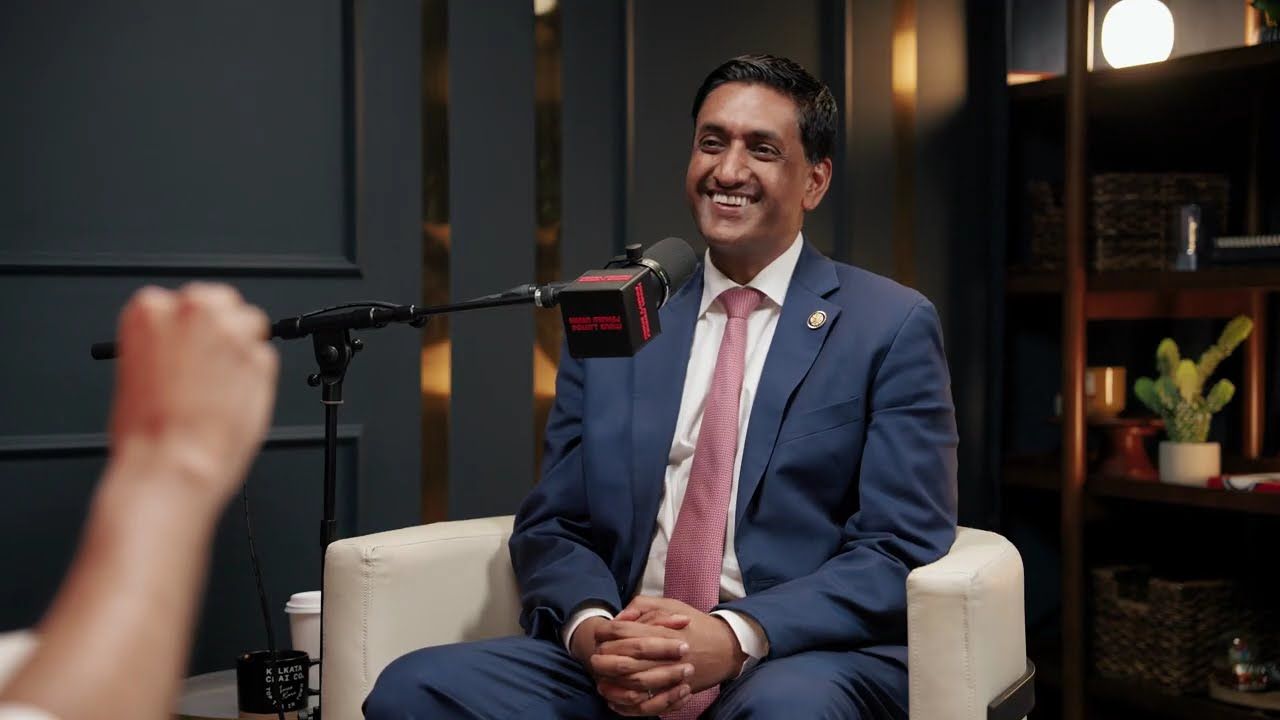
"Regardless of ideology": Khanna explains why he books podcasts
Khanna has also used podcasts to push an agenda. The Hasan Minhaj episode in the photo was released Aug. 27, 2025. At the time, he and Rep. Thomas Massie (R-Ky.) were co-sponsoring the Epstein Files Transparency Act. Speaker Mike Johnson sent the House home for August recess a day early, which blocked a vote. Khanna and Massie then pursued a discharge petition, which needs 218 signatures to bypass leadership. During the recess, Khanna talked with Minhaj about the Epstein case, progressive capitalism and his text exchanges with Elon Musk and Steve Bannon. When the House returned in early September, he gathered signatures for the petition.
Earlier, in July 2025, Khanna went on comedian Theo Von's "This Past Weekend." He told Von that his questions were "deeper and smarter than some of the Sunday talk show hosts" because Von talks "to real people." NPR reported that month that such non-political podcasts have become a testing ground for politicians considering higher office.
He laid out his reasoning in a February 2025 NPR interview, where he called the lesson that Harris should have gone on Joe Rogan "too simplistic." He said "there are all these podcasts reaching people that we need to be on" and that Democrats should book conservative and liberal shows "regardless of ideology." He added that many hosts welcome politicians because it is a novelty to have one "actually mixing it up."
He also accepted the risk of gaffes. "The more you talk, the more you can misspeak," he said, but he argued that in today's media environment a gaffe has a shelf life of about 24 hours and that it is more important to be out there. On conservative host Megyn Kelly's show, he spent 30 minutes defending transgender rights in a heated exchange. The comments were mostly negative, but he said Kelly invited him back afterward. He has urged colleagues to try local shows too: "it doesn't have to be national."
Burlison at 186: taking UFO disclosure to podcasts
Rep. Eric Burlison, who tied Jordan for the most appearances among Republicans, has made disclosure of unidentified anomalous phenomena, or UFOs, his signature issue. He sits on the House Oversight Committee's Task Force on the Declassification of Federal Secrets. On May 26, 2026, following President Trump's order to declassify UAP files, he sent interrogatories and document requests on UAP records to MITRE, which operates federally funded research and development centers. On June 9, he joined UFO whistleblower David Grusch at a task force press conference.
Earlier, at the task force's first UAP hearing on Sept. 9, 2025, Burlison released new footage of an unidentified object. On March 27 that year, he named Grusch a special advisor on his UAP transparency work. Grusch, a former Air Force officer, testified to Congress in 2023 that elements of the government had concealed programs to recover and reverse-engineer craft of unknown origin and had obstructed congressional oversight.
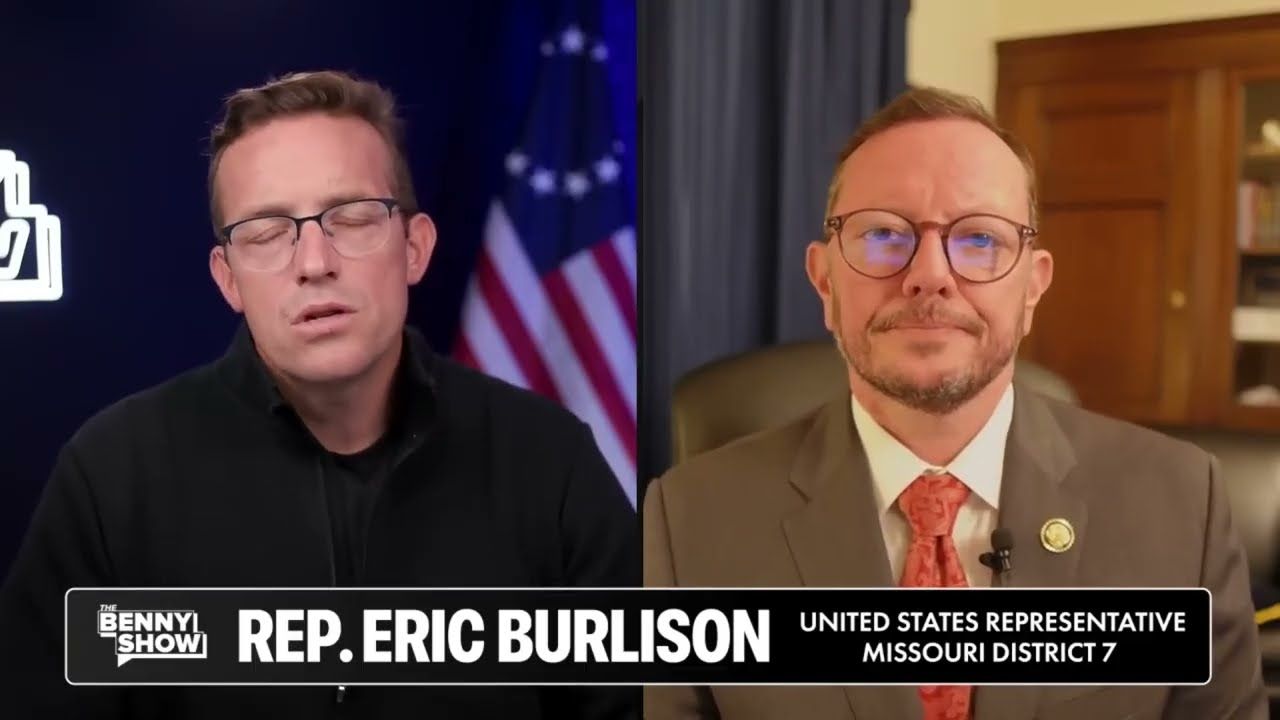
Podcasts have been his main channel for the issue. On his own podcast, "Fresh Freedom," Burlison said he had viewed classified UAP footage and that "neither could the people that filmed them" identify the objects, Wonderwall reported. He has also appeared on the UFO podcast "WEAPONIZED" and on "The Benny Show." Khanna took the Epstein files to podcasts; Burlison took UAP disclosure. Both have used podcasts to promote legislative causes, not just during campaign season.
Burchett at 126: from UFO disclosure to Senate ambitions, on podcasts
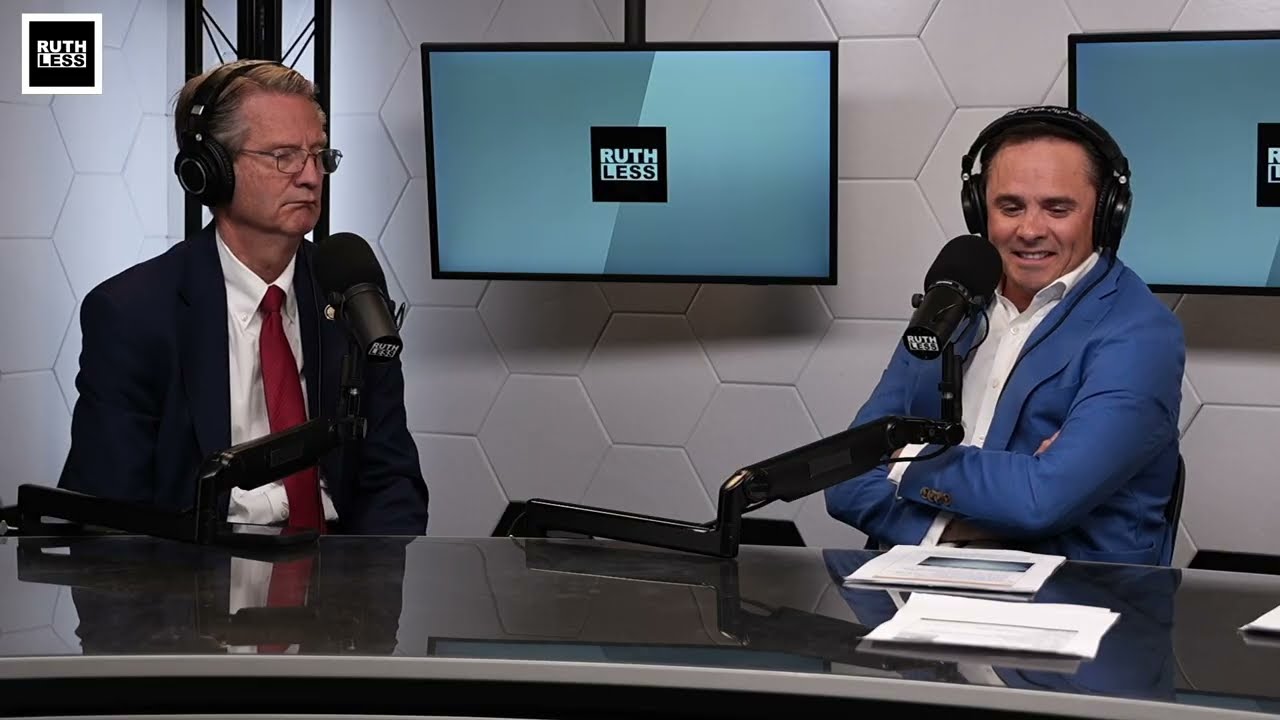
Rep. Tim Burchett (R-Tenn.) has also pressed for UFO disclosure on the same task force. In a "Ruthless" podcast episode released May 14, 2026, he said more UFO videos would be released and expressed interest in a Tennessee Senate seat, Fox News reported. Around the same time he also appeared on The Joe Rogan Experience. His case shows a House member who has logged many appearances using podcasts to signal interest in higher office.
Burchett also hosts his own shows. He launched "Unscripted with Tim Burchett" in July 2025. That month he told The Daily Caller that he films his own phone videos, mostly unedited clips from the halls of Congress, without staff or a social media team, and said of his style: "It's not anything put on." In January 2022 he launched "Tennessee Talks," released every other Wednesday, saying he wanted constituents to "hear directly from me." He has also appeared on John Solomon's show, host of the program with the most candidate appearances, to discuss federal job cuts.
Raskin at 107: the Judiciary ranking member takes oversight beyond the hearing room
Rep. Jamie Raskin (D-Md.), the top Democrat on the House Judiciary Committee, has used podcasts to make the case against the Trump administration. On Aug. 12, 2026, he demanded that Paramount Skydance CEO David Ellison sit for a transcribed interview after Ellison pledged in a New York Times op-ed to break his silence, pressing him on the company's dealings with the administration, threats to newsroom independence and media consolidation. On July 8, he appeared on The Nation's podcast "Start Making Sense" to lay out a House strategy and discuss Supreme Court reform.
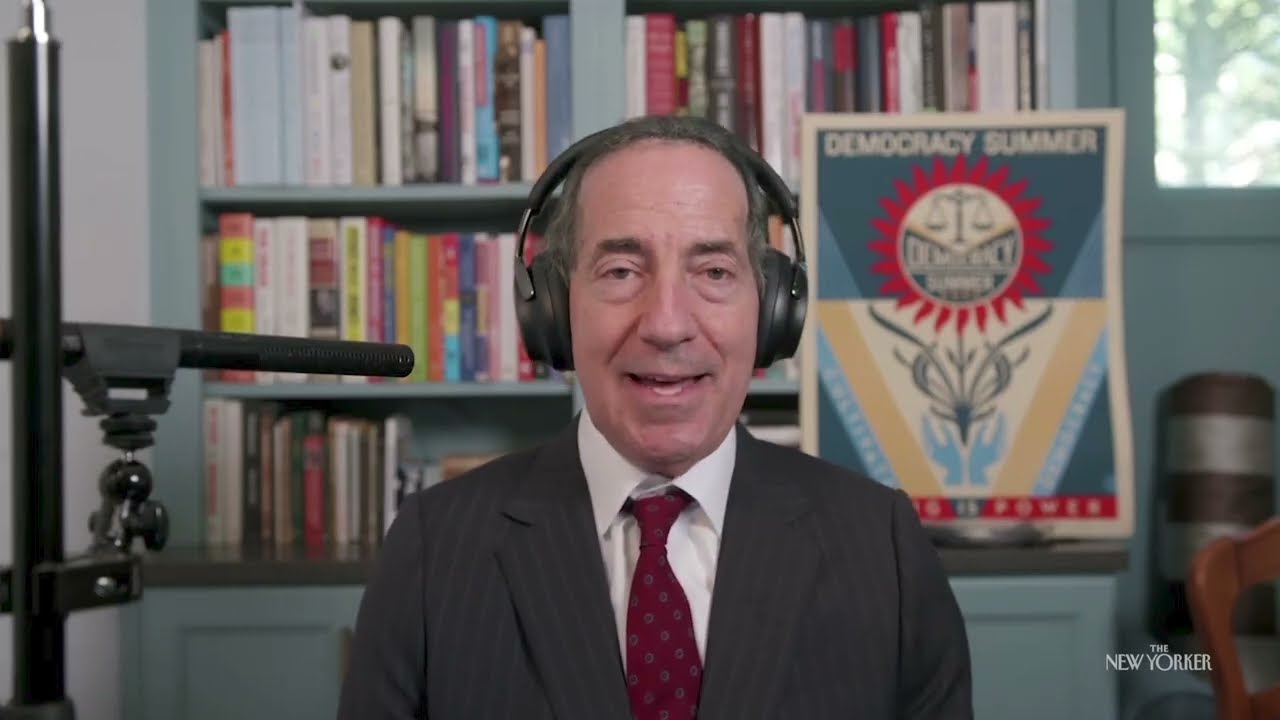
Earlier, in July 2025, he joined Sen. Sheldon Whitehouse's podcast "Making the Case" to discuss the Epstein files and the weakening of democracy. The Democrats' "shadow hearings" he helped lead drew millions of YouTube views across channels including the anti-Trump outlet MeidasTouch. Semafor reported that after losing in 2024, Democratic leaders have been updating their media strategies for a fragmented landscape, and that shadow hearings give members a chance to build stronger digital media habits.
Democrats' median six, Republicans' five — and both mostly stay on their own side
Democrats and Republicans appeared at similar rates. Democratic candidates had a median of six appearances and Republicans five. Among winners, Republicans had a slightly higher median, 12 to 10.
Where they went split along party lines. The podcast database Rephonic matched 1,411 Senate, governor and House candidates against podcast guest lists from Jan. 1 to Oct. 10, 2026. Among shows with a known political leaning, 83% of Democratic appearances were on left-leaning shows and 84% of Republican appearances on right-leaning ones. Only 5% of Democratic and 10% of Republican appearances crossed over. In Rephonic's count, which uses a different candidate pool, Democrats logged 3,565 appearances to Republicans' 2,987, on shows with a combined estimated 75 million listeners versus 37 million.
$11.6 billion in projected political ads; Spotify at 777 million monthly users
Paid media is moving toward audio as well. A column in the trade publication Campaigns & Elections projected record U.S. political ad spending of $11.6 billion in 2026, with a growing share expected to flow into podcasts and digital audio.
The platforms are larger, too. Spotify reported 777 million monthly active users in the second quarter of 2026, up 12% from a year earlier, and said at its May investor day that more than 500 million users have streamed a video podcast, up nearly 50% year over year. Compiling candidate-level appearance data and handing it to the press also positions Spotify in the political advertising market.
58% of Americans use podcasts monthly; U.S. podcast ads hit $2.86 billion and podcasts passed radio in listening share
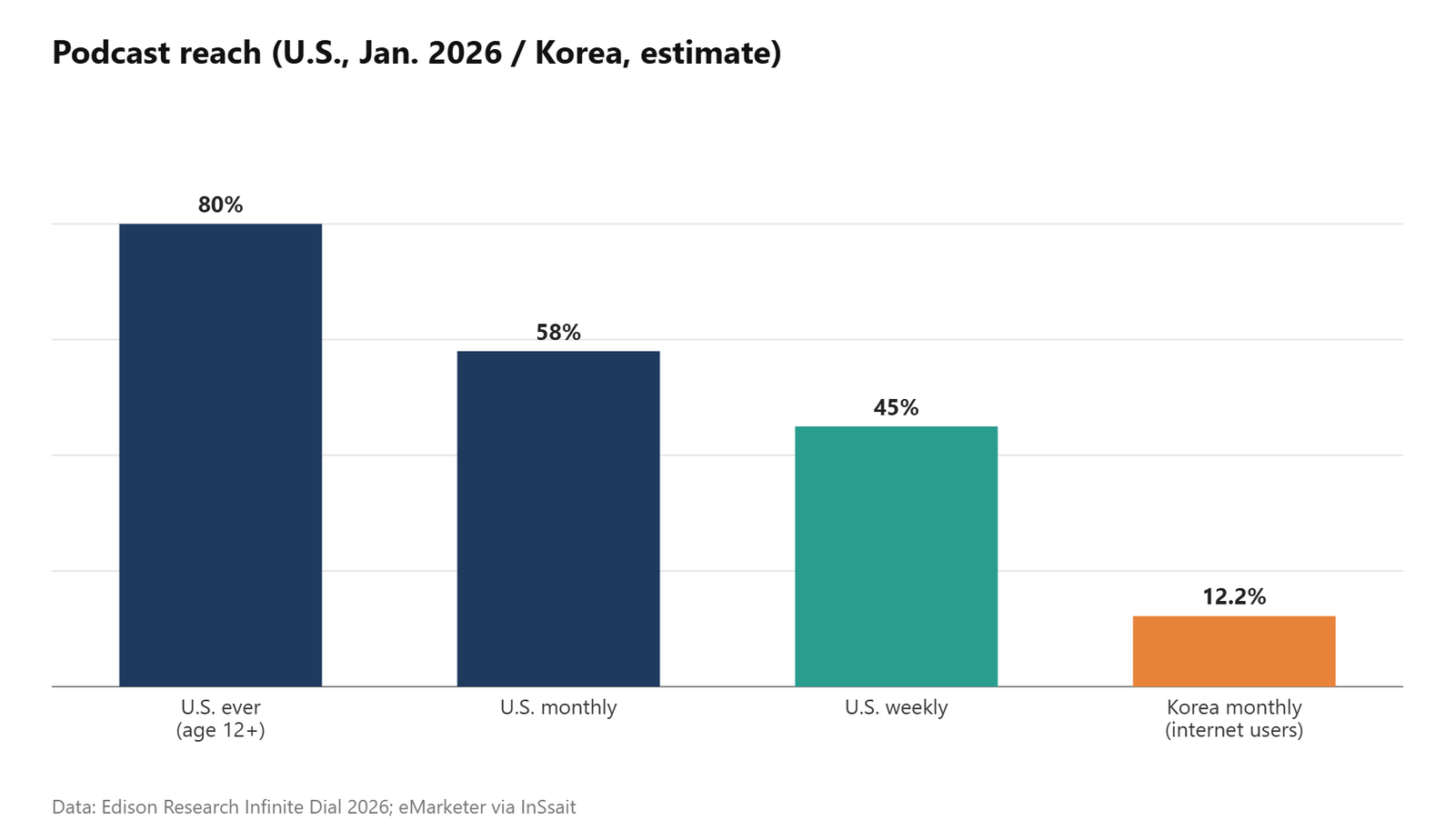
The candidates followed a growing market. According to Edison Research's Infinite Dial 2026, 58% of Americans 12 and older, about 167 million people, listened to or watched a podcast in the past month as of January 2026. Weekly use reached 45%, about 130 million. Some 80%, about 230 million, have ever consumed a podcast, up 20 million in a year, the largest jump since Edison began measuring. And 57% of Americans 12 and older have both listened to and watched podcasts.
Listening time has shifted too. In Edison's Share of Ear data for the fourth quarter of 2025, podcasts took 40% of U.S. ad-supported audio listening time, passing radio at 39% for the first time.
The ad market has grown with it. U.S. podcast advertising revenue reached $2.86 billion in 2025, up 17.6%, according to the Interactive Advertising Bureau and PwC; eMarketer expects it to top $3 billion in 2026. Consultancy Owl & Co. put the 2025 global podcast market, including ads, production and subscriptions, at $9.2 billion, and found video accounted for 41% of U.S. net podcast ad revenue, up from 28% a year earlier.
Video platforms are driving the growth. YouTube said in February 2025 that it had more than 1 billion monthly podcast viewers, and Bloomberg reported that people watched 700 million hours of YouTube podcasts on TV screens in October 2025, up from 400 million a year earlier. In July 2026, James Murdoch's Lupa Systems acquired the Vox Media Podcast Network along with New York Magazine and other assets.
iHeart warns of talent-deal "exuberance" as its podcast revenue rises 20.7% to $162 million
Competition for hosts has intensified. At Axios's Media Trends Live in New York on Oct. 20, iHeartMedia CEO Bob Pittman suggested rivals' recent podcast talent deals go beyond what they can recoup. Asked about SiriusXM's four-year agreement with "Giggly Squad," he said: "We only want to do a deal where we can make money, and if the deal is throwing away crazy money, we don't believe in it." He called the spending the kind of "exuberance" that "always happens in every business," adding, "If it can't work for us, it's a loss leader for whoever gets it."
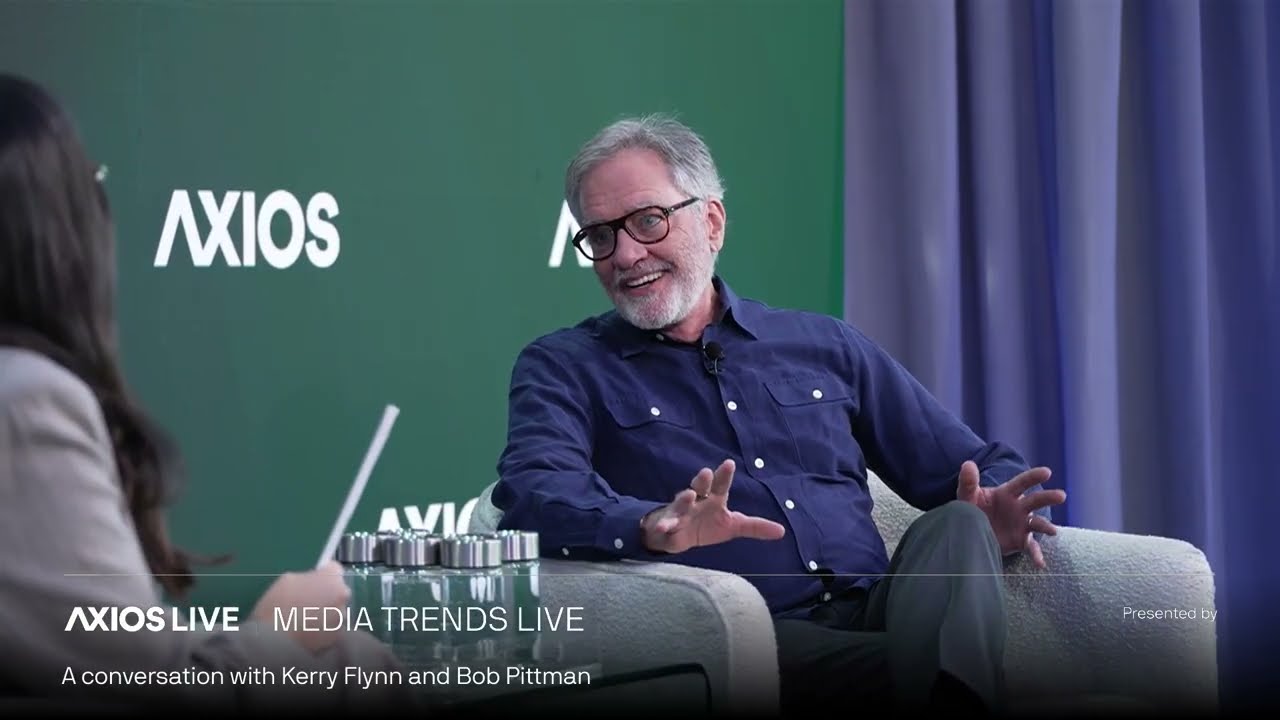
Pittman said no single show is essential to iHeartMedia, which has about 800 podcasts. The best outcome, he said, is growing a show with a partner or bringing over podcasts that have done well elsewhere and making them bigger. iHeartMedia's podcast revenue grew 20.7% to $162 million in the second quarter of 2026. Its digital audio segment generated $123 million in adjusted EBITDA, against $59 million for its traditional multiplatform business. He said the broadcast radio network gives podcasts national reach and promotion.
The fight is moving into video. iHeartMedia has video podcast partnerships with Netflix and Disney's Hulu. Pittman said video brings incremental audiences and revenue rather than just shifting listeners: "What surprised us all is that podcast with video on it is so popular it can take time away from video viewing." In August, Axios reported an investment valuing "Call Her Daddy" host Alex Cooper's company Unwell at $500 million. Bloomberg reported in April that SiriusXM was in preliminary talks to acquire iHeartMedia; The New York Times reported in May that the talks had stalled.
52% call hosts most influential; 84% changed their minds: why podcasts work in campaigns
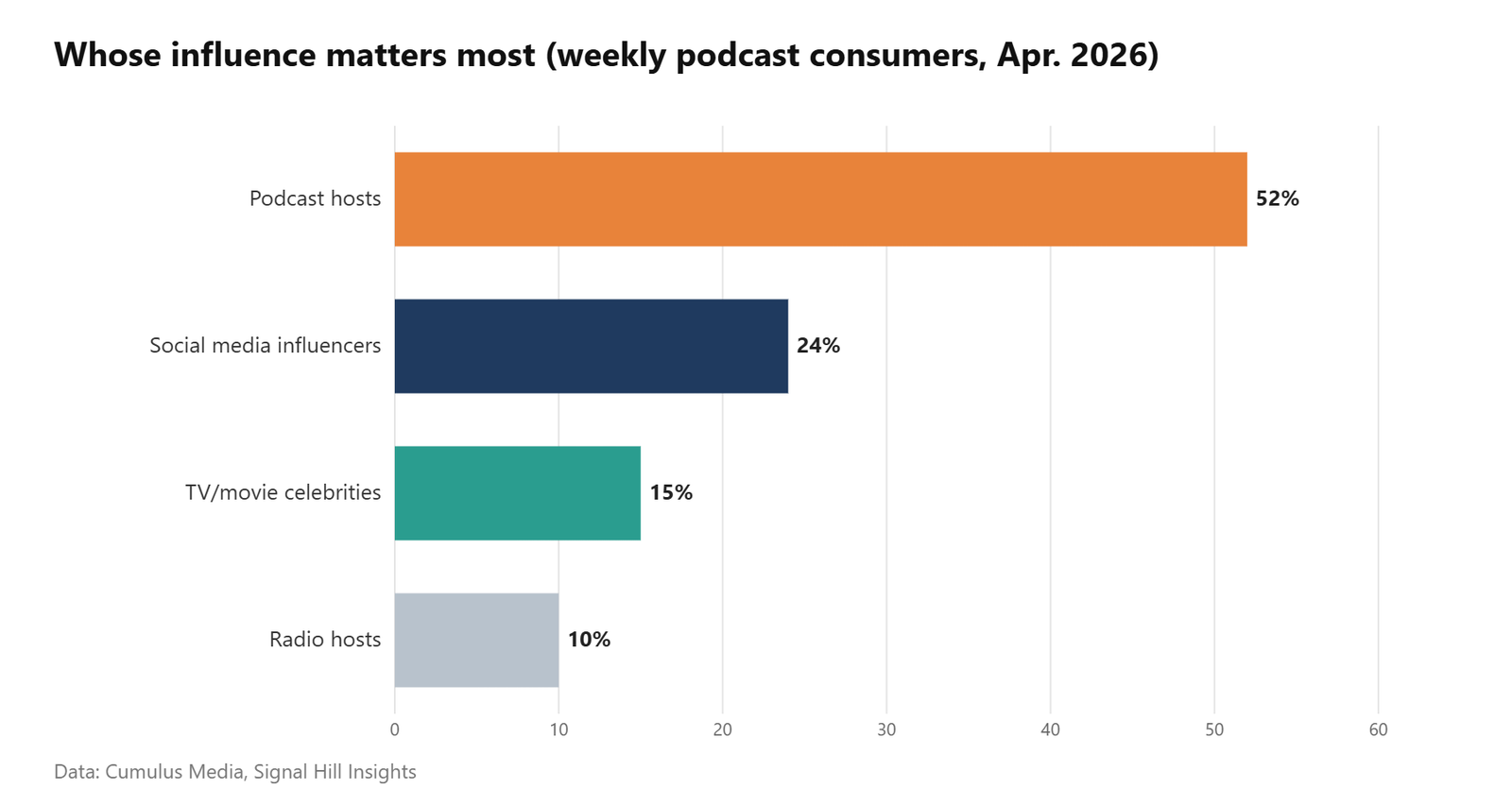
Podcasting's power rests on trust in hosts. In an April 2026 survey of 600 weekly podcast consumers by Cumulus Media and Signal Hill Insights, 52% named podcast hosts as the figures whose influence matters most to them, more than double social media influencers (24%) and well ahead of TV and movie celebrities (15%) and radio hosts (10%). YouTube captured 65% of the time respondents spent with their most-listened podcast, versus 25% for Spotify and 10% for Apple Podcasts.
In Acast's Podcast Pulse 2025, 84% of weekly listeners said a podcaster had changed their mind about something, yet 75% did not consider podcast hosts to be influencers. Listeners hear the conversations as talk, not advertising.
That dynamic carries into elections. In the Sounds Profitable survey cited above, 70% of likely-voting monthly podcast consumers do not listen to political talk. A candidate who appears on a sports, comedy or lifestyle show can borrow the host's trust to reach voters who do not seek out political news. An hourlong conversation also shows a candidate's voice and thinking at length in a way a 15-second ad cannot. Khanna's argument that a gaffe lasts only about 24 hours reflects the same calculation.
Trump made 196 media appearances in the 2024 general election; about 22 were podcasts or streaming
In the 2024 general election, Trump's most frequent stop was mainstream television: roughly 50 appearances on national networks, most of them on Fox News, plus around 16 on radio networks. Appearances on podcast or streaming platforms, including YouTube, came to about 22. Axios concluded that despite the narrative that podcasts and creator-led media dominated 2024, the vast majority of both candidates' appearances were with mainstream outlets.
Radio's reach remains broad. Per Nielsen, radio still reaches more people weekly in the U.S. than any other medium. Only a few podcasts, such as The Joe Rogan Experience and Call Her Daddy, reach more people than traditional outlets. Trump's Rogan interview drew more than 46 million views on YouTube alone, and Harris appeared on Call Her Daddy.
Legacy media's influence also carries online. Cable and broadcast audiences are shrinking, but Axios noted that the credibility of those outlets tends to drive strong social engagement when their clips are shared. Its bottom line: politicians campaigning for big positions still rely much more on traditional platforms.
The smaller the office, the bigger the podcast share. In New York City's 2025 mayoral race, Edison Research estimated that Zohran Mamdani's podcast appearances reached an average of 12.5 million weekly listeners, against 1.2 million for Andrew Cuomo. The presidential data (Roll Call) and the congressional data (Spotify) use different methods and cannot be compared directly.
Korea's monthly podcast reach is about 12%, and YouTube political talk leans conservative
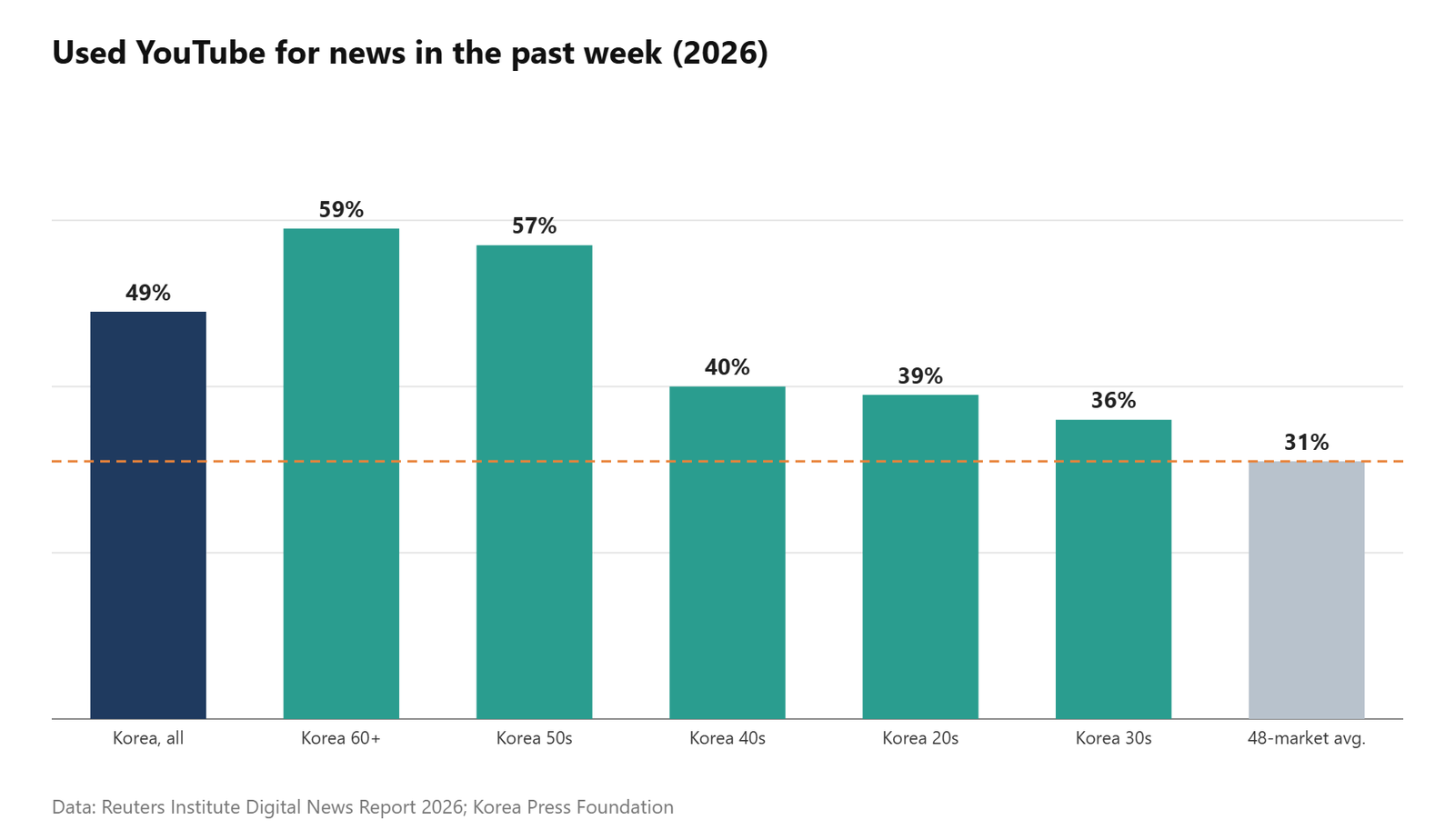
Korea's podcast market is built differently. eMarketer estimates that about 12.2% of Korean internet users listen to podcasts monthly, well below the U.S., Canada, Sweden and Norway, InSsait reported. YouTube has absorbed the role: 49% of Koreans used YouTube for news in the past week, against a 48-market average of 31%.
In Korea, too, many people are said to play political YouTube in the background and listen rather than watch. Much of Korea's political YouTube is two or more people talking at a desk, so the words carry the information more than the picture; in format it is a video podcast in all but name. In the Korea Press Foundation's 2025 media audience survey, 99.0% of video-news users named YouTube as their platform. Writing in the December 2025 issue of the Korea Communications Agency's Media Issue & Trend, Noh Chang-hee (노창희) of the Digital Industry Policy Research Institute said it is a natural progression for Korean broadcasters to offer "visible radio" and extended YouTube-only segments. In a small Dailian survey of 50 people in their 20s and 30s in October, 76% said they play long videos while doing other things such as eating or cleaning.
The audience also leans differently. In the U.S., Democratic and Republican candidates appeared at similar rates (medians of six and five). In Korea, the Reuters Institute's 2025 Digital News Report found that 63% of conservative respondents used YouTube for news, against 43% of progressives; the 48-market averages were 33% and 32%. Trust is low as well: overall trust in news in Korea was 30% in the 2026 report, seven points below the 37% average.
Measurement differs too. The U.S. has Edison Research's listening surveys, IAB and PwC's ad revenue counts, and appearance records from Spotify and Rephonic. Korea has no regularly published measure of podcast audience size or ad revenue, and analysts say revenue is concentrated in advertising.
Korea bars broadcast appearances 90 days out; YouTube-only content falls outside the rules
In Korea, YouTube plays the role podcasts play in the U.S. In the Reuters Institute's Digital News Report 2026, as analyzed by the Korea Press Foundation (한국언론진흥재단) on June 16, 49% of Koreans said they had used YouTube for news in the previous week, against a 48-market average of 31%. The share was 59% among those 60 and older and 57% among people in their 50s. Some 64% had used content from news creators.
Regulation differs by medium. Korea's special rules on election broadcast review bar broadcasters, from 90 days before an election, from featuring candidates in any program other than legally mandated election broadcasts and news or debate shows. Entertainment and lifestyle programs cannot book candidates in the final three months. A broadcaster's YouTube video may fall under internet election-coverage review when it is posted alongside articles on the outlet's website, but no clear standard covers content distributed only on YouTube or other social platforms.
That gap showed up in Korea's June 3 local elections. The regional daily Kyeonggi Ilbo (경기일보) launched an election-only YouTube channel and hosted gubernatorial primary candidates and provincial party chairs from both sides. Kim Sang-wook (김상욱), the Democratic Party's candidate for mayor of Ulsan, livestreamed a town-hall conversation on his own YouTube channel.
Election-season interview demand grows outside broadcast schedules — and no one is counting
That adding repackaged TV news podcasts lifted the U.S. participation rate by only half a point is worth noting for Korean broadcasters. Candidates sought long-form conversations with independent hosts, not reworked broadcast material. Because Korean broadcasters cannot cover candidates in entertainment or lifestyle slots during the final 90 days, those conversations move to news outlets' YouTube channels and to individual creators.
Korean broadcasters already hold relevant assets. Radio current-affairs programs are audio conversation formats with established hosts and loyal listeners. That repackaged TV news podcasts lifted the U.S. participation rate by only half a point suggests that moving broadcast programming over unchanged does not earn the trust podcast hosts build. What is needed are long-form conversations that broadcast hosts build outside the schedule, and formats that pair politicians with sports or lifestyle hosts to reach people who do not follow political news. In Korea's conservative-leaning YouTube political market, broadcaster-run interviews that book guests from both camps could stand out on trust.
The 2024 data also show that broadcast credibility still underpins election media. Axios's finding that clips from established outlets travel well online could apply when Korean broadcasters recut election debates and interviews for YouTube. Korean broadcasters' election desks and debate-moderation experience can be carried over into YouTube-native interview formats. Applying the same fairness standards on guest selection and speaking time to their own YouTube interviews would set them apart from unregulated personal channels. There is also a data gap. Spotify compiled and published candidate-level appearance records in the U.S., but no comparable public dataset tracks Korean candidates' YouTube interview appearances. Ahead of Korea's general election in April 2028, measuring candidate appearances and their reach could become new business for both media companies and platforms.
Outlook: podcast tours are now part of 2028 presidential groundwork
Axios concluded on Nov. 10 that podcasts, which gained momentum as a tool for presidential candidates in 2024, have become critical campaign stops down-ballot. Earlier, on May 9, it reported that potential 2028 candidates are building creator-style media brands, while concluding the same day that politicians running for the biggest offices remain far more reliant on traditional platforms. The push by 2028 hopefuls dates to 2025: Axios reported in April 2025 that potential Democratic contenders including former Transportation Secretary Pete Buttigieg, Pennsylvania Gov. Josh Shapiro and Khanna were appearing on podcasts popular with young men. Khanna's first-place finish in the Spotify count extends that pattern. The 2028 race is likely to require both a traditional-media schedule and a podcast schedule.
Whether appearances move votes remains unproven. Rephonic said it is hard to say how much podcast appearances actually changed results, while noting that both parties now treat where a candidate shows up to talk as part of the plan. The measurement itself is becoming competitive: Spotify counts appearances by candidate, Rephonic sums estimated listeners by party, and Edison Research estimates weekly reach by candidate. Measuring the reach and effect of election podcasting could grow into a data business for the U.S. audio industry before 2028.