MAZE, Sets New Global Standard for Privacy-First Retail Intelligence. Nevada–Reno Champion Global Expansion
by
2026년 2월 24일
Samsung Taps Gracenote Metadata to Power Next-Generation AI Content Discovery
"Whoever Owns the Conversation Layer Will Own TV"
The race to define the future of content discovery on connected TV has entered a decisive phase. Samsung Electronics has formalized a multi-year strategic partnership with Nielsen-owned Gracenote, deploying the vendor's structured entertainment metadata across its global smart TV lineup to power LLM-based conversational search, hyper-personalized recommendations, and backend operational efficiencies.
Coming just weeks after Google renewed a similar agreement with Gracenote, the back-to-back deals signal that verified, real-world entertainment metadata is fast becoming the foundational infrastructure for AI-driven content experiences — and that the platform capable of owning the conversational interface between viewers and their TVs may ultimately own the medium itself.
 Jung Han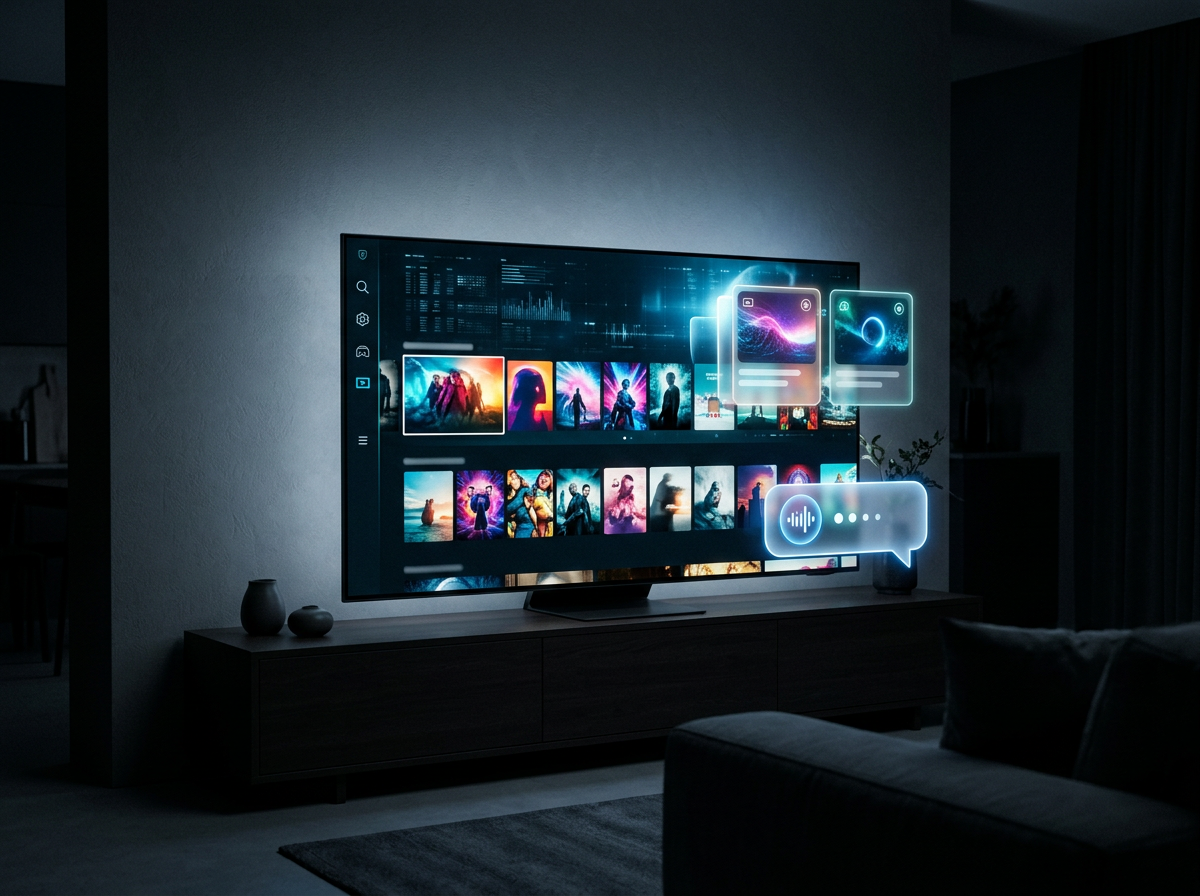
Samsung Electronics has entered into a multi-year strategic partnership with Gracenote, the content data business unit of Nielsen, to integrate the vendor's TV, film, and sports metadata across the company's smart TV AI initiatives worldwide.
The deal covers three core areas: advanced conversational search that allows users to find precisely the programming they want through natural-language interactions; curated content carousels and lean-back recommendations designed to maximize viewer engagement; and backend data ingestion and harmonization that enables AI-driven operational efficiencies at scale.
The announcement follows a similarly structured multi-year partnership extension that Gracenote completed with Google last month, making Samsung the second major platform in rapid succession to commit to grounding its AI ambitions in Gracenote's content intelligence layer.
"Samsung is committed to delivering the most useful and engaging entertainment experiences to our users. By combining our AI technology with Gracenote's industry-leading metadata, we aim to push content search and discovery to new heights, delighting viewers by empowering them to find the entertainment they love intuitively and naturally."
— Bongjun Ko, Corporate EVP, Samsung Electronics
Gracenote CEO Jared Grusd underscored the strategic fit, noting that "the structured nature of Gracenote's entertainment metadata and the scale of our content coverage put us in a unique position to power LLM-driven use cases," and expressing confidence the collaboration "will yield innovative user experiences and benefits extending far beyond."
Gracenote SVP of Product Tyler Bell articulated clearly why raw LLM capability alone is insufficient for entertainment applications, pointing to two well-known but underappreciated structural limitations.
Hallucination: Because LLMs are probabilistic by nature, they can generate responses that sound authoritative but are factually incorrect. In an entertainment context, this means recommending shows that don't exist, citing wrong broadcast details, or misattributing awards — errors that directly erode user trust.
Knowledge Lock: LLMs cannot see information beyond their training cutoff date. Because model training is expensive and time-consuming — typically conducted only once or twice a year — even the most capable models operate with static knowledge.
Gemini 3 Pro, for instance, was built in November 2025 and has no native visibility into content released, sports results, or awards ceremonies that have occurred since.
Bell drew an important distinction between consumer-facing AI chatbots — such as ChatGPT or the Gemini client — and the underlying models that streaming platforms must work with directly. Consumer chatbots layer additional data sources on top of their LLMs to compensate for these gaps.
But a vMVPD or streaming service using a base model such as Gemini 3 Pro inherits the model's limitations without those compensating mechanisms. Neither Samsung nor Google is training LLMs on Gracenote's metadata; instead, both use it as a live reference layer — a source of verified, up-to-date truth against which AI-generated responses are checked and grounded.
"Grounding really helps all of these companies fundamentally ensure that the model they have, with its strong inference capabilities, can be combined with real-world, authoritative, factual data that's also up to date. And therefore it basically mitigates the deficiencies that the probabilistic nature of AI introduces."
— Tyler Bell, SVP of Product, Gracenote
Bell outlined three primary buckets where Gracenote customers are actively using or evaluating AI-metadata integration:
1. Conversational Search: Moving beyond voice as mere navigation, this use case enables users to query content with natural language and follow-up questions — for example, asking for horror movies for Halloween but refining the request to titles that "wouldn't freak out a 12-year-old." Roku's AI-powered voice capabilities and Google TV's Gemini integration already reflect this direction. A key commercial benefit: users remain inside the app rather than switching to a mobile browser to search Google.
2. Personalized Recommendations: Combining LLMs with behavioral data such as watch history and demographic signals like age to build highly customized content rails on the home screen — even before a user logs in. Bell noted that AI can assist human editors and algorithmic recommendation engines alike, enabling Samsung to deliver curated carousels tailored to individual viewers in lean-back mode.
3. Data Ingestion and Harmonization: On the infrastructure side, AI paired with standardized metadata taxonomy normalizes and matches content descriptions across a wide variety of sources, creating a common language that reduces backend complexity and accelerates content operations at scale.
Samsung's move reflects a broader wave of AI investment across the TVOS ecosystem. Roku is readying AI-powered voice capabilities for content discovery. Google TV has debuted Gemini on smart TVs including TCL, with VP Shalini Govil-Pai describing a vision where viewers hold natural conversations with their television about what to watch — including AI-generated voice responses to questions spanning education, travel, and shopping. Amazon has incorporated Alexa+ into its entertainment experience.
Running parallel is The Trade Desk's Ventura operating system, which explicitly positions itself as a more neutral alternative — one designed to surface content that serves viewer preferences rather than platform commercial interests. Bell acknowledged the tension directly: in a landscape where TVOS platforms operate their own channels that compete with app partners, content discovery "very often remains a zero-sum game." His counter-argument is that a more neutral business model can make better personalization commercially viable for all parties.
Bell expects LLM adoption to become universal across the CTV stack, predicting it will happen "very slowly at first and then all at once" — a trajectory he attributes both to the industry still figuring out its approach and to the cost and complexity of transitioning away from long-running systems.
For now, most players are taking what he describes as an augmentative posture: using AI to enhance existing capabilities rather than replacing them wholesale. "What they are doing is looking to see how they can use AI in combination with Gracenote data to augment and make better what they already do well," he said.
Platforms have two integration paths available: they can connect through Gracenote's Video Model Context Protocol (MCP) Server, or they can — as Samsung has chosen to do — integrate Gracenote metadata directly into their own AI stacks using proprietary technology.
The strategic stakes were framed most starkly by Fubo CEO David Gandler at a Paley Center for Media event in New York last month. Gandler argued the industry must shift from reactive content discovery — where watching one mystery show floods the algorithm with mystery recommendations — to a predictive, anticipatory experience driven by accumulated behavioral signals.
Looking further ahead, he envisioned a world where the current UI disappears entirely, replaced by two-way AI conversation. In his example: a child who doesn't want to watch TV with their parent tells the household AI — which already knows both of their preferences deeply — "what are the things we could watch together?" That exchange, Gandler said, is the anticipation problem solved.
"This now becomes the conversation layer — and who owns that. The company or the group that's going to figure out or own that layer, those are the groups that are going to really own TV like ten years from now."
— David Gandler, CEO, Fubo
Optimum CEO Dennis Matthew echoed the transformational outlook while emphasizing the collaborative effort required to deliver it. In his own household, he noted, viewing patterns are largely predictable by day and time — a family show on a weeknight, an NBA game during the season. "I imagine AI is going to completely transform this experience," he said, but added that stakeholders across the industry must be willing to work together to make it real: "We can monetize in a way that's much different than what it is today — and customers would be happy to pay for it."


![[보고서]전통 언론사의 크리에이터 전략 대전환](https://cdn.media.bluedot.so/bluedot.kentertechhub/2026/02/0nwc9z_202602100212.png)