

Skydance splits 50-plus cable networks into four divisions, combines Paramount and Warner Bros. TV studios and moves Paramount+ and HBO Max to one tech stack within a year… Legacy majors shrink to four; $6B in annual savings against $80B in net debt
Skydance has put Paramount's and Warner Bros.' 50-plus cable networks into four divisions and merged their TV studios. Paramount+ and HBO Max move to one tech stack within a year. Hollywood's legacy majors are down to four. With $80B in net debt, it targets $6B in yearly savings.
On Nov. 17, Skydance placed the more than 50 cable networks of Paramount and Warner Bros. into four divisions under Skydance Global Cable Media. On Nov. 18 it combined the two companies' TV studios into Warner Bros. Television Studios. Paramount+ and HBO Max will move onto the same technology platform within a year of the merger's close. The cable, TV production and streaming operations the two companies ran separately are each being reduced to one.
Paramount, founded in 1912, and Warner Bros., incorporated in 1923, competed for more than a century, each with its own film, TV production, cable and streaming operations. They became one company on Oct. 6, when Skydance completed its $111 billion acquisition of Warner Bros. Discovery (WBD). Hollywood's legacy major studios now number four: Disney, Skydance, a soon-to-be-independent NBCUniversal and Sony.
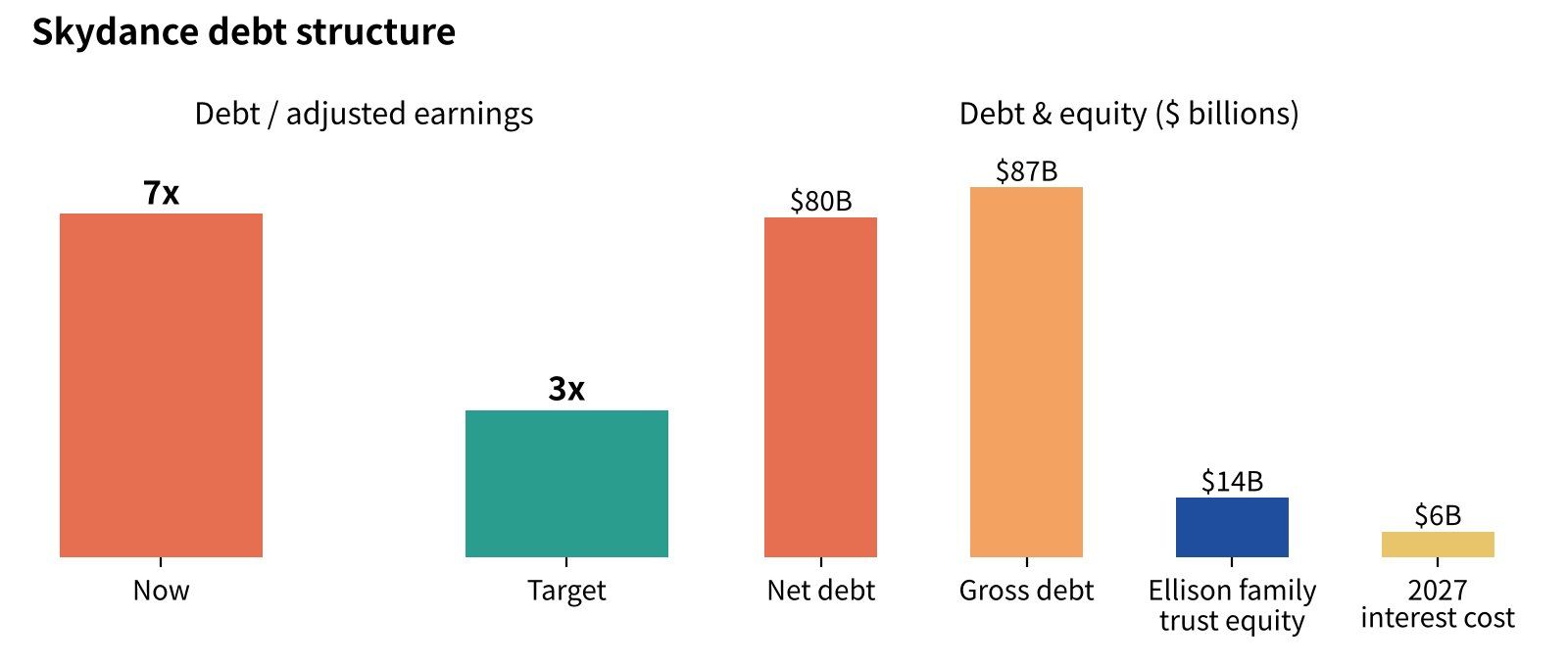
Debt and cash flow are driving the reorganization. Skydance carries $80 billion in net debt, and interest expense alone is expected to top $6 billion next year. CBS and the cable networks still generate the cash, but that business shrinks every year. In its first quarterly report on Nov. 9, the company said it would cut more than $6 billion in annual costs within three years.
CEO David Ellison has kept the pledges of $30 billion a year in content spending and at least 30 theatrical releases annually. Layoffs continue through the first quarter of next year. The head of DC Studios was replaced five weeks after the merger, and day-to-day operations fall to co-CEO Ynon Kreiz, a former Mattel CEO. CFO Dennis Cinelli told Variety that content is "not a cost but an asset."
Cable in four genre divisions, TV production in one studio… brand-by-brand vertical silos rebuilt by business
Paramount and Warner Bros. were each built as a vertical set: a film studio, a TV production arm, cable networks and a streaming service. Six weeks after closing the deal, Skydance began reducing those two sets to one per business. Cable is grouped by genre rather than by brand, TV production goes into one studio and streaming onto one technology platform. Management is divided the same way, by film, TV and streaming.
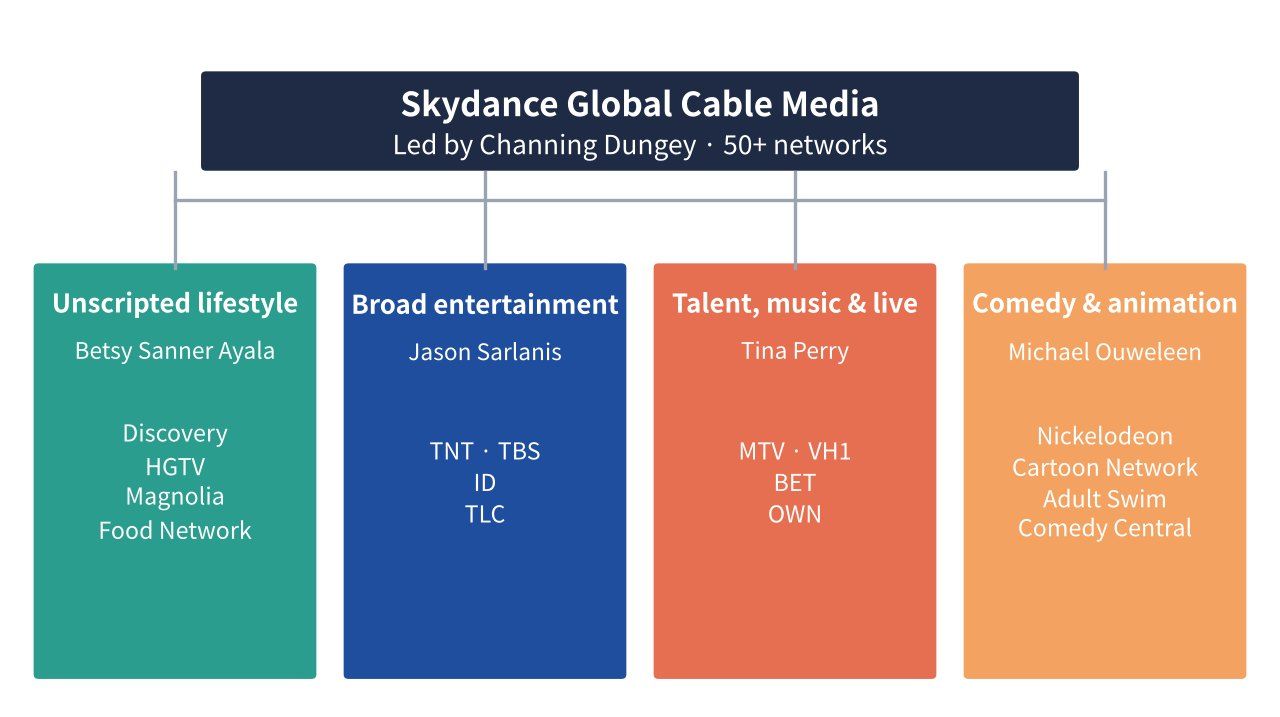
Skydance on Nov. 17 reorganized its cable business as Skydance Global Cable Media. The group includes more than 50 networks, among them Adult Swim, BET, Comedy Central, Discovery, Food Network, HGTV, ID, MTV, TLC and Nickelodeon. Channing Dungey, who oversees cable channels for the combined company, named the heads of four divisions in a memo to staff, TheWrap reported.
Betsy Sanner Ayala, president of Food Network, will run unscripted lifestyle, including Discovery, HGTV and Magnolia. Jason Sarlanis, who has led TNT, TBS and ID, will oversee broad-based entertainment and add TLC. Tina Perry, president of OWN, will lead talent, music and live, adding MTV, VH1 and BET. Animation is grouped in a new Skydance Television Animation, which includes Nickelodeon and Nickelodeon Animation Studios, Adult Swim, Cartoon Network, Warner Bros. Animation, Cartoon Network Studios and Hanna-Barbera Studios Europe. Adult Swim's Michael Ouweleen will lead it, and Comedy Central will also report to him.
The animation group will also sell to outside platforms. Dungey said in the memo that the team will "help defend our core business while building out a multi-platform strategy for these brands that will allow us to reach audiences wherever they may be," and that more on the international business would come in the coming weeks. Howard Lee, who led Warner Bros. Discovery's U.S. networks, left the company in the restructuring. With Nickelodeon and Cartoon Network titles opening to outside sales, Korean kids' channels and streaming services could become buyers.
A day later, on Nov. 18, Skydance combined its TV production units. It said Warner Bros. Television Group and Paramount Television Studios will become Warner Bros. Television Studios, launching in early 2027 and bringing the studios behind "The Pitt," "Ted Lasso," "Reacher" and "Landman" under one roof. Dungey and Matt Thunell, who led Paramount Television Studios, will be co-presidents reporting to George Cheeks, co-chair and chief content officer of Skydance TV. The combined studio will also oversee BET Studios and Warner Bros. International Television Production, with more than 100 active productions across streaming and broadcast. CBS Studios will remain separate under president David Stapf.
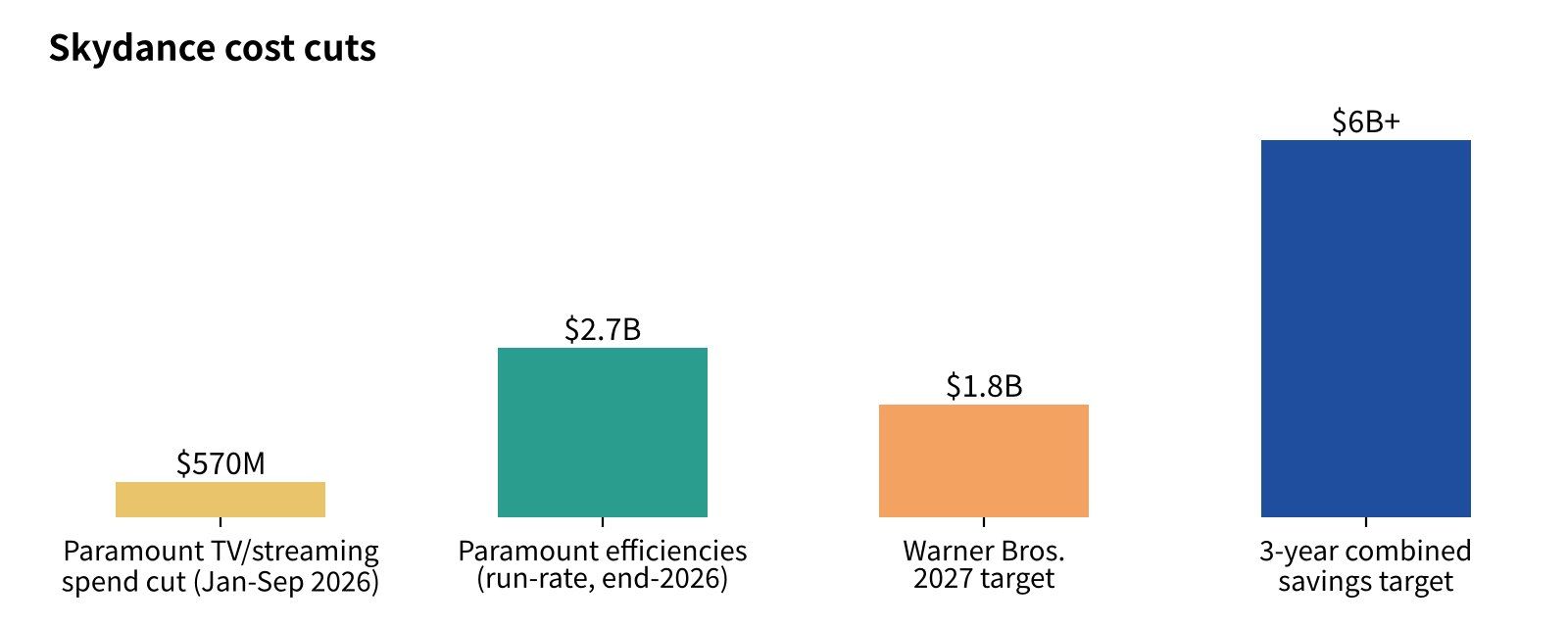
Ellison said on the call that Paramount+ and HBO Max will move onto a common technology stack within about a year of the Oct. 6 merger close. Integrating Pluto TV and BET+ into Paramount+ took about 18 months, and the company will draw on that experience and AI development tools. Co-CEO Ynon Kreiz identified at least $1.4 billion (about ₩2 trillion) in annual technology savings. The $6 billion savings target includes $2.2 billion from corporate overhead and property, $1 billion from marketing and $1.4 billion from procurement, Broadband TV News reported on Nov. 10. The company will stop publishing quarterly subscriber figures from the fourth quarter. Aggregate subscribers across Paramount+, HBO and HBO Max, excluding Discovery+ and without removing overlap, total 203 million.
Co-CEO Kreiz runs daily operations; president Andy Gordon and CFO Cinelli oversee people and finance. HBO's Casey Bloys leads all of streaming with JB Perrette. Dana Goldberg and Josh Greenstein run film across Paramount, Warner Bros. and DC, and former CBS chief George Cheeks oversees broadcast, cable, news, sports and three production studios. Michael De Luca and Pamela Abdy, who ran Warner Bros. film, have left.
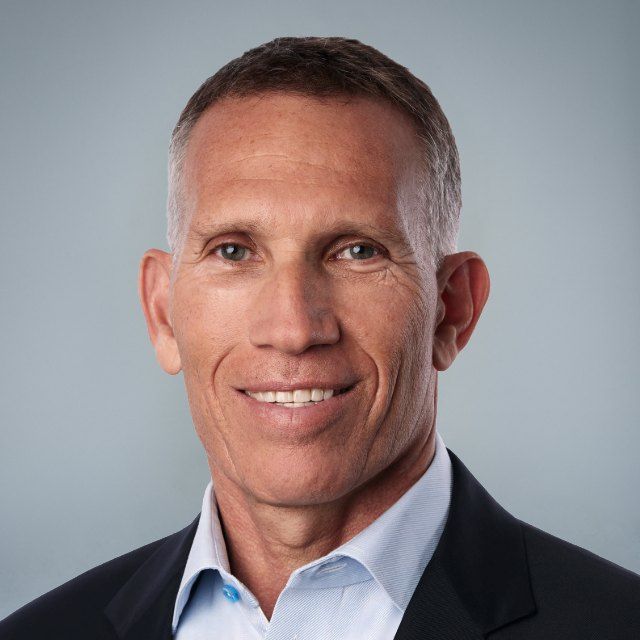
Kreiz, who runs day-to-day operations, was born in Tel Aviv and entered the media business in 1994 when he teamed up with Haim Saban. As Mattel's CEO, he brought the "Barbie" film to fruition with Warner Bros. Former WBD CEO David Zaslav left after the deal closed with about $600 million, Deadline reported.
CBS and 55 cable channels carry the profit… TV revenue down 9% with $80 billion in net debt
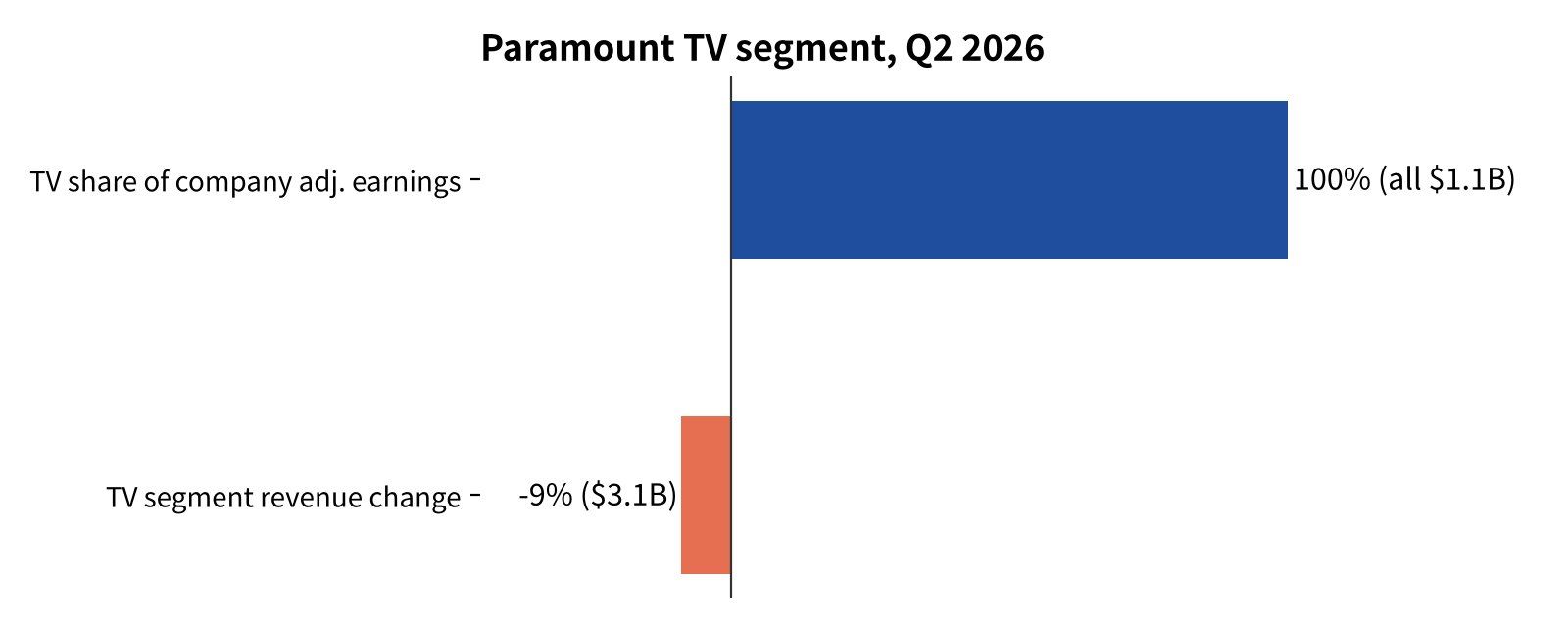
Skydance's TV business is anchored by CBS and spans some 55 cable channels, including CNN, TNT, TBS, Cartoon Network, TCM, Nickelodeon, Comedy Central, BET, Discovery, TLC, Food Network and HGTV. In the second quarter Paramount's TV segment revenue fell 9% to $3.1 billion, yet it produced all of the company's $1.1 billion in adjusted earnings.
Cable subscribers have been moving to streaming for more than a decade. MoffettNathanson analyst Robert Fishman warned in an Oct. 23 note that aggressive cost cutting in TV could speed up revenue declines. Skydance's financial targets depend on whether streaming growth can keep pace with the erosion of cable profits.
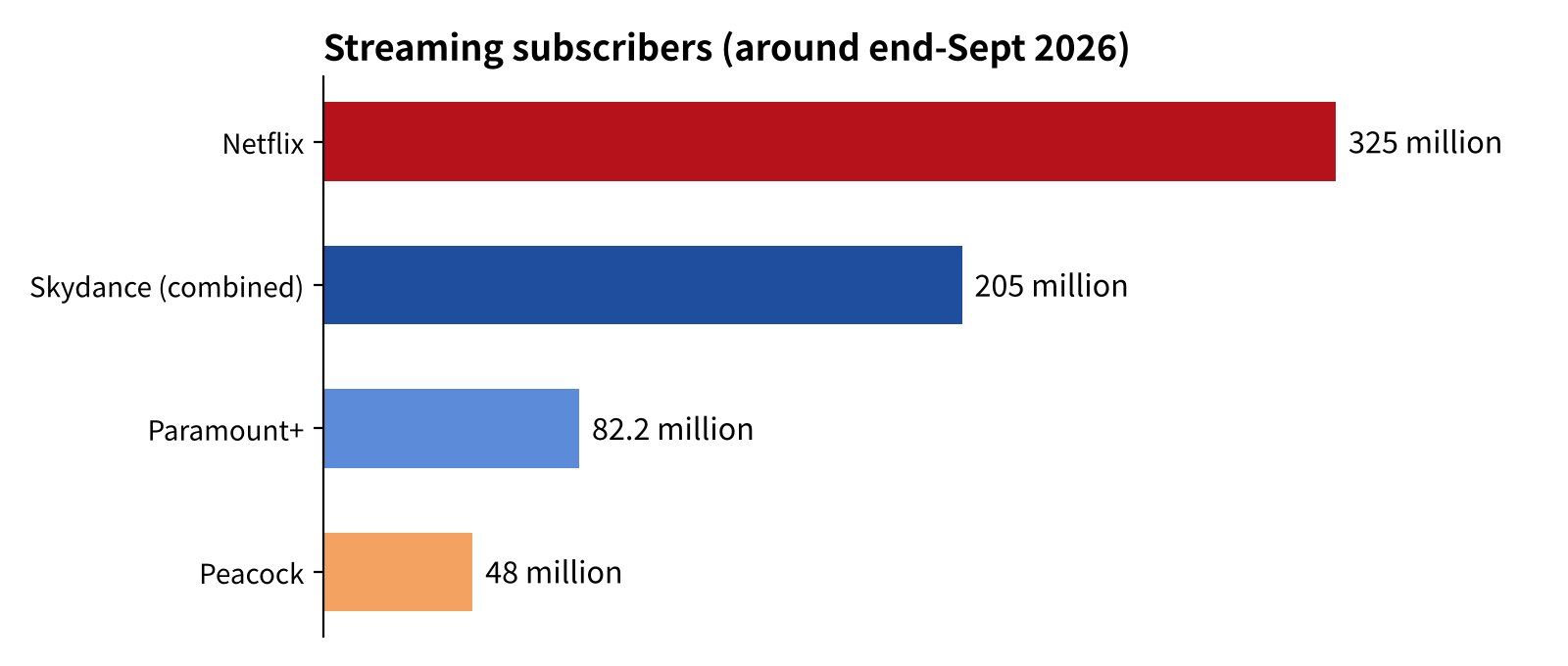
Third-quarter adjusted EBITDA was about $1 billion, above the top of the $875 million to $975 million range the company gave in the second quarter. The company warned, however, that weak Warner Bros. box office could cut fourth-quarter profit by up to $200 million. The combined company has 205 million streaming subscribers in more than 100 territories and a library of about 15,000 films and more than 100,000 hours of television.
The deal was financed largely with debt. The Ellison family trust committed $14 billion in equity, and gross debt rose to $87 billion after closing. The company plans to cut its debt from seven times adjusted annual earnings to three times, a level typical of large companies. Cinelli told Variety the company is not seeking additional capital. Skydance and Elon Musk declined to comment on rumors that Ellison is looking for new backers, including Musk.
$6 billion in annual savings… the Paramount playbook applied to Warner Bros., $1.8 billion in 2027 alone
Paramount spent $570 million less on TV and streaming in the first nine months of 2026 than a year earlier, The Ankler reported on Nov. 12. Its efficiency program will reach a $2.7 billion annual run rate by year-end, with the target raised to more than $3 billion — 50% above the $2 billion set when the Skydance–Paramount merger was announced. Ellison plans to apply the same playbook to the much larger Warner Bros., cutting $1.8 billion in 2027 alone. That is 30% of the $6 billion target, falling in the first year of combined operations; another $1.8 billion is slated for the final year. Marketing, procurement and overhead are the main areas.
On the WBD side, sources told Variety that hospitality spending on meals, travel and gifts ran to tens of millions of dollars. Outside vendors, studio services, real estate and duplicated marketing budgets are being cut, and sports rights such as the Olympics are under review.
The Ankler's podcast hosts expect them to start in the first quarter of 2027. The company has said layoffs will account for less than half of the $6 billion. Real estate comes next. Kreiz noted on the call that the company has five offices in New York, seven sites in Los Angeles and several in London and Atlanta. The Warner Bros. lot in Burbank and the Paramount lot on Melrose will stay; the antitrust settlement with California Attorney General Rob Bonta requires them to be kept for five years. In 2028 the company will shrink vendor contracts, using the scale of more than 50 cable channels, two streaming services and two film studios to renegotiate media-buying rates and merge the two services' technology. Skydance has set a 2030 free cash flow target of $10 billion.
HBO Max–Paramount+ bundle in 2027, a single platform by 2029… 205 million subscribers
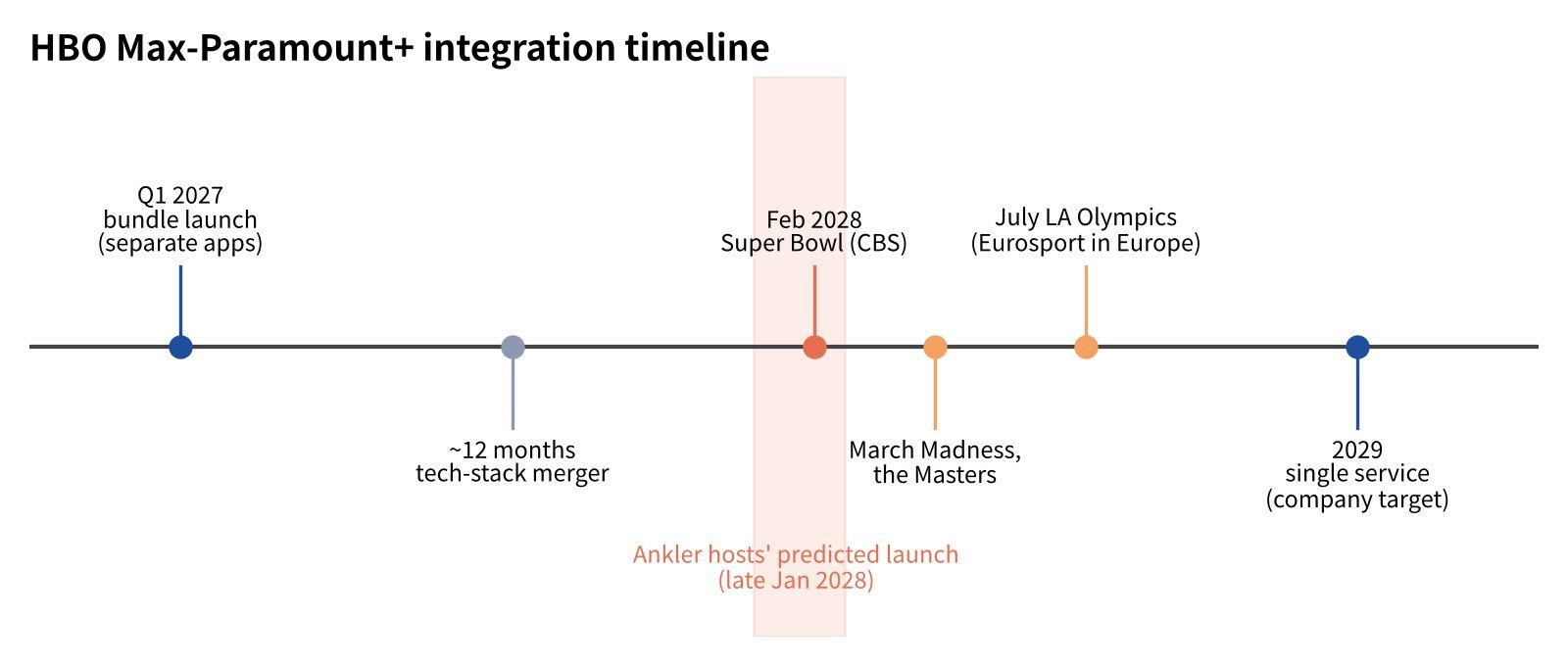
Ellison said on the earnings call that the company would launch a bundle of HBO Max and Paramount+ in early 2027. An insider told Variety it would be priced at a discount to rivals to win share. A fully integrated service with both brands in one app is targeted for 2029. Many in the industry expect HBO, the stronger consumer brand, to survive and the Paramount+ name to be retired.

The company has put TV and streaming under a single commercial team to sell advertising and distribution together. It is switching from quarterly to annual guidance and will give its 2027 outlook with the next results. Paramount's third-quarter content licensing revenue rose by more than $200 million year on year on sales to rivals such as Netflix. Ellison estimated that merging the two services' technology would take about 12 months, and hosts of The Ankler's podcast expect the integrated service just before CBS's Super Bowl in February 2028.
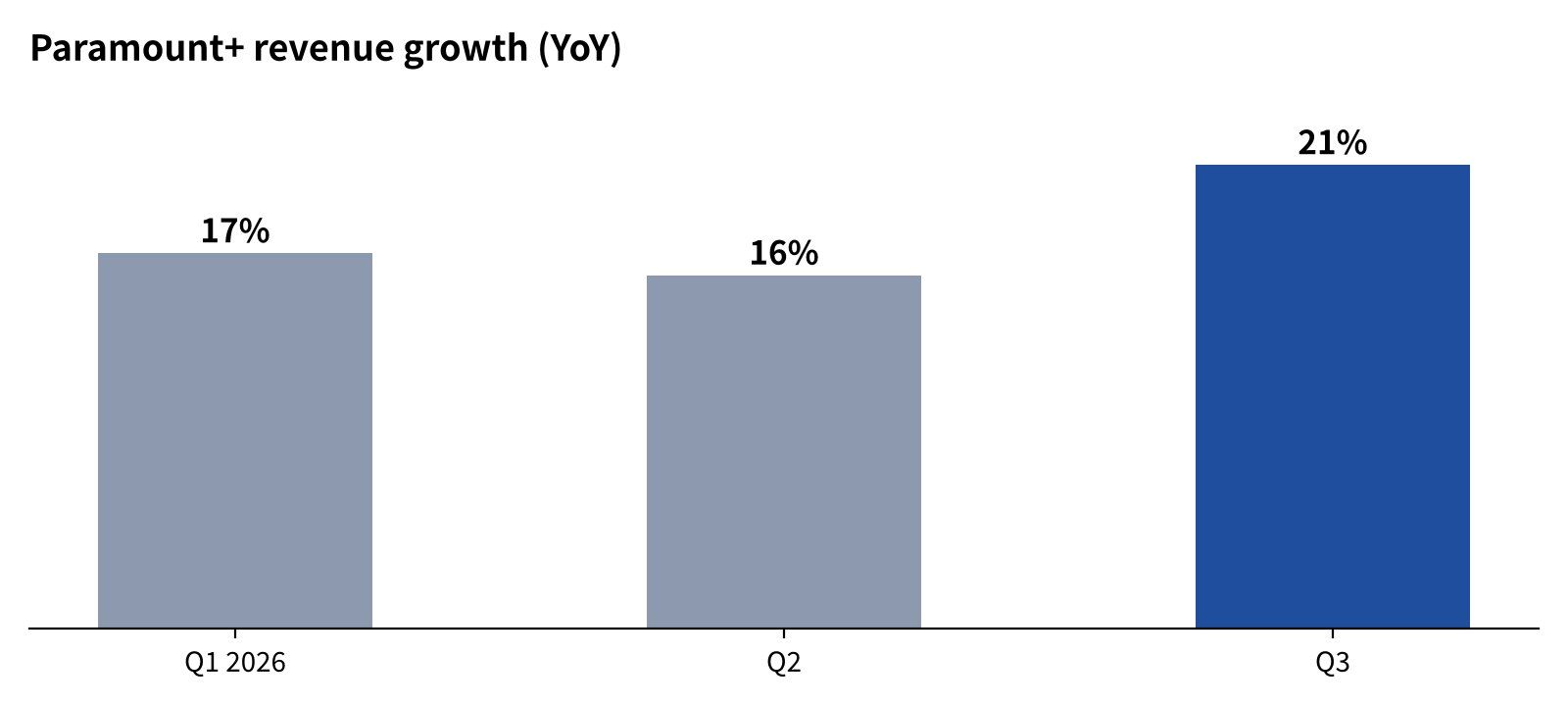
Because the deal closed after the quarter ended, the third-quarter results cover Paramount alone. Revenue rose 5% from a year earlier. Paramount+ revenue grew 21%, up from 17% in the first quarter and 16% in the second, Earnings Whispers noted. Paramount+ subscribers reached 82.2 million, up 6% year on year. Pro forma direct-to-consumer revenue for Warner Bros. and Paramount combined grew 15%.
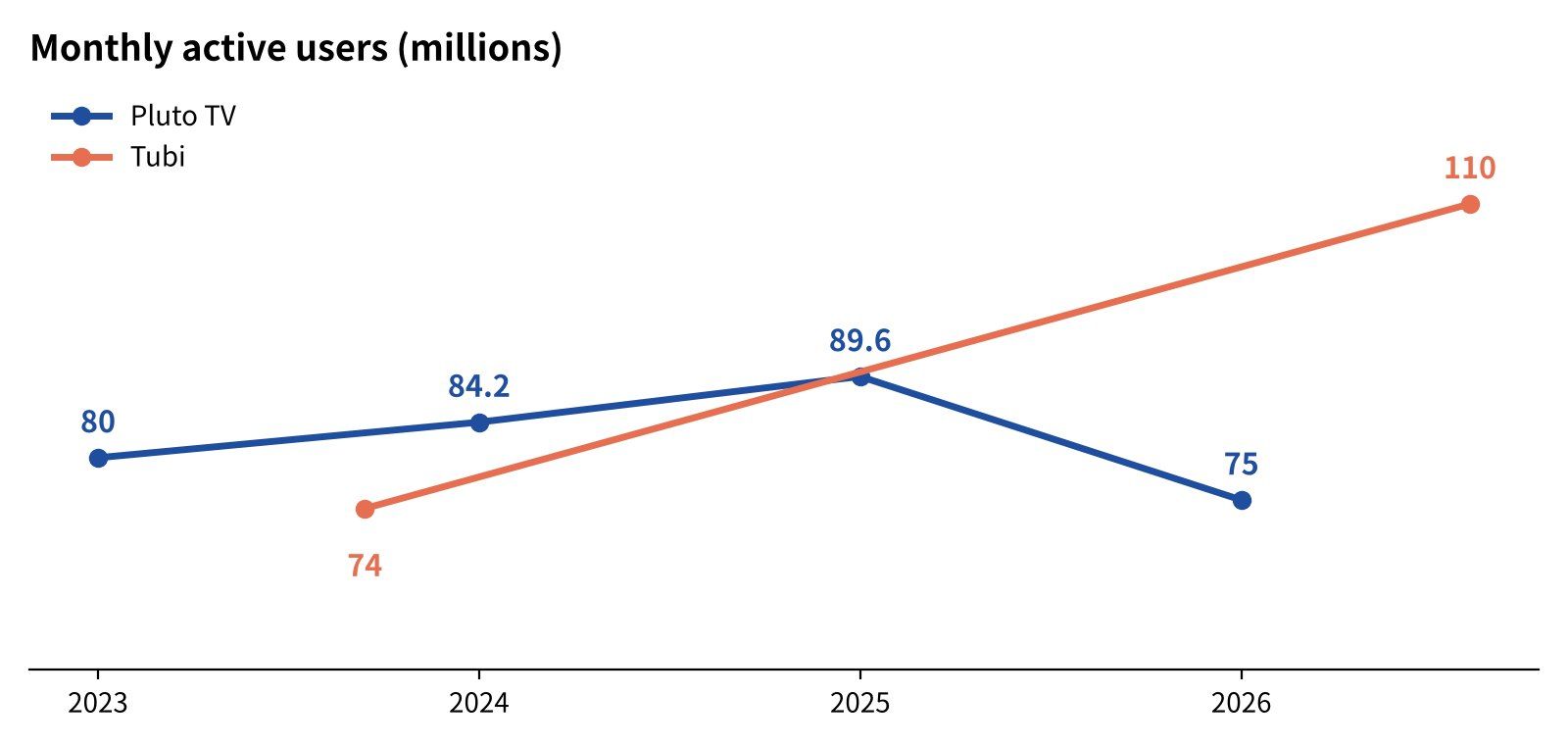
In its third-quarter shareholder letter Skydance said its free ad-supported streaming TV (FAST) service Pluto TV has about 75 million monthly users, 14.6 million fewer than the 89.6 million for 2025 shown in an April internal document obtained by Business Insider. In September Pluto TV moved on-demand (VOD) content ahead of live channels on its home screen, and two employees told the outlet the change may have contributed to the decline. The company said the first phase of moving Pluto TV onto the same technology as Paramount+ is largely complete, lowering operating costs and letting the services share personalization and ad-sales tools. Direct-to-consumer (DTC) advertising revenue rose 13.2% to $542 million (about ₩775 billion) in the quarter, while TV Media advertising revenue fell 8%. In Nielsen's August report, released Oct. 22, Paramount+ and Pluto TV combined held 2.3% of TV viewing, up 0.1 point from July, and Paramount ranked fifth at 6.8% among media companies. Under an output pact with Warner Bros. TV, it will stream all 12 seasons of "Two and a Half Men" free for the first time from Nov. 20, Variety reported on Nov. 13.
$30 billion a year in content, 30 films a year… decision lines for DC and 'Barbie' redrawn
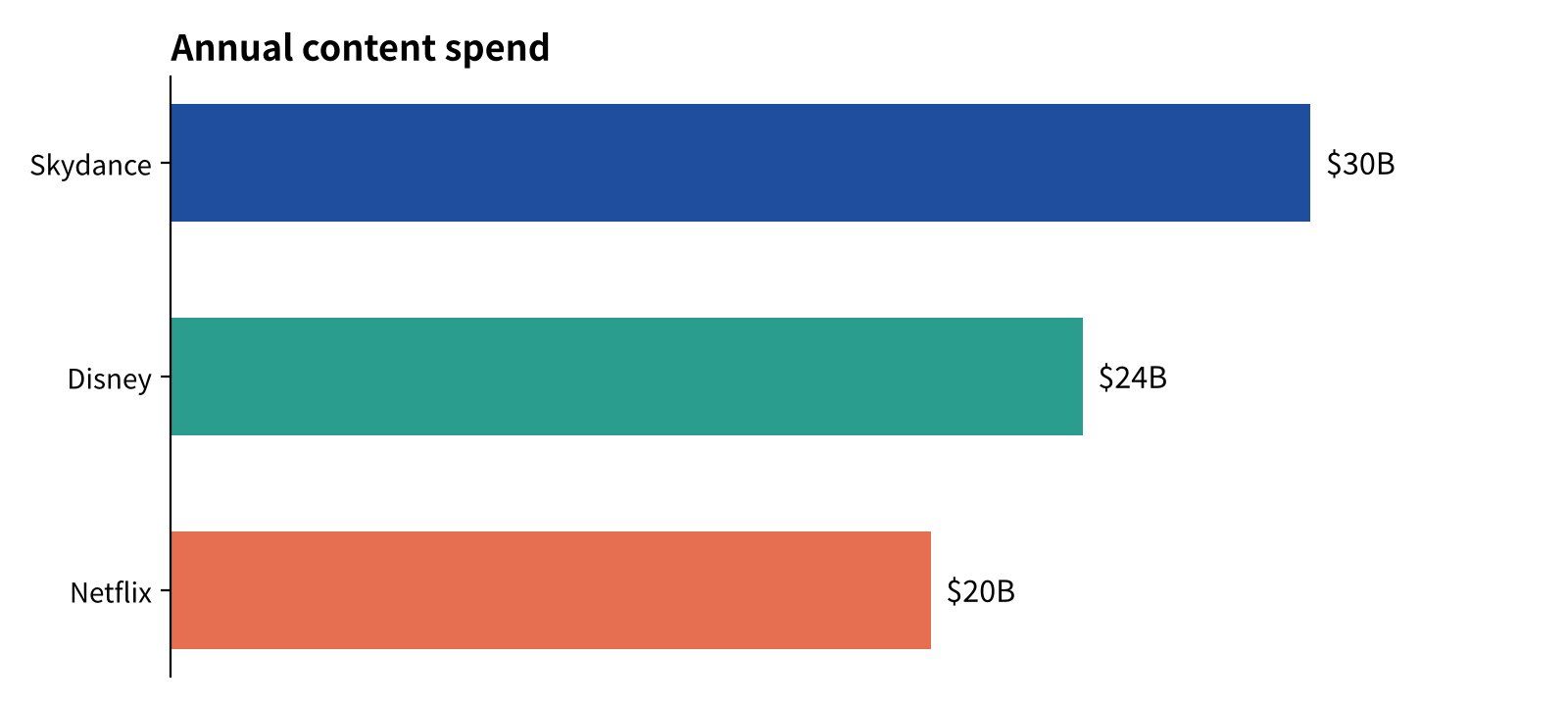
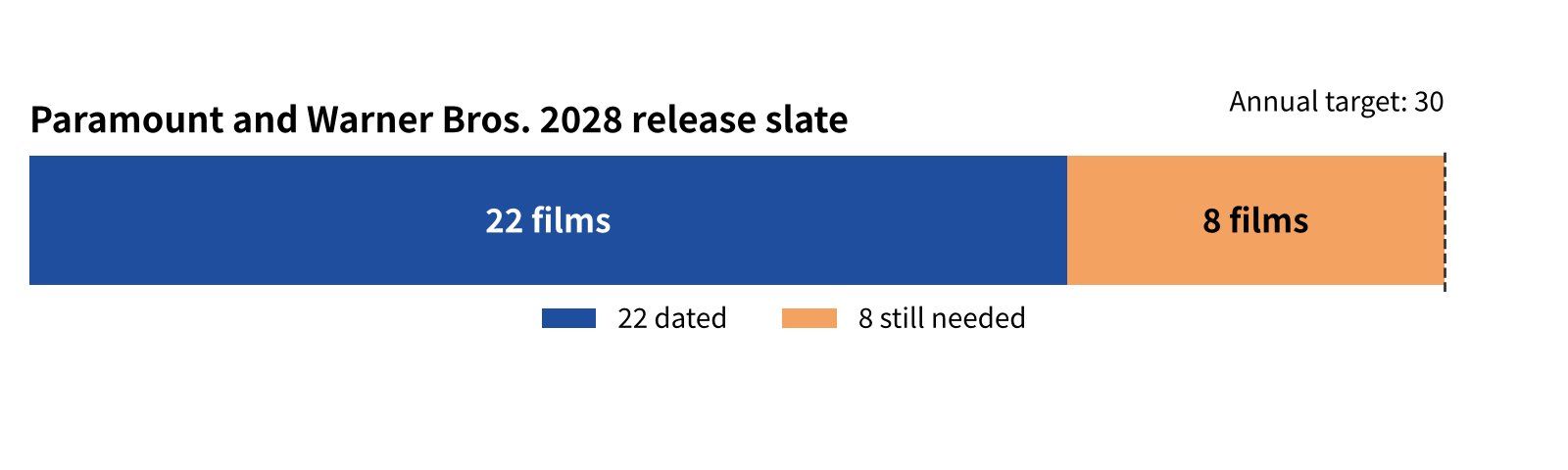
Skydance's $30 billion annual content commitment exceeds Netflix's $20 billion and Disney's $24 billion for 2026. The 30-films-a-year pledge will be tested from 2028. Paramount and Warner Bros. have dated 22 films for 2028. Many — including "Gremlins 3," Baz Luhrmann's reported Joan of Arc film and an untitled film from the Duffer brothers — have yet to start shooting. In a September settlement with state attorneys general, Paramount agreed to release at least 30 films theatrically each year for two years after the deal closes, and 32 a year for the following three years.

Jeremy Latcham, a member of Marvel Studios' founding core, becomes president and chief creative officer of DC Studios on Dec. 1. The announcement came as DC's "Clayface" had earned about $109 million worldwide within three weeks of release; "Supergirl" flopped this summer. James Gunn and Peter Safran, who have led DC since November 2022, step down but stay on as executive producers of projects including Gunn's Superman sequel "Man of Tomorrow," due July 9, 2027, and HBO Max's "Lanterns." Latcham was senior vice president of production and development under Kevin Feige at Marvel from 2004 to 2017 and an executive producer on Gunn's "Guardians of the Galaxy," and later produced "Dungeons & Dragons" and Sony's "The Breadwinner." The reporting line also changes: instead of reporting directly to Ellison, DC will report through Skydance film chiefs Dana Goldberg and Josh Greenstein, while part of the brand goes to Casey Bloys, The Ankler reported. Ellison's direct reports drop from 15 to 13. On the TV side, "Peacemaker," "Creature Commandos" and "The Penguin" performed well, but "Lanterns" has yet to be renewed for a second season.
Talks on a sequel to "Barbie," Warner Bros.' highest-grossing film, stalled during the bidding war. Director Greta Gerwig and co-writer Noah Baumbach pitched a concept but would not begin development until new deals were struck for Gerwig, Margot Robbie and Ryan Gosling. The three sought equal pay of about $25 million each and bigger back-end shares, and talks broke down when then-WBD CEO Zaslav balked at the back-end demands, Variety reported. CAA's Bryan Lourd led negotiations for the creative team.
Ellison, co-CEO Kreiz and Lourd aim to close a deal by year-end. Kreiz is the former CEO of Mattel, which owns the Barbie brand. Whether a company carrying $80 billion in debt will accept a lower-margin megadeal is the open question.
Two pillars of the old 'Big Five' become one company… Hollywood down to four legacy majors
Hollywood's major studios have consolidated quickly over the past seven years. Disney bought 21st Century Fox for $71.3 billion in March 2019, and Amazon acquired MGM for $8.5 billion in March 2022. In April of that year WarnerMedia combined with Discovery to form WBD. With Skydance's purchase of Paramount in August 2025 and of WBD in October 2026, two pillars of the 1930s–40s "Big Five" became one company. The remaining legacy majors are Disney, Skydance, NBCUniversal — to be spun off from Comcast in mid-2027 — and Sony.

Paramount began as the Famous Players Film Company, founded by Adolph Zukor on May 8, 1912, and took the name Paramount Pictures in 1914. It is Hollywood's second-oldest studio after Universal. Warner Bros. was incorporated on April 4, 1923, by brothers Harry, Albert, Sam and Jack Warner, and joined the majors in 1927 with the talkie "The Jazz Singer." Both were among Hollywood's "Big Five" studios in the 1930s and 1940s.



Both changed hands many times. Paramount spun off its theater chain after the 1948 Supreme Court antitrust ruling in United States v. Paramount Pictures, and was acquired by Gulf+Western in 1966 and Viacom in 1994. It recombined with CBS as ViacomCBS in 2019 and renamed itself Paramount Global in 2022. Warner Bros. passed through Time Warner (1990), AOL Time Warner (2001) and AT&T (2018) before merging with Discovery in 2022 to form WBD.
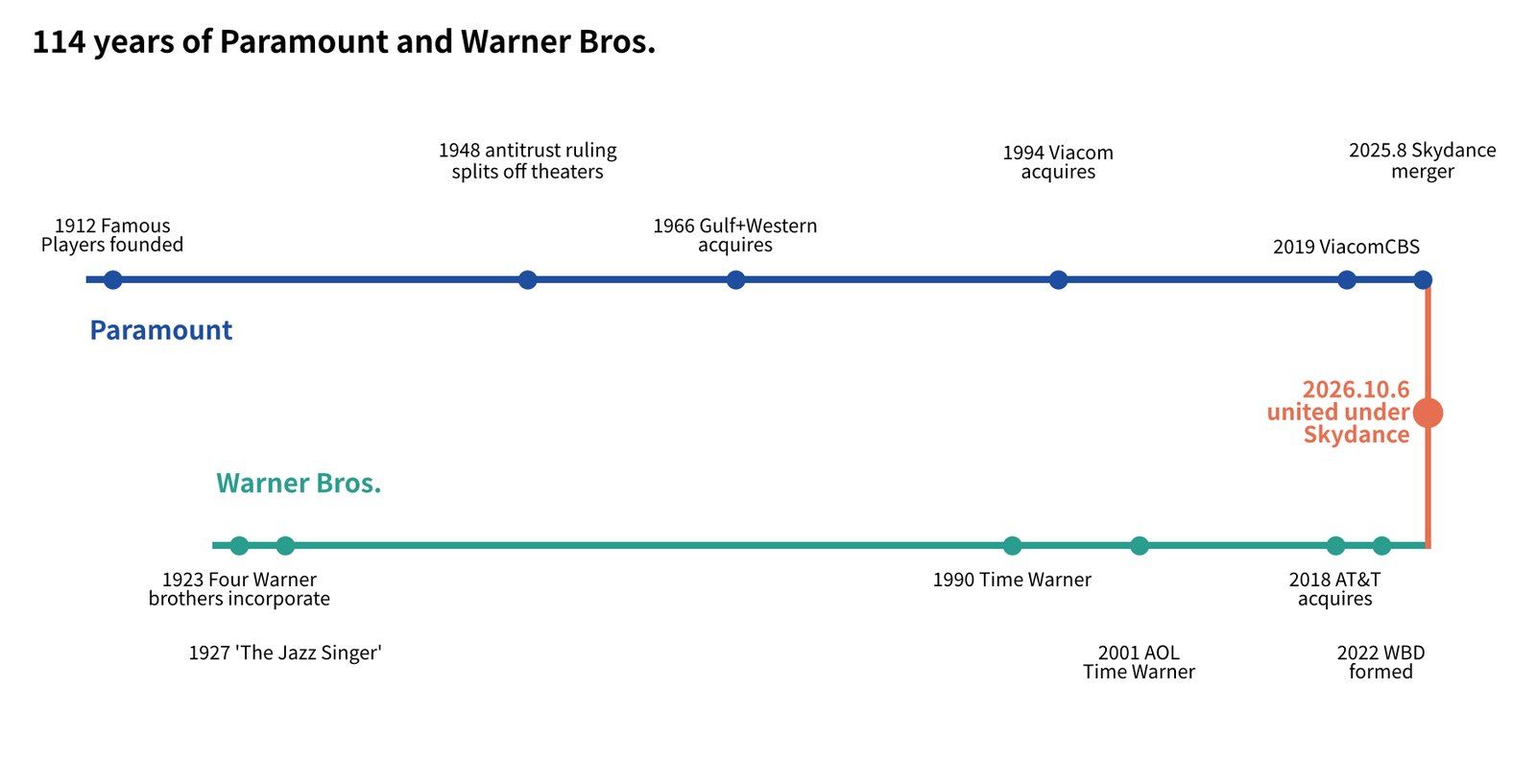
Skydance is the production company David Ellison, son of Oracle co-founder Larry Ellison, founded in 2010. It co-produced "Mission: Impossible" and "Top Gun: Maverick" with Paramount. After signing a deal to buy Paramount in July 2024, it closed an $8 billion merger on Aug. 7, 2025, first buying National Amusements, the Redstone family holding company, and then combining with Paramount Global. Fourteen months after taking Paramount, it took Warner Bros. as well.
Four-month bidding war with Netflix… won with $31 a share in cash
WBD's board put the company up for sale in October 2025. Netflix struck first in December with a deal to buy the studio and streaming businesses at an enterprise value of $82.7 billion. Paramount followed a $30-a-share cash bid with a final offer in February 2026 for the whole company at $31 a share, about $111 billion including debt. Netflix walked away on Feb. 26 rather than raise its price. Co-CEOs Ted Sarandos and Greg Peters said the deal had been "nice to have" at the right price but not a "must have" at any price. Paramount covered the $2.8 billion breakup fee owed to Netflix.
After winning approval from the U.S. Justice Department and authorities in the European Union, Britain and South Korea, the company settled an antitrust suit with 12 states including California on Sept. 21. Because closing came six days after the Sept. 30 deadline, WBD shareholders received an additional $41.9 million ticking fee. The combined company was named Skydance.
Netflix has since slowed. Its third-quarter revenue growth of 11.8% was the weakest in three years, and its stock fell from $124 a year earlier to the $68 range on Oct. 20. In October it cut about 1,000 jobs, 6% of its workforce, and replaced chief content officer Bela Bajaria and film chief Dan Lin. Hollywood now names NBCUniversal, which will be spun off from Comcast in mid-2027, as Netflix's next acquisition target (continued in Part 2).
In Korea, one window: Coupang Play carries both HBO and Paramount+
Paramount and WBD do not operate their own streaming services in South Korea. Both companies' content now reaches Korean viewers through a single platform, Coupang Play (쿠팡플레이). Since March 21, 2025, Coupang Play has carried HBO and HBO Max originals exclusively in Korea, along with Warner Bros. films such as "Harry Potter" and "Dune." On Oct. 29, 2025, it launched a "Paramount+ Pass" add-on, offering most Paramount+ content exclusively for 3,300 won (about $2.30) a month for WOW members.
Before Coupang Play, TVING (티빙) opened a Paramount+ brand hub in June 2022 — Paramount+'s first move into Asia. The two companies agreed to co-invest in and co-produce seven TVING originals, three of which were released on Paramount+ overseas. The hub closed in June 2024 when the license expired.
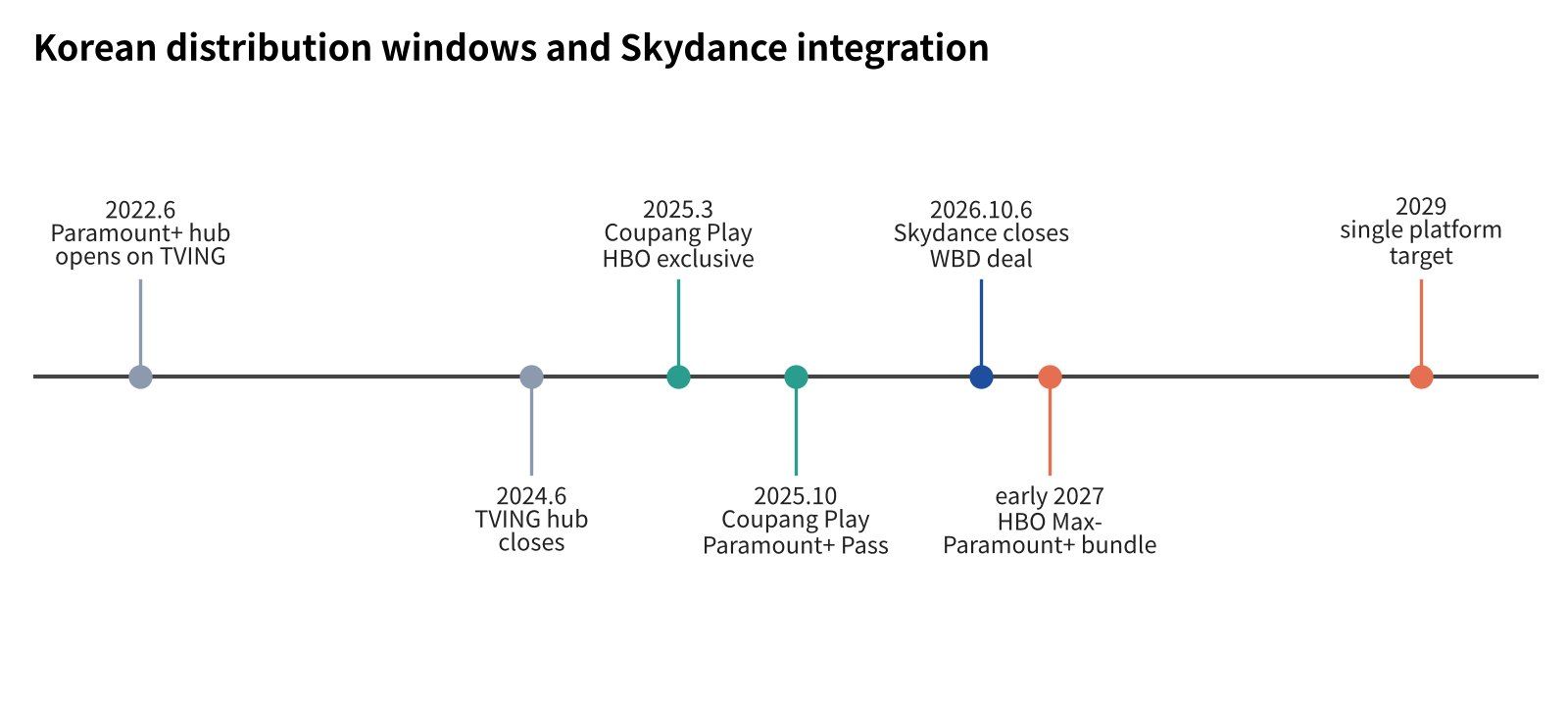
If the two services are bundled in 2027 and merged in 2029 in the U.S., overseas supply contracts may be restructured at the company level rather than by brand. Whether Skydance enters Korea directly or folds its HBO and Paramount+ deals with Coupang Play into one will depend on when each contract expires and the integration timeline. For Coupang Play, its two key foreign content suppliers are now one company with more negotiating leverage. Channels carried on Korean pay TV, such as CNN and Cartoon Network, also now sit under the same owner.
For Korean producers and broadcasters, there is one fewer Hollywood buyer. Paramount has co-produced Korean originals with TVING before. It has not been disclosed whether Skydance's cost cuts will reach overseas co-production and licensing budgets, or whether the $30 billion content budget will include a share for local production abroad. Skydance's 2027 guidance and the overseas rollout of the integrated platform will be the first indicators of the terms Korean companies can expect.
Korea's broadcast revenue falls for a third year… TVING–Wavve merger still unfinished 18 months after approval
Korea's broadcast revenue fell 0.8% in 2025 to 18.6495 trillion won (about $13 billion), the third straight annual decline, according to financial data released June 19 by the Korea Communications and Media Commission (방송미디어통신위원회). TV advertising revenue shrank an average of 10.6% a year from 2021 to 2025, while mobile advertising grew 7.5% a year. Terrestrial broadcasters' ad revenue was 835.7 billion won (about $584 million) in 2024, just 23.7% of their total revenue, down from 47.4% in 2014. Their spending on producing and buying programs fell 6% that year to 972.7 billion won (about $680 million).
The kind of restructuring Skydance is carrying out — consolidating channels, studios and streaming by business to cut costs — has yet to happen in Korea. TVING (티빙) and Wavve (웨이브) won conditional approval from the Korea Fair Trade Commission (공정거래위원회) in June 2025 but have not completed their merger. CJ ENM said on its August earnings call that it would discuss the timing with KT, a Wavve shareholder. Content from the three terrestrial networks, once Wavve's main draw, is now spread across platforms, with SBS supplying Netflix and MBC supplying TVING, Hankook Sports Economy (한스경제) reported in March.
Once Skydance merges HBO Max and Paramount+ in 2029, Korean broadcasters will have one fewer door in Hollywood for selling dramas or pitching co-productions. At the same time, a combined global platform will need more non-English content. For Korean broadcasters, terms of sale will depend on consolidating rights deals and production units now scattered across platforms, and on being able to negotiate in packages with the Hollywood buyers that remain — Skydance, Netflix and Disney.
2027 guidance next quarter… layoffs through the first quarter
At its next earnings report, Skydance will give its first combined results with WBD and its full-year 2027 guidance, preceded by pro forma financials. Latcham takes over DC Studios on Dec. 1, and the target for a "Barbie 2" deal is year-end. Layoffs run from year-end through the first quarter of 2027, and the HBO Max–Paramount+ bundle launches in early 2027. A plan for the international cable business is due within weeks.
Barry Meyer, who spent 41 years at Warner Bros. including 14 as CEO, told Variety that distribution is largely commoditized while content is unique, and that the new owners must keep investing in creativity. Many in the industry hope the logos and lots of the two studios founded in 1912 and 1923 will endure, Variety reported. With Skydance's formation, Hollywood's legacy studios now consist of Disney, Skydance, a soon-to-be-independent NBCUniversal and Sony. Skydance's twin goals — paying down debt and expanding content — draw on the same cash. How much goes to each will first become visible in its 2027 guidance.
K-EnterTech Hub and smartcms host Waving Entertainment Tech Summit in Las Vegas on Jan. 7 during CES 2027
K-EnterTech Hub and smartcms will host the Waving Entertainment Tech Summit from 5 to 8 p.m. on Jan. 7, 2027, during CES 2027, at UNLV's Dreamscape Learn center in Las Vegas (venue to be confirmed). As studios and streaming services consolidate across Hollywood, the summit covers Hollywood in the AI era, shifting content formats and the entertainment tech trends of CES 2027. Pitches from Korean entertainment tech and K-culture companies and a networking session follow.
Representatives of the Nevada Governor's Office of Economic Development (GOED), Film Nevada, Adobe and DramaBox are expected to attend. The summit is part of K-EnterTech Hub's CES 2027 Next Hallyu Entertainment Tech & AI Insight Program. Program details and registration are at kentertechhub.com/ces2027. Contact: Nam Hyun-jung (남현정), CEO of smartcms. Korean broadcasters and content companies are also invited to register.
Top photo: The former Warner Bros. studio on Sunset Boulevard. Photo: Doncram/Wikimedia Commons (CC BY-SA 3.0)