'K팝 데몬 헌터스', 아카데미 장편 애니메이션상 수상… "이것은 한국과 전 세계 한국인을 위한 것"
by
2026년 3월 15일

SXSW 2026 Featured Session Field Report
The Future of News :How Global Media Leaders Are Surviving — and Thriving — Amid AI, Political Pressure, and Advertiser Flight
March 16, 2026 | JW Marriott, Salon 1–4, Austin, Texas | SXSW 2026 Featured Session | Reported by K-EnterTech Hub

Even as AI-generated misinformation floods the internet, political forces target news organizations directly, and advertisers retreat from news environments, the value of credible, legacy journalism is rising. The New York Times achieved a record 13 million subscribers and 20% digital advertising growth in 2025 simultaneously, while The Guardian generated $58 million in voluntary reader contributions in the US alone — without a paywall.
 Jung Han
These paradoxical results are rooted in structural transformation. Three external shocks are shaking the entire news industry: the collapse of the traditional advertising model, traffic capture by social media platforms, and the unauthorized use of content by AI large language models (LLMs) for training.
In 2025 alone, 17,000 journalism jobs disappeared in the US, making it one of the most distressed white-collar industries in the country. Yet this structural pressure has forced news organizations to develop new survival formulas — revenue diversification, direct reader relationships, and platform bundle strategies.
On March 16, 2026, at SXSW in Austin, Texas, leading global media figures gathered to address this crisis and opportunity head-on.
The panel featured Betsy Reed (US Editor, The Guardian), Jennifer H. Cunningham (Editor-in-Chief, Newsweek), and Rebecca Grossman-Cohen (Head of Strategic Partnerships & Chief of Staff to the CEO, The New York Times), moderated by Jill Zuckman, Partner at SKDK and former chief congressional correspondent for the Chicago Tribune.
Two decades after the internet's rise and Craigslist's dismantling of classified advertising, legacy media organizations have been continuously experimenting with new revenue formulas. This session revealed — with concrete numbers — how each organization has built a model that goes beyond mere survival to genuine growth.
The Guardian: Voluntary Reader Contributions Without a Paywall
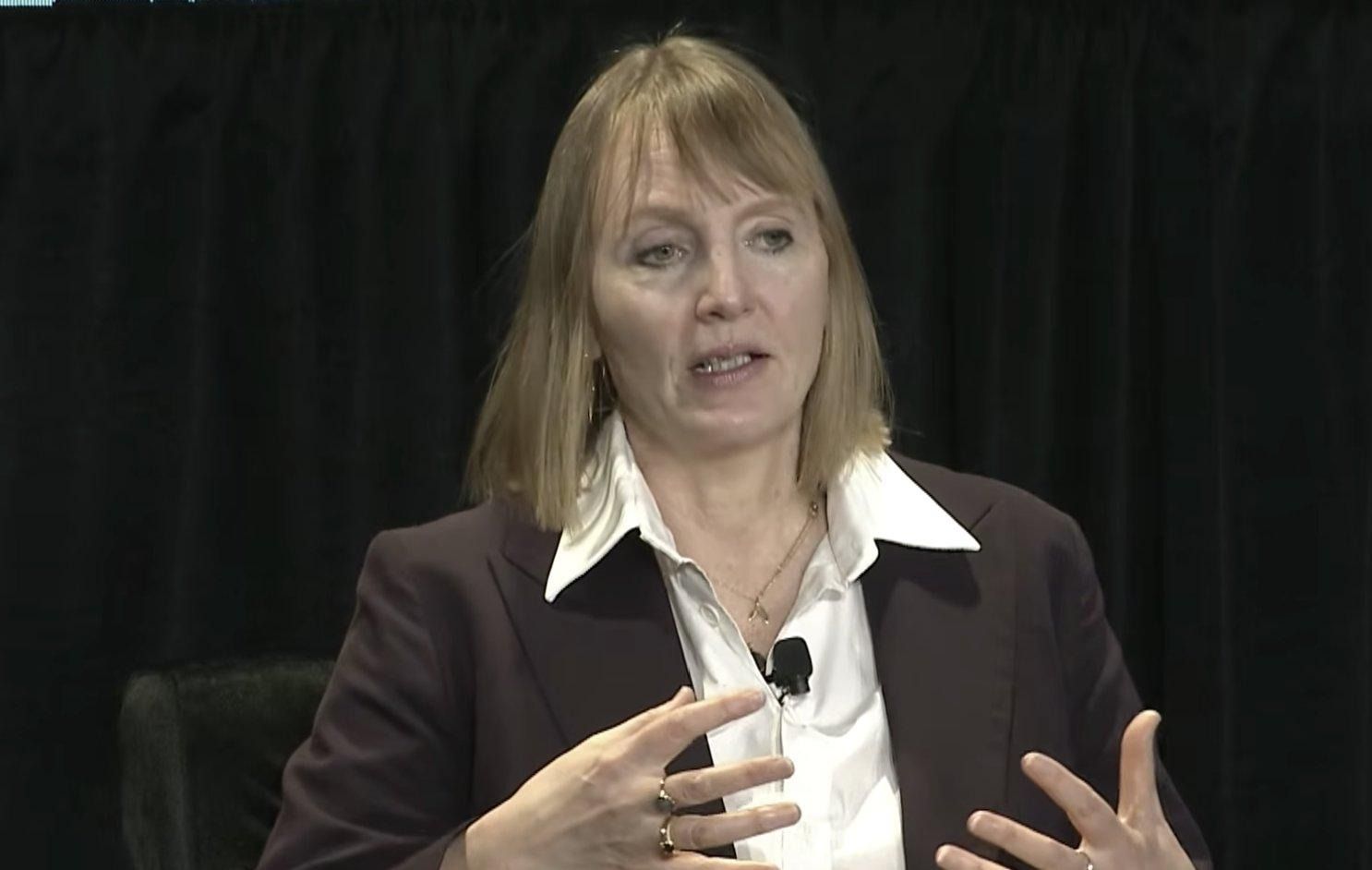
The 200-year-old British news organization introduced a 'voluntary reader contribution model' about a decade ago under Editor-in-Chief Kath Viner. Betsy Reed explained that when The Guardian had rapidly grown its digital audience and reputation but was losing significant money, it chose to rely on voluntary reader support rather than a paywall.
"The absence of a paywall is the key. Anyone can access quality news, and readers, moved by that value, choose to give. No other news organization lets anyone read freely."
Currently, 70% of The Guardian's US revenue comes from voluntary contributions — approximately $58 million in the US for 2026, and around $140 million globally. In the US, The Guardian is expanding sports and wellness content, and plans to launch its first video podcast, 'Stateside,' in May 2026. The goal is to bring the UK Guardian's 'playful intelligence' concept — encompassing culture, food, health, and opinion alongside hard news — to the US market.
Newsweek: Aggressive Diversification and Centrist Independent Brand Strategy
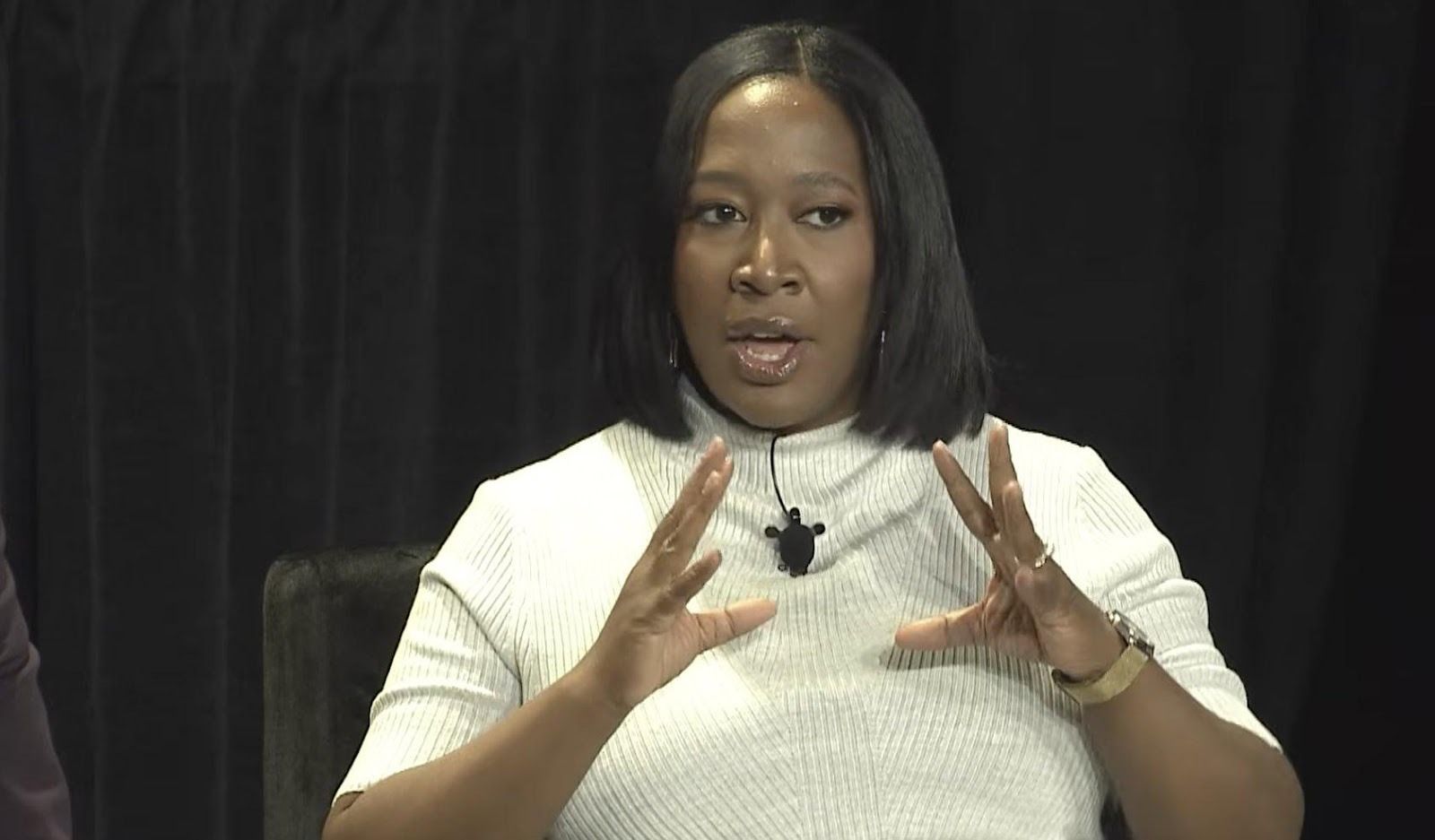
Jennifer Cunningham delivered the session's most forceful warning against single-revenue-stream dependency.
"To rely on a single revenue stream in this media ecosystem is, at best, naive and, at worst, foolish."
Newsweek is aggressively building multiple revenue channels including subscriptions, events, rankings, and a healthcare B2B vertical. Simultaneously, its core brand strategy positions Newsweek as a 'fact-based, independent, centrist media organization,' appealing to readers exhausted by political tribalism. Cunningham noted growing success in multimedia, including the launch of 'News Makers' — a program featuring deep-dive interviews with CEOs, world leaders, and A-list celebrities, combining magazine cover stories with QR-linked video interviews.
The New York Times: Subscription Bundle Strategy and 13 Million Subscribers
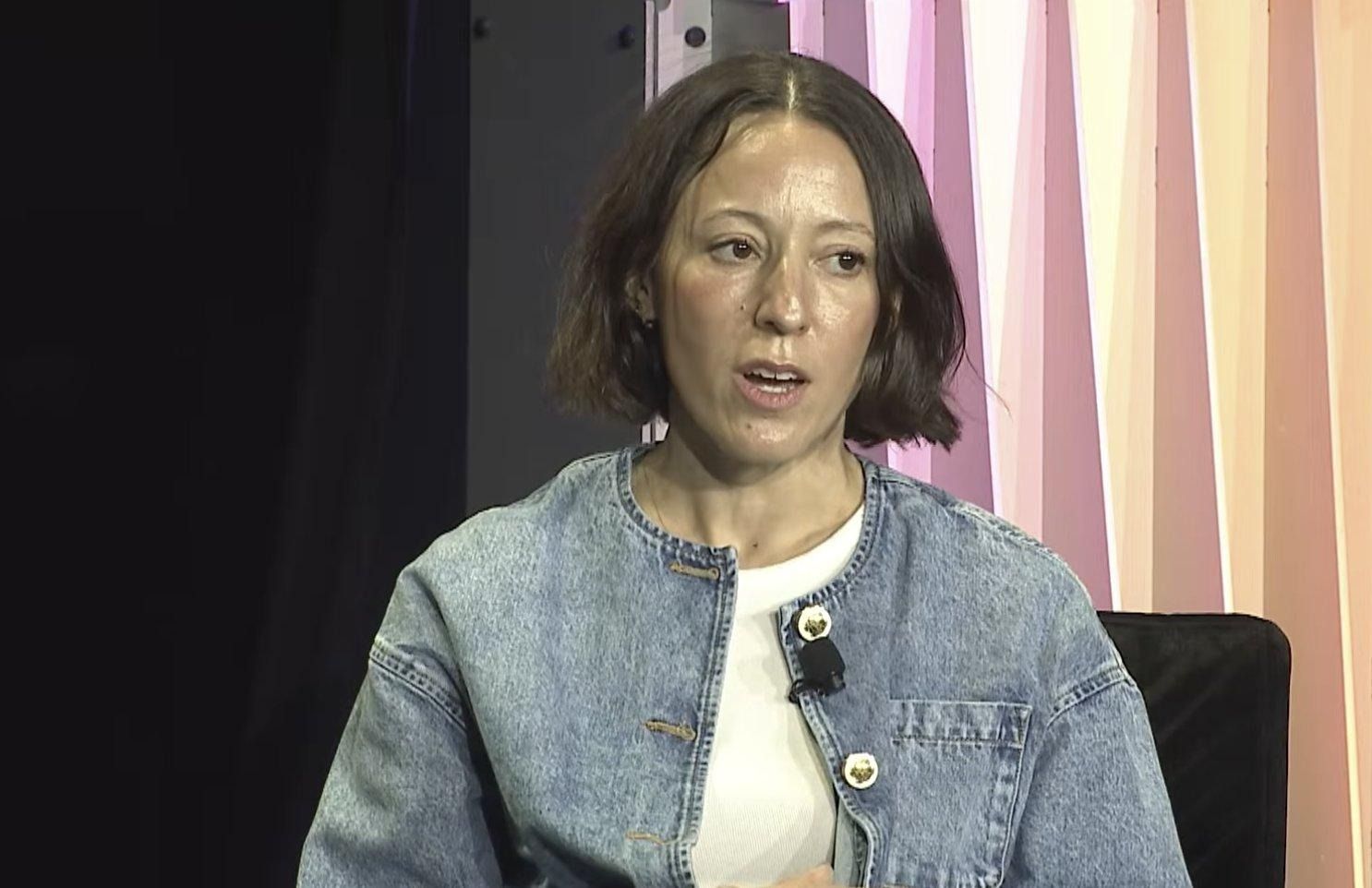
Rebecca Grossman-Cohen summarized the NYT's evolution over 15 years around three principles.
The result: a record-high 13 million subscribers, 150 million registered members, and 50–100 million weekly platform visitors. Games like Wordle and Connections, the Cooking app, sports coverage, and the Wirecutter shopping guide create powerful daily habits that bring readers back to the platform. In advertising, NYT introduced ads in Crossplay (a new multiplayer Scrabble-style game), launched a vertical video feed ('Watch Tab'), deployed the AI-powered targeting solution 'Brand Match,' and conducted its first product placement with McCormick in the Cooking section. NYT's digital ad revenue grew 20% in 2025.
The moderator noted that Gen Z is the audience everyone wants but no one has cracked. Panelists offered a consistent direction: Gen Z no longer enters news sites through the 'front door.'
The Guardian has long engaged Gen Z via Instagram and plans to deepen that relationship through the YouTube-centered 'Stateside' video podcast. Reed emphasized that Gen Z is far more actively engaged with news than commonly assumed and is a generation with strong social consciousness.
Newsweek's Cunningham described social media platforms like TikTok and Instagram as Gen Z's 'on-ramp' — the first point of contact. The goal is designing a funnel: social content exposure leads to long-form journalism, which leads to engagement with journalists and editors, and ultimately to subscription conversion.
Grossman-Cohen revealed that approximately 30% of NYT's global audience is already Gen Z — an encouraging figure. She emphasized that rather than targeting specific demographics, the key is delivering content in formats that resonate. The strategy of building relationships off-platform through Instagram, TikTok, and YouTube, then bringing audiences back to the platform, is shared by all three organizations.
AI dominated the conversation as journalism's hottest issue. Panelists shared candid perspectives on how they're deploying AI internally and how they're responding to LLM companies using their content without authorization.
Newsweek: Sending Reporters into the Field with 'Martin'
Cunningham described Newsweek's enthusiastic embrace of AI as 'a bicycle for the mind.' Newsweek operates an internal AI tool suite called 'Martin,' named after founder Jay Thomas Martin. The system frees reporters from administrative tasks like CMS uploads and photo selection so they can focus on field reporting and breaking scoops.
"Nobody wants to talk to my AI agent or digital twin. They want to talk to me, to our reporters. AI should be the tool that sends journalists into the field."
On unauthorized LLM training, Newsweek's position is that a compromise between news organizations and tech companies is achievable. Newsweek has struck deals with some LLM providers but acknowledges it isn't enough yet.
The Guardian: Trusted Journalism Grows More Valuable in the AI Era
Reed argued that 'AI slop' — AI-generated misinformation flooding the internet — paradoxically increases the value of verified journalistic brands. The Guardian maintains an absolute principle: no content published without human review. Every article is reported and written by human journalists.
"In an age of AI proliferation, trusted journalism brands become more precious and important. Without clear lines, the already-eroded trust in media could collapse further."
The New York Times: Parallel Pursuit of AI Innovation and Copyright Protection
Grossman-Cohen described NYT's dual approach: aggressive AI innovation alongside firm IP protection. The newsroom's AI infrastructure has compressed data-intensive investigative stories from a year to a month — or even a week. All content still requires human review.
On copyright, NYT is uncompromising. The organization maintains that AI platforms never had permission to use its content and is pursuing both litigation and negotiated agreements simultaneously.
"We do not believe these platforms ever had permission to use our content. We will continue to pursue both lawsuits and deals as needed."
The most urgent discussion in the session focused on threats to press freedom. The panel discussed responses to President Trump's public attacks on female journalists — calling them 'ugly,' 'rotten,' 'stupid and nasty,' and 'sleaze' — and the FCC commissioner's threats to revoke broadcast licenses.
The Guardian: Transparency and Journalistic Due Diligence Together
Reed explained that even when the administration responds to press inquiries with responses filled with insults directed at reporters, The Guardian's principle is to include those responses in the article — as a matter of transparency so readers can see the environment in which journalists are operating.
"We always try to hear both sides. We are clear about our progressive values, but we conduct rigorous journalistic due diligence. Readers need to see that we are reporting fairly."
Newsweek: No Exceptions to Fact-Based Reporting — Not Even for the President
Cunningham was direct: 'We cover the Trump administration the same way we covered the Biden administration. We are not fawning, and we are not reflexively adversarial.' Journalism's mission is to report facts and deliver them to readers — accountable to the audience, not to sources or power. She mentioned reporters receiving death threats on social media, underscoring the need for institutional protection and support.
The New York Times: 'Without Fear or Favor' — and Active Defense
Grossman-Cohen reaffirmed NYT's longstanding principle of reporting 'without fear or favor' while noting a significant shift: unlike in the past, NYT now actively and publicly defends its journalists at the corporate level. Physical safety threats have become real — people showing up at journalists' and editors' homes.
"In the past we would have said, let's stay out of it and let the journalism speak for itself. We can't do that anymore. We have to go out and defend our reporters openly and actively."
NYT filed suit against the Defense Department — an unprecedented action. Reed pointed to Washington Post's withdrawal of its Harris endorsement and the CBS crisis as evidence that the intimidation campaign is already altering media owners' behavior. On FCC Commissioner Brendan Carr's threats to revoke broadcast licenses, she called it 'a truly chilling fact that broadcasters are being threatened simply for reporting what is actually happening in the Middle East.'
As major events unfolded — the Washington Post's mass layoffs, CBS's leadership turmoil, CNN's uncertain ownership change — the panel examined why ownership structure is decisive.
The Guardian: 200 Years of the Scott Trust
Reed emphasized that The Guardian is governed not by a profit-seeking billionaire owner, but by the Scott Trust — a 200-year-old structure whose sole mission is to preserve The Guardian's journalism in perpetuity.
"Who owns a news organization determines the direction of its journalism. This has never been clearer than right now. Independent ownership structure is absolutely critical."
The New York Times: The Sulzberger Family's 175-Year Investment Philosophy
Grossman-Cohen shared a historical example from World War II: while other papers shrunk their journalism to maintain ad revenue, NYT cut advertising and committed to war coverage. The result was a subscriber base that dramatically outpaced competitors after the war. 'Investing in journalism is investing in the product — and that creates a virtuous circle' remains the family's 175-year management philosophy.
Newsweek: Revenue Diversification as the Foundation of Editorial Independence
Cunningham stressed that Newsweek's aggressive revenue diversification isn't purely a business strategy — its real purpose is creating an environment where journalists can focus entirely on reporting without financial anxiety.
"My job is to make sure reporters and editors are not worried about revenue or layoffs. That is my responsibility, and I take it seriously."
The latter part of the session offered frank diagnoses of the industry's structural challenges.
17,000 Jobs Eliminated in 2025 Alone
Cunningham cited the Reuters Institute 2025 report: 17,000 journalism positions were eliminated in a single year, making journalism one of the most distressed white-collar industries in the United States.
"As national newsrooms shrink and local news declines, the ultimate losers are readers — the people losing access to information about what is happening in their communities, their states, their countries. This is an emergency."
The Vicious Cycle: Local News Collapse and Foreign Coverage Retreat
The collapse of local news threatens democracy directly. Reed criticized the Washington Post for eliminating all foreign correspondents: 'You lay off all your foreign correspondents and then a war breaks out in the Middle East.' Most news organizations have cut foreign coverage for cost reasons, weakening American citizens' understanding of a world in which the US remains the central actor. The pipeline for training future journalists — built through local newsrooms — is disappearing.
Prescription: AI and Data Journalism to Rebuild Local News
Cunningham suggested local newsrooms can leverage free or low-cost AI data analysis tools to compete with larger, better-resourced organizations. Grossman-Cohen offered an optimistic counterpoint:
"AI answer engines, if they want to be the answer engine for everyone everywhere, are going to need information they simply can't get without local reporting. Nobody else is covering what's happening in Paterson, New Jersey."
The session's final question was existential: 'If the public stops believing journalists when they present evidence, what mechanism still exists to hold power accountable?' All three panelists agreed: a world without journalism is a very scary one.
Explain the Process of Independent Journalism
Grossman-Cohen noted that NYT is now more actively explaining to the public how independent journalism is made — more so than ever before.
"Independence is not a point of view — it's a process. However a journalist approaches a story, it goes through multiple editors and checks to scrub bias. Making that process transparent to the public is the first step toward restoring trust."
Two-Way Dialogue and Transparent Corrections
Cunningham argued journalism must move away from a top-down communication style and engage readers in genuine two-way dialogue. Transparent disclosure of AI use, swift and prominent corrections, and treating readers as equal partners are the core of rebuilding trust.
The Guardian's Reader's Editor
Reed highlighted The Guardian's Reader's Editor — an office independent from the newsroom that investigates reader complaints and determines the language of corrections when necessary.
"Trust is everything. And not every news organization has an independent reader representative. That is a very important difference."
This SXSW Featured Session delivers five essential messages for Korean media and content industry stakeholders.
① Independent Ownership Structure Determines Content Credibility
The Guardian's Scott Trust and the NYT's Sulzberger family demonstrate that ownership structures prioritizing editorial independence over short-term profit are the foundation of long-term survival. Korea's media industry needs a serious conversation about designing ownership models that resist capture by large conglomerate capital or political interests. Only within such structures do strategic and impact investors have reason to commit long-term capital to trusted journalism IP.
② Revenue Diversification Is a Survival Requirement, Not an Option
NYT's subscription bundle strategy and Newsweek's events, rankings, and B2B model both point toward the same imperative: reduce single-platform dependency and build direct reader relationships. Diversifying revenue across subscriptions, events, licensing, and advertising is the immediate challenge for K-media.
③ AI Sends Reporters into the Field — It Doesn't Replace Them
Korean news organizations must reframe AI from cost-cutting tool to capability-enhancing instrument. AP, Reuters, and local broadcasters have already deployed AI for automatic transcription and summarization of meetings, briefings, and interviews, freeing reporters from manual transcription to focus on sourcing and reporting. Simultaneously, the industry must develop a coordinated response strategy to the unauthorized use of Korean-language content in LLM training.
④ Bring Gen Z in Through Social Media, Then Convert to Your Own Platform
Research shows that roughly 40% of 18–24 year-olds use social and video platforms as their primary news source — most encountering journalism first through TikTok or Instagram feeds rather than direct website visits. Korean media must treat these platforms as the top of a funnel, not a final destination. Short videos and card-format news capture attention, leading to follows, newsletter sign-ups, app installs, and paid subscriptions via a 'social on-ramp → direct relationship conversion' funnel. The Washington Post, NYT, and BBC are already running experiments connecting TikTok explainer videos to free newsletter sign-ups and trial subscriptions through link-in-bio landing pages.
⑤ Journalism Is the Infrastructure of Democracy
As generative AI and deepfakes flood the information environment, the ability to distinguish real from fabricated becomes harder — making trusted news brands increasingly central to democratic health. Research consistently confirms that trust recovers when organizations openly publish their AI principles, explain their reporting and verification processes, and issue swift, prominent corrections. Korean media must develop, at an industry level, a trust-restoration strategy that includes publishing independent journalism processes, strengthening correction culture, and creating media literacy programs — treating credible journalism as essential democratic infrastructure in the AI-deepfake era.
This report was produced by K-EnterTech Hub based on coverage of the SXSW 2026 Featured Session 'The Future of News' (March 16, 2026, Austin, Texas).
Reported & Edited by: K-EnterTech Hub Editorial Team



![[SXSW2026]에이미 웹 트렌드 리포트(Convergence
Outlook 2026)](https://cdn.media.bluedot.so/bluedot.kentertechhub/2026/03/kty3s8_202603152312.png)



![[보고서]전통 언론사의 크리에이터 전략 대전환](https://cdn.media.bluedot.so/bluedot.kentertechhub/2026/02/0nwc9z_202602100212.png)