[Samseog Ko's Insight]SXSW 2026 and the Future of K-Content
by
2026년 3월 16일
![[Samseog Ko's Insight]SXSW 2026 and the Future of K-Content](https://cdn.media.bluedot.so/bluedot.kentertechhub/2026/03/w7ml0m_202603160702.png)
key takeaways
Recently, Walt Disney, the world's largest content company, announced a licensing agreement with OpenAI that will allow the use of approximately 200 Disney characters on OpenAI's platform for artificial intelligence (AI) video and image production over the next three years.
Through this contract, both companies announced that AI content utilizing characters from Disney, Marvel, Pixar Studios works, and the Star Wars series can now be produced and shared on OpenAI's video generation platform 'Sora' and ChatGPT.
Regarding this decision, Bob Iger, Disney's CEO, stated, "We want to be part of what [OpenAI's] Sam Altman and his team are creating. We believe this is a good investment for Disney." He explained the rationale behind the decision: "We thought that if certain changes are ultimately going to happen, including the disruption of existing business models, we should ride that wave (rather than be destroyed by that technology)."
As this case demonstrates, with generative AI reshaping the entire content industry, the important question for broadcasters is no longer "Should we use AI or not?" The key issues now are: "Can broadcasters maintain their leadership in the content industry even in the AI era?" and "How can we create a structure that maintains this leadership?"
The strategic partnership between Disney and OpenAI has raised these questions head-on. This collaboration is not simply about technology adoption or application, but rather a kind of experiment to reorganize the market power structure between companies holding content IP and general-purpose AI platforms.
As is well known, Disney is a content giant possessing world-class story IP and character assets. OpenAI is a platform company representing general-purpose generative AI technology.
The intersection of these two companies is clear. Disney seeks to maximize efficiency across the entire production, post-production, and distribution process through AI, while OpenAI aims to secure high-quality IP, safe training data, and credibility in the entertainment sector. However, the real message this collaboration conveys is different: it's a warning that the moment content companies passively accept general-purpose AI, leadership will shift to AI platforms.
This is where the concept that the broadcasting industry, especially terrestrial broadcasters, should pay attention to comes in: Vertical AI. Vertical AI does not mean simply using general-purpose generative AI, but rather refers to a 'specialized AI system' designed with the premise of the broadcasting industry's unique business structure, content formats, public responsibilities, and rights framework.
If the strategic partnership between Disney and OpenAI is a typical example of 'platform-centered AI expansion,' then the solution broadcasters need is the opposite: a 'content-centered AI internalization strategy' for broadcasting.
First, the starting point for vertical AI in broadcasting is the asset-ization of video data. Broadcast archive footage, scripts, and edited versions accumulated over decades are themselves world-class multimodal data.
If this is not structured and asset-ized by story, scene and character, context and rights units, broadcasters will inevitably be relegated to entities that merely supply data to external AI. This is why Disney insisted on IP management and control, and subscriber information protection as prerequisites for collaboration.
Second, the construction of multimodal AI engines. AI specialized for broadcasting cannot be replaced by text-centered LLMs. They are completely different in nature.
Models that understand voice (STT/TTS), video comprehension, real-time processing, and genre-specific grammar must be combined. This is an area that broadcasters can design and build much better than general-purpose AI platforms. In other words, the entities that best understand broadcasting and content are still the broadcasters themselves.
Third, integration of production and news workflows. Disney's core purpose in utilizing AI is not 'replacing creators' but 'maximizing creative efficiency.' In broadcasting too, AI must naturally integrate into the planning, editing, subtitling, clipping, and review processes. It is meaningless unless we create AI models that are used in actual production and news sites, not in separate laboratories.
Finally, building trust, responsibility, and ethics layers. The area where Disney was most cautious in its strategic partnership with OpenAI was risk management surrounding brand damage and misuse. Terrestrial broadcasting must be even more stringent.
In news and current affairs, AI must necessarily operate under a final approval structure by 'humans,' and the use of AI data or results where source verification or validation is impossible must be extremely careful. One more point: in the AI era, the negotiating power of content companies like terrestrial broadcasters lies not in technology but in IP and rights management capabilities. If broadcasters fail to build their own vertical AI, it will be difficult to expect legitimate rights protection and fair compensation in future AI learning, secondary utilization, and global distribution processes.
The message that the strategic partnership between Disney and OpenAI conveys to our TV industry is clear. Now the key is not 'introducing' AI to production sites, but what kind of 'relationship' broadcasters will establish with AI and AI platform companies. For terrestrial broadcasters to remain public goods even in the AI era, we must not forget that the question is not simply using general-purpose AI platforms, but 'whether they can build AI systems optimized for broadcasting.'
About the Author
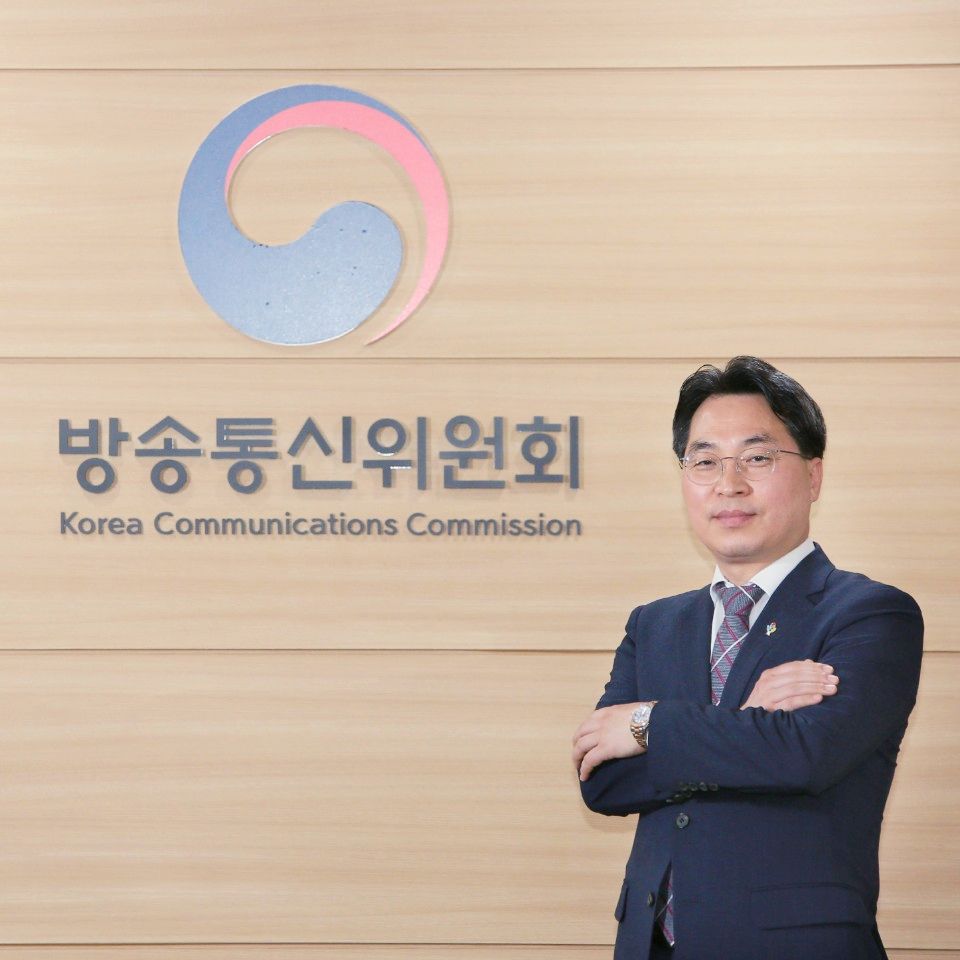
Dr. Sam-Seog Ko is currently a Distinguished Professor at the College of Advanced Convergence Engineering, Dongguk University, and serves as a member of National Artificial Intelligence Strategy Committee. He holds a Ph.D. in Communication (specializing in Digital Policy) from Chung-Ang University Graduate School and served as a Visiting Scholar at Peking University(北京大学) in China.
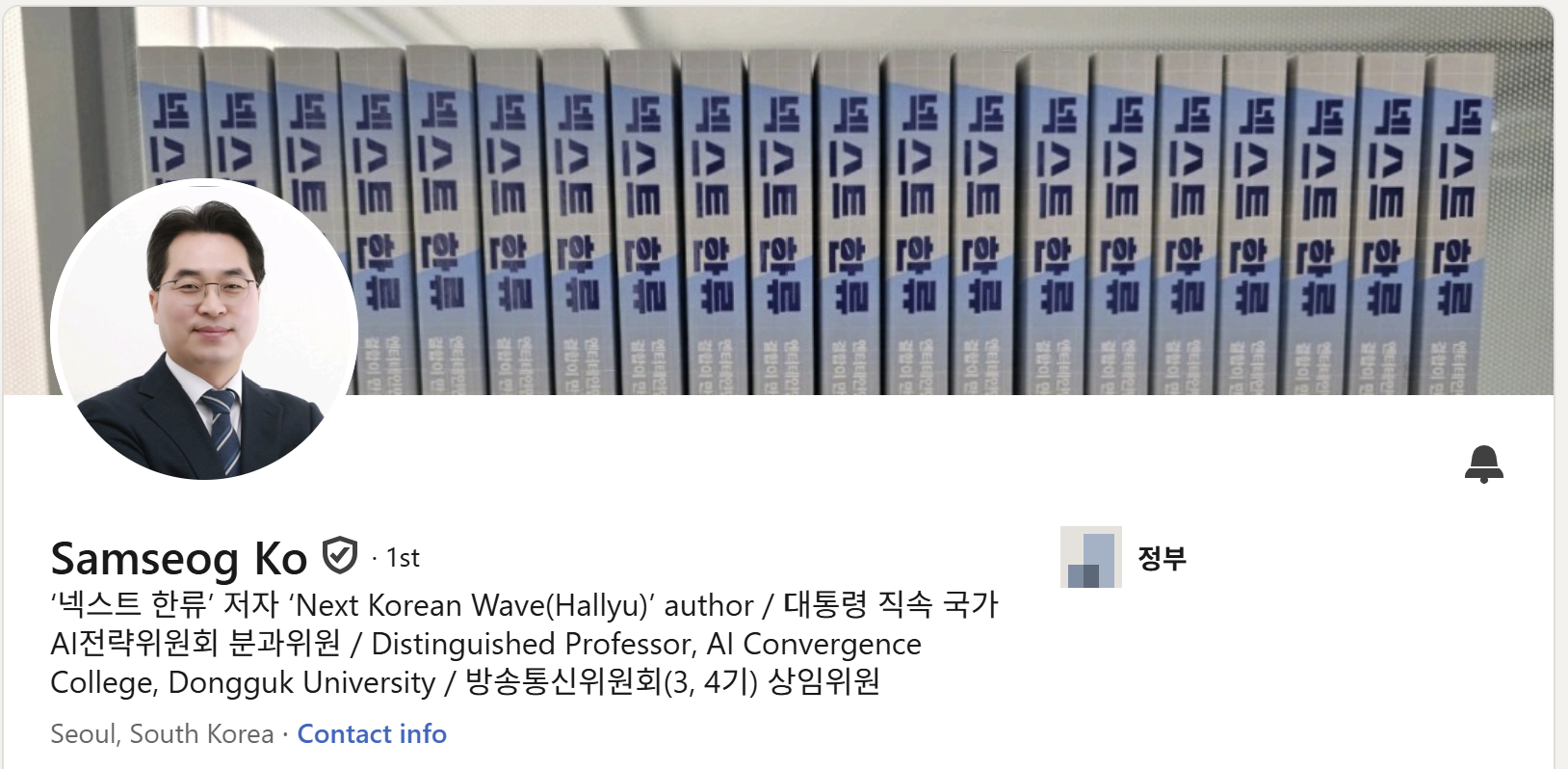
Over the past 30 years, he has significantly contributed to establishing the Republic of Korea as a cultural powerhouse and IT powerhouse through policy and administration, research, and lectures in the fields of content (Korean Wave), media, and IT in government and academia. He recently published <Next Hallyu (2025)> and published <The 5G Hyper-Connected Society: A Completely New Future (2019)> in Korea and China (2021).
![[Samseog Ko's Insight]SXSW 2026 and the Ascent of Entertainment Technology](https://cdn.media.bluedot.so/bluedot.kentertechhub/2026/03/p3scrb_202603091153.png)
![[Samseog Ko's Insight]Why "Coevolution"? — From Content Export to Ecosystem Building](https://cdn.media.bluedot.so/bluedot.kentertechhub/2026/02/rhl2gg_202602230602.png)
![[Samseog Ko's Insight]Co-Evolution, Not Competition: A Strategy for Korea-Malaysia Content Industry Partnership](https://cdn.media.bluedot.so/bluedot.kentertechhub/2026/02/1fzdnf_202602170324.jpeg)
![[SXSW2026]에이미 웹 트렌드 리포트(Convergence
Outlook 2026)](https://cdn.media.bluedot.so/bluedot.kentertechhub/2026/03/kty3s8_202603152312.png)
![[보고서]전통 언론사의 크리에이터 전략 대전환](https://cdn.media.bluedot.so/bluedot.kentertechhub/2026/02/0nwc9z_202602100212.png)