
Executive editor Matt Murray says break-even is within reach and 2027 should be the paper's best year in seven, after annual losses near $100 million and a one-third staff cut
After losing about $100 million a year and cutting a third of its staff, The Washington Post is near break-even. Editor Matt Murray expects 2027 to be its best year in seven; direct ad sales grew fastest since 2021 and programmatic rose 48%. Next: owning Washington and writer-led audio.

The Washington Post is closing in on break-even. Executive editor Matt Murray told ADWEEK at Web Summit in Lisbon that the paper is "within striking distance of break-even." He expects 2027 to be its best year in seven.
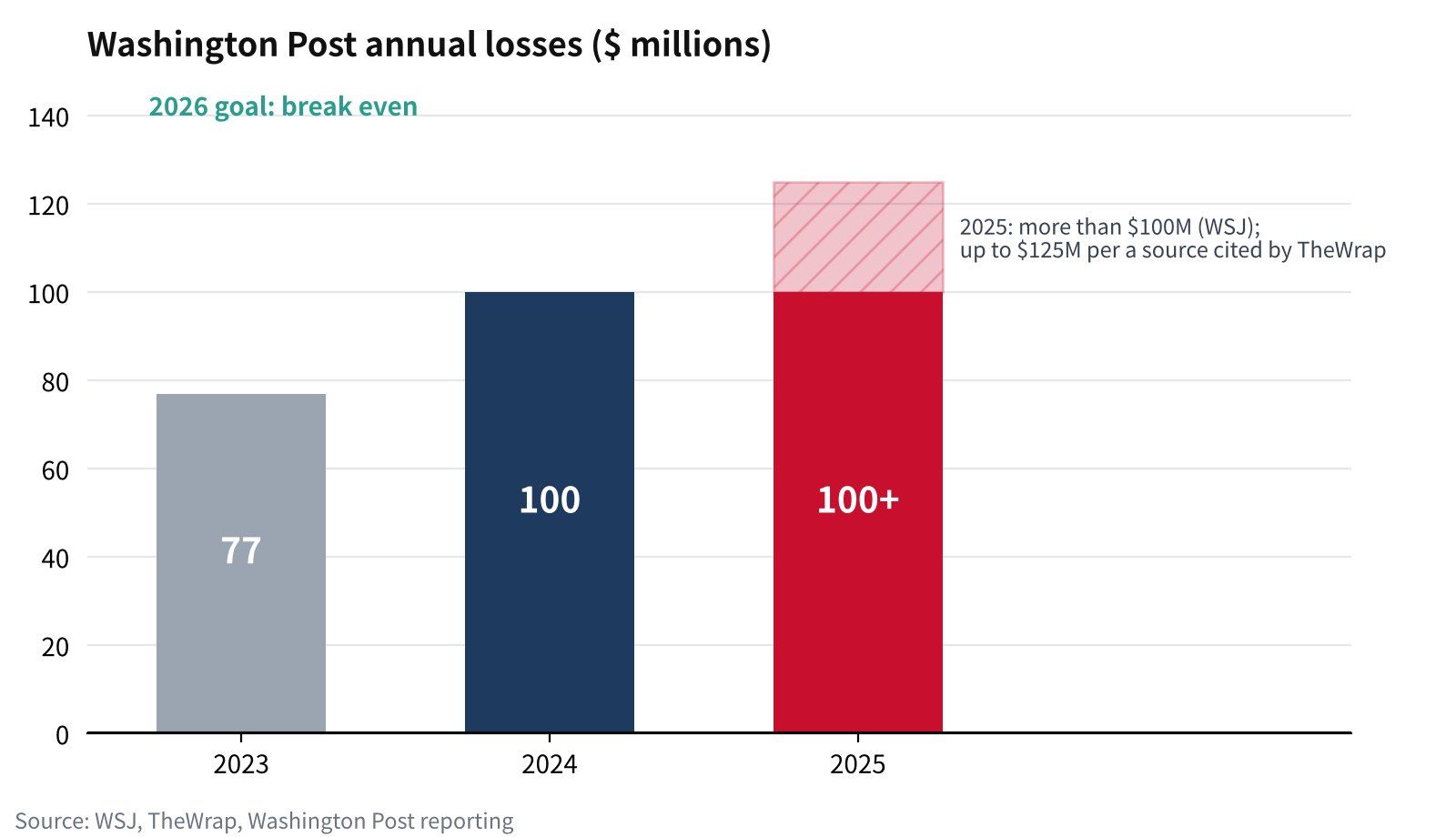
The Post, one of America's flagship newspapers, slipped into the red in 2022. It reportedly lost $77 million in 2023 and $100 million in 2024, and The Wall Street Journal reported a loss of more than $100 million for 2025. Murray said the company is private and does not disclose figures, but acknowledged losses of "hundreds and hundreds of millions of dollars."
In response, on Feb. 4 the company cut about a third of its workforce across departments. It shut the sports department and the books section and laid off its entire Middle East staff; more than 300 journalists lost their jobs. Three days later publisher and chief executive Will Lewis resigned. Chief financial officer Jeff D'Onofrio took over on an acting basis and was named publisher and CEO permanently in September.
Advertising moved first once costs came down. Direct ad sales in the third quarter had their strongest year-over-year growth since 2021, and programmatic revenue was up 48% as of September, a company spokesperson said.
The newsroom is hiring again, bringing in James Politi from the Financial Times, Nancy Cook from Bloomberg and Ian Ward from Politico. Murray's next phase of growth rests on dominance of Washington coverage and on franchises built around individual writers across newsletters and podcasts.
Losses of $77 million in 2023 and over $100 million in 2025; staff down from 2,500 to 1,300
According to the Journal, the Post's expenses exceeded revenue every year from 2022 through 2025. At a staff town hall, management also told employees that story output had fallen 42% since 2020. TheWrap, citing a source, put the 2025 loss as high as $125 million.
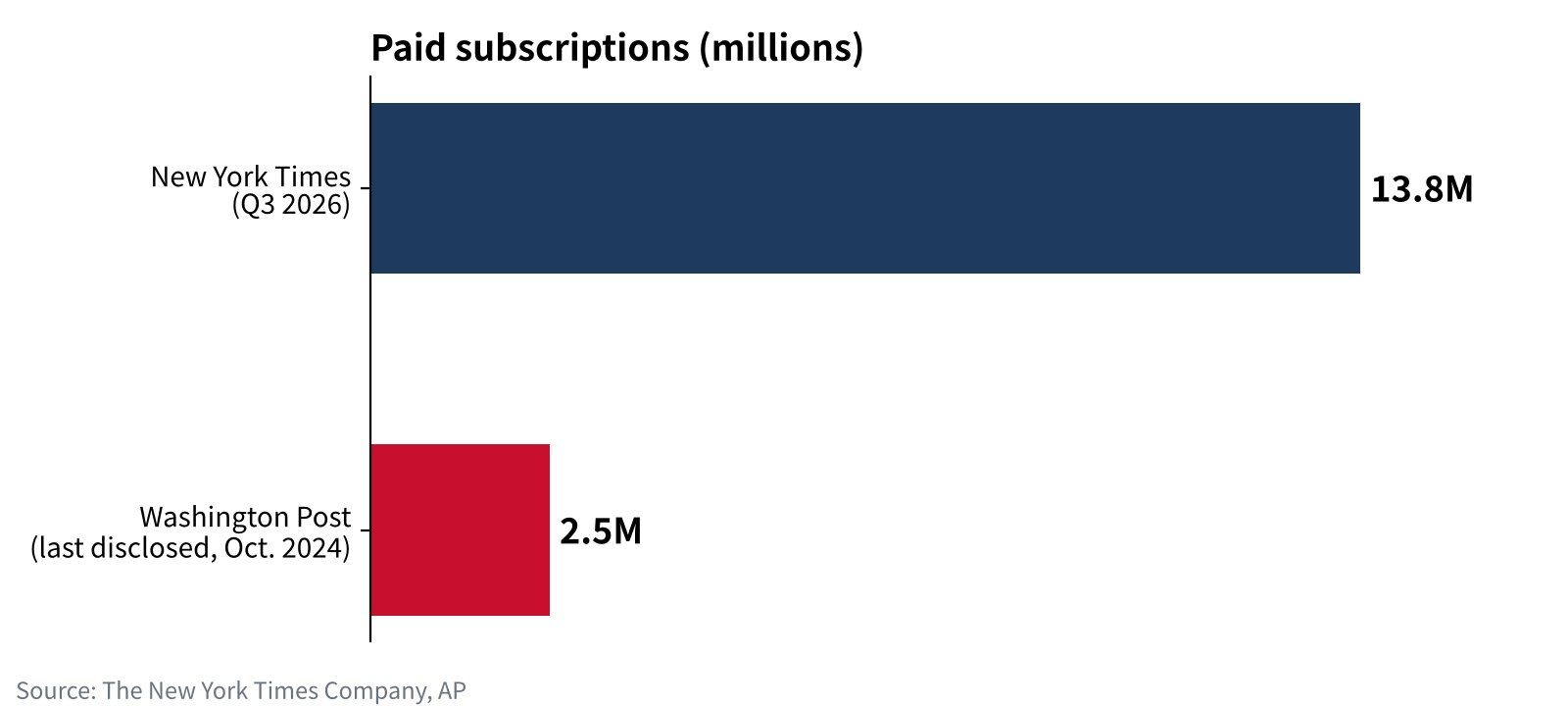
Subscriber defections deepened the losses. After owner Jeff Bezos blocked a presidential endorsement in October 2024, more than 250,000 digital subscribers cancelled, about 10% of the digital base. NPR reported that about 75,000 more left in early 2025 after the opinion section was refocused on personal liberties and free markets. The last known total, from October 2024, was 2.5 million.
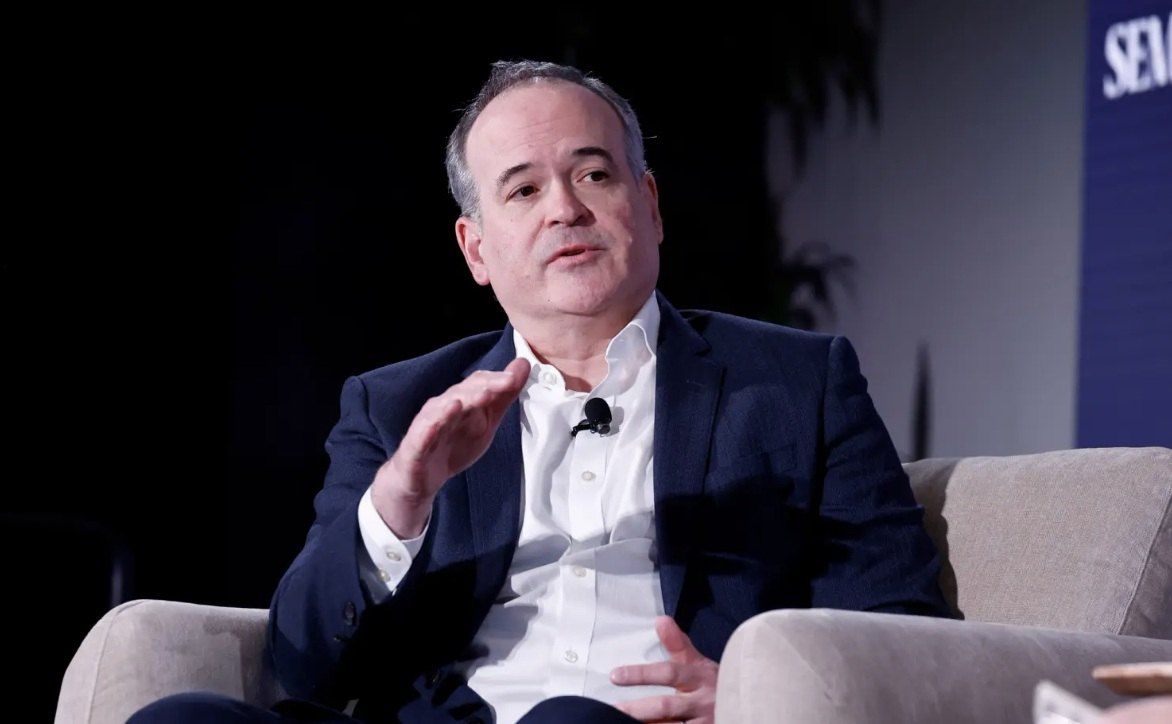
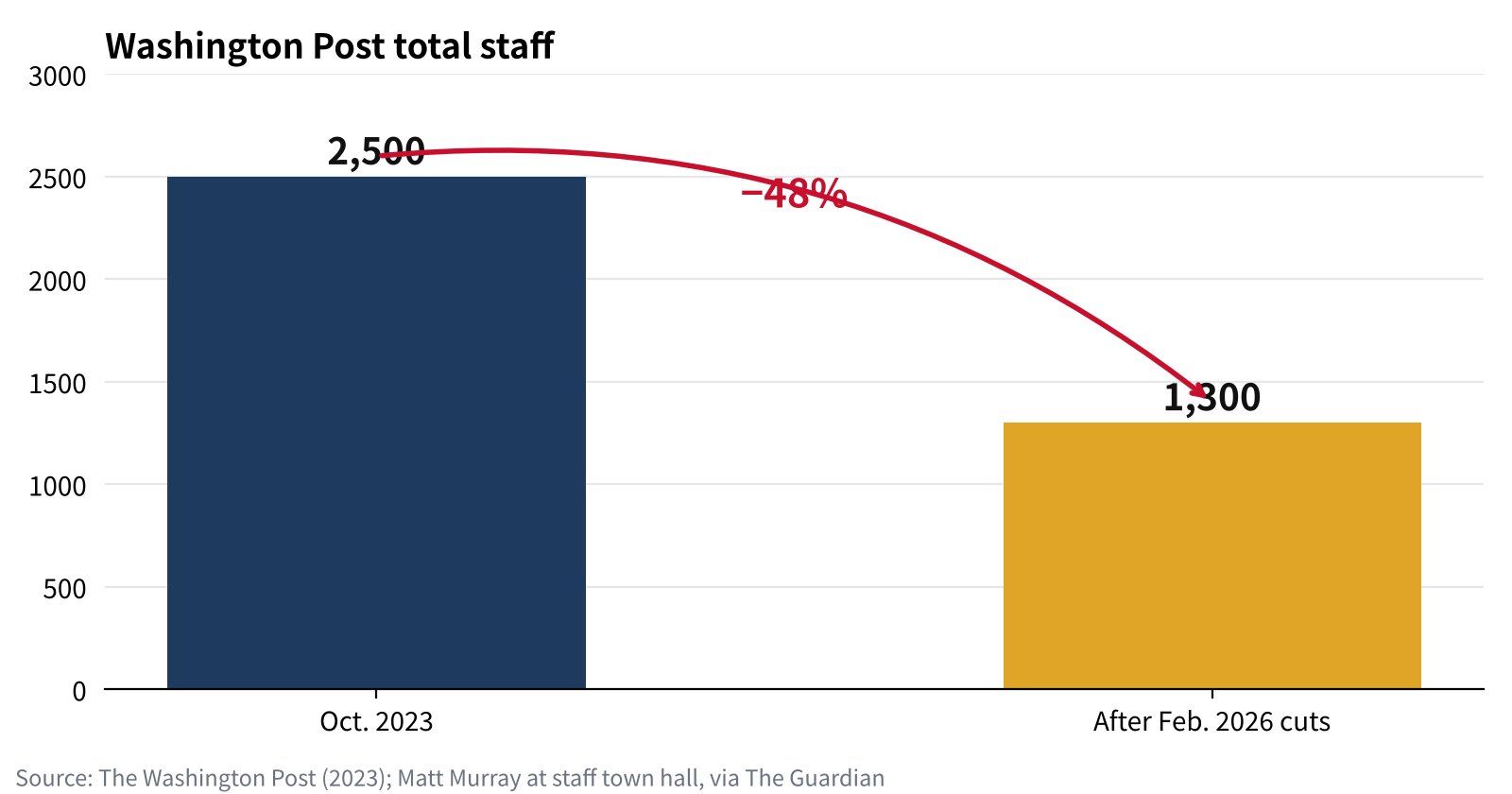
Weeks after the February cuts, Murray told a Semafor audience that the paper was on a trajectory to break even, without giving a date. He added that the Post does not have to be "a gigantic profit center." Fox News reported that Murray told a staff town hall that roughly 1,300 employees remained. The company had about 2,500 employees in October 2023.
Direct ad sales post best growth since 2021; programmatic up 48%
The company says it has sold more than 300,000 individual subscriptions so far this year and that total audience reach rose 20% year over year in August. It cited several six- and seven-figure partnership contracts without naming amounts.
Similarweb, by contrast, put website visits down 17% from a year earlier at 53.7 million. The New York Times reported more than 60,000 cancellations after the February cuts, a figure the Post disputed without offering its own.

The Post named D'Onofrio permanent publisher and CEO in September. A former Tumblr chief executive and Raptive CFO, he joined the Post as CFO in June 2025. On his first day as acting CEO in February he told staff that "customer data will drive our decisions." Murray described him as a calm, low-drama executive focused on data and fundamentals.
D'Onofrio knows he is not a journalist and leans on the newsroom, Murray said, and the two have not clashed. In October the Post hired former NBC News and Yahoo executive Alex Wallace as chief operating officer, effective Oct. 19.
Murray said that when he arrived two and a half years ago, too much of the newsroom was still oriented toward print and the paper lacked good audience data. The foundational work ran deeper than outsiders realized.
Daily podcast paused, then revived; Carolyn Hax and Michelle Singletary lead a host-driven slate
The February cuts reached audio too: the Post suspended its daily podcast, Post Reports, because costs outran revenue, Murray said. It can now sell advertising itself, including through a partnership with Acast, and is bringing back a version of the daily show.
The new shows start from writers who already have loyal followings. Advice columnist Carolyn Hax, whose podcast the company discussed for years, launched one this year and it is growing quickly; personal-finance columnist Michelle Singletary has one too. Murray said at least six people at the paper could fill the same mix of newsletter, podcast and writing.
Ballroom, Kennedy Center, monuments: the push to own post-Trump Washington
"The Post has got to be about Washington," Murray said, conceding the paper had not been dominant enough at home in reach and comprehensiveness. He cited this year's coverage of the White House ballroom, the Kennedy Center and the monuments, and said election night this month went well.
The next target is Washington after President Donald Trump. The city has revolved around Trump for a decade and still does, Murray said, but last week's results showed millennials and Gen Z coming to the fore. With boomers receding, he wants those generations as the Post's news audience.
The Post is reviving its internal Ben Bradlee award and giving it to reporter Hannah Natanson. On Jan. 14 FBI agents searched her Virginia home in a probe of a government contractor accused of taking classified material, seizing a phone, two laptops and a Garmin watch; the Post said it was told that neither Natanson nor the paper was a target. The paper will also honor photojournalist Heidi Levine, who was attacked by Israeli settlers in the occupied West Bank last month.
The Times negotiates for Letterboxd at $330 million; the Post is still fixing its core
The New York Times Company is in exclusive talks to buy Letterboxd, the film-review social platform, for about $330 million, more than 20 times its projected earnings of about $15 million this year. The Times added 420,000 digital-only subscribers in the third quarter for 13.8 million paid subscribers, building on The Athletic, Wirecutter and Wordle.
Asked why the Post is not buying properties, Murray credited the Times for spending years reorganizing the company and its relationship with the newsroom. The Post, he said, spent that decade leaning on open-web wins such as Facebook partnerships and on a Trump bump that, by his account, lifted subscriptions from about 35,000 to 3 million.
What it means for Korean broadcasters and publishers: YouTube news use 49%, trust 30%
The Post's recovery formula was to cut costs, rebuild its ad-sales channels and actively grow fandoms around newsletters, podcasts and writers. Korean newspapers and broadcasters have reason to study it: because so much Korean news is consumed through portals and YouTube, they struggle to grow the share of advertising they sell directly.
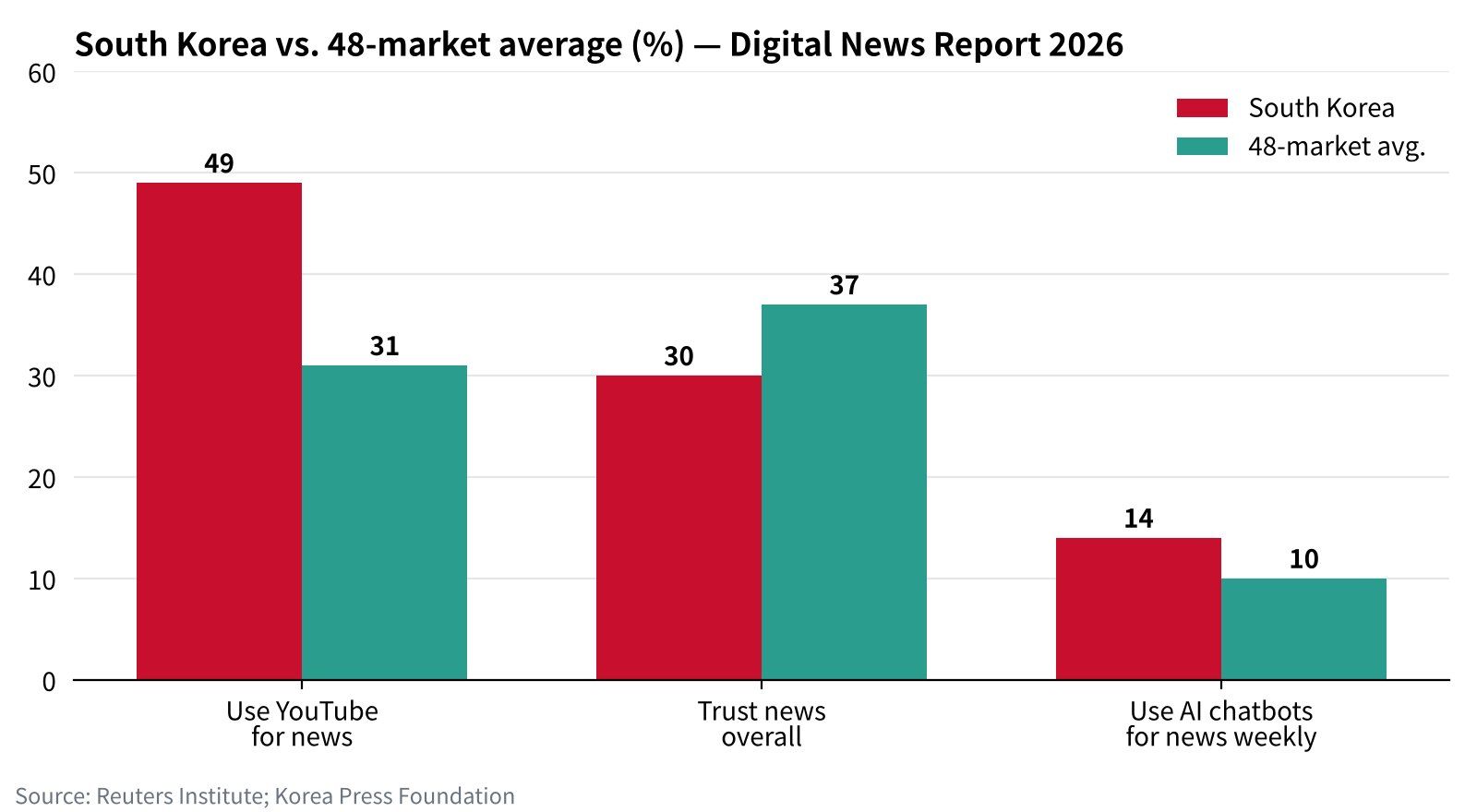
In the Reuters Institute's Digital News Report 2026, 61% of South Koreans named search engines and aggregators as a main gateway to news, second-highest of 48 markets. Some 49% use YouTube for news against a 31% average, and overall trust in news is 30% against 37%. News-creator usage, by contrast, stands at 64%.
The Post's move to sell podcast ads directly with an outside platform such as Acast mirrors the question facing Korean broadcasters that run YouTube channels: how to grow channel-level sponsorship and direct ad sales.
The Post's writer-led fandom franchises could work in Korea too. A 64% news-creator usage rate suggests many viewers follow people rather than outlets. Reporters, anchors and commentators at Korean broadcasters increasingly gather regular audiences through personal YouTube segments, which could be extended into newsletters and audio and sold as separate ad products.
Owning a core beat translates as well. Just as the Post is leaning on Washington, coverage of the National Assembly (국회), the presidential office and ministries is where Korean broadcasters can differentiate. With trust at 30%, though, scoops will convert into subscriptions and ad revenue only if credibility is managed alongside them.
AI is the other variable. Weekly use of AI chatbots for news in Korea doubled from 7% to 14% in a year, and Korea's 56% click-through rate from chatbots to original articles was the highest surveyed. ADWEEK reported the same week that the Associated Press signed a content licensing deal with Anthropic. Designing licensing revenue and referral traffic together is a near-term task for Korean outlets too.
Outlook: 'best year in seven' targeted for 2027, with new revenue streams to fund growth
In a memo to staff shortly after his permanent appointment, D'Onofrio said that to move past break-even into profit and reinvest in journalism, "we will build a modern media company with new revenue streams."
What those businesses are has not been spelled out, but Murray's interview points the way: deeper Washington political coverage; franchises that bundle newsletters, podcasts and articles around writers with large followings, such as Hax and Singletary; and audio ads sold directly with Acast. Third-quarter direct ad sales, up the most since 2021, and programmatic revenue, up 48% as of September, were offered as evidence for that plan.
Audience numbers remain the open question. The Post has not disclosed total subscribers since October 2024, and web visits are falling. Story output is sharply lower than in 2020, yet a smaller staff has to widen Washington coverage. Whether Murray's 'best year in seven' arrives depends on how quickly ad and franchise revenue builds on a cost base the layoffs have already cut.
The contrast with its rival is sharp. While the Times widens its bundle across games, cooking, reviews, sports and now a film community, the Post has chosen to win back its home beat before adding products. "In the long run, we probably need our version of that model, with the journalism at the center," Murray said. "But we're still getting the Post itself where it needs to be." In 2027, the year the Post marks its 150th anniversary, it will face its first test of whether a balance struck through cost cuts can turn into growth.