
This article is also available in 한국어 · 日本語
In brief CNN and E.W. Scripps told NAB Show New York that newsroom AI starts with real work problems and fast human review, not tools. CNN requires review that reaches the source in one click; Scripps, which cut 432 jobs this year, said rollouts fail without managing workflow change.
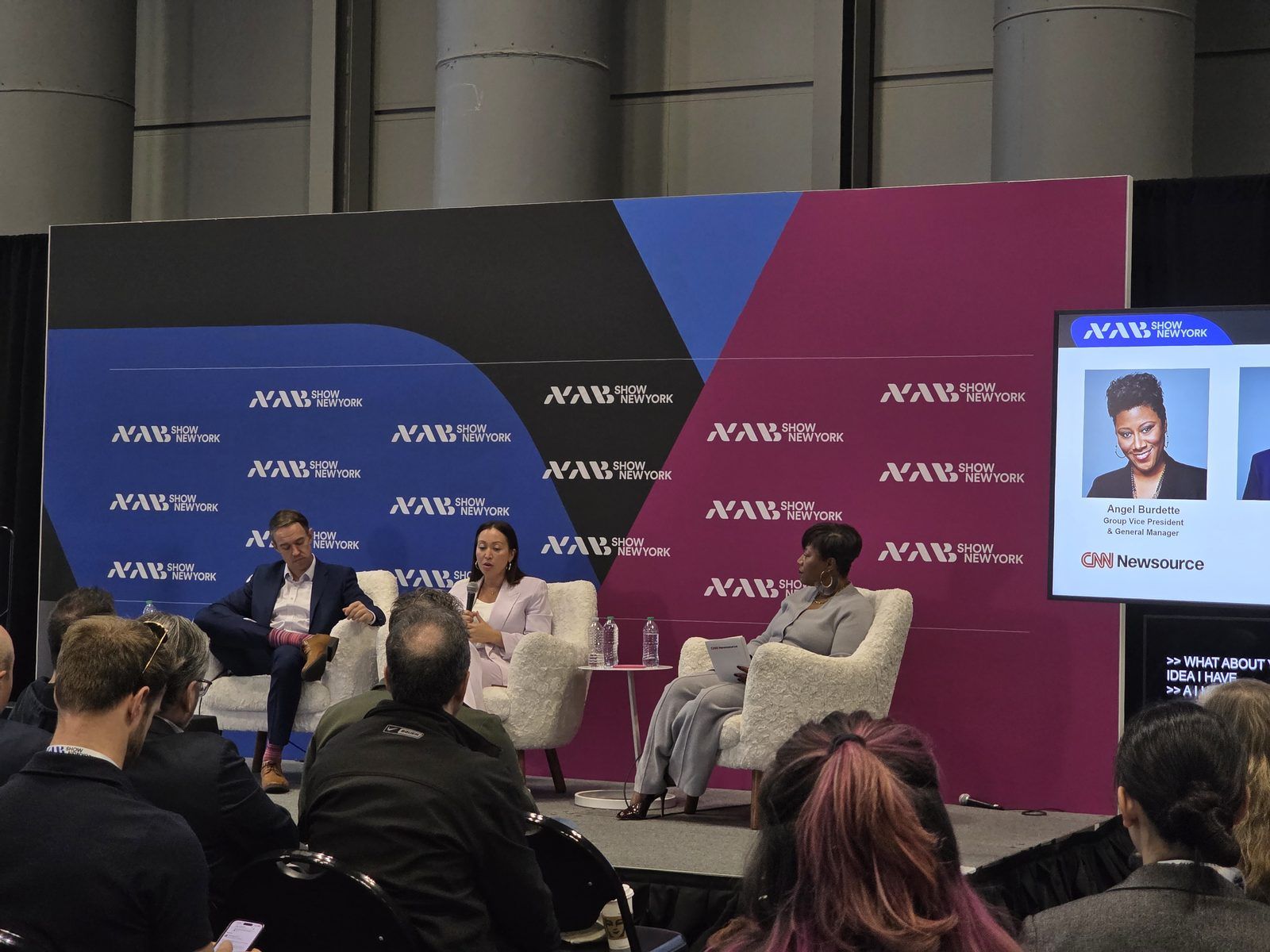
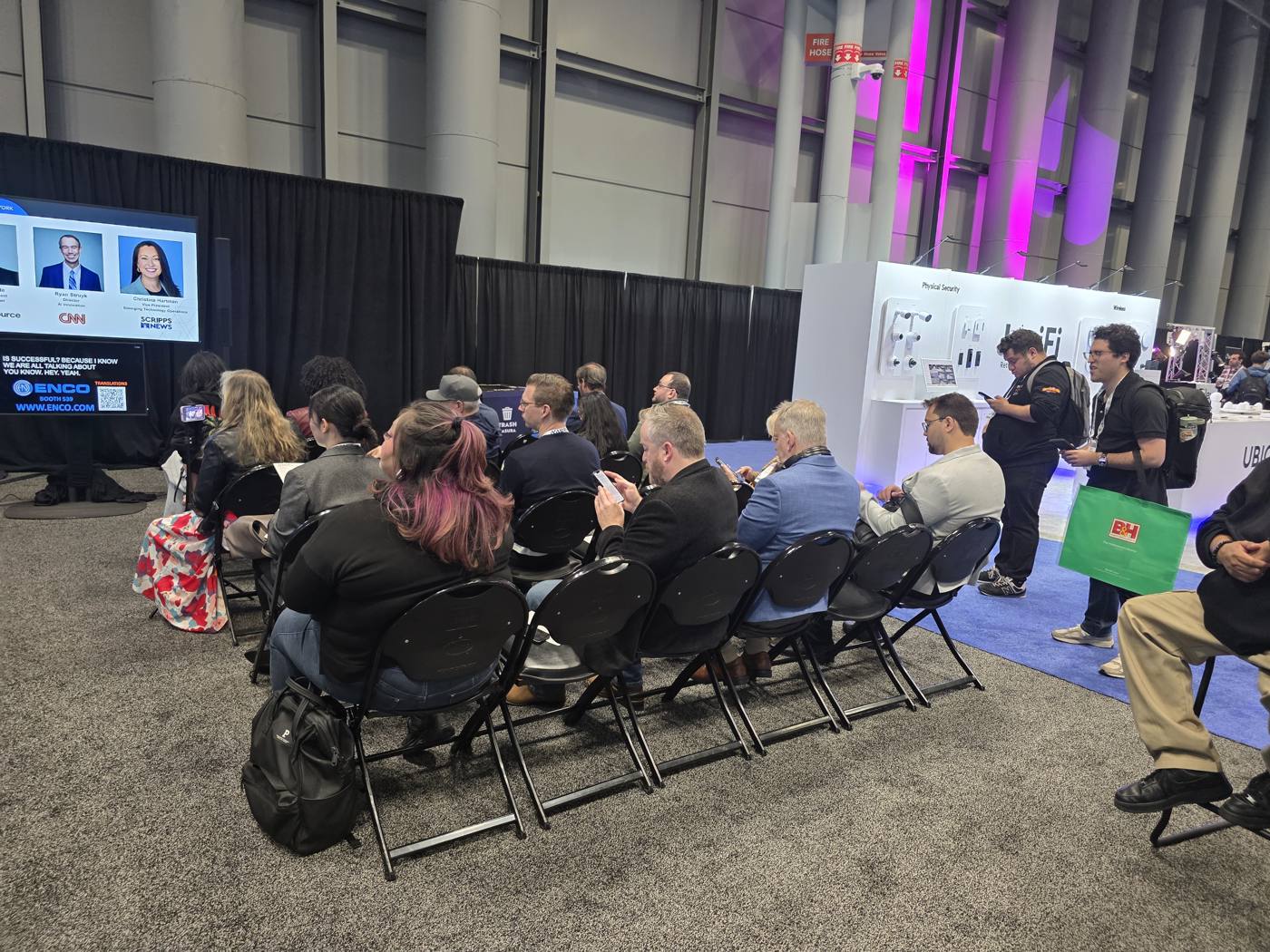
CNN and E.W. Scripps laid out how they put artificial intelligence to work in their newsrooms on Thursday, at the “AI in the Newsroom” session of NAB Show New York 2026 at the Javits Center. Ryan Struyk, CNN’s director of AI innovation, and Christina Hartman, vice president of emerging technology operations at Scripps, spoke on a panel moderated by Angel Burdette, group vice president and general manager of CNN Newsource.
Both executives put the same things first: the problem a journalist actually has, and a review process a human can complete quickly. Struyk said CNN designs AI tools so that a reporter checking the output lands on the original document line or the original recording. Hartman cautioned leaders against “just buying software and calling that transformation,” and said ignoring the workflow and behavior change that comes with any deployment will “absolutely guarantee failure.”
Both companies are mid-restructuring. Scripps has eliminated 432 positions and 126 open roles since January, about 12% of its workforce, and chief executive Adam Symson told investors in August that the company intends to become an “AI-powered broadcast journalism company,” The Media Copilot reported. CNN’s parent, Warner Bros. Discovery, was acquired by Paramount Skydance on Oct. 6 in a $110 billion deal, putting the network inside the newly renamed Skydance.
Still, both companies have kept final responsibility with people. Scripps’ published AI guidelines say a human remains responsible for the finished work, and every generative AI tool must be approved by its AI Governance Committee. At CNN, Struyk sends a weekly newsletter to more than 1,000 newsroom employees collecting the ways colleagues actually use AI.
A first cut from the script and raw footage, for a whole newscast at once
Hartman’s top example was AI-assisted video editing. In news, she said, if you rule out tools that introduce generative components, the market narrows sharply. The tool Scripps uses takes a reporter’s script and the originally shot video, assembles a first cut, and hands it to Final Cut or whichever finishing platform an editor prefers. The finishing stays with the editor.
The gain grew at newsroom scale. All the packages that make up a 30-minute newscast can be processed simultaneously, which she called “a real game changer for our newsrooms,” freeing journalists to reach one more source or get a head start on the next story. She also recommended voice mode: she plans her day by talking to an AI assistant while getting ready in the morning, turning ideas from the night before into something she can show a colleague.

Scripps cuts 432 positions this year as it bets on AI and automation
Hartman told the room that Scripps is in “a fairly public transformation.” On Aug. 4 the company said it would cut 268 jobs as a dozen local stations shifted to 24/7 local news streams supported by AI and automation, a model it plans to extend to all its local stations, MySA first reported. Second-quarter revenue fell 9% to $490.4 million. Scripps expects the restructuring to save $100 million a year and projects that its broader plan will lift EBITDA by $125 million to $150 million by 2028.
The Media Copilot, which pulled the Scripps cuts and Symson’s remarks together, is an independent U.S. publication covering the intersection of AI and media. It was founded by journalist Pete Pachal, who held senior newsroom roles at Mashable and CoinDesk; at CoinDesk, as chief of staff for content, he led the AI committee and wrote the company’s generative AI guidelines. The Media Copilot publishes a newsletter and a weekly podcast and runs AI training courses for journalists and PR professionals. In December 2025 it expanded into a fuller news operation, and Pachal also writes a weekly column for Fast Company.
A public explainer from Scripps-owned KGTV in San Diego lists where AI is used today: turning finished broadcast scripts into web drafts, scanning long government documents such as city council agendas and returning the relevant passages with page references, and checking scripts against Scripps’ ethics guidance for accuracy and fairness before regular editing. Editors and news managers review the output before publication, and affected web stories carry a disclosure.
Scripps rejected an unsolicited takeover offer from Sinclair last December in favor of a standalone plan; the cuts and the streaming shift are that plan in motion.
CNN’s weekly AI newsletter reaches more than 1,000 staff
Struyk started at CNN as a data reporter for CNN Politics and later produced “State of the Union” before taking on AI innovation. He named two factors that have made or broken AI projects. The first is solving a problem people actually have. He said he will not “parachute into your life” assuming he understands someone else’s job, and warned against building for months on the premise of “if I were a journalist, wouldn’t it be great if I could…” while the need moves on.
The second is a culture of experimentation, which he called hard to build in news because generative AI gets things wrong. When journalists say they don’t want to use it, he said, he does not blame them. Instead he celebrates small wins in the weekly newsletter: a new internal coding tool one week, a reporter who used AI to summarize a backlog of email and Slack messages after clocking in to a huge breaking story the next. Readers write back asking how to do the same, which he described as a kind of FOMO inside the newsroom.
Zero clicks to the source: CNN’s human review requirement
Asked whether CNN’s AI points to specific pages when reporters sift large document sets in an investigation, Struyk said it does. “At CNN, we have a human review requirement,” he said, and the key is making that review as frictionless as possible: zero clicks, or one, to the actual source line. For audio and video, the reporter must be one click from listening to the original and confirming the AI transcription, “because I can’t trust the AI transcription.”
KGTV’s document tool follows the same design, returning page references rather than unsupported summaries, which cuts the time a reviewer spends finding the original.

“Not just buying software and calling that transformation”
Asked by Burdette what makes an AI rollout succeed, Hartman called for a user-focused rather than a tool-focused approach. Much of her job, she said, is making sure leadership understands the outcomes it is after, and the people who will execute them, before choosing any technology, AI included. Buying, building and deploying technology also means signing up for workflow and behavior change, she said, and lack of attention to that “will absolutely guarantee failure.” Burdette added that adoption needs a culture of inclusion.
Judgment and iteration: “The tools available now are the worst they’re ever going to be”
Asked which newsroom skill AI makes more valuable, Hartman said “the number one human skill in the newsroom or in any industry in the post-AI era is judgment.” She criticized colleagues who paste AI answers they have not read, and defined judgment as treating AI output like any other source and filtering it through one’s own context.
Struyk added iteration. He said he will not spend time editing someone’s eight- or ten-page AI memo when the author plainly has not absorbed it; the skill is the back-and-forth of reviewing output, keeping one section, cutting another, adjusting style and feeding in a memo the user wrote six months earlier.
A video editor in the audience asked how to protect the value of a job that new tools cut into directly. Hartman replied that “the tools that are available now are the worst they’re ever going to be,” but that there will always be a role for finishing, refining and checking that it was the best shot. She also urged broadening one’s skills toward what is core to journalism: uncovering information that is not yet known.
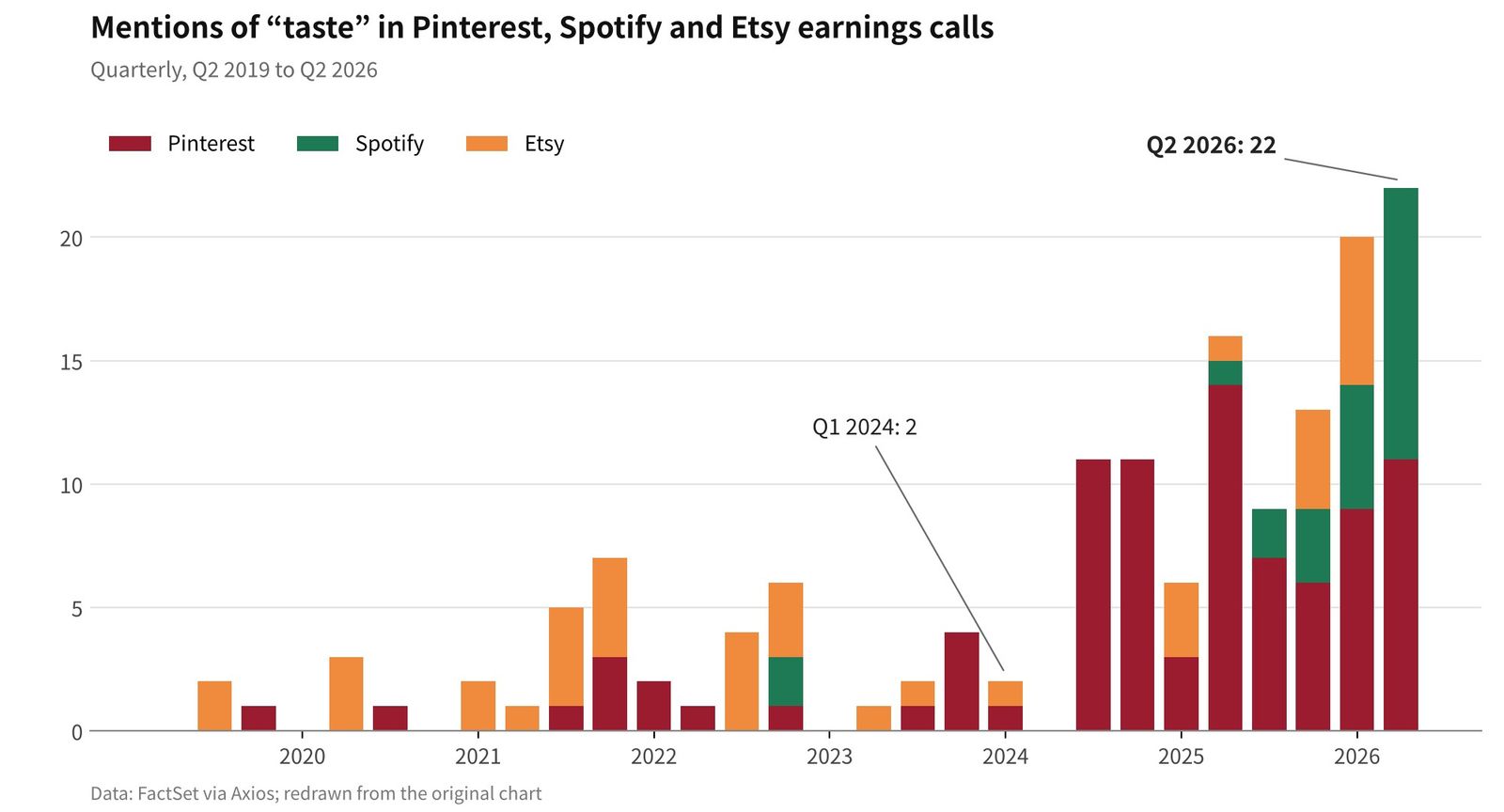
“Taste” on earnings calls: two mentions in Q1 2024, 22 in Q2 2026
The capacity Hartman calls judgment is increasingly described in tech and media as taste, paired with trust. In a deck titled “Taste + Trust Is the New Moat,” Axios traces the web’s center of gravity from search (indexing) to the feed (distribution) to AI (personalization), a stage in which personal preference data matters more than social-graph data. “Models commoditize. Taste doesn’t,” it says, defining taste as “accumulated context.”
The word is spreading on earnings calls. Using FactSet data, Axios counted 22 mentions of “taste” across the Q2 2026 calls of Pinterest, Spotify and Etsy, up from two in Q1 2024. On the chart, the rise began in the second half of 2024, when Pinterest used the word 11 times a quarter; by Q2 2026 Spotify had matched Pinterest at 11 mentions.
Axios’ definition of taste as accumulated context lines up with Hartman’s definition of judgment as filtering AI output through your own context. In a newsroom that context is sources and a verification record, and trust is built by procedures like CNN’s, where a person checks the original before readers ever see the story. On Axios’ logic, as models converge, those are the two places news organizations will differ, and for Korean broadcasters and newspapers with decades of reporting and video archives, that context is the first asset to protect when bringing in AI.
Gen AI, machine learning or automation: getting the coverage right
An audience member who said he had studied machine learning for years asked how journalists can cover AI accurately. Hartman said the broad anxiety about AI has less to do with technical misunderstanding than with a sense of lost control, symbolized by the spread of data centers, while insisting on accuracy and avoiding sensationalist headlines. Struyk said people conflate generative AI, machine learning and simple automation; when someone asks “Can AI do this?” he asks which of the three it is, a distinction that is now part of CNN’s internal training.
In Korea, 58.1% of journalists use generative AI, with uneven safeguards
In the Korea Press Foundation’s (한국언론진흥재단) 2025 survey of journalists, 58.1% said they use generative AI in their work, rising to 71.6% of those in their 20s. About 40% said AI could threaten journalists’ job security.
A July 9 report by the association’s weekly lists the tools in use. The Seoul Economic Daily’s (서울경제신문) NOVA supports reporters from story ideas through drafting, copy editing, headlines and graphics; about 300 reporters use it, and it went on sale to outside customers in June. Yonhap News Agency’s (연합뉴스) AI content unit launched a chart-graphics service in March, runs assistants for personnel and obituary items, and is developing real-time speech-to-text for press conferences. TV Chosun (TV조선) runs an AI reporter, YTN uses AI anchors and virtual reporters, and MBC subsidiary Dost11 (도스트11) sells its AI tools externally.
Struyk’s rule that AI transcripts be checked against the original recording applies directly to the kind of speech-to-text tool Yonhap is building: at CNN, who verifies the original, and in how many clicks, is decided when the tool goes in.
Korea also has a cautionary case. Regional commercial broadcasters CJB, G1, JIBS and KNN adopted weekend AI newscasts about two years ago. During a wildfire in Inje, Gangwon Province, in April 2025, G1’s duty reporter was tied up producing the AI newscast and the fire was covered only in a brief, drawing internal criticism that local safety had been compromised. Management and the union then wrote an AI news response manual and reorganized holiday standby shifts. Scripps, by contrast, published its approval process and disclosure rules alongside its plan to move local stations to AI-supported streams. CNN Newsource, which supplies video and scripts to more than 1,000 local news partners, sits in a position similar to Korea’s wire services relative to regional broadcasters, so verification standards set at the supply end also shape what local newsrooms can automate.
Outlook: Scripps’ plan runs to 2028; CNN starts life under Skydance
Scripps has set 2028 as the horizon for its transformation. As cuts and streaming spread across its stations, the test is whether the human review steps both companies described remain staffed. CNN begins its first year under Skydance; as part of the merger settlement, Paramount agreed to establish an editorial board to help CNN and CBS maintain editorial independence. Warner Bros. Discovery projected that CNN would earn $600 million on $1.8 billion in revenue in 2026.
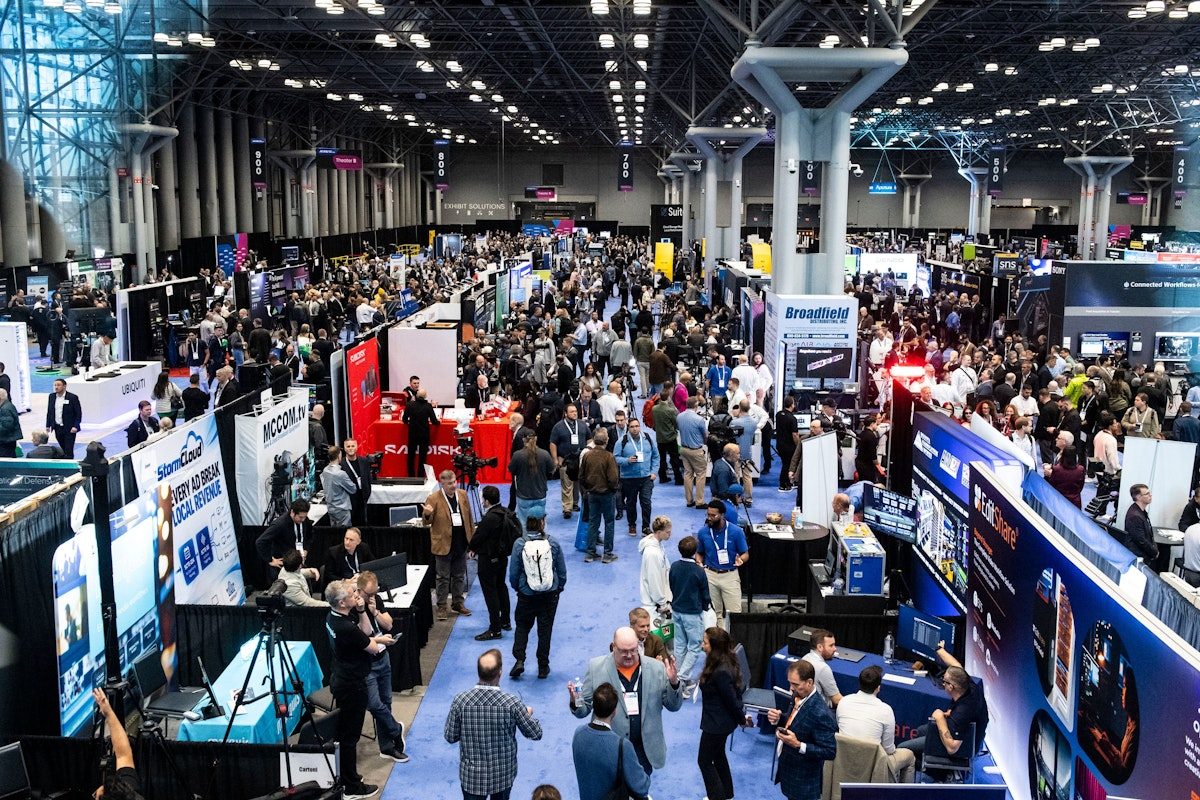
This year’s NAB Show New York drew attendees from 72 countries, 57% of them first-timers, with about 250 exhibitors and sponsors and 101 sessions featuring 156 speakers. The show returns to the Javits Center on Sept. 29–30, 2027, co-located with the SMPTE Summit (Sept. 28–30). NAB Show in Las Vegas runs April 3–7, 2027.
In Korea, where generative AI use among journalists is approaching 60% and the AI Basic Act (인공지능기본법), with its labeling requirements for generative AI output, took effect in January, the practices CNN and Scripps described — review built around the original source, workflow checks before deployment, and shared newsroom examples — can be written directly into in-house AI guidelines.