
AD TECH · ANALYSIS
Gorgie tests Kargo's Karlo… six agents handle planning, targeting and creative for advertisers spending about $30,000 a month

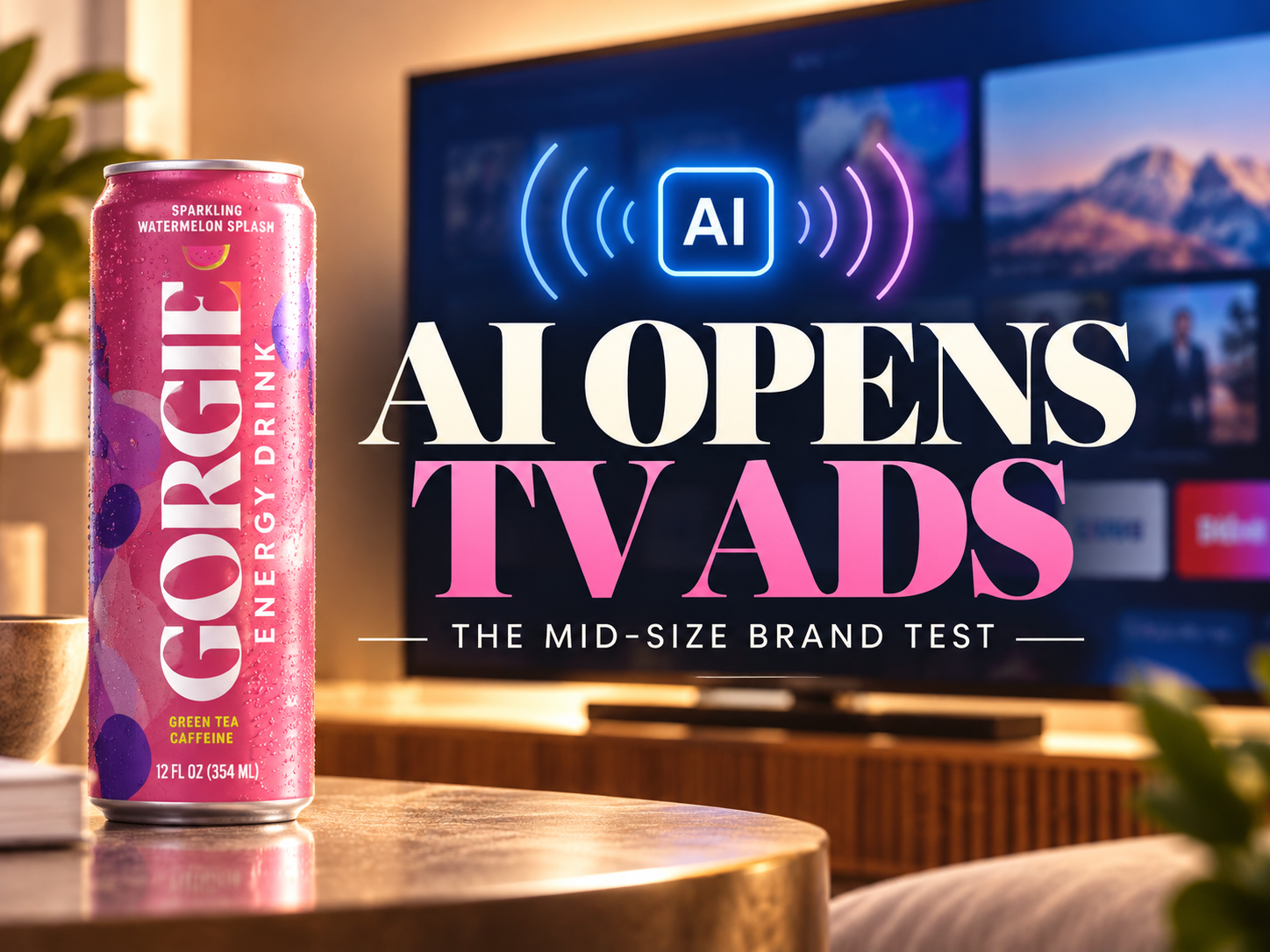
Gorgie, the U.S. energy drink brand built around social media and in-person events, is testing how to take its advertising onto the living-room screen. Using Karlo, a self-service platform from adtech company Kargo, it is exploring whether an existing video library and a lean marketing team can support a connected TV campaign. Its results have not yet been disclosed.
Karlo runs on six AI agents. As Ad Age reported on Oct. 27, the agents split up campaign planning, audience selection, inventory selection, creative adaptation and performance analysis, while the advertiser gives instructions in plain language. Kargo has not settled on pricing. Its first target is marketers spending roughly $30,000 a month.
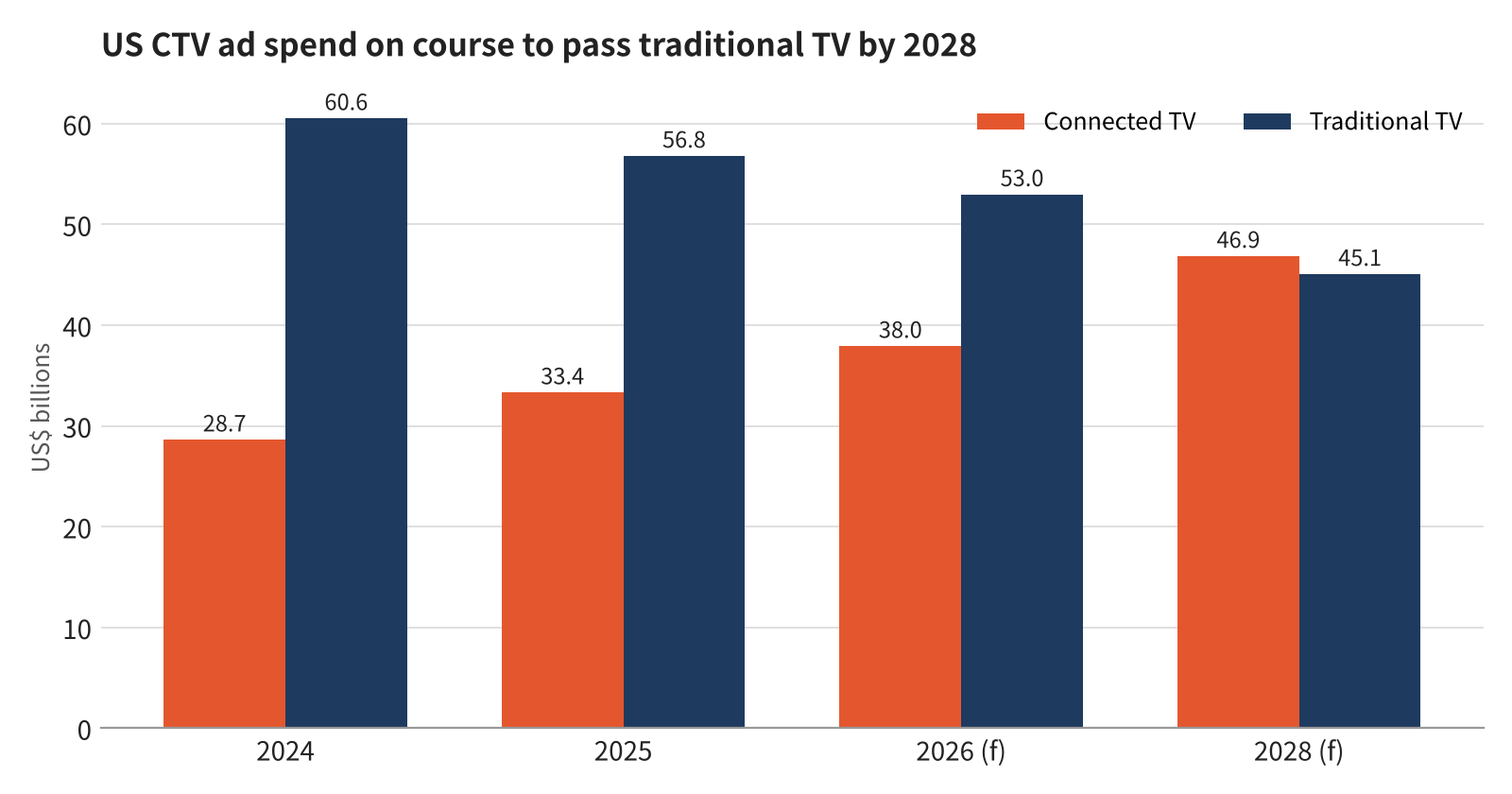
A summary of eMarketer’s December 2025 forecast put U.S. CTV ad spending at $37.95 billion in 2026 and expects the channel to overtake traditional TV by 2028. Buying TV, though, still takes a large budget, people who know how to buy media, and creative cut to each format. That is why smaller advertisers have kept most of their money with Google and Meta, where a lean team can buy ads with little effort.
Michelle Cordeiro Grant, Gorgie's founder and CEO, told Ad Age that getting near TV used to require budgets in the high seven to high eight figures, and that Karlo lets her test the audiences and placements she actually wants. Gorgie has no campaign results to share yet. Harry Kargman, Kargo's CEO, acknowledged that the company still has work to do on attribution and on proving outcomes.
Six agents from plan to creative… 70% of budget to CTV in demo
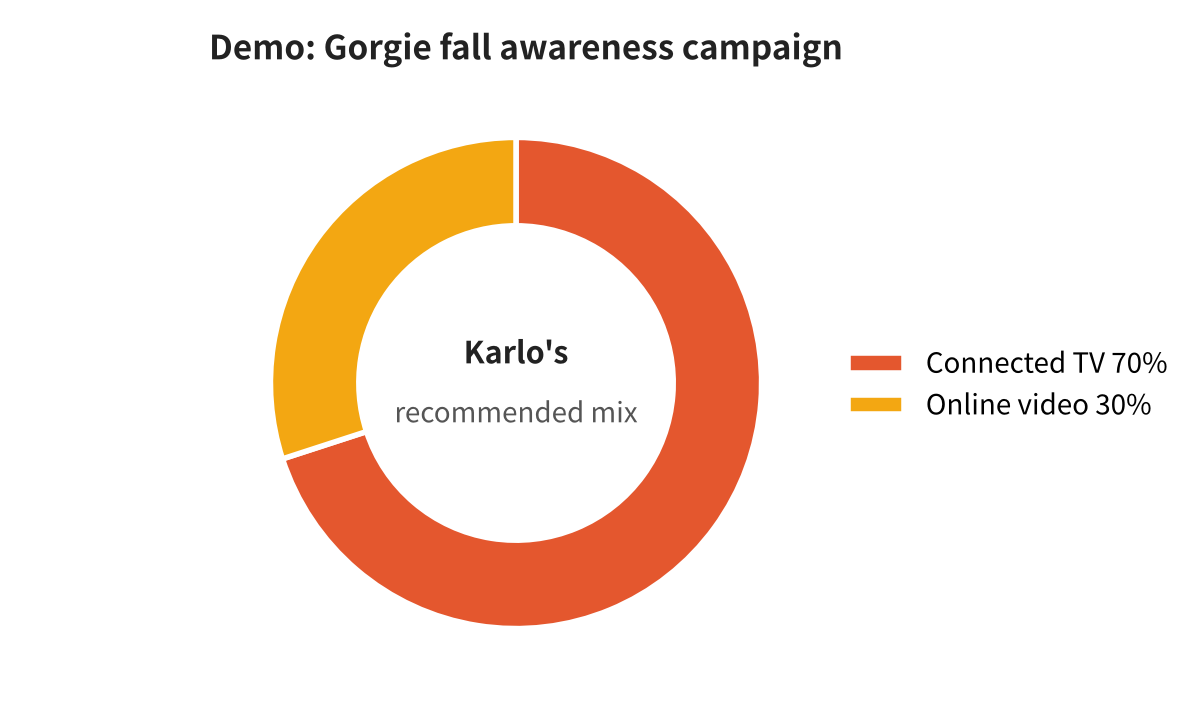
In a demonstration for Ad Age, Karlo took Gorgie's existing creative and built a fall awareness campaign. It recommended putting 70% of the budget into CTV and 30% into online video, and generated a custom audience of consumers interested in alcohol-free drinks.
For Grant, the change is in the creative. Karlo resizes assets for each placement, and she can change headlines, images and colors by asking. Before, she said, even a new headline color meant reworking assets across formats, which made small tests hard to justify. "That thinking is gone," she said, adding that she can now try a change and reverse it if it does not work. Karlo can also pull in assets from Meta and Canva.
In the launch announcement, Kargman said "most of the agentic tools launching right now are built around bidding and targeting." Karlo scores and adjusts creative inside the same loop as bidding and targeting while a campaign runs, which Kargo says removes the need for a dedicated analyst watching the account.
Founded in New York in 2003, Kargo has run a managed-service business selling creative formats and premium placements to large advertisers such as Hershey, serving 800 to 1,000 enterprise clients a year. On March 31 it put Project KERA, an agentic buying platform for big buyers, into closed beta with Hershey, travel media network Navigator and independent agency Wpromote. Karlo packages the same technology for small teams. Kargo wants its self-serve customer count to reach the tens of thousands.
Drone drops at sorority houses… social clips become campus CTV ads
Gorgie was founded in 2022 and shipped its first cans in January 2023. Grant previously founded the intimates brand LIVELY, which Retail Dive reported was sold to Wacoal for $105 million in 2019. Gorgie raised a $24.5 million Series A in 2025.
The company says July retail sales rose 600% from a year earlier and that it expects to be in more than 15,000 U.S. stores by year-end. Influencer Alix Earle and musician Jon Bon Jovi are investors. Half of its marketing goes to events and half to digital advertising; Gorgie declined to give figures.
Since June, Gorgie has delivered product packages by drone to sorority houses and turned the footage into social content. Grant said the brand has seen a correlation between drone activity, social sharing and visits to nearby Target and Walmart stores. It now plans to move those videos into CTV through Karlo and geotarget campaigns around college communities.

Walmart buys Vibe… retail giants join self-serve CTV race
On June 23, Walmart agreed to acquire Vibe.co and completed the acquisition on August 4. Vibe is a self-serve CTV platform for small and mid-size advertisers with more than 10,000 customers. Walmart did not disclose terms; The Wall Street Journal put the price at about $1.4 billion (as cited by industry media). Walmart already owns smart-TV maker VIZIO, bought in 2024, giving it shopper data, TV inventory and a self-serve buying tool under one roof.
PPC Land notes that Amazon DSP's managed-service tier typically requires a $50,000 minimum, while the $30,000 monthly budget Kargo is targeting is a customer profile, not a confirmed minimum. The two products are not directly comparable. The IAB's September update projects U.S. CTV ad spending growth of 15.6% in 2026, up from its January forecast of 13.8%; social media is projected to grow 16.5%.
One published result, from an Ad Council campaign… commerce data still being wired in
The only performance figures Kargo has released for Karlo come from the Ad Council's "Love, Your Mind" mental health campaign, where Kargo reported a 21% lift in ad recall and a 10% lift in aided awareness. PPC Land pointed out on Oct. 7 that sample size, flight dates, budget and study design were not disclosed.
Kargman told Brand Innovators that Karlo is stronger today on awareness than on performance marketing, and that Amazon and Walmart Connect data integrations are still in progress (as cited). For Gorgie, Grant sees the immediate return in time: hours her team no longer spends on media operations can go to events, creative experiments and meeting customers in person.
Korea's broadcast ad market falls to ₩2.77 trillion… SMB TV support centers on production costs
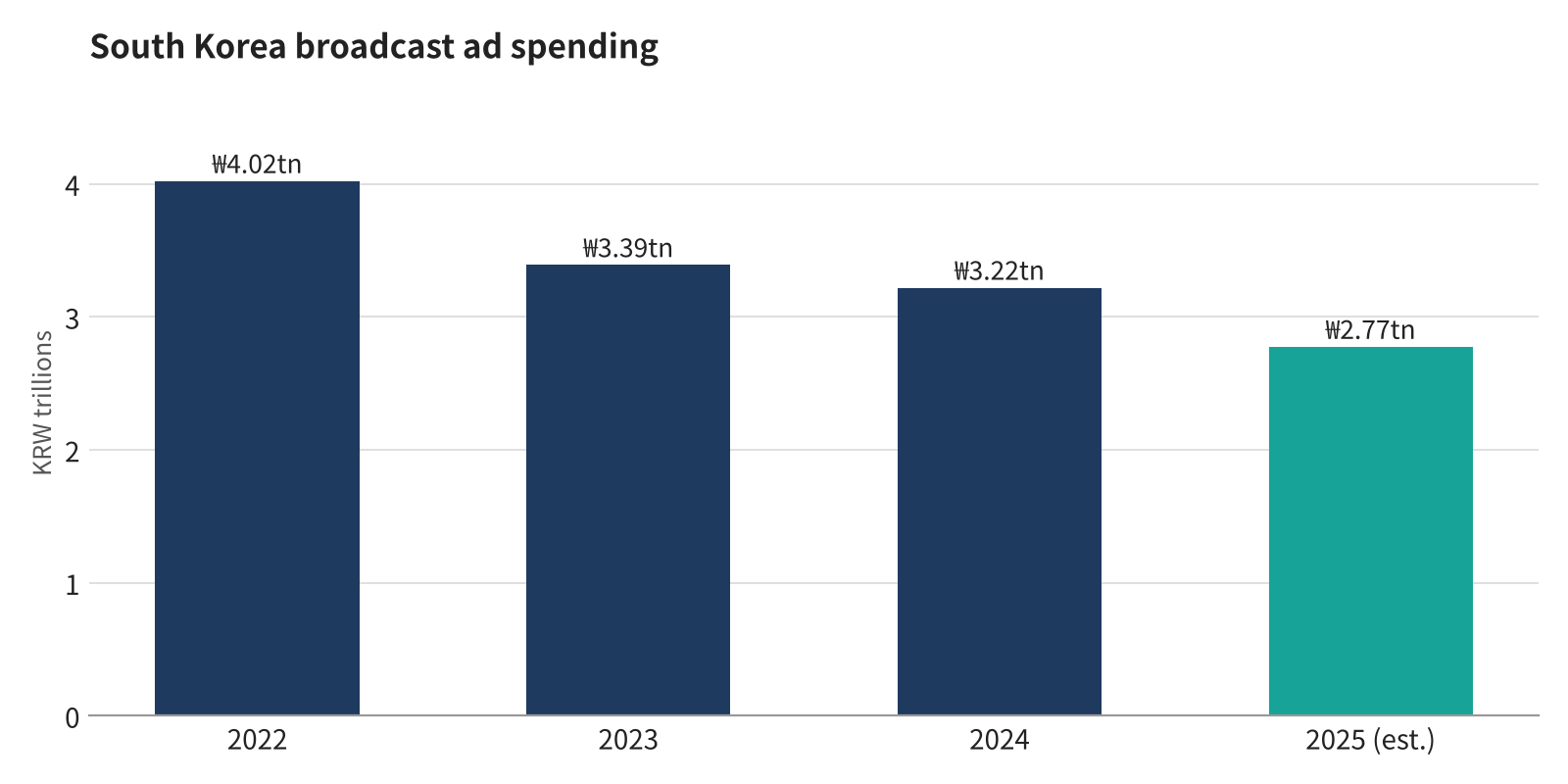
The 2025 Broadcasting and Communications Ad Spending Survey, released Jan. 8 by the Korea Communications and Media Commission (방송미디어통신위원회) and KOBACO (한국방송광고진흥공사), projected 2025 broadcast ad spending at ₩2.77 trillion ($2.1 billion), down 13.8% from a year earlier and about ₩1.2 trillion below the 2022 level of ₩4.02 trillion ($3.0 billion). Online took 62.1% of total ad spending.
Ad tech firm Motiv Intelligence (모티브인텔리전스) reports that spending on its CrossTarget TV (크로스타겟TV) CTV platform rose 76.8% in 2024 and 17.9% in 2025. In a regulator survey of 153 Korean advertisers, targeting accuracy (53.4%) was the top reason for buying streaming-service ads, while cost efficiency (63.4 points) was among the lowest-rated after the campaigns ran.
Under this year's SMB broadcast advertising support program, the commission picked 23 small businesses and 114 micro-businesses in the first round and two of 37 applicants in a June second round, 139 in all. Selected companies receive up to half of their TV ad production cost, capped at ₩45 million ($34,000). Ads on Korea's terrestrial and general-programming cable channels are sold through media reps under the Act on Broadcast Advertising Sales Agency (방송광고판매대행 등에 관한 법률).
Format conversion, small budgets… a test for Korean broadcasters' digital sales
In Gorgie's case, the savings show up less in media cost than in staffing and creative adaptation, the two benefits Grant named. Korea's SMB support focuses on production subsidies for the same reason: making TV-ready creative is expensive. KOBACO's ₩45 million cap sits close to the monthly spend Karlo is built for.
Kargo wants to go from 800 to 1,000 enterprise clients to tens of thousands of self-serve customers; Korea's broadcast ad support program reaches 139 companies this year. If Korean broadcasters want to open their FAST channels and streaming-service inventory to small advertisers, Gorgie's test points to three requirements that come as a package: converting vertical social video to TV formats, buying in small increments, and reporting on one screen. The low cost-efficiency score highlights a need for stronger measurement; it does not by itself establish demand for small test buys.
Social support due this year… Gorgie's fall campaign is the first test
Shelly Palmer reported that Karlo launched with CTV and open-web video, with social scheduled for later in 2026 and display after that. Kargo pitches CTV, social and the open web as one flow built on a single audience target. Once the Amazon and Walmart Connect integrations are done, Karlo's market could widen from awareness buyers to advertisers who measure sales.
In an earlier eMarketer forecast, U.S. CTV ad spending reaches $46.89 billion in 2028, passing traditional TV at $45.1 billion. Walmart's Vibe deal and Kargo's Karlo are both aimed at the small and mid-size share of that growth. If Gorgie publishes results, its fall campaign could become a useful midsize brand case, and whether the measurement method is disclosed alongside them will likely shape how other advertisers judge it.
In Korea, CTV spending is rising while broadcast ad spending falls. Whether broadcasters and media reps offer small advertisers creative-conversion and small-budget buying tools, not just production subsidies, may decide how much of that digital money they capture.
What could change next
Easier buying and creative adaptation could help more midsize brands test television inventory. The size of that opportunity will depend on actual minimum budgets, fees, inventory access and repeat buying. This is an industry assessment, not a quantified market forecast.
Retail data may bring brand exposure closer to purchase measurement, but an observed association between ads and sales does not establish causation. Privacy safeguards, data access and credible control groups will shape the value advertisers can assign to results.
For publishers and agencies, self-service raises questions about revenue sharing, duplicated reach, brand safety and measurement standards. Korean CTV platform data should not be treated as a measure of growth across the whole market.
Market shifts and indicators to watch