Not the news but the hosts and the format endure: the growth equation behind Fox News’ roundtable, and its lessons for Korean media
Cable news audiences have bled away for more than a decade. In the same stretch, Fox News’ weekday roundtable “The Five” lifted its viewership by 148% to more than 3.6 million on average this year. What this program — No. 1 in cable news for 22 straight months — sells is not breaking news but experience.

In a market where news and information are free and everywhere, what holds viewers is the feeling of sitting at the table with familiar faces who spar every day, the relationship they build with the hosts. Korea’s news channels and FAST operators, watching linear viewing collapse as FAST and YouTube move in, face the same equation.

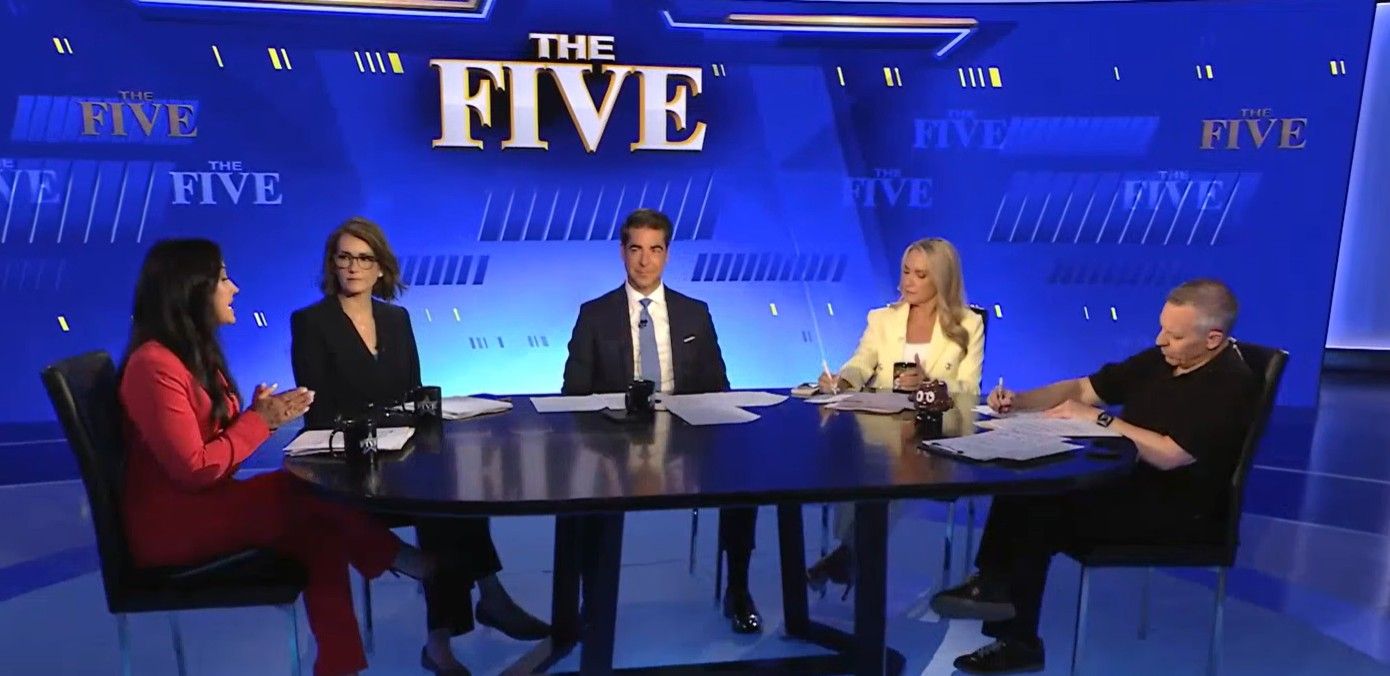
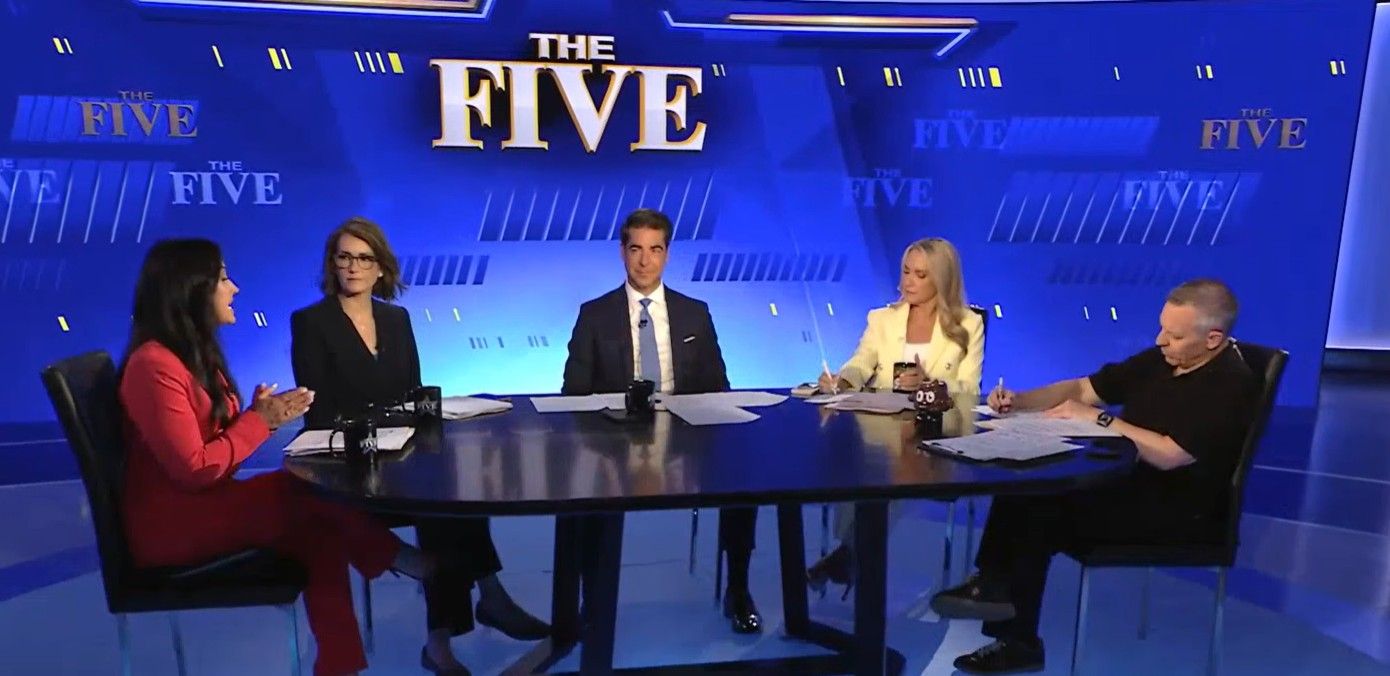
A screen grab from “The Five.” Five hosts discuss the day’s issues around the roundtable. Source: Fox News
Fox News makes no claim to neutrality. Even so, the hosts credit the format and their chemistry for the growth. Founding co-host Greg Gutfeld says the secret is teasing: you can only tease people you like, and without it the chemistry freezes. Jesse Watters, who has spent his entire career at Fox News, says he enjoys “The Five” more than his 8 p.m. solo show because it runs without a script.
The hosts describe a format built to feel inviting to viewers across the spectrum and to the Democratic co-hosts who rotate through it. Jessica Tarlov, a Democratic co-host, calls it “the coolest job for a liberal in media today” and says the show models the kind of cross-party conversation Americans were hungry to see. Harold Ford Jr., a former Democratic congressman, adds simply that the panel likes one another.
Airing at 5 p.m. ET, “The Five” has grown its average audience 148% since 2011 to more than 3.6 million this year, per Nielsen — the most-watched program in cable news and the top non-sports show on cable. At 5 p.m., Fox’s roughly 3.7 million viewers dwarf MS NOW (formerly MSNBC) at about 1.2 million and CNN at about 788,000. After doubling in its first decade, the show added another million over the next five years to approach 4 million in 2025. It has held the No. 1 cable-news spot for 22 consecutive months, and its midnight replay regularly draws more than 900,000.

Average weekday 5 p.m. ET viewership for select cable news networks (July 2011 – July 2026). Source: Nielsen, Axios
“The Five” turned 15 last week. It began as a five-week placeholder after Glenn Beck’s departure. Dana Perino, a founding co-host still on the panel every day, says nobody expected it to become permanent. Minutes into the debut, Suzanne Scott — then head of programming and development, now Fox News CEO — declared from the control room that it would be a hit, and it was.
Over 15 years the hosts have argued about guns, marijuana, immigration and abortion, and the debates have moved their own positions. Ford Jr. credits Perino with broadening his view on education; Perino credits Gutfeld with sharpening how she argues marijuana legalization; Tarlov says she has grown tougher on sanctuary-city policy. Even Watters, one of the network’s more populist conservative voices, says Tarlov helped him better understand what draws Democratic voters to certain candidates.
Industry analysis — what endures is the people and the format, not the news
The growth is not a sign that cable news is healthy. In the same chart, CNN and MS NOW (formerly MSNBC) are flat or falling at 5 p.m. It is closer to a single model surviving while the market as a whole shrinks. The core of that model is people and format, not a race to break news.
Roundtable talk is cheap to make. It needs no field reporting or large sets, and the same cast fills an hour every day. A single production is reused — the midnight replay pulls in another 900,000 — across multiple windows. The host becomes a portable asset rather than a cost tied to one show. Gutfeld carried the profile he built on “The Five” into a weekend solo program in 2015 and then a weeknight late-night talk show in 2021. Low cost, high repetition and star incubation together made the personality panel the standard in cable news, not the exception.
The moat that remains is experience, not the news commodity. Breaking news and information are free everywhere and now machine-generated; what does not copy is the felt presence of specific hosts sparring at the same hour, at the same table, day after day. Viewers do not come to receive information — they come to join a conversation among people they know. What “The Five” sells is that relationship and immediacy, and the debate format is the vessel that holds it. Keeping Democratic co-hosts on the panel while making no secret of its politics is a way to raise the density of that experience, not to hide it.

A screen grab from Fox News. Host Dana Perino (right) discusses divisions inside the Democratic Party with guests. Source: Fox News
The message for Korea
Korean media sit under the same pressure. Live viewing of terrestrial, general-programming and news channels is in long-term decline, while FAST platforms such as Samsung TV Plus and LG Channels, along with YouTube, move into the gap. For operators who have to fill a schedule, “The Five” model carries several implications.
Format and personality are cheap, ownable content. Studio talk costs less than drama or sports yet gives a channel its own signature. Producing once for linear and re-cutting the same show into YouTube highlights, shorts and FAST feeds multiplies the windows — an approach already partly at work in Korean current-affairs and entertainment. The layered original-replay-clip structure that lets “The Five” capture viewers again and again can be built more tightly here.
Growing hosts into franchises is another route. Korea has long been strong at discovering and scaling artists and IP. Applying that method to news, current-affairs and infotainment hosts turns individual programs into portable star assets. Leaning on a single host carries risk, but the idea that relationship and character are the differentiation is a grammar K-content has already proven.
The deeper point is that as content grows abundant, the value rises on experience and presence. Unlike information and video that copy without limit, live immediacy and the relationships between people do not copy. Taking the bond between hosts and viewers off the screen — into live tapings, fan meetings and in-person events — raises its worth. Korea already leads in live formats, fandom and the artist–fan relationship. Extending that asset into news and infotainment, and linking on-screen relationships to offline experience, is where linear and FAST operators can differentiate.
The 15 years of “The Five” read less as a victory for cable the medium than as a record of an experiment into what holds viewers once news is cheap. What remained was not the medium but the people, and the experience of being with them. That is the point Korea’s linear and FAST operators can look to as they redraw their schedules and their economics.
Adapted from Sara Fischer, “‘The Five’ at 15: Fox News’ unlikely TV survivor,” Axios. Viewership data: Nielsen. Industry analysis and Korea implications by the author.