
Bloomberg reports company-wide AI push from finance to film… $20 million for Character.AI assets, Disney-only models with Adobe, and AI-animated 'Ozzy Fox' heading to Disney+ in December
The Walt Disney Co. is building artificial intelligence into nearly every part of the company, from film and animation to Disney+, its theme parks and the finance department. Bloomberg reported on Nov. 13 that Disney+ will add 'Ozzy Fox,' a preschool series made over a year with French startup Animaj, in December.
After years of hedging between using AI and protecting its intellectual property, Disney has decided to embrace the technology.
The reason is control. According to Bloomberg, Disney cares more about controlling how its characters are used, and keeping them exclusive, than about collecting fees from AI companies that train on its films. A company that has spent more than $100 billion (about ₩133.6 trillion) over two decades on Marvel, Pixar, Lucasfilm and 21st Century Fox is not handing those assets to someone else's model.
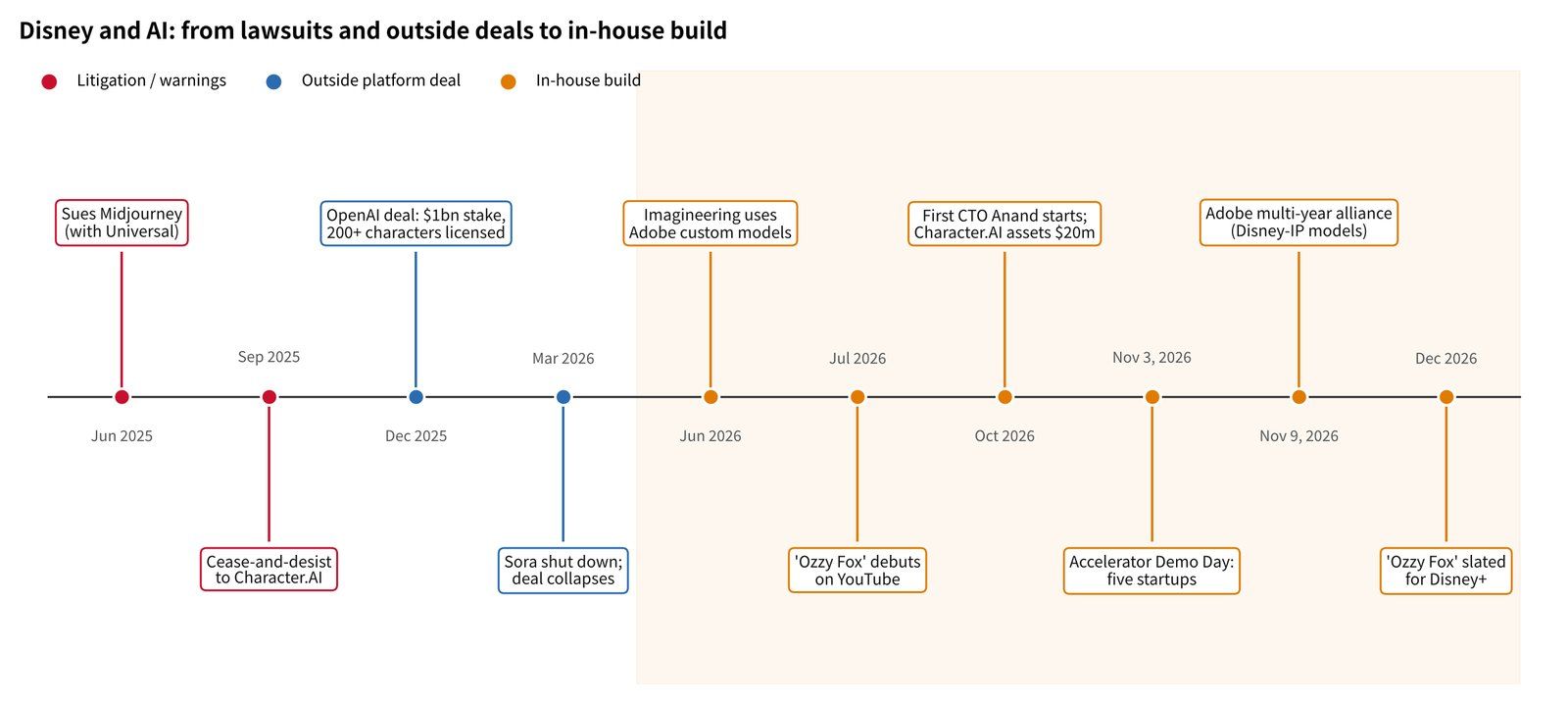
The shift was signalled in March. On March 24, a week into Josh D'Amaro's tenure as chief executive, OpenAI shut its Sora video app. With it went a three-year deal under which Disney would have invested $1 billion (about ₩1.34 trillion) and licensed more than 200 characters to Sora, exchange4media reported. Since then Disney has brought the technology and the people in-house rather than renting out its characters.
In September it named Karandeep Anand, former chief executive of Character.AI, as the first chief technology officer in its 103-year history. In October it agreed to buy some of the bankrupt startup's assets for $20 million (about ₩26.7 billion) and take on 60 of its employees. On Nov. 9 it signed a multi-year alliance with Adobe to build generative models trained on Disney's own IP.
Sora's closure sank a $1 billion deal… the Iger-era mix of lawsuits and licences
That marks a break from the Bob Iger years, when Disney used both lawsuits and partnerships. In June 2025 it sued image generator Midjourney with Universal for copyright infringement, and it also took China's MiniMax to court, after images of Mickey Mouse holding a machine gun and crude renderings of Disney princesses spread on social media. Warner Bros.' claims have since been consolidated into the Midjourney case, and in June a federal magistrate judge ordered the studios to hand over some data on their own AI use.
At the same time, Disney partnered with AI companies. Its December 2025 agreement with OpenAI called for $1 billion in equity and warrants, while OpenAI would let Sora users make videos with more than 200 Disney, Marvel, Pixar and Star Wars characters; a selection of those videos was to stream on Disney+.
Sora shut down before the deal was finalised. No money changed hands, and Disney said only that it respected OpenAI's decision to shift priorities.
How Disney lends out its characters also appears to have changed. In August it partnered with TikTok so that creators can feature Marvel, Pixar and Star Wars characters in videos hosted on both TikTok and Verts, Disney+'s vertical video feed.
Verts launched in March, part of Disney's response to changing viewing habits. Luminate's October special report on social media and entertainment discovery cited the TikTok deal as one of the ways streaming services are using vertical feeds to help viewers find shows. Instead of handing its characters to an outside generative-AI app, Disney manages their use inside a feed it runs, guarding the originals.
Character.AI's former CEO becomes first CTO… $20 million for a bankrupt startup's assets and 60 staff
Anand started on Oct. 2 as senior executive vice president and CTO, overseeing enterprise technology, infrastructure, data and AI platforms, and product and engineering. In September 2025, Character.AI, which he then ran, received a cease-and-desist letter from Disney over chatbots built on its characters. A year later, Disney hired the chief executive of the company it had warned to run its technology.
Character.AI's technology was well regarded, but it filed for bankruptcy after a wave of negligence and wrongful-death lawsuits. The asset purchase gives Disney conversational-AI expertise, and it plans to build systems in-house with stronger safety procedures.
Bloomberg reported that letting Disney+ subscribers talk with characters is one option under discussion, though nothing is imminent. Jamie Voris, who oversaw AI adoption at the Office of Technology Enablement, and Eddie Drake, CTO of Walt Disney Studios, are retiring. AI work is being centralised under Anand.
| Name | Title | AI role | Status |
|---|---|---|---|
| Josh D'Amaro | Chief executive officer | Sets company-wide AI direction; reinvests savings in technology | CEO since March 2026 |
| Karandeep Anand | Senior EVP and chief technology officer | Enterprise technology, infrastructure, data and AI platforms, product and engineering | Started Oct. 2; former Character.AI CEO |
| Dana Walden | President and chief creative officer | Reviews AI use in content production | Saw Amazon MGM AI demo in October |
| Alan Bergman | Chairman, Disney Entertainment Studios | Reviews AI in live-action and animation production | Saw Amazon MGM AI demo in October |
| Becca Vodnoy | SVP, corporate alliances | Adobe multi-year alliance | Adobe deal announced Nov. 9 |
| Bonnie Rosen | General manager, Disney Accelerator | AI startup investment and collaboration with units | All five 2026 companies are AI firms |
| David Min | VP, corporate innovation | Tests whether Accelerator tech fits workflows | Worked on Animaj partnership |
| Jamie Voris | Head, Office of Technology Enablement | Oversaw AI adoption to date | Retiring |
| Eddie Drake | CTO, Walt Disney Studios | Studio technology | Retiring |
Key Disney executives in AI. AI work is being centralised under CTO Anand. Sources: Bloomberg, Variety, Adobe, Disney, TheWrap
Adobe's Firefly Foundry to build Disney-only models… Imagineering has used them since June
Having committed to bringing AI in-house, Disney is partnering actively with technology companies. The alliance unveiled at Adobe MAX on Nov. 9 makes Adobe Disney's Official AI Innovation Partner. Disney gets early access to Firefly, Firefly Foundry, Premiere and Photoshop, and Adobe assigns dedicated engineering and research staff to Disney's production pipeline.
The core is a set of Disney-specific models on Firefly Foundry. Adobe said they will be trained on Disney knowledge such as character attributes, environments and visual styles, and designed to produce commercially safe, production-ready output.
Walt Disney Imagineering, Disney's entertainment-technology arm, has used the platform in its theme-park design pipeline since June: one model turns hand-drawn sketches into finished 2D concept art, and another generates franchise-accurate images. The alliance also reaches StudioLAB at Walt Disney Studios, ESPN Edge, Walt Disney World, Disneyland and Disney Cruise Line. Disney rents the tools but keeps the models and the data inside its own walls.
'Ozzy Fox' passed 1.5 million YouTube views in five days… Disney+ debut in December
'Ozzy Fox,' the AI-assisted series coming to Disney+ in December, is a musical preschool show about a five-year-old orange fox. Co-developed by Disney Jr. and Animaj, a 2025 Disney Accelerator company, it premiered on YouTube and YouTube Kids on July 15. Animaj said on July 23 that the first two episodes drew more than 1.5 million views in under five days.
Animaj uses a tool called Sketch-to-Motion. Animators set the key poses, acting and timing, and the AI generates the in-between frames that turn an animatic into a rough animation pass. The company's research team presented the technique at SIGGRAPH 2026. Bloomberg described the tool as converting hand drawings and text instructions into 3D animation.
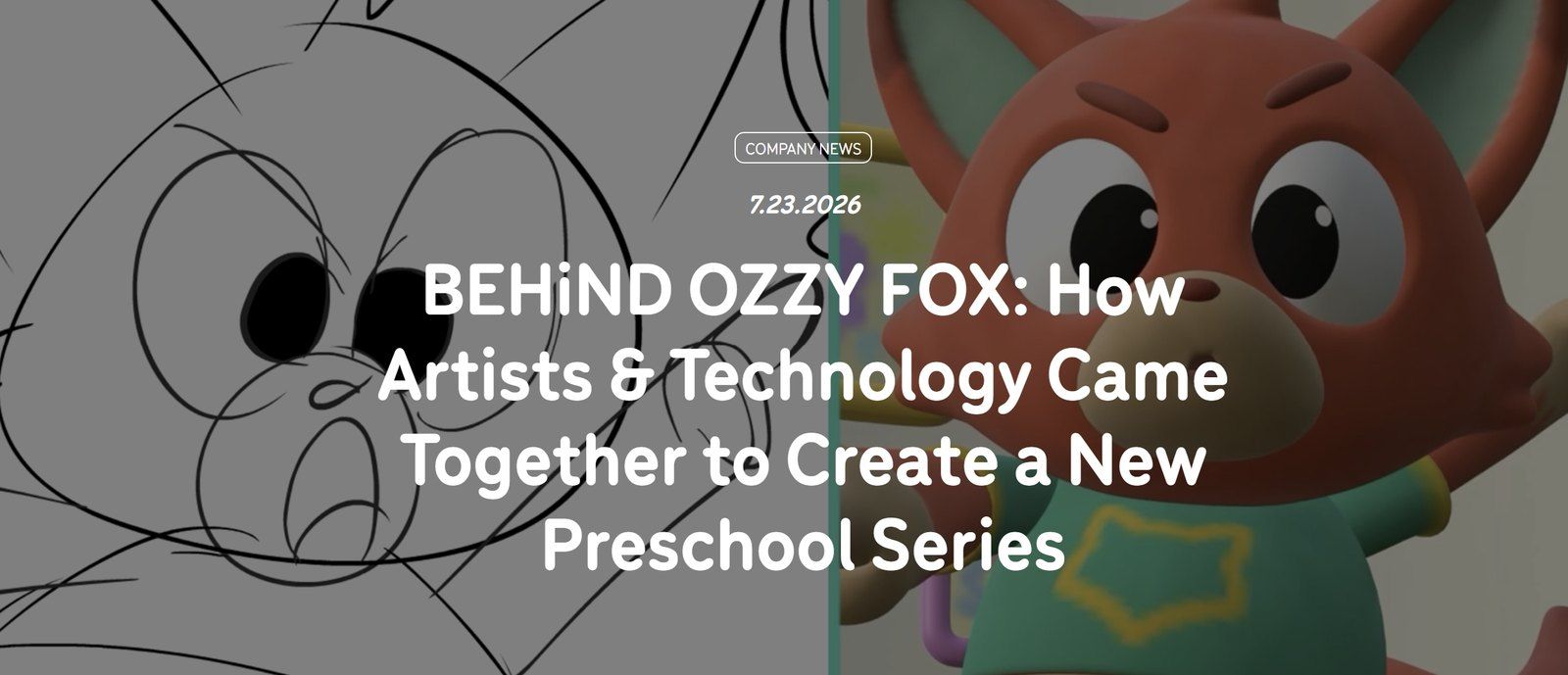
The rollout drew criticism because neither company said what role AI played. Cartoon Brew noted that such silence is becoming common, and Kotaku said the AI gave the show an overly smooth, bland look. Disney tested the audience response on YouTube before moving the show onto its own platform.
A 'D-Fi' finance platform, voice search on Disney+, park patents… starting where creative pushback is light
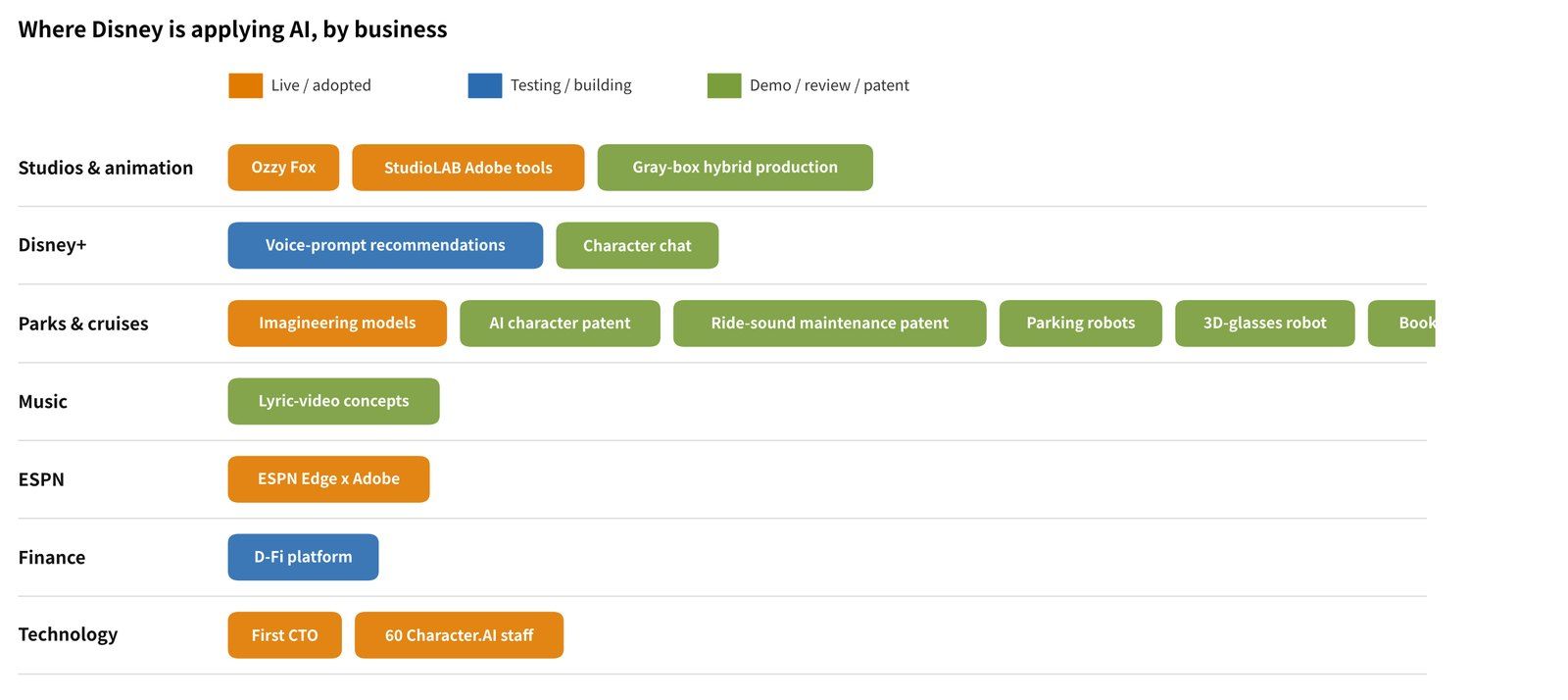
Disney has not published a company-wide AI strategy. Instead, each unit is running its own experiments, and like other Hollywood studios it began where creative resistance is weakest. Finance is building Disney Financial Insights, or D-Fi, a collaboration platform that automates manual budget reports and puts approvals and analysis in one place. Disney+ is testing, with some US subscribers, a feature that lets viewers describe out loud what they want to watch.
The push on recommendations reflects how long viewers now spend looking for something to watch as services multiply. In Gracenote's 2026 State of Play, a survey of 3,000 streaming viewers across six countries including the US and UK conducted in August by the Nielsen company, the average search took 12 minutes, rising to 15 minutes for viewers aged 18 to 24. Some 47% said they spend more time searching than a year ago, and 31% said they have not found a good source of recommendations for their tastes.
Patents show what the parks are planning. One filing this year describes an AI-enabled resort character that asks guests about favourite memories and compares them with its own programmed memories. Another covers AI microphones that detect small changes in ride sounds to flag maintenance. According to Axios, experiences such as parks and cruises account for 38% of Disney's revenue.
Creative leadership is engaged too. Bloomberg reported that Dana Walden, president and chief creative officer, and Alan Bergman, chairman of Disney Entertainment Studios, visited Amazon MGM Studios in October to see how Amazon uses AI to speed up live-action and animated production.
Five startups demo at Accelerator Day… D'Amaro says Disney will be 'very aggressive'
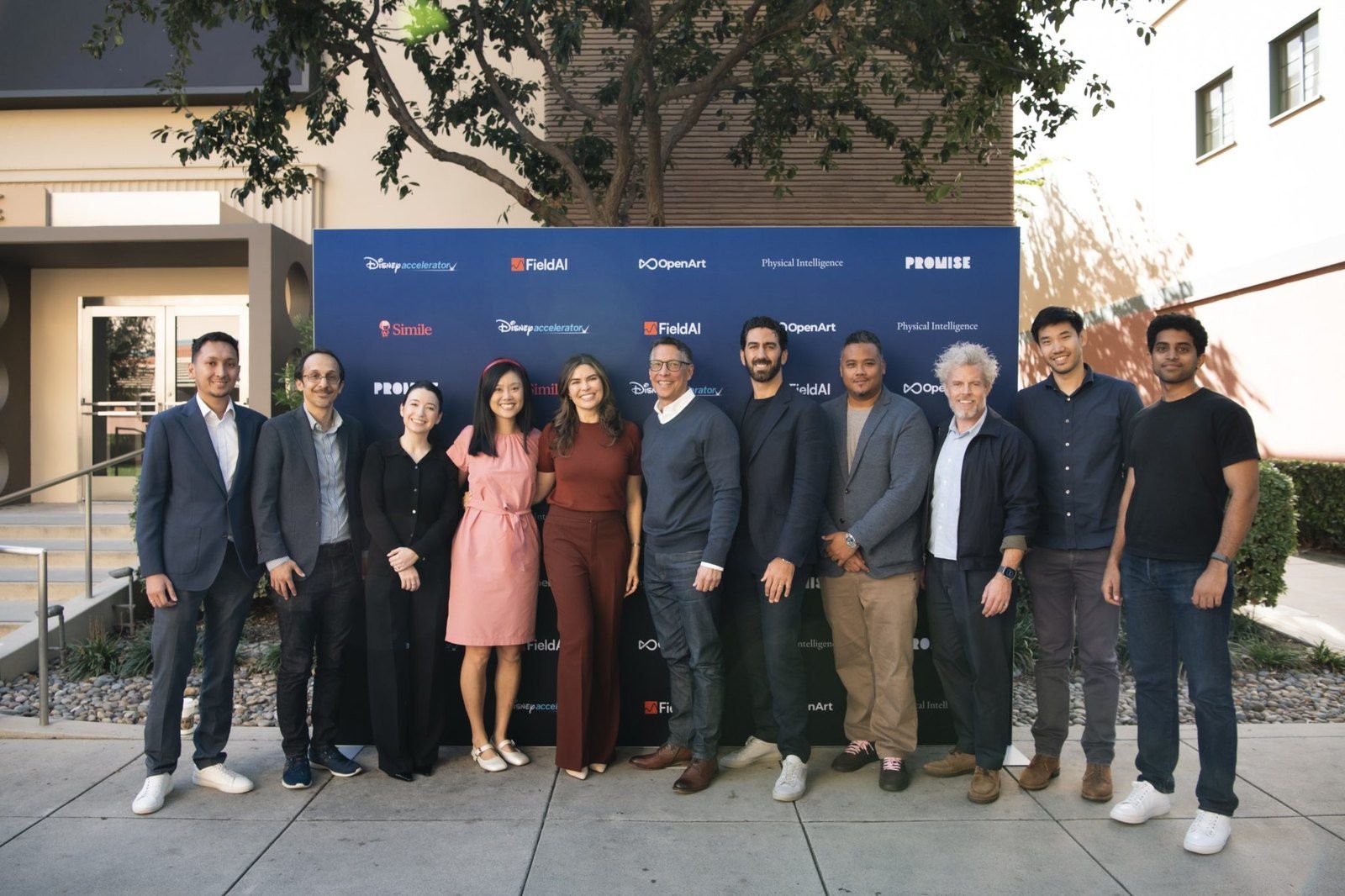
Disney's AI work also runs through startups. It held its 2026 Disney Accelerator Demo Day on the Walt Disney Studios lot in Burbank on Nov. 3, where this year's cohort — Promise, OpenArt, FieldAI, Physical Intelligence and Simile — showed the results of four months of work with Disney's business units. The programme, launched in 2014, is in its 12th year and has taken in more than 60 companies. (Each company's work with Disney)
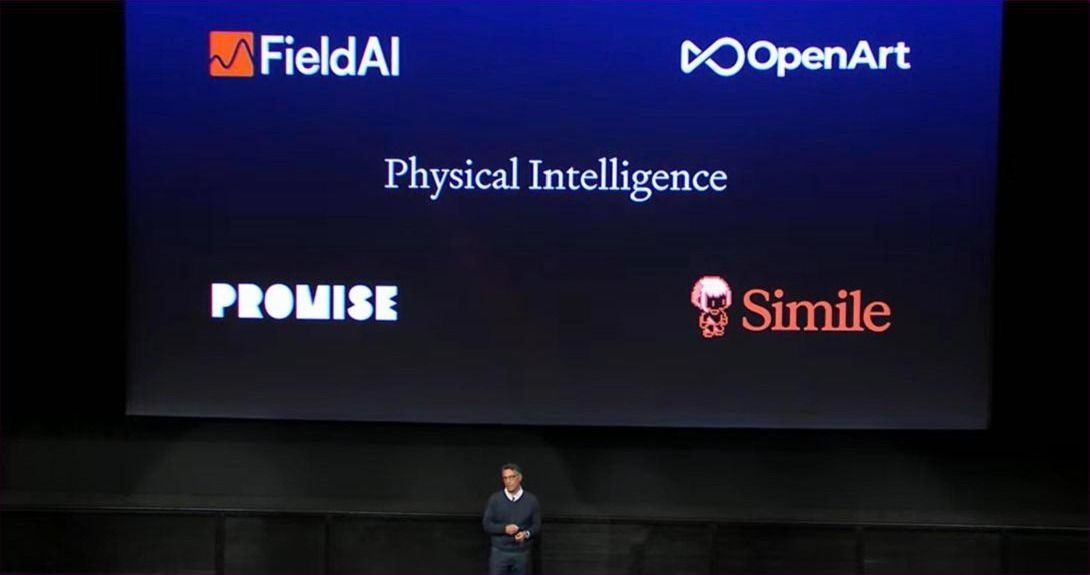
All five of this year's companies are AI firms. Opening the event, D'Amaro said Disney would be "very aggressive about this," TheWrap reported. He said the company is exploring how new technologies can support its creators and give audiences around the world more engaging, more personalised experiences. "It's been a privilege to help these collaborations take shape," Bonnie Rosen, general manager of the Disney Accelerator, said in Disney's announcement.
David Min, Disney's vice president of corporate innovation, said the company is testing whether the technology fits workflows it already has.
Promise, an AI-native studio, demonstrated hybrid filmmaking with Walt Disney Studios, blending live-action performance with generative workflows. Actors perform in a 'gray box' studio — neutral light, a plain backdrop and a few boxes standing in for props — while AI fills in the background and props in near-real time.
Doug Liman's 'Bitcoin: Killing Satoshi' was the first gray-box AI shoot. Promise CEO George Strompolos said Disney is not currently working on a gray-box project.
Music was part of the programme too. OpenArt announced work with Disney Music Group to generate and evaluate visual concepts for lyric videos quickly. CEO Coco Mao calls the practice of typing conversational instructions to make a video 'vibe directing.' Disney discussed using the tool for older soundtrack singles, marketing clips and possibly fan creations, and it includes CopySight, a feature that flags output at risk of infringing other IP. With OpenArt's tools, Disney Music Group's team cut the time needed to produce and compare concept options from weeks to hours, and Disney plans to use them for fan-focused music content between major album releases.
In the parks, robotics AI companies FieldAI and Physical Intelligence worked with Imagineering on a parking-guide robot and a backstage robot that sorts 3D glasses between shows, while Simile used crowds of digital twins modelled on real people to test Walt Disney World's booking process.
Animaj, last year's cohort member mentioned above, demonstrated FlipMove, its artist-led AI animation workflow, which builds 3D scenes from animators' animatics and speeds up in-betweening; it is being used on season two of 'Ozzy Fox' with Disney Jr.
A 20% savings target… part of the money goes back into technology and content
Disney is restructuring at the same time. Bloomberg reported on Nov. 3 that the company is moving toward thousands of job cuts and has asked some managers to target 20% in annual cost savings. D'Amaro plans to reinvest part of the savings in film and TV programming, technology, and the parks and cruise businesses.
Because technology is on the reinvestment list, the cuts are running alongside the Character.AI purchase, the Adobe alliance and the Accelerator investments.
At the Bloomberg Screentime conference on Oct. 1, Walden said: "Technology set their sights on our business and we must survive and thrive and grow." She called layoffs "extremely painful."
CJ ENM made a 60-minute AI film for ₩500 million… Korea chases cost, Disney chases control
Korean media companies are also bringing AI into production and management. In Korea, CJ ENM has gone furthest in commercialising AI production. On April 30 it premiered 'The House' (아파트), a 60-minute film in which everything except the actors' performances was generated with AI. It was shot in four days on an indoor stage for about ₩500 million (roughly $374,000). In February the company launched an AI Content Alliance (AI 콘텐츠 얼라이언스) with 13 production companies and five schools to co-develop AI-native IP and share GPU and cloud capacity.
Korean and US media companies differ in how they use AI. Korean AI production is aimed at lowering costs and creating new IP; Disney's approach is about governing IP it already owns. What it is building with Adobe is not a deal to train someone else's general model on Disney characters but a Disney-only model trained on Disney data.
Korea's terrestrial broadcasters KBS, MBC and SBS, and channel operators such as CJ ENM and JTBC, sit on decades of drama, entertainment and documentary archives and face the same question as Disney.
They can license those archives to AI companies for training revenue, or rent the tools, build their own models and keep control of characters, formats and visual style. Deal terms are shifting as well. Axios's Media Trends 2026 annual report counts at least 299 content deals between AI companies and media groups against 107 lawsuits, and payment is moving from training licences toward compensation based on actual usage.
Subtitles and dubbing first, one owner for AI… what Korean broadcasters need to settle
Disney has pulled AI work that was spread across its units under its first CTO, and the executives who had overseen AI adoption and studio technology are stepping down. It started with areas where creative pushback is light: finance reports, title recommendations and park operations.
In a YouGov survey from October 2025 cited in Luminate's report, majorities of US adults found AI acceptable for subtitle translation for overseas releases (64%) and for creating dubbed voices (52%), while 75% said replacing actors entirely with AI characters was unacceptable. For Korean broadcasters that rely heavily on overseas distribution, subtitling and dubbing are the processes where AI can go in first.
From Adobe, Disney secured early access to new tools, dedicated engineering and research staff for its production pipeline, and models trained on its own IP.
Disclosure remains an open question. 'Ozzy Fox' reached children without any statement of how AI was used. Korea's AI Basic Act (인공지능 기본법), in force since Jan. 22, requires labelling of generative-AI output, and in a July report from Luminate, 93% of US respondents said AI use in film and TV should be disclosed. Korean broadcasters and producers taking AI-assisted shows abroad need a disclosure standard first. As the line between AI-assisted and AI-made content blurs, YouTube, TikTok and Meta are each setting their own disclosure rules, and labels vary by platform.
Disney's approach to talent is also worth noting for Korean media companies. Through its annual Accelerator it nurtures companies such as Animaj and turns them into co-production partners, and the programme favours growth-stage companies that can contribute to a division right away. Rather than building AI teams from scratch, Korean broadcasters could tie startup investment and incubation programmes directly to co-production pipelines.
Conclusion and outlook… 'Ozzy Fox' on Disney+ in December is the first test
"Technology itself is not the goal," D'Amaro said at Accelerator Demo Day on Nov. 3. He sees AI investment as a continuation of the Hollywood model, much as the 2006 Pixar acquisition ushered in the era of computer-animated features.
The first test is likely to come in December. How 'Ozzy Fox,' which drew both views and criticism on YouTube, performs on a paid subscription service will shape how much AI animation Disney schedules. Next year, conversational features built by the Character.AI team, whether the Adobe models move into film production, and discovery in the Midjourney case will set the next stage. With the studios' own AI use now a discovery issue, the line Disney draws between the AI it uses and the AI it fights is likely to be tested.
Korean broadcasters and media companies should note that what Hollywood studios prize in AI deals is changing. The focus used to be training fees paid for content used to train models; it is now moving to control over the output. Any Korean company discussing archive licences with a foreign AI firm should settle model ownership and the scope of output use before it settles the price.