
FCC Moves to Scrap the 85-Year-Old 39% Ownership Cap — and the Industrial Language Missing From Korea's Broadcast Debate
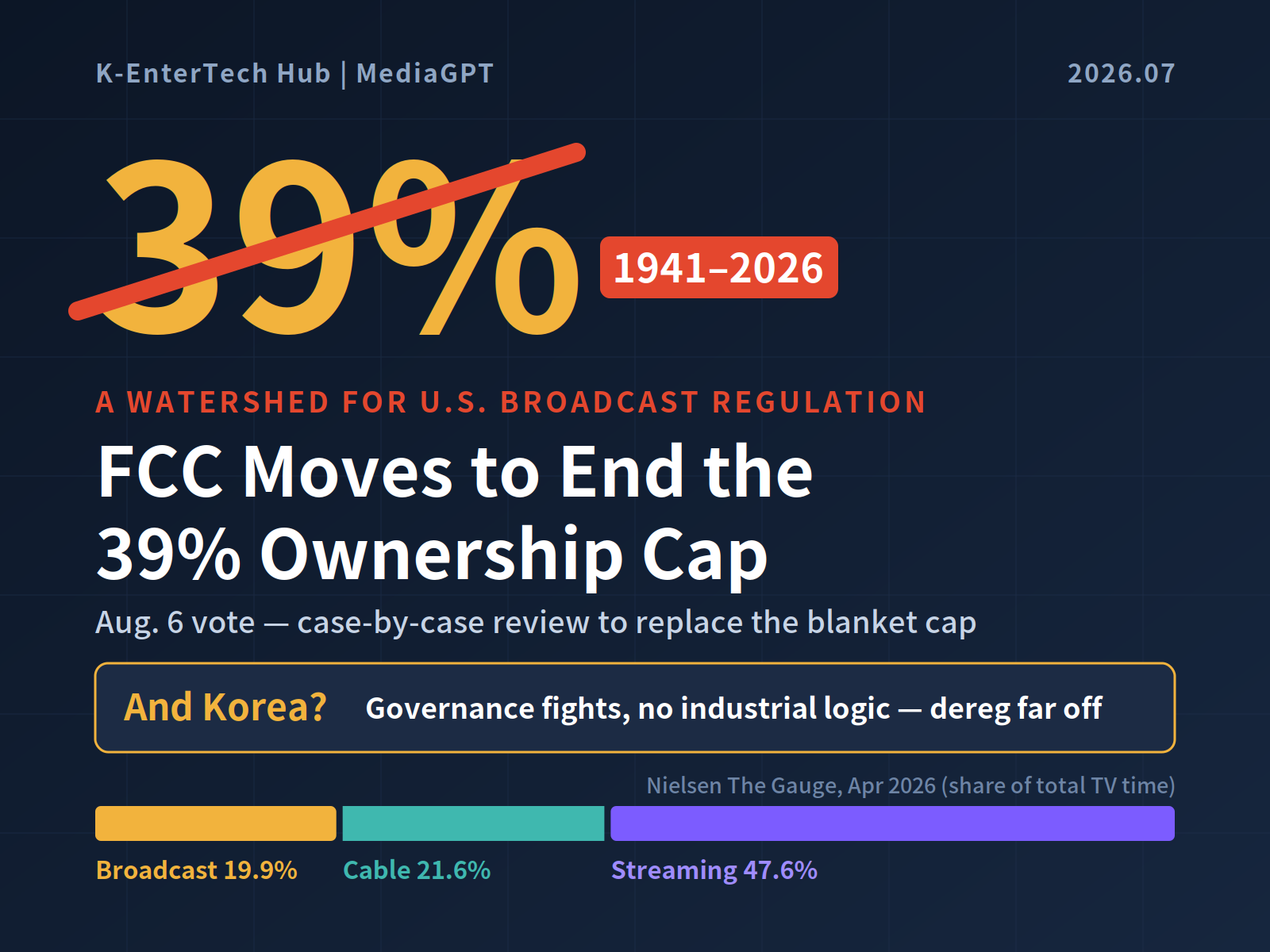
Aug. 6 vote would replace the blanket national cap with case-by-case public interest review — a starting gun for mega-consolidation among Nexstar, Sinclair and their peers
While Washington argues over broadcast survival in industrial terms, Seoul remains locked in 'normalization' fights over public-broadcaster boards — ownership deregulation nowhere in sight
The last pillar of U.S. national broadcast ownership regulation is coming down. On August 6, the Federal Communications Commission will vote to eliminate the rule that bars any single broadcaster from reaching more than 39% of U.S. TV households, replacing the blanket limit with a case-by-case review of each transaction against the agency's public interest standard. FCC Chairman Brendan Carr confirmed the plan on July 15 through an op-ed and an official FCC announcement. It comes 85 years after the first national ownership restrictions of 1941, and 22 years after Congress fixed the cap at 39% in 2004.
 Jung Han
Behind the push is the collapse of the economics that once sustained local broadcasting. In Nielsen's The Gauge for April 2026, broadcast fell to 19.9% of total U.S. TV time while streaming held 47.6%. Streamers and virtual pay-TV distributors like Netflix and YouTube TV can deliver programming to 100% of the country with no reach restriction of any kind, while local station owners alone remain bound by the 39% ceiling. Cord-cutting is squeezing retransmission fees and advertising at the same time, and U.S. television news employment has been shrinking since its 2021 peak, down 3.3% in 2024. Station groups have demanded the scale to compete with big tech, and the FCC of the second Trump administration has now answered.