

U.S. 'Make Hollywood Great Again' Policy Projected to Cause ₩1.8 Trillion in Damages to K-Content... Seeking Opportunities Amid Crisis
12월 2일 국회 오후 1시 30분 11간담회실 [글로벌 정책 변화에 따른 국내 콘텐츠산업 대응방안」포럼 개최
The 5th Media & Content Industry Reform Forum to Be Held at National Assembly Members' Office Building on December 2 (Tuesday)
The forum "Strategies for Korean Content Industry in Response to Global Policy Changes," co-hosted by Rep. Han Min-su (Democratic Party of Korea) and the Digital Future Research Institute, will be held at Conference Room 11 of the National Assembly Members' Office Building at 2:00 PM on Tuesday, December 2.
This forum is the fifth installment of the "Institutional Reform Forum for Media & Content Industry Restructuring," designed to conduct in-depth analysis of the impact of the Trump administration's "Make Hollywood Great Again (MHGA)" policy on the Korean content industry and explore response strategies.
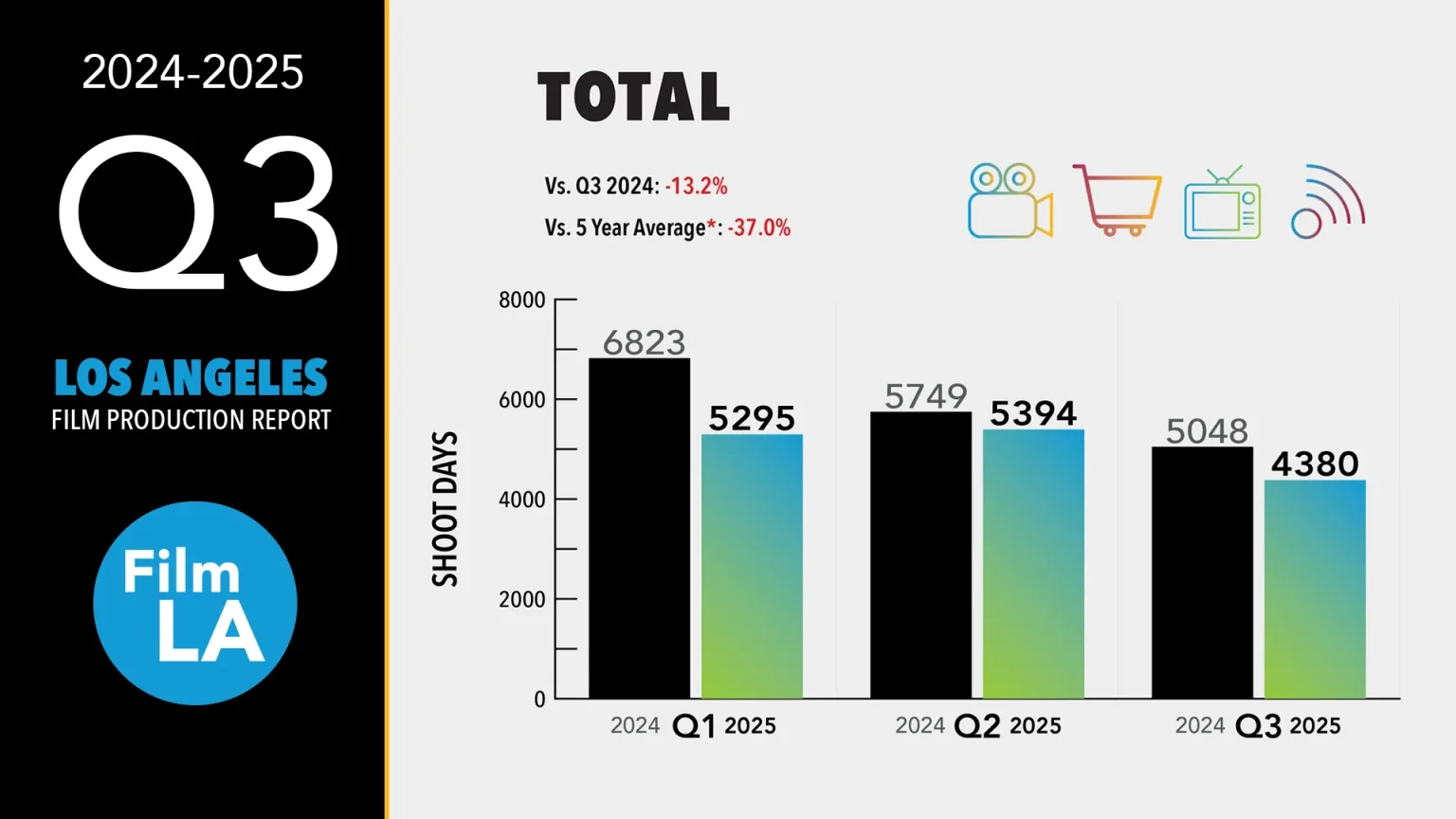
Hollywood's Crisis Amid Shrinking Global Production Market
According to a report released by FilmLA on November 25, Los Angeles maintained its position as the global hub for film and TV production in 2024, but overall market volume has been shrinking dramatically. Of the 857 films and scripted TV series released in 2024, 18.3% were shot in LA—nearly unchanged from the 18.5% share in 2023—while second-place Georgia accounted for 9.8%.
However, total production volume has been declining continuously, from 1,040 in 2022 to 990 in 2023 and 857 in 2024. This reflects both the aftermath of the 2023 actors' and writers' strikes and streaming companies scaling back their production ambitions. FilmLA spokesperson Philip Sokoloski stated, "There are far fewer film projects being made in Los Angeles than there were in the recent past—something California's creative community already understands on a personal level."
Notably, the UK has seen its market share rise from 6.6% to 8.8% due to a surge in streaming and cable TV series production, illustrating the trend of Hollywood work moving overseas. In response, California Governor Gavin Newsom implemented a policy last summer to expand the state's tax credit from $330 million to $750 million.
| Time | Program | Speaker / Affiliation |
|---|---|---|
| 13:30–13:35 | National Ceremony | |
| 13:35–13:40 | Opening Remarks | KWEON Osang, Director (Digital Future Research Institute) |
| 13:40–13:45 | Welcome Remarks | HAN Minsoo, Member of the National Assembly (Democratic Party of Korea) |
| 13:45–13:50 | Commemorative Photo | |
| 13:50–14:20 | Presentation 1 | “MHGA (Make Hollywood Great Again) Policy Impact Analysis” – LEE Changu, Research Fellow (Digital Future Research Institute) |
| 14:20–14:50 | Presentation 2 | “MHGA (Make Hollywood Great Again) Policies and Responses by Country and Company” – JUNG Han, CEO (K EnterTech Hub) |
| 14:50–15:10 | Break | |
| 15:10–16:10 | Comprehensive Discussion | Chair: JOO Jungmin, Professor (Chonnam National University); Panelists: KIM Seonghoon, Director (Cine21); OH Hayoung, Senior Researcher (Korea Culture & Tourism Institute); YOO Geonsik, Professor (Sungkyunkwan University); LEE Sangwon, Professor (Kyunghee University) |
| 16:10–16:30 | Q&A |
Hollywood's Structural Crisis and MHGA Policy Background
The MHGA policy stems from Hollywood's structural crisis. According to Variety Intelligence Platform's 2025 report, film and TV production activity in Los Angeles has declined 36% compared to 2022, while California's film and TV industry employment has dropped 54% from its peak. In Q1 2025, LA-area shoot days totaled 800—the lowest since the pandemic.
In response, President Trump is pursuing the MHGA policy, which includes strong protectionist measures such as 100% tariffs on foreign-produced content, new federal tax credits of 25-40% for domestic production, and an additional 50% tax on licensing costs when streaming services include foreign content. Other measures under consideration include a 567% expansion of Section 181 limits from $15 million to $100 million, revival of Fin-Syn rules restricting streaming platforms' content ownership, and mandatory disclosure of viewership data.
P1: Quantitative Analysis of MHGA Policy Impact
In the first presentation, Dr. Lee Chan-gu, Research Fellow at the Digital Future Research Institute, will present quantitative analysis results using various economic models including VAR (Vector Autoregression), VARX, and CGE (Computable General Equilibrium) to assess MHGA's impact on the Korean content industry.
According to the analysis, if MHGA is fully implemented, Korean content industry exports to the U.S. are projected to plummet by 83-86%. By sector, music exports are expected to decline by 85.6%, broadcasting by 84.9%, and film by 83.8%—indicating that tariffs would effectively serve as market entry barriers given the high price elasticity of entertainment products.
Total economic losses are analyzed at approximately ₩1.821 trillion, comprising direct effects (content production) of approximately ₩583 billion, indirect effects (related industries) of approximately ₩438 billion, and induced effects (tourism, consumer goods, etc.) of approximately ₩800 billion. On the employment front, approximately 3,873 jobs are expected to be lost, with damage likely concentrated on small and medium production companies and freelancers.
VARX/partial CGE analysis shows that when U.S. GDP increases by 1%, IP (music) demand rises by 3.79% and audiovisual (broadcasting/film) demand increases by 5.95%, suggesting that K-content is consumed as a luxury or discretionary good rather than a necessity in the U.S. market. Under 100% tariffs, prices perceived by U.S. consumers would double, resulting in projected declines of 29.3% in IP exports and 31.5% in audiovisual exports.
Dr. Lee emphasized, "These results demonstrate that protectionism is not even a 'zero-sum game' but rather a 'negative-sum game' that ultimately shrinks the entire economic pie," adding that "the role of government policy is to transform finite games into infinite games."
P2: Country-by-Country and Company-by-Company Response Strategies
In the second presentation, Jung Han CEO of K-EnterTech Hub, will provide detailed analysis of global market response trends.
California has aggressively responded to MHGA by expanding its annual tax credit budget by 127% from $330 million to $750 million and offering up to 53% rebates for independent films. In November 2025, it allocated a total of $313 million (approximately ₩420 billion) in tax credits to 17 TV programs including "Fallout" Season 3 and "Mr. & Mrs. Smith" Season 2.
The European Union is considering 100% retaliatory tariffs on U.S. films, raising the mandatory European content ratio for streaming platforms from 30% to 50%, and increasing the Creative Europe budget by 50% from €2 billion to €3 billion. The UK is pursuing an independent path post-Brexit, having attracted £4.8 billion (approximately $6.3 billion) from U.S. projects in 2024 and planning to invest £1.5 billion in expanding Pinewood Studios and Shepperton Studios.
China is accelerating its "Hollywood Decoupling" policy by reducing the foreign film import quota from 34 to 20 annually, limiting Hollywood films to a maximum of 10, and allocating an additional 10 billion yuan to the China Film Development Fund. Hollywood's share of the Chinese box office has fallen from 35.8% in 2019 to 21.4% in 2024.
Canada is positioned as the biggest beneficiary of MHGA, offering a combined 55% incentive (20% federal plus 35% provincial) plus exchange rate advantages (1 USD = 1.35 CAD), with the share of U.S. projects projected to increase from 87% in 2024 to 94% in 2026.
Japan is investing ¥50 billion in animation production support (double the previous year), actively pursuing film adaptations of game IPs, and planning 20 new studios in the Kyoto-Osaka region.
Global studios are also responding rapidly. Disney, with 72% of production overseas, faces potential losses of $2.1 billion if MHGA is implemented, and is actively responding by considering shifting Marvel Phase 6 to U.S. production and deploying 100 legal team members. Netflix is expanding its U.S. production share from 48% to 65%, reallocating $5 billion, and considering subscription price increases of 15-20%. Warner Bros. Discovery has taken a conservative approach, immediately halting 2 ongoing projects and cutting its 2025 production slate by 40%.
Han stated, "MHGA represents both crisis and opportunity," adding that "this could be a historic turning point where Korea can leverage its accumulated creativity and production capabilities to emerge as a new leader in the post-Hollywood era."
MHGA Implementation Probability and Scenario Projections
According to a joint analysis by the Brookings Institution and CSIS in June 2025, the probability of full MHGA implementation is assessed at 20%, partial implementation at 50%, and negotiated settlement at 30%.
Under full implementation, Korea would face damages including a 50% reduction in Netflix investment (approximately ₩400 billion annually), a 30% decline in K-content exports, and a 20% reduction in production workforce (approximately 8,000 people). Under partial implementation, Netflix investment would decrease by only 20%, potentially creating an opportunity for K-content to fill the Hollywood vacuum. A negotiated settlement would maintain the status quo while potentially catalyzing international co-production.
Policy Response Directions
The forum will discuss multifaceted policy response directions including: ▲Concentrating trade diplomacy efforts (leveraging Korea-U.S. FTA provisions, asserting cultural exception principles, pursuing bilateral high-level consultations) ▲Strengthening industry support measures (emergency financial support, tax benefits, employment maintenance subsidies) ▲Supporting market diversification (expanding Asian markets through RCEP, establishing cultural cooperation provisions in Korea-ASEAN FTA, creating K-content co-production funds) ▲Strengthening the domestic market base (transitioning to IP-based business models, expanding cultural expense income deduction limits, extending Youth Culture Pass to media and content sectors).
Immediate and structural response tasks will also be presented, including establishing a pan-government task force, allocating emergency support budgets, signing MOUs to maintain global co-production and AI investment, comprehensive revision of the Content Promotion Act, establishing an Intellectual Property Protection Agency, and developing rights frameworks for AI-created works.
Panel Discussion
The panel discussion will be moderated by Prof. Joo Jung-min of Chonnam National University, with panelists including Kim Sung-hoon (Division Director, Cine21), Oh Ha-young (Associate Researcher, Korea Culture and Tourism Institute), Prof. Yoo Gun-sik (Sungkyunkwan University), and Prof. Lee Sang-won (Kyung Hee University) engaging in in-depth discussion of the presentations.
12월 2일 국회서 오후 2시 [글로벌 정책 변화에 따른 국내 콘텐츠산업 대응방안」포럼 개최
미국 '할리우드를 다시 위대하게(MHGA) 정책, K-콘텐츠에 약 1조 8천억원 피해 전망... 위기 속 기회 모색
12월 2일(화) 국회의원회관에서 제5차 미디어·콘텐츠 산업 제도개선 포럼 열려
국회의원 한민수(더불어민주당)와 디지털미래연구소가 공동 주최하는 「글로벌 정책 변화에 따른 국내 콘텐츠산업 대응방안」 포럼이 오는 12월 2일(화) 오후 2시 국회의원회관 제11간담회의실에서 개최된다.
이번 포럼은 '미디어·콘텐츠 산업 체질 개선을 위한 제도개선 포럼'의 다섯 번째 행사로, 트럼프 2기 행정부가 추진 중인 'MHGA(Make Hollywood Great Again)' 정책이 한국 콘텐츠 산업에 미칠 영향을 심층 분석하고 대응 방안을 모색하는 자리다.
글로벌 제작 시장 축소 속 할리우드의 위기
지난 11월 25일 FilmLA가 발표한 보고서에 따르면, 로스앤젤레스는 2024년에도 글로벌 영화·TV 제작의 중심지 지위를 유지했지만, 전체 시장 규모는 급격히 축소되고 있다. 2024년 개봉된 857편의 영화 및 스크립트 TV 시리즈 중 18.3%가 LA에서 촬영되어 2023년의 18.5%와 비슷한 수준을 기록했으며, 2위인 조지아주는 9.8%의 점유율을 보였다.
그러나 전체 제작 편수는 2022년 1,040편에서 2023년 990편, 2024년 857편으로 지속적으로 감소하고 있다. 이는 2023년 배우·작가 파업의 여파와 함께 스트리밍 기업들이 제작 규모를 축소하면서 나타난 결과다. FilmLA 대변인 필립 소콜로스키는 "LA에서 제작되는 영화 프로젝트가 최근에 비해 훨씬 줄었다는 것은 캘리포니아 크리에이티브 커뮤니티가 이미 체감하고 있는 현실"이라고 밝혔다.
특히 영국은 스트리밍 및 케이블 TV 시리즈 제작 급증으로 시장 점유율이 6.6%에서 8.8%로 상승하며 할리우드의 해외 이탈 추세를 보여주고 있다. 이에 대응해 캘리포니아주 개빈 뉴섬 주지사는 지난 여름 세액공제 규모를 3억 3천만 달러에서 7억 5천만 달러로 확대하는 정책을 시행했다.
LA 촬영일수 추이 (총계)
| 분기 | 연도 | 촬영일수(Shoot Days) |
|---|---|---|
| Q1 | 2024 | 6,823 |
| Q1 | 2025 | 5,295 |
| Q2 | 2024 | 5,749 |
| Q2 | 2025 | 5,394 |
| Q3 | 2024 | 5,048 |
| Q3 | 2025 | 4,380 |
할리우드의 구조적 위기와 MHGA 정책 배경
MHGA 정책은 이러한 할리우드의 구조적 위기에서 비롯됐다. Variety Intelligence Platform의 2025년 보고서에 따르면 로스앤젤레스의 영화·TV 제작 활동이 2022년 대비 36% 감소했으며, 캘리포니아의 영화·TV 산업 고용은 정점 대비 54%나 줄었다. 2025년 1분기 LA 지역 촬영일수는 800일로 팬데믹 이후 최저치를 기록했다.
이에 트럼프 대통령은 해외 제작 콘텐츠에 100% 관세를 부과하고, 미국 내 제작에 대해 25~40% 연방 세액공제를 신설하며, 스트리밍 서비스의 해외 콘텐츠 편성 시 라이선스 비용의 50%를 추가 과세하는 등 강력한 보호무역주의적 조치를 담은 MHGA 정책을 추진하고 있다. 또한 Section 181 한도를 1,500만 달러에서 1억 달러로 567% 확대하고, 스트리밍 플랫폼의 콘텐츠 소유를 제한하는 Fin-Syn 규칙 부활, 시청 데이터 공개 의무화 등도 검토되고 있다.
발제 1: MHGA 정책영향 정량 분석
첫 번째 발제에서 이찬구 디지털미래연구소 연구위원은 VAR(벡터자기회귀), VARX, CGE(연산일반균형) 등 다양한 경제 모형을 활용해 MHGA 정책이 한국 콘텐츠 산업에 미칠 영향을 정량적으로 분석한 결과를 발표한다.
분석 결과에 따르면, MHGA가 전면 시행될 경우 한국 콘텐츠 산업의 대미 수출이 83~86% 급감할 것으로 전망된다. 산업별로는 음악 85.6%, 방송 84.9%, 영화 83.8%의 수출 감소가 예상되며, 이는 가격 탄력성이 높은 엔터테인먼트 상품의 특성상 관세가 사실상 시장 진입 장벽으로 작용함을 의미한다.
총 경제적 손실 규모는 직접 효과(콘텐츠 생산) 약 5,830억원, 간접 효과(연관산업) 약 4,380억원, 유발효과(관광, 소비재 등) 약 8,000억원 등 총 약 1조 8,210억원에 달할 것으로 분석됐다. 고용 측면에서는 약 3,873명의 일자리가 감소할 것으로 예상되며, 중소 제작사 및 프리랜서에 피해가 집중될 가능성이 높다.
VARX/부분CGE 분석에서는 미국 GDP가 1% 증가할 때 IP(음악) 수요는 3.79%, 시청각(방송/영화) 수요는 5.95% 증가하는 것으로 나타나, K-콘텐츠가 미국 시장에서 필수재가 아닌 사치재 또는 기호재로 소비되고 있음을 시사한다. 100% 관세 부과 시 미국 소비자가 체감하는 가격은 2배가 되며, 이로 인해 IP 수출은 29.3%, 시청각 수출은 31.5% 감소할 것으로 전망된다.
이 연구위원은 "보호무역이 결국 경제 전체의 파이를 줄이는 '제로섬 게임'도 아닌 '마이너스섬 게임'임을 보여주는 결과"라며 "정부 정책의 역할은 유한 게임을 무한 게임으로 전환시키는 것"이라고 강조했다.
발제 2: 국가별·기업별 대응 전략
두 번째 발제에서 한정훈 K엔터테크허브 대표는 글로벌 시장의 대응 동향을 상세히 분석한다.
캘리포니아주는 MHGA에 대응해 세액공제 예산을 연간 3.3억 달러에서 7.5억 달러로 127% 확대하고, 독립영화에 최대 53% 환급을 제공하는 등 공격적인 대응에 나섰다. 2025년 11월에는 '폴아웃' 시즌 3, '미스터 & 미세스 스미스' 시즌 2 등 17개 TV 프로그램에 총 3억 1,300만 달러(약 4,200억원)의 세액공제를 배정했다.
유럽연합은 미국 영화에 대한 100% 보복 관세를 검토하고, 스트리밍 플랫폼의 유럽 콘텐츠 의무 비율을 30%에서 50%로 상향하며, Creative Europe 예산을 20억 유로에서 30억 유로로 50% 증액하는 방안을 논의 중이다. 영국은 Brexit 이후 독자 노선을 추진하며 2024년 미국 프로젝트로부터 48억 파운드(약 63억 달러)를 유치했고, Pinewood Studios와 Shepperton Studios 확장에 15억 파운드를 투자할 계획이다.
중국은 외국영화 수입 쿼터를 연간 34편에서 20편으로 축소하고, 할리우드 영화는 최대 10편으로 제한하며, 중국영화발전기금에 100억 위안을 추가 편성하는 등 '할리우드 디커플링' 정책을 가속화하고 있다. 중국 박스오피스에서 할리우드 영화 점유율은 2019년 35.8%에서 2024년 21.4%로 하락했다.
캐나다는 MHGA의 최대 수혜자로 지목되며, 연방 20%와 주 35%를 합한 총 55%의 인센티브와 환율 이익(1 USD = 1.35 CAD)을 제공해 미국 프로젝트 유치 비중이 2024년 87%에서 2026년 94%로 증가할 전망이다. 일본은 애니메이션 제작 지원에 500억 엔(전년 대비 2배)을 투자하고, 게임 IP 영화화를 적극 추진하며, 교토·오사카 지역에 20개 스튜디오 신설을 계획하고 있다.
글로벌 스튜디오들도 발 빠르게 대응하고 있다. Disney는 해외 제작 비중이 72%로 MHGA 시행 시 21억 달러의 손실이 예상되며, Marvel Phase 6의 미국 제작 전환 검토와 법무팀 100명 투입 등 적극적으로 대응하고 있다. Netflix는 미국 제작 비중을 48%에서 65%로 확대하고 50억 달러를 재배치하며, 구독료 15~20% 인상을 검토 중이다. Warner Bros. Discovery는 진행 중인 프로젝트 2개를 즉시 중단하고 2025년 제작 슬레이트를 40% 축소하는 보수적 접근을 선택했다.
한 대표는 "MHGA는 위기이자 기회"라며 "한국이 그동안 축적한 창의성과 제작 역량을 바탕으로 할리우드 이후(Post-Hollywood) 시대의 새로운 리더로 도약할 수 있는 역사적 전환점이 될 수 있다"고 전망했다.
MHGA 시행 가능성과 시나리오별 전망
Brookings Institution과 CSIS의 2025년 6월 공동 분석에 따르면, MHGA 정책의 전면 시행 가능성은 20%, 부분 시행 가능성은 50%, 협상 타결 가능성은 30%로 평가된다.
전면 시행 시 한국은 넷플릭스 투자 50% 감소(연간 약 4,000억원), K-콘텐츠 수출 30% 감소, 제작 인력 20% 감원(약 8,000명) 등의 피해가 예상된다. 부분 시행 시에는 넷플릭스 투자 20% 감소에 그치며, 할리우드 공백을 K-콘텐츠가 채우는 기회가 될 수 있다. 협상 타결 시에는 현상 유지와 함께 국제 공동제작 활성화의 계기가 될 전망이다.

정책 대응 방향
포럼에서는 ▲통상 외교 역량 집중(한-미 FTA 협정 조항 활용, 문화 예외 원칙 주장, 양자 고위급 협의 추진) ▲산업 지원 방안 강화(긴급 금융 지원, 세제 혜택, 고용 유지 지원금) ▲시장 다변화 지원(RCEP 활용 아시아 시장 확대, 한-ASEAN FTA 문화 협력 조항 신설, K-콘텐츠 공동제작 펀드 조성) ▲내수 시장 기반 강화(IP 기반 비즈니스 모델 전환, 문화비 소득공제 한도 확대, 청년 문화패스 미디어·콘텐츠 분야 확대) 등 다각적인 정책 대응 방향이 논의될 예정이다.
특히 범정부 TF 구성, 긴급 지원 예산 편성, 글로벌 공동제작 및 AI 투자 유지를 위한 양해각서 체결, 콘텐츠진흥법 전면 개정, 지식재산권 보호원 설립, AI 창작물 권리 체계 정비 등 즉각적·구조적 대응 과제도 제시된다.
종합토론
종합토론은 주정민 전남대학교 교수가 좌장을 맡고, 김성훈 씨네21 본부장, 오하영 한국문화관광연구원 부연구원, 유건식 성균관대학교 교수, 이상원 경희대학교 교수가 토론자로 참여해 발제 내용에 대한 심층 논의를 진행한다.
행사 개요
| 항목 | 내용 |
|---|---|
| 일시 | 2025년 12월 2일(화) 13:30~17:00 |
| 장소 | 국회의원회관 제11간담회의실 |
| 공동주최 | 국회의원 한민수, 디지털미래연구소 |
| 발제 1 | "MHGA 정책영향 분석점" - 이찬구 연구위원(디지털미래연구소) |
| 발제 2 | "MHGA 정책과 국가별/기업별 대응" - 한정훈 대표(K엔터테크허브) |
| 좌장 | 주정민 교수(전남대학교) |
| 토론자 | 김성훈 본부장(씨네21), 오하영 부연구원(한국문화관광연구원), 유건식 교수(성균관대학교), 이상원 교수(경희대학교) |