
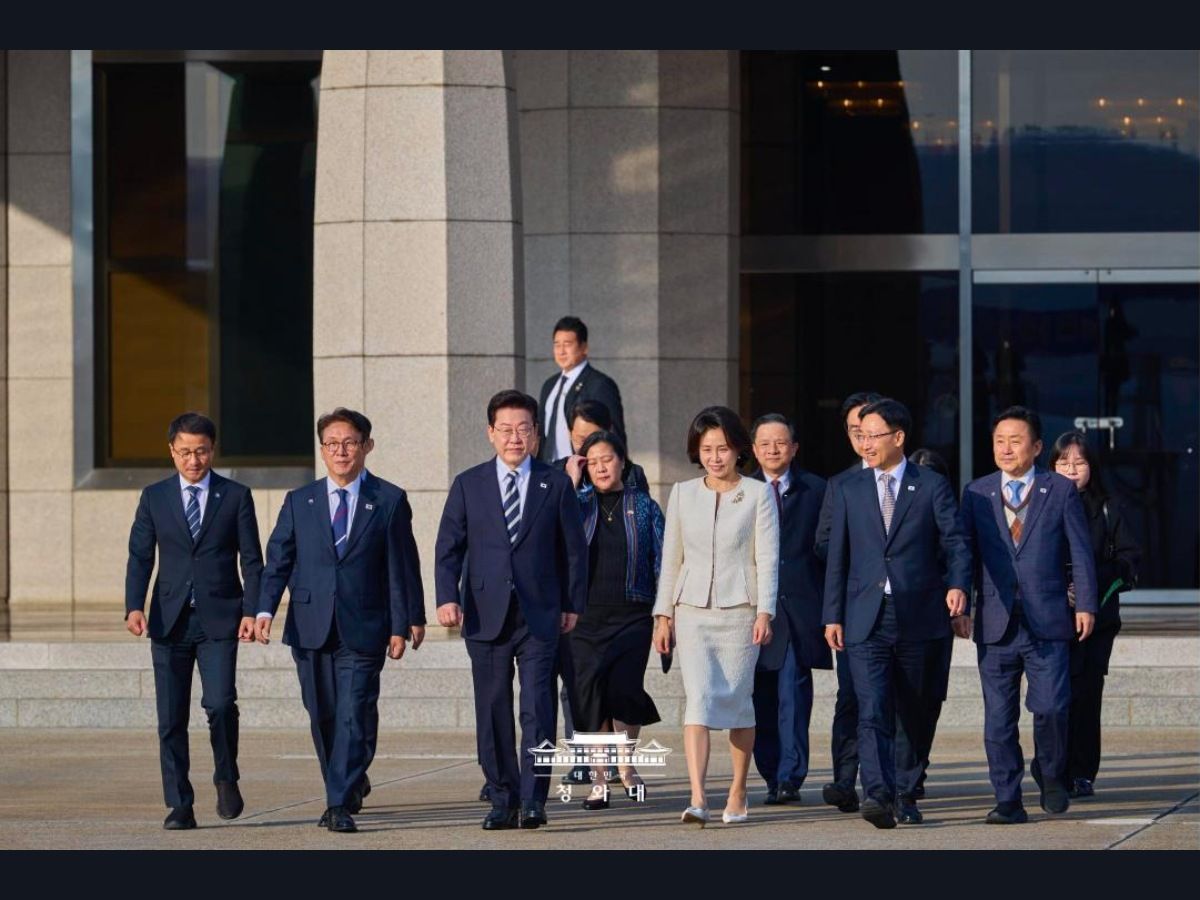
President Lee Jae Myung proposes AI and creative-industry initiatives at the 27th Korea–ASEAN Summit and reaffirms a US$300 billion trade goal, as industry voices keep pressing for a Korea–ASEAN content and AI alliance
South Korean President Lee Jae Myung (이재명) on Monday proposed two new areas of cooperation with the Association of Southeast Asian Nations: artificial intelligence and the creative industries.
“I would like to propose two new forms of cooperation,” Lee said in his opening remarks at the 27th Korea–ASEAN Summit at the Philippine International Convention Center in Manila, naming a Korea–ASEAN AI Partnership Initiative (한-아세안 AI 동행 이니셔티브) and a Korea–ASEAN Creative Industries Initiative (한-아세안 문화창조산업 이니셔티브). “Korea will take the lead so that everyone can share in the benefits of AI, and so that the cultural creativity of ASEAN’s young people leads to new opportunities.”
“The deeper geopolitical conflict and economic uncertainty become, the more closely Korea and ASEAN must stand together,” Lee said. Pointing to the launch of talks to upgrade the Korea–ASEAN free trade agreement, he called for the two sides to move together “toward an era of $300 billion in annual trade.” Two-way trade stood at $204.7 billion in 2025.
The trip runs through Nov. 19. After the ASEAN-related summits in Manila, Lee travels on to the Asia-Pacific Economic Cooperation (APEC) leaders’ meeting.
AI and creative-industry initiatives were first outlined at July ministers’ meeting
The outline of both initiatives was first presented in July at the 29th Korea–ASEAN Foreign Ministers’ Meeting at the same venue. According to Korea’s Ministry of Foreign Affairs (외교부), the AI initiative aims to use AI to tackle social problems in ASEAN and build a sustainable AI ecosystem, drawing on Korea’s full-stack AI capabilities to support ecosystem building, joint research and talent development. The creative industries initiative is organized around shared prosperity, future talent and mutual understanding.
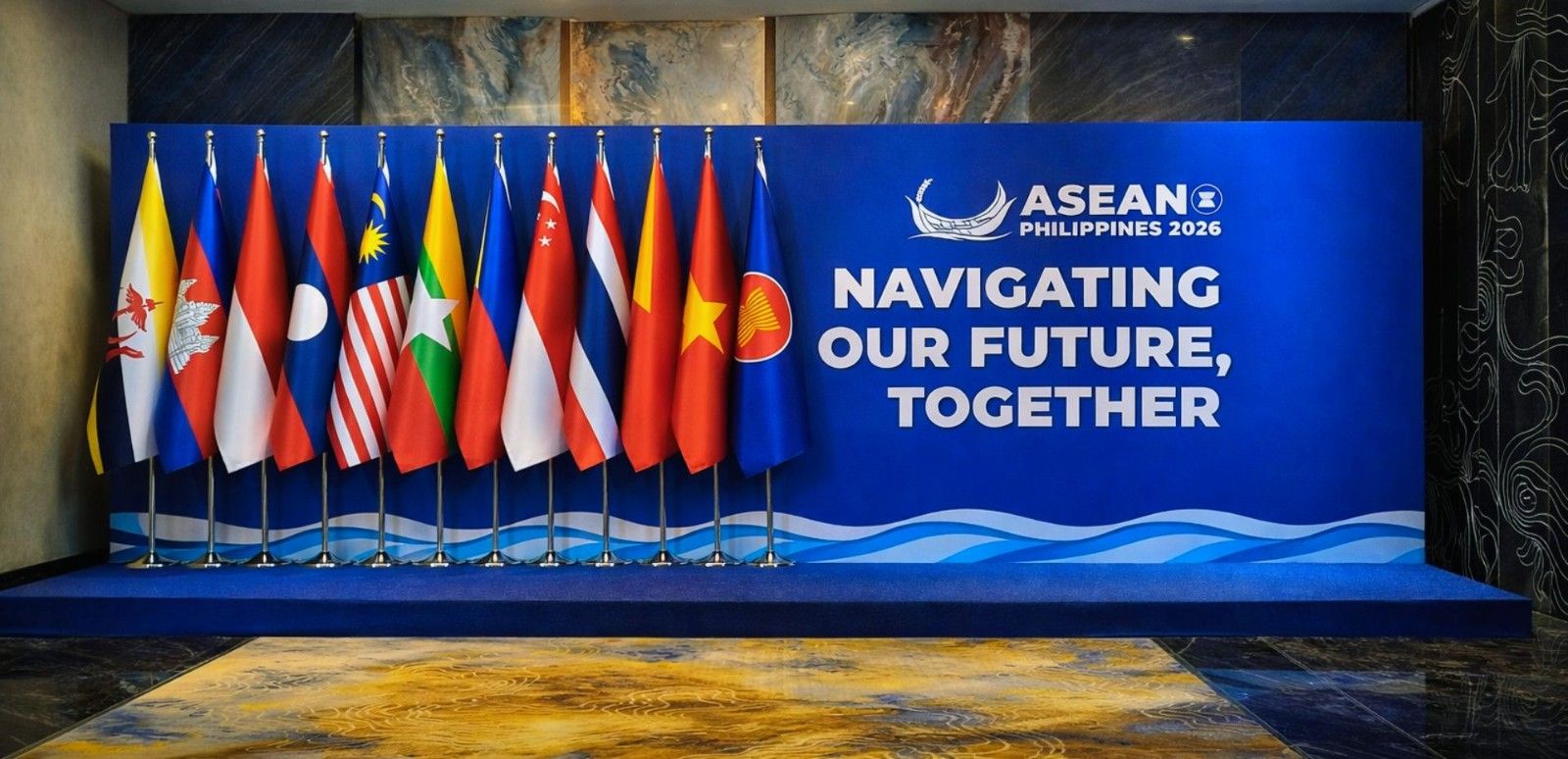
Monday’s summit raised the plan to the leaders’ level. Lee said the Korea–ASEAN Comprehensive Strategic Partnership (CSP) vision he set out in Kuala Lumpur last year was “taking shape one piece at a time within a year,” citing the first concrete Korea–ASEAN project between police and coast guard agencies against transnational crime. “From online to the sea, Korea and ASEAN will protect the lives and safety of our peoples together,” he said.
Lee said the ASEAN Community Vision 2045 “is not ASEAN’s goal alone. It is also a future Korea wants to build together,” pledging that Korea would be a reliable “action partner.” He reaffirmed support for ASEAN centrality and the ASEAN Outlook on the Indo-Pacific, and thanked ASEAN for its role in peace on the Korean Peninsula.
Trade at $204.7 billion, target $300 billion; FTA upgrade talks in second round
The Korea–ASEAN FTA, in force since 2007, is being renegotiated for the first time in 19 years. The two sides declared the start of upgrade talks at last October’s summit and held a first round in Seoul in June. The second formal round ran Sept. 28–Oct. 1 in Singapore, according to the Ministry of Trade, Industry and Resources (산업통상부), opening rule-making talks across 13 areas including digital trade, critical minerals, supply chains and intellectual property. The goal is substantial conclusion by the end of 2027.
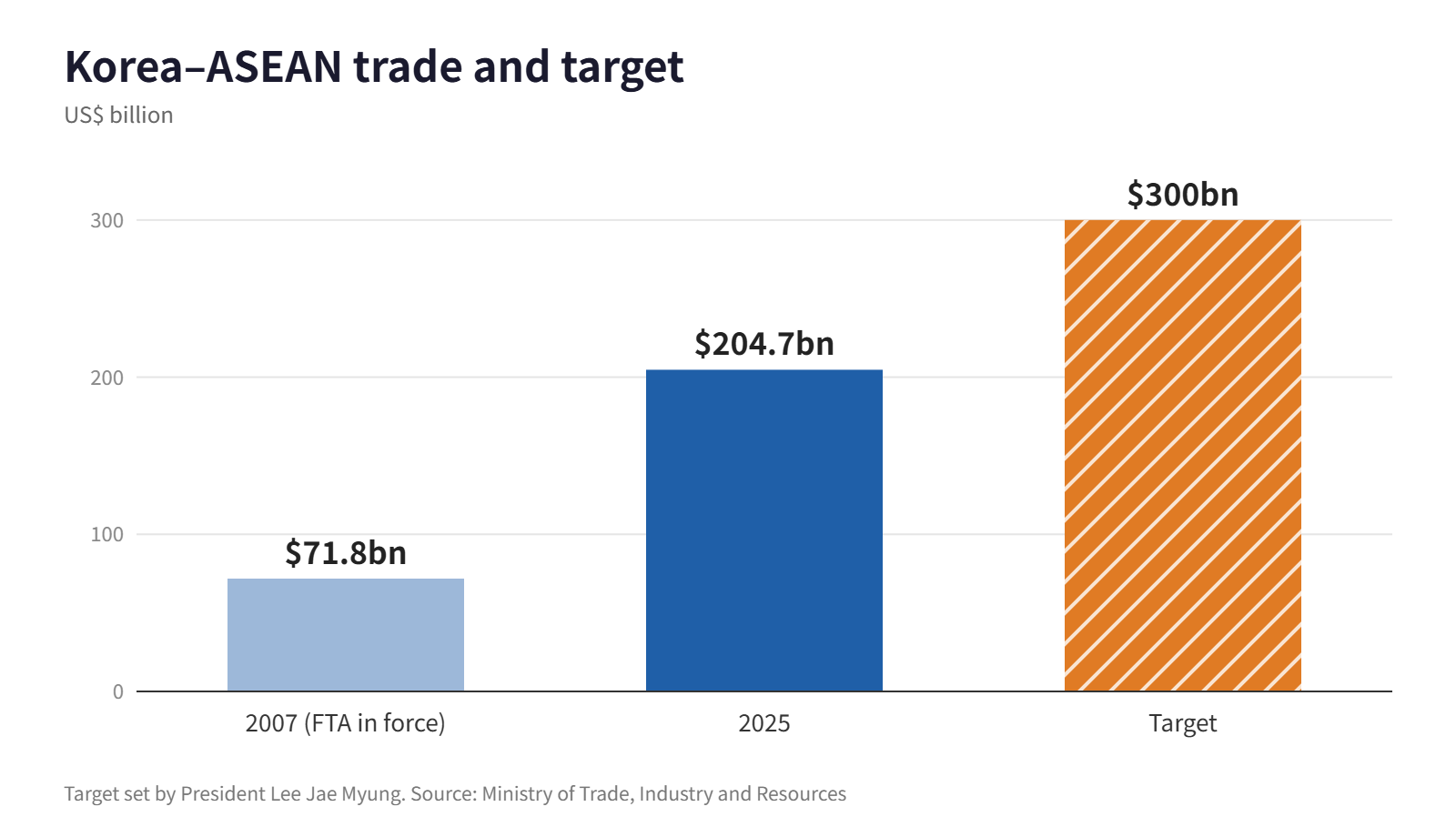
For the content industry, the digital and IP chapters matter most: they will set rules for streaming distribution, digital content trade and IP protection. Trade has nearly tripled from about $71.8 billion when the agreement took effect. Reaching $300 billion would take roughly $95 billion more.
Short dramas and generative AI: a route to co-production and local testing in ASEAN
The creative industries initiative targets young ASEAN creators, giving Korean broadcasters and entertainment tech companies grounds to treat the region as a co-production partner rather than a sales market. Short-form drama is already moving that way. DramaBox, owned by Singapore-based StoryMatrix, is one of the leading micro-drama platforms. Viu, the streaming service of Hong Kong’s PCCW, opened its Viu Shorts section in January, with KT Studio Genie (KT스튜디오지니) among its main content partners.
The AI initiative’s talent and research programs could give Korean generative AI toolmakers room to test products locally. The National IT Industry Promotion Agency (정보통신산업진흥원) held AI Youth Festa 2026, a Korea–ASEAN AI startup competition for 24 teams from Korea and 11 ASEAN countries, in Manila on Nov. 4–5.
Samseog Ko: “one national strategy” for K-content and AI; industry urged a Korea–ASEAN content alliance
Industry has made a similar case. Samseog Ko (고삼석), a distinguished professor at Dongguk University (동국대학교) and a subcommittee member of the Presidential Council on National AI Strategy, proposed at AI CON 2025 in Singapore last October that Korea and Singapore lead a Korea–ASEAN content alliance and an “AI policy alliance.”
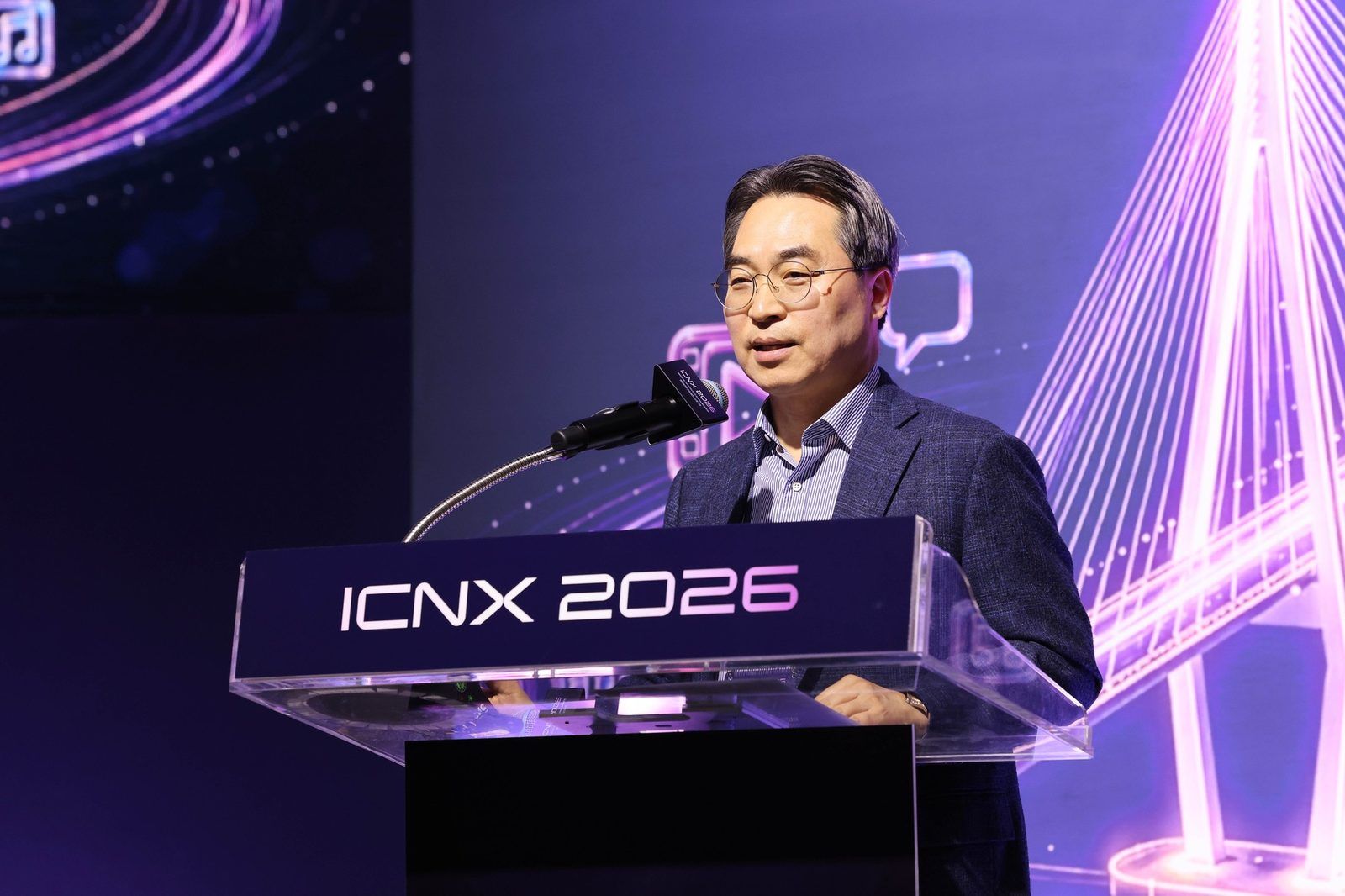
“K-content promotion and AI industry development must be pursued as one national strategy, not as two separate policies,” Ko said in a keynote at ICNX 2026 in Incheon on Nov. 4, arguing for an open ecosystem of co-production with foreign companies and creators.
FTA deal targeted for 2027, 40th-anniversary summit in 2029; industry looks to CES 2027
The FTA upgrade is aimed at substantial conclusion by the end of 2027, and Seoul has asked ASEAN members to back a special summit in Korea in 2029 to mark 40 years of dialogue relations. How far the two initiatives turn into funded programs over that period is the next thing to watch.
For industry, the next stop is CES 2027 in Las Vegas in January, where K-EnterTech Hub will host Entertainment Tech programs and continue talks linking Korean, ASEAN and U.S. companies. The open question is how the two government initiatives translate into co-production in ASEAN and a joint push into the U.S. market for content and AI firms.
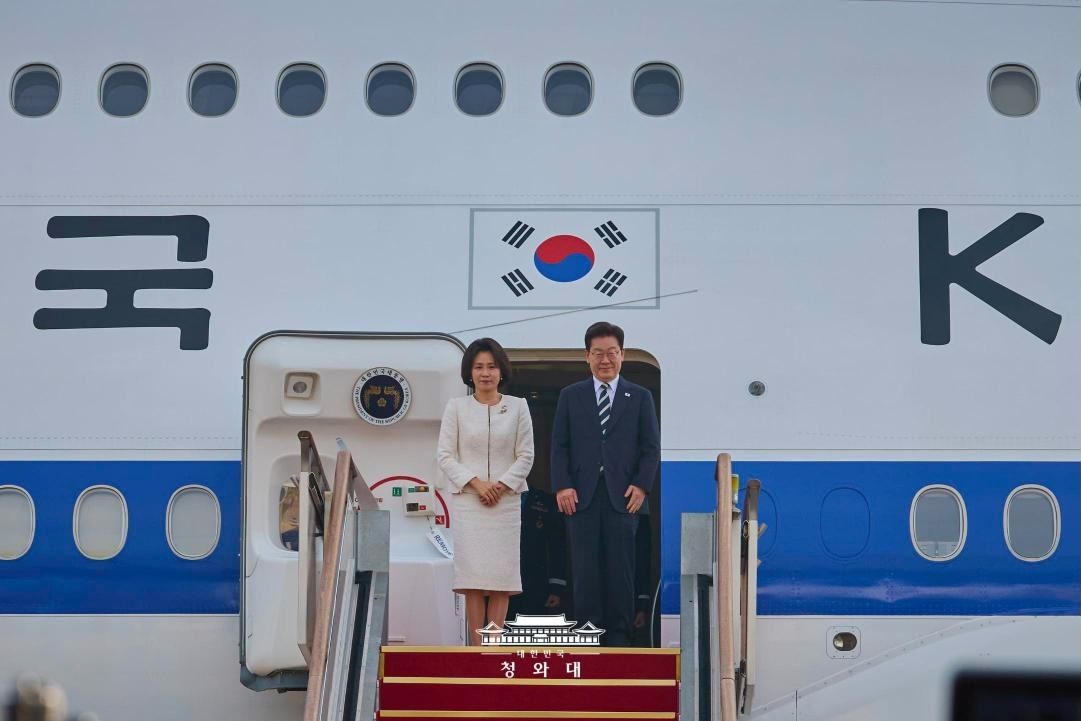
Feature photo: Cheong Wa Dae