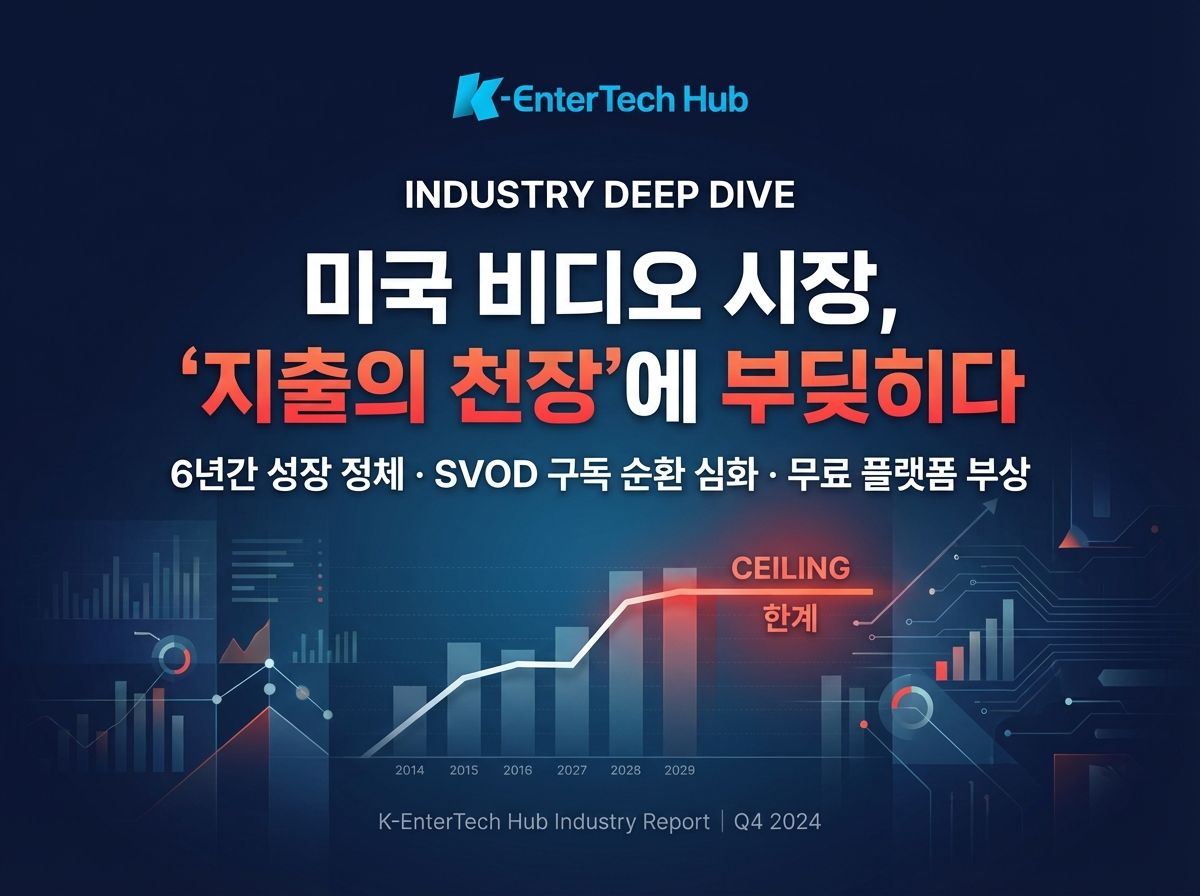
39% 상한선과 넷플릭스–WBD 합병: 붕괴하는 케이블 모델과 부상하는 FAST
by
2026년 2월 8일

INDUSTRY REPORT
The Way Company & K-EnterTech Hub Sign Official MOU with Nevada’s EDAWN
Korean Deep-Tech Enters Nevada: From Tourism Visits to a Year-Round Settlement Platform
February 7, 2026 | On-Site Coverage from Reno, Nevada
Reporting & Analysis: K-EnterTechHub | Partner: The Way Company
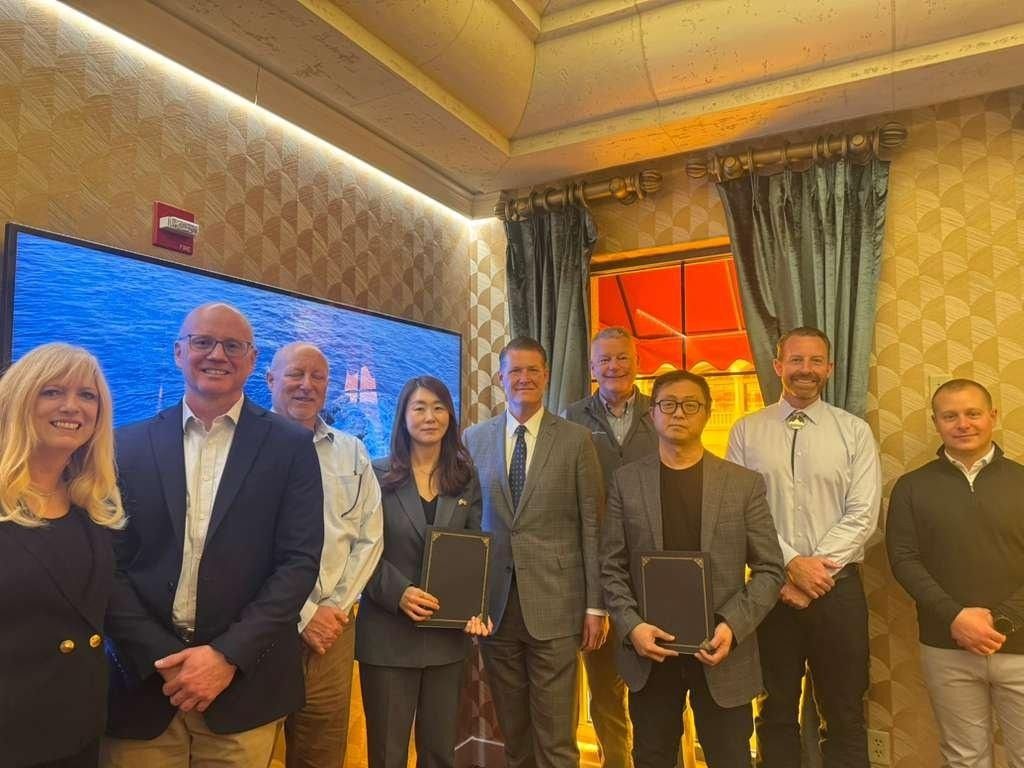
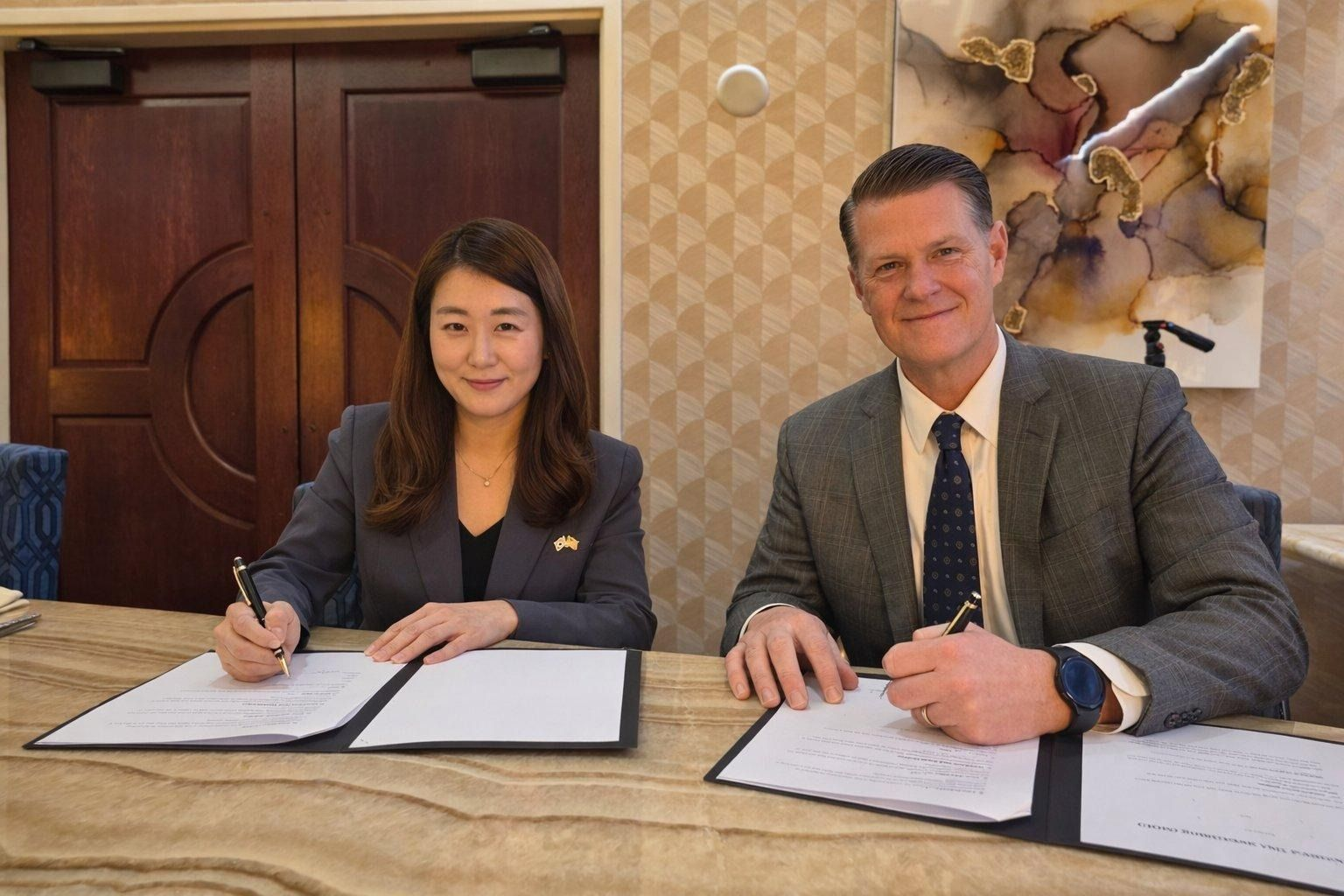
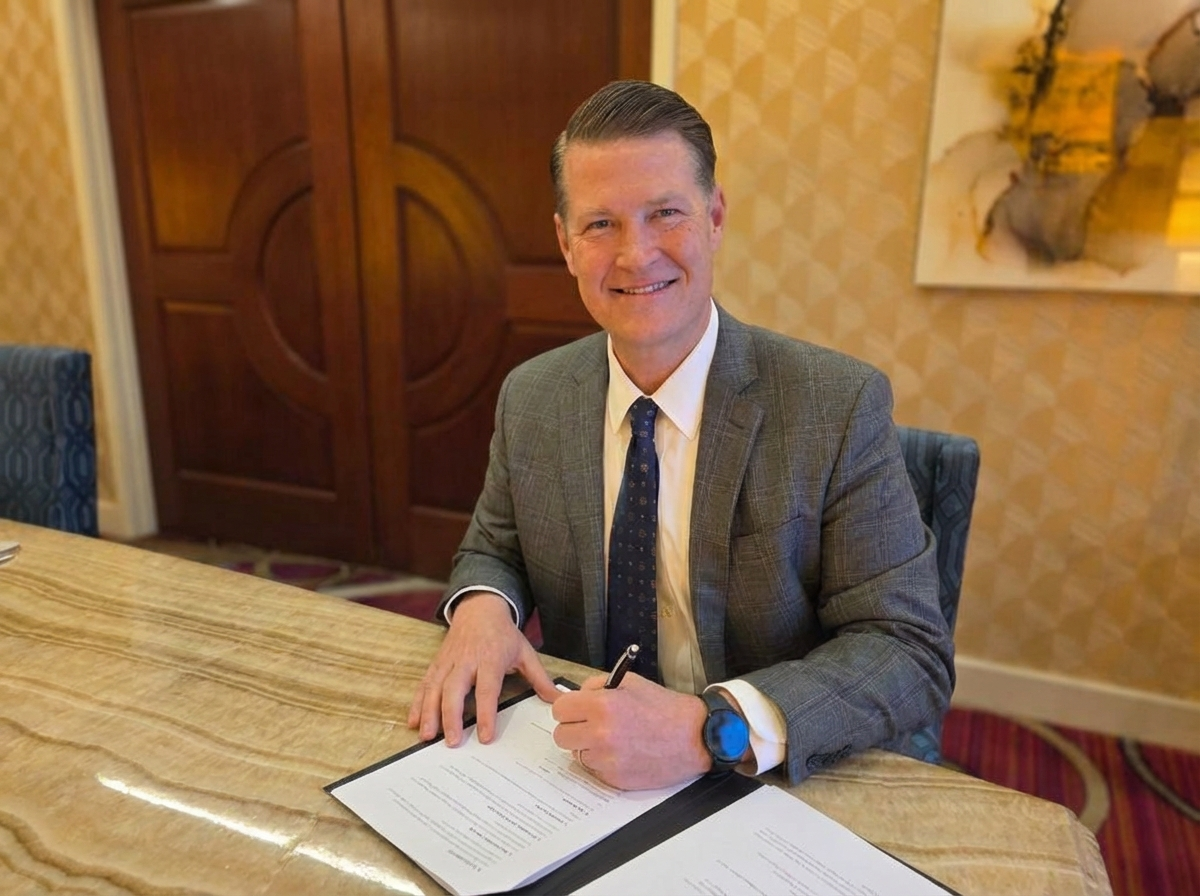
▲ MOU Signing Ceremony — The Way Company, K-EnterTech Hub, EDAWN, and Nevada economic delegation | Feb 5, Peppermill Resort, Reno, NV | Photo: K-EnterTech Hub
● ● ●
The Way Company (CEO Michelle Minkyung Kim) and K-EnterTechHub (CEO Jung Han), two organizations dedicated to helping Korean deep-tech companies enter the U.S. market, have signed an official Memorandum of Understanding (MOU) with EDAWN (Economic Development Authority of Western Nevada).
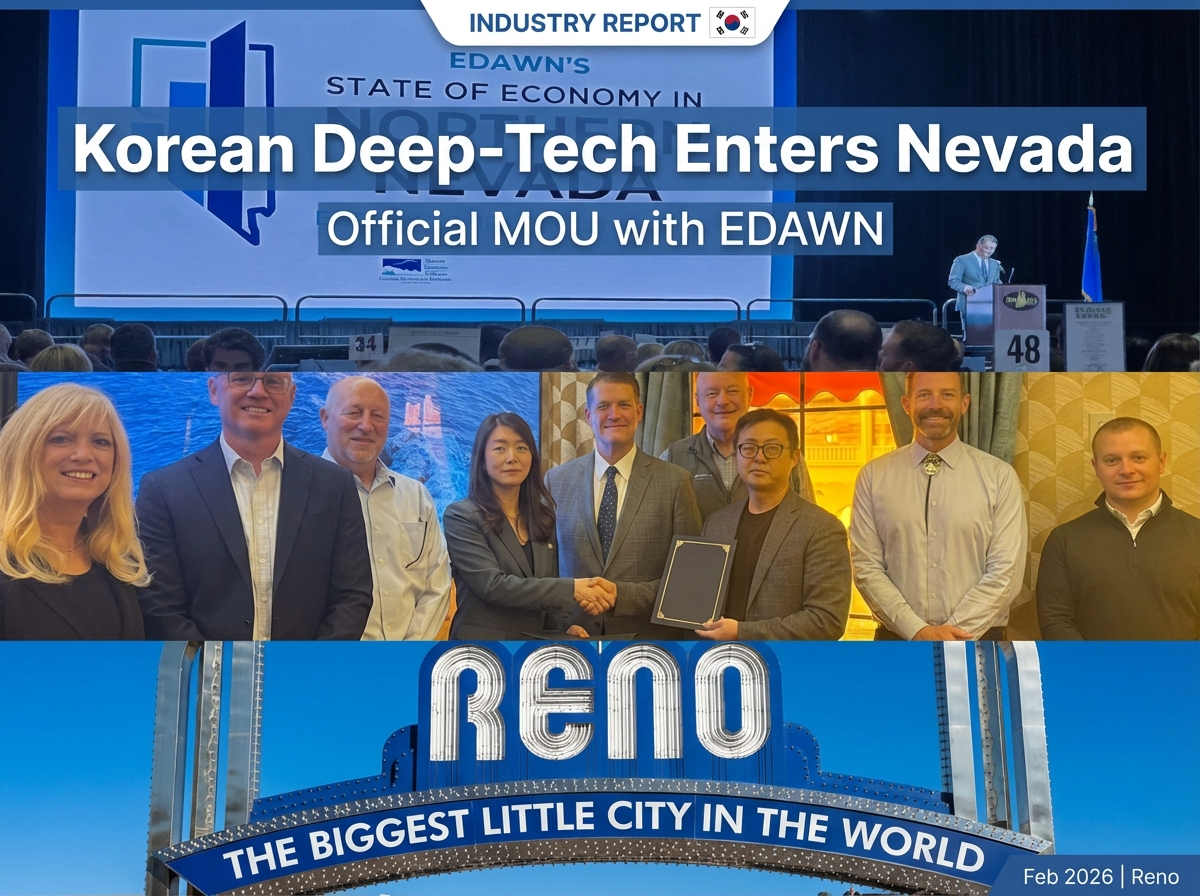
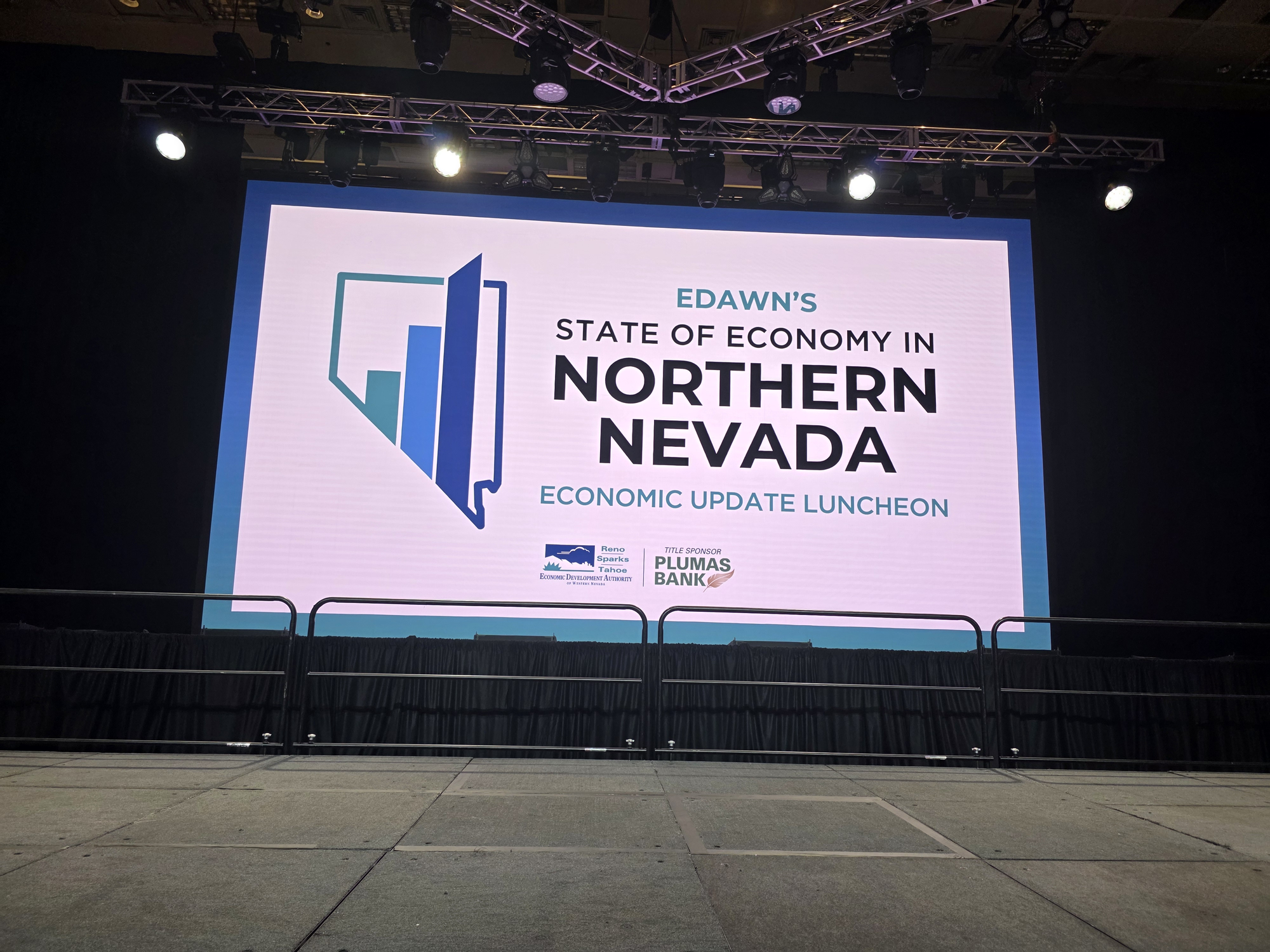
The MOU was signed on February 5 at the Peppermill Resort in Reno, Nevada, during EDAWN’s annual State of Economy report. Before an audience of more than 1,500 executives, investors, and government officials, EDAWN CEO Taylor Adams publicly named K-EnterTech Hub and The Way Company, announcing the organization’s commitment to industrial collaboration with Korea.
 Jung Han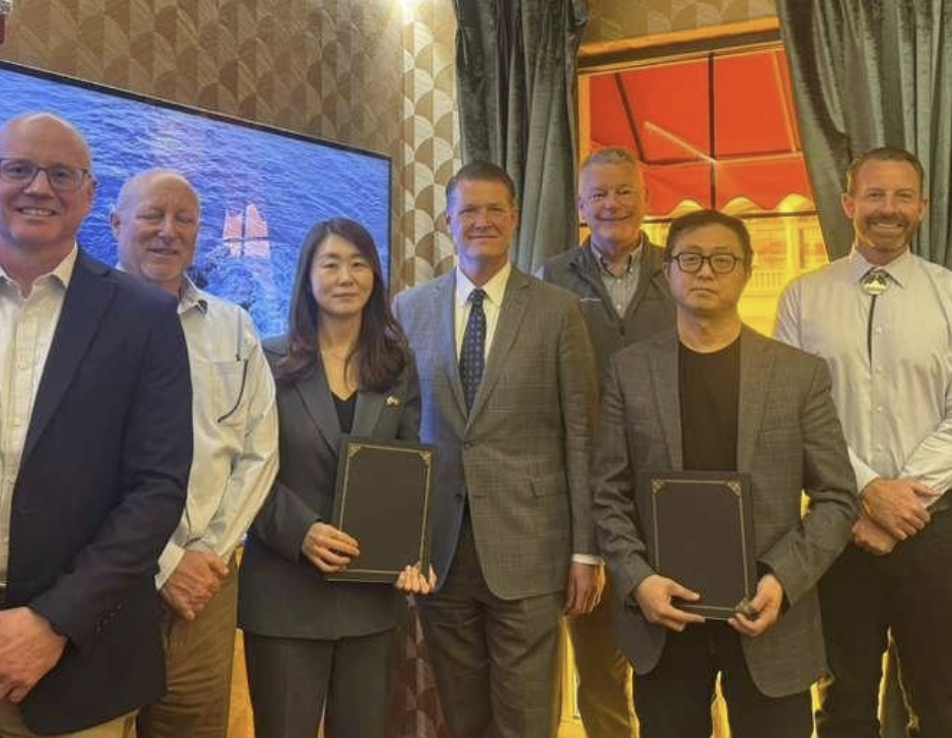
Heather Wessling Grosz, EDAWN Vice President, played the most pivotal role in bringing this MOU to fruition. She personally accompanied the Korean delegation throughout their entire Reno visit, coordinating relay meetings with Tesla, NV Energy, Renown Health, and Dragonfly Energy. At the 1,500-person EDAWN economic luncheon, she arranged VIP seating at the Tesla table for the Korean team and secured a dedicated incentive track for Korean companies.
● ● ●
Nevada is undergoing an unprecedented structural transformation. Tesla’s Gigafactory is in the midst of a $3.5 billion expansion. Within the Tahoe Reno Industrial Center (TRIC) alone, 25 data centers are either operating or under construction. New power requests filed with NV Energy total approximately 20 GW—more than double the state’s current peak load of roughly 10 GW.
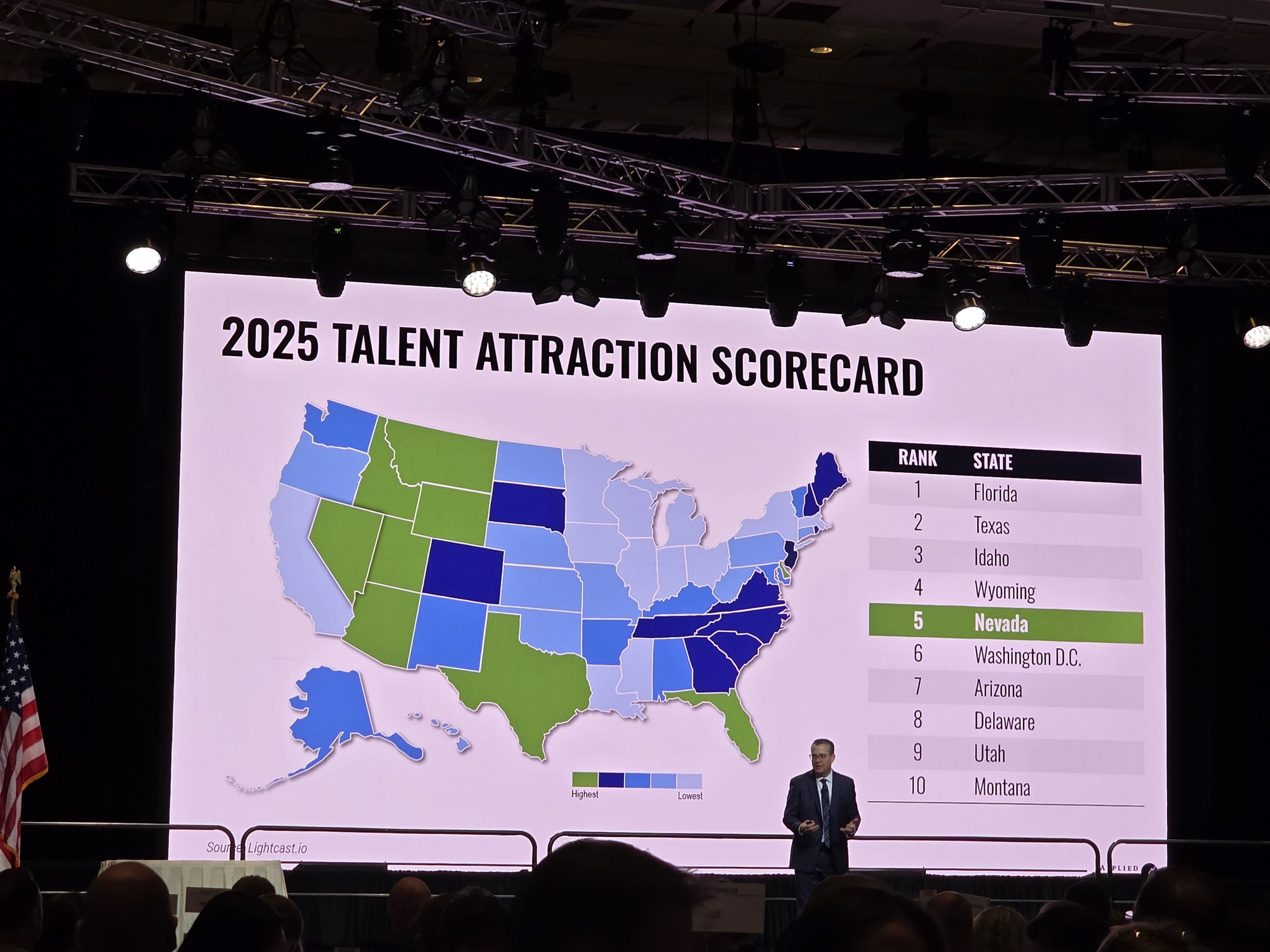
AI infrastructure, battery manufacturing, and advanced manufacturing are all surging simultaneously, creating technology demand that far exceeds local supply. A development pipeline exceeding $26 billion is underway, manufacturing jobs have doubled over the past decade, and population growth runs at 1.5–2% annually—three to four times the U.S. average of 0.5%. This massive demand-supply gap is precisely the entry space for Korean deep-tech.
EDAWN’s interest in Korea is clear-cut. Korea ranks among the top three CES-exhibiting nations, with proven innovation capacity. Government-level AI R&D investment is massive, and the country holds world-class competitiveness in batteries, semiconductors, and AI infrastructure. Critically, major Asian manufacturers—LG, Samsung, TSMC—have not yet established a presence in Nevada’s battery value chain, presenting a first-mover opportunity for Korean companies.
Last November, Nevada Economic Development Director Tom Burns visited Korea, touring the Incheon Free Economic Zone, MBC, and LG Science Park, confirming the state’s commitment to industrial cooperation. The Governor’s Office of Economic Development (GOED) has maintained Korea partnerships for over a decade, and that relationship is now transitioning into tangible corporate recruitment.
Nevada’s Structural Advantages
● ● ●
The Korean delegation visited Reno from February 3 through 6, conducting relay meetings with Tesla, Renown Health, Dragonfly Energy, NV Energy, the Southern Nevada Water Authority (SNWA), and EDAWN.
Tesla Gigafactory Tour
The delegation toured the entire Tesla Gigafactory, witnessing the power infrastructure buildout firsthand. The 5.4-million-square-foot facility employs approximately 8,000 workers, with a $3.5 billion expansion underway. Semi truck production lines, 4680 cell plants, and LFP battery factories are being built in parallel. Including Panasonic’s 4,000-strong joint venture workforce, total TRIC employment reaches 22,000.
Tesla executives shared their vision for a “Center of Excellence” and expressed strong willingness to support future events connected to Korean company engagement.
NV Energy Meeting — Power Infrastructure Reality
The NV Energy meeting provided a detailed briefing on Nevada’s power infrastructure. The Greenlink Project—a massive transmission initiative connecting the state via 525 kV lines in a triangular configuration—is under construction. NV Energy’s first self-owned solar facility, the Sierra Solar project (400 MW solar + 400 MW battery storage), is progressing on budget.
During this meeting, The Way Company CEO Michelle Minkyung Kim directly presented a Korean AI-based infrastructure inspection and predictive maintenance company that has partnered with KEPCO (Korea Electric Power Corporation) for over eight years. The technology installs AI cameras on power facilities for real-time monitoring, achieving up to 40x efficiency improvement over conventional methods, with proven testing in Saudi Arabia’s extreme conditions. Pilot project costs would be fully covered by Korean government funds or the company itself.
Renown Health & Dragonfly Energy
CEO Michelle Kim discussed AI healthcare PoC opportunities with Renown Health hospital administrators. The delegation also visited Dragonfly Energy—a Reno-grown company specializing in LiFePO4 batteries and dry-electrode technology—to explore collaboration potential with Korean battery and materials companies.
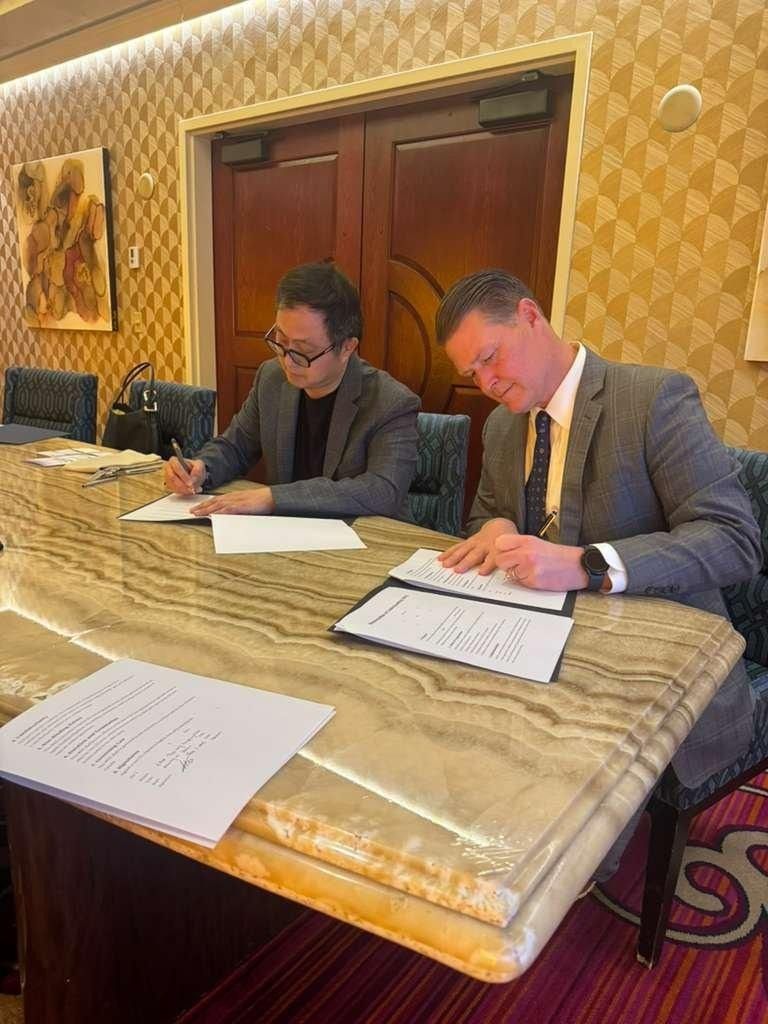
▲ K-EnterTech Hub CEO Jung Han (left) and EDAWN CEO Taylor Adams sign the MOU | Feb 5, Reno, NV | Photo: K-EnterTech Hub
● ● ●
Key Agreement Points
The MOU establishes a comprehensive cooperation framework for Korean companies entering Nevada.
First, a dedicated Korean company entry support system. EDAWN will operate a dedicated incentive track for Korean companies, providing one-stop support for visas, site selection, and tax benefits. Customized consulting will help Korean firms maximize Nevada’s zero-tax environment and minimal regulatory burden.
Second, joint program operations. From webinar series to on-site PoC matching, investment events, and global exhibition tie-ins, both parties will co-plan and execute a phased, year-round 365-day accompaniment program.
Third, investment cooperation. Nevada’s $26 billion development pipeline will be matched with Korean deep-tech capabilities to facilitate FDI. Existing platforms such as Reno Startup Week will expand local fundraising opportunities for Korean companies.
Fourth, industry-academia-research linkage. Joint R&D, internships, and technology validation programs will be pursued between UNR, DRI, NCAR, and Korean companies.
Four-Phase Roadmap
Execution Team — ‘Field’ Meets ‘System’
● ● ●
Taylor Adams, CEO, EDAWN
Q. You declared ‘opportunity outweighs challenge.’ Where does Reno stand today?
“This region is transitioning from stabilization to acceleration. It didn’t happen overnight, and it’s not without challenges, but we have momentum built on real activity. Business leads surged from 34 eighteen months ago to more than 130. Over 175 annual site visits place us in the top 1% nationally. Redefining EDAWN as a ‘marketing services platform’ rather than a bureaucratic agency was the core transformation.”
Q. How is AI impacting Nevada’s economy?
“AI is a paradigm shift comparable to the introduction of the PC in the early 1980s. Nevada leads the nation in data-center capacity growth. Within TRIC alone, 25 data centers are operating or under construction, and 2026 construction investment is projected to grow 23% year-over-year. The axis of construction is shifting from housing to digital infrastructure.”
Q. Why publicly announce the Korea partnership?
“Mentioning K-EnterTech Hub and The Way Company by name in front of 1,500 people was a deliberate message. The breadth of Korea’s venture ecosystem, its proven innovation capacity as a top-three CES exhibiting nation, and massive government-level AI R&D investments—all of this is why Nevada views Korea not merely as an FDI target but as a strategic technology partner.”
Q. What about tariff uncertainty?
“Tariffs are a concern in the short term, but if they ultimately bring more manufacturing back to the U.S., northern Nevada is uniquely positioned to benefit as a reshoring destination.”
Q. Your vision for the startup ecosystem?
“America was built not by spectators, but by startups. By people with ideas, guts, and the courage to act. Positron achieving $1 billion in Reno proves founders can start, scale, and raise significant capital here. The economy has entered ‘acceleration phase.’”
Heather Wessling Grosz, Vice President, EDAWN
— The key figure behind this MOU
Q. What was your role in making this MOU happen?
“GOED has been running missions with Korea for over a decade, and the volume of Korean companies interested in the U.S. market is surging. Our CEO publicly announced the MOU—that shows organizational commitment. My role is executing this on the ground. From the moment the Korean delegation arrived, I coordinated and accompanied every meeting with Tesla, NV Energy, Renown Health, and our other key partners.”
Q. Why Nevada over Silicon Valley?
“There is nothing in California, in terms of foreign direct investment, that couldn’t be done in Nevada. You actually have less competition. Positron approaching a billion dollars in Reno is proof. For growing companies, they can achieve the same thing here faster. We’re right next to California with all that proximity—but without the negativity.”
Q. What specific support did you provide?
“I accompanied the entire schedule personally. I arranged meetings with Tesla, NV Energy, Renown Health, Dragonfly, and SNWA. At the EDAWN luncheon, I secured VIP seating at the Tesla table. With 1,600 people at the event, I literally could have spent all day just introducing them to people.”
Q. Nevada’s geopolitical strengths?
“We are the lowest regulatory state for foreign entities. We’re a purple state, so both sides try not to make us mad. You’re not going to be a lightning bolt if you come into Reno—it’s low-profile. Korea is a really great ally. While things change around them, we can do business with them easily. That’s not as easy with China or other countries.”
Q. How do you evaluate Korean innovation?
“I went to CES. Korea was the third largest exhibiting entity—out of over 8,000 companies. For a country of their size, the technology investment intensity is remarkable. I got on a Korean shuttle bus at CES—25 people, and within four seconds, everyone was sleeping. They take the overnight flight, arrive in Vegas, and start at 5 a.m. That work ethic matches exactly what we want here.”
Q. What’s next?
“Online events first. Tesla’s Mark Ford and developers will support physical events. Korean companies provide tech snapshots, we share them with our experts, and define next steps. This isn’t 500 projects at once—it’s relationship-based corporate attraction.”
Michelle Minkyung Kim, CEO, The Way Company
Q. What differentiates this program?
“It’s a year-round accompaniment system—March webinars through year-round PoC, the September main event, and January CES. Each phase connects so Korean companies generate real results from the moment they arrive. Not a one-time visit but a settlement platform.”
Q. What’s unique about the content?
“Through a ‘hybrid curriculum’ combining Brian Gordon’s economic analysis and Alex’s business modeling, we first identify local market demands, then connect Korean technology to that demand.”
Q. What technology did you present to NV Energy?
“An AI-based infrastructure inspection company that has partnered with KEPCO for over eight years. They install AI CCTV for real-time monitoring—up to 40x efficiency improvement. Some hydro companies were hiring two student interns for manual inspections during summer. The difference is overwhelming. Pilot costs are fully covered by the Korean government or the company.”
Q. Your relationship with KOVA?
“KOVA (Korea Venture Business Association) has approximately 18,000 member companies. We brought one company this time, but we have lists of thousands. The key is understanding NV Energy’s priorities, classifying the right companies, and aligning timelines.”
Q. Long-term goals?
“February’s meetings laid the groundwork with Tesla, Renown Health, and NV Energy. The EDAWN MOU provides the official framework. Our goal is for K-Nevada Bridge to become a trusted platform helping Korean deep-tech establish lasting roots in Nevada. Nothing is easy at the beginning. But as time goes by, results will come—slowly at first, then in increasingly significant ways.”
● ● ●
Near-Term (H1 2026): Building the Foundation
The ‘Why Nevada’ monthly webinar series launching in March raises Korean companies’ understanding of the Nevada market. EDAWN incentive and tax information, UNR and DRI collaboration opportunities, and ecosystem visions from Tesla and Panasonic will be delivered directly to Korean firms. Year-round PoC matching activates simultaneously, enabling market-ready companies to launch local pilot projects within 90 days.
Mid-Term (H2 2026): Visible Results
The K-Nevada Gateway during Reno Startup Week (September 28–October 2) will be the watershed moment. First-half PoC results will be presented across AI, medical, energy, semiconductor, and gaming verticals, with follow-on VC investment as the core objective. Korea Night 2026 will introduce Korean technology through K-pop, premium K-food and K-beauty showcases, and VIP networking dinners. The ‘Next K-Wave Conference,’ hosted by Distinguished Professor Samseog Ko of Dongguk University (member of the Presidential Committee on AI), will be held concurrently.
Long-Term (2027+): Global Expansion
The ultimate goal is to debut on the global stage at CES 2027, backed by PoC track records built in Nevada—not mere exhibition participation but ‘performance-based globalization.’
K-Nevada Bridge aims to redefine the U.S. market-entry map for Korean deep-tech. The conventional Silicon Valley → Texas → East Coast path now has a new coordinate: Nevada. Zero tax, one-third the cost of Silicon Valley, real demand from a 20 GW power queue, and a market untapped by major Asian manufacturers—whether Korean deep-tech can seize this structural timing is the defining question.
Nevada’s Collaborative Ecosystem
● ● ●
Nevada is no longer ‘the tourism state.’ A $26 billion development pipeline, a 20 GW power queue, Positron’s unicorn milestone, and $3.5 billion in Tesla expansion converge on one conclusion: Reno is no longer Silicon Valley’s rear guard but an advance base for next-generation industry.
The K-Nevada Bridge Program stands on the institutional foundation of the EDAWN MOU, with academic channels through DRI and UNR and industrial connections to Tesla, Renown Health, and NV Energy—a full-cycle partnership platform. Built on the ground by Heather Wessling Grosz, who personally accompanied every meeting, this framework provides Korean deep-tech a practical pathway: ‘pilot-style proof of concept,’ not ‘tourism-style visits.’
AI-based infrastructure inspection, ESS, digital twins, floating solar—Korea’s deep-tech strengths align precisely with Nevada’s infrastructure demands. KEPCO’s 8-year partnership, KOVA’s 18,000-member network, and Korea’s top-three CES status converge with Nevada’s 20 GW power queue, 25 data centers, and $3.5 billion Tesla expansion. At that intersection stands K-Nevada Bridge.
“Opportunity outweighs challenge. And the state of our economy is—strong.”
— Taylor Adams, CEO, EDAWN — Closing declaration, 2025 State of Economy
The 365-day journey has begun.

![[보고서]전통 언론사의 크리에이터 전략 대전환](https://cdn.media.bluedot.so/bluedot.kentertechhub/2026/02/0nwc9z_202602100212.png)