
Seoul AI entertainment-tech firm hosts 20 young innovators from Taiwan's Global Pathfinders Initiative, walks them through Fumeancats, Very Miss Rabbit and The Bridge Curse 2, and demos PLAYPOP ahead of a 120-site AI pop-up target for 2028
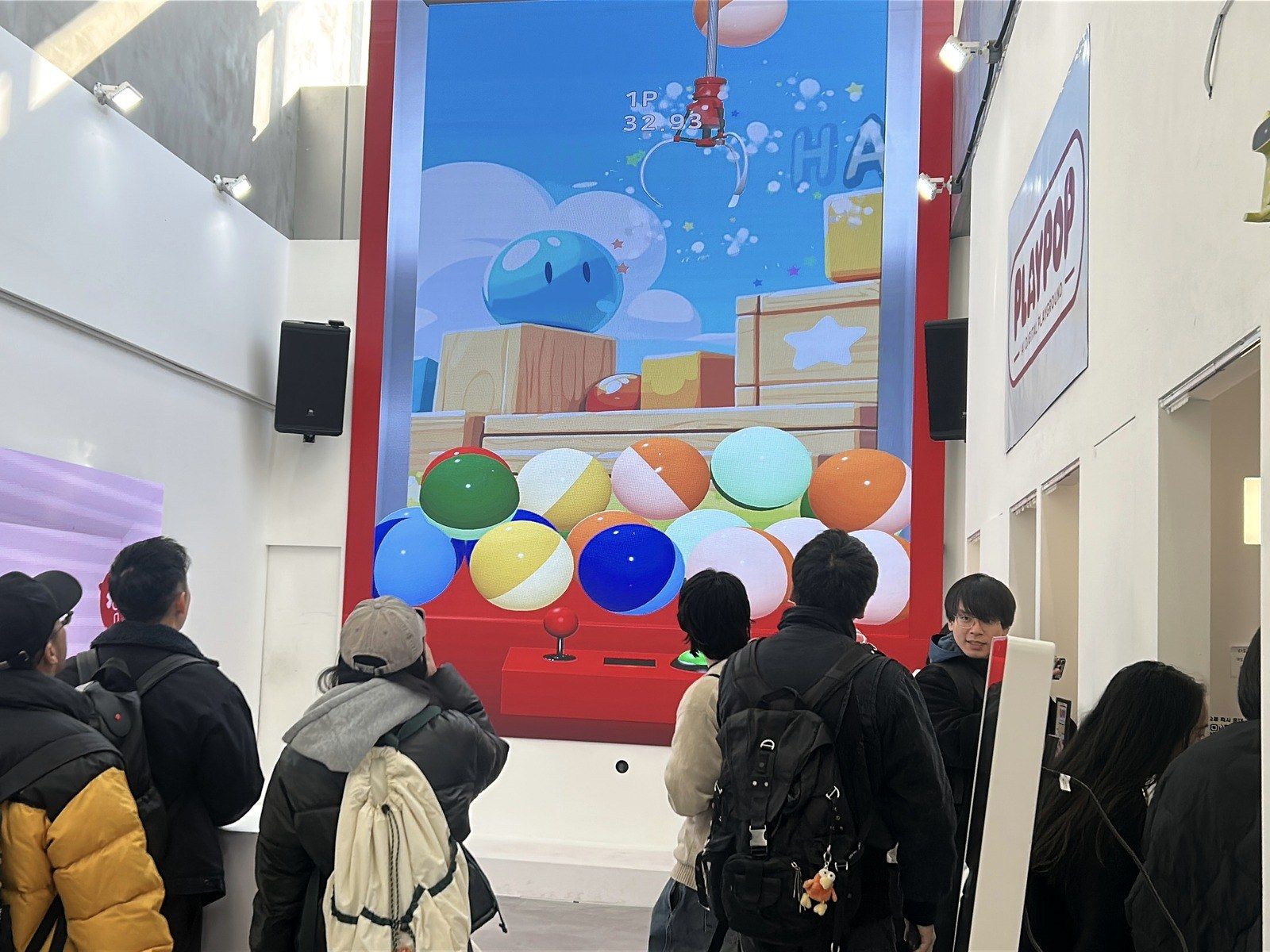
The claw on the floor-to-ceiling LED screen dropped slowly, and 20 young Taiwanese visitors looked up at the same moment. The delegate holding the joystick had 33 seconds left. A capsule fell, the screen switched to a "Lucky Draw" prize page, and phones went up around the room.
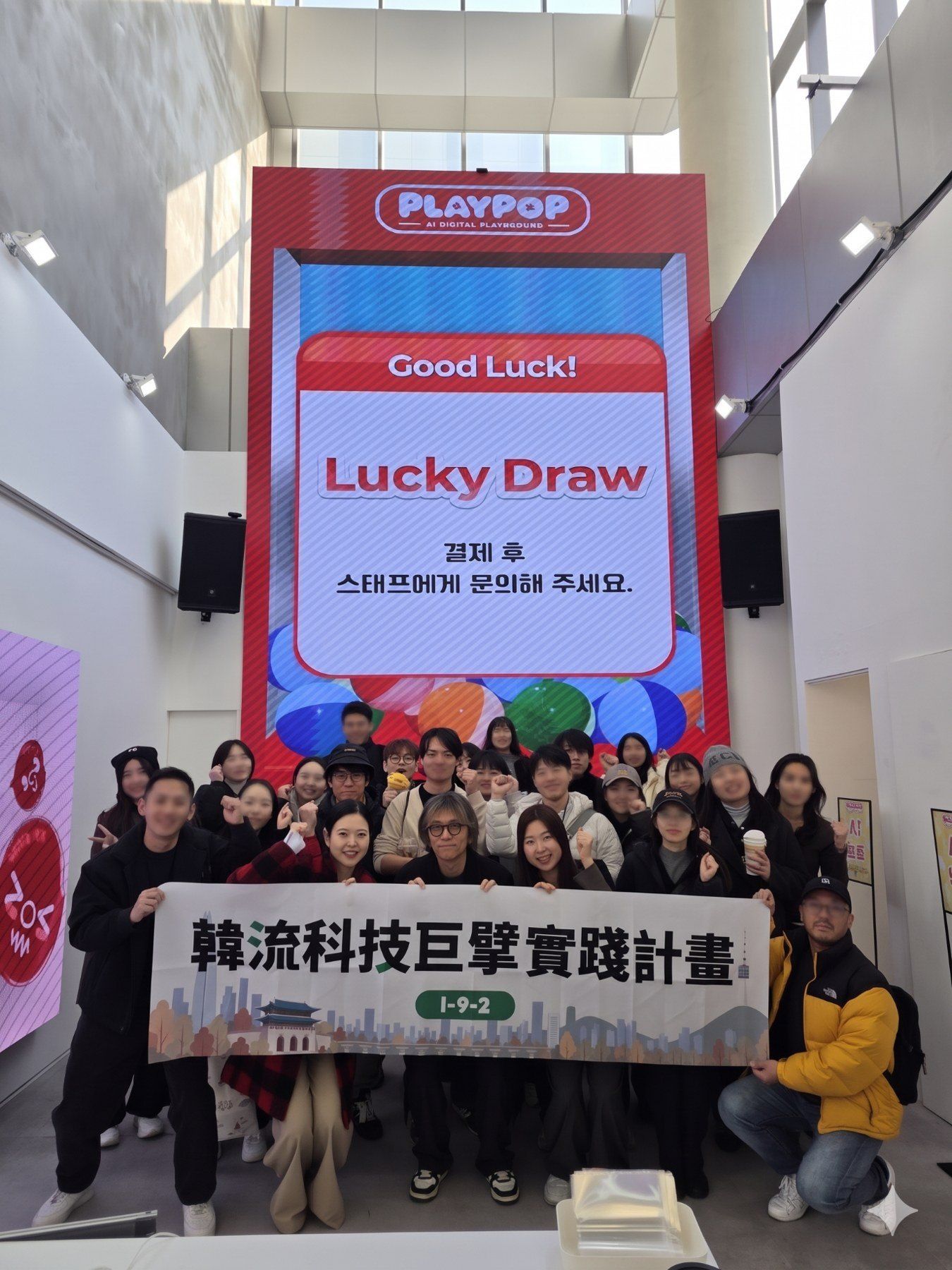
Seoul-based AI entertainment-tech company Millennial Works said on Nov. 7 that it hosted 20 participants from the Northeast Asia innovation track of the Taiwan Global Pathfinders Initiative, run by the Youth Development Administration (教育部青年發展署) of Taiwan's Ministry of Education. The group was selected nationwide from mobile platform, tech and digital content startups. On a trip to study Korea's digital and AI ecosystem, it picked Millennial Works as its startup site visit. The delegation's banner carried the project name 韓流科技巨擘實踐計畫 (Hallyu and Tech Leaders Practicum).
The money in character IP is moving from the merch shelf to the experience booth, and that is the operating model CEO Hailey Song laid out. Her examples were three Taiwanese properties: cat creator brand Fumeancats (黃阿瑪的後宮生活), messenger sticker character Very Miss Rabbit (好想兔), and horror game and film franchise The Bridge Curse 2 (女鬼橋二 釋魂路). Delegates then tried AI photo, tarot and music modules and the giant LED digital claw machine.
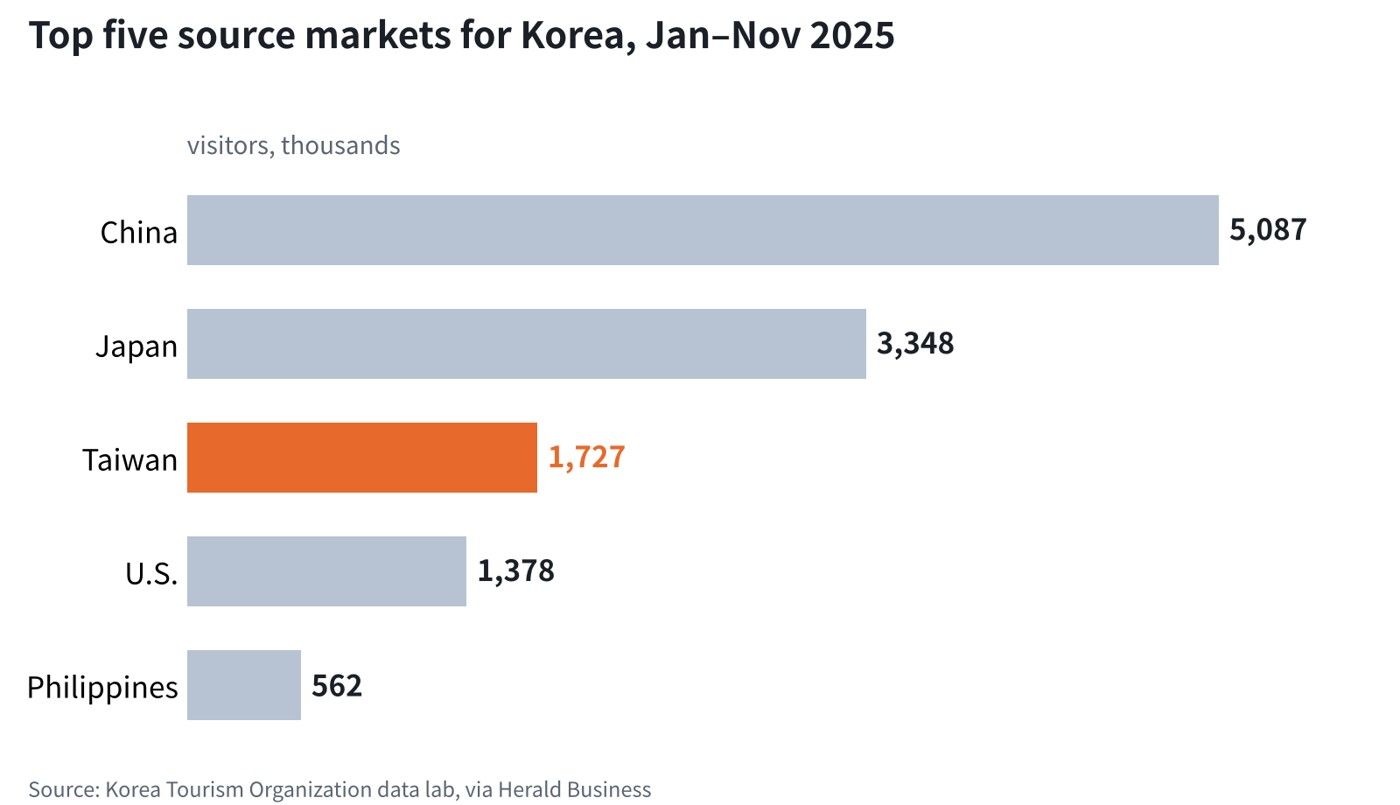
Taiwan is Korea's third-largest inbound tourism market. 1,727,496 Taiwanese visited Korea in January–November 2025, behind only China and Japan, up 27% on the year. The Korea Tourism Organization has set a 2026 target of 2.32 million. Millennial Works plays both directions: it brings Taiwanese IP into Korean venues that draw Taiwanese tourists, and it sends proven operating modules to sites in Taiwan, Japan and elsewhere in Asia.
NT$10 billion over four years: Taiwan's youth fund sent 1,463 abroad in year one
The trip was paid for by the NT$10 Billion Youth Overseas Dream Fund (青年百億海外圓夢基金計畫), a campaign pledge of President Lai Ching-te (賴清德). At its launch on Jan. 24, 2025, Lai said, "You bring the dream; the state will build the stage" (夢,你來做;台,國家來搭). The Ministry of Education is spending NT$10 billion (about $313.8 million) over four years on overseas study tours, internships and exchanges for people aged 15 to 30.
There are two tracks. The Dream Builder track (築夢工場組), for self-designed projects, pays up to NT$2 million (about $62,800) per project. The Overseas Soaring track (海外翱翔組), for programs designed by agencies and private partners, pays up to NT$1.5 million (about $47,100). In 2025, the first year, 1,463 young people went abroad: 1,273 on the Soaring track and 190 on Dream Builder. In June, Lai said the program had grown to more than 3,000 opportunities in over 50 countries, and pointed to a participant who learned street dance in Korea. Korean culture and Korean companies are now field sites for Taiwan's youth policy.
| Item | Details |
|---|---|
| Official name | NT$10 Billion Youth Overseas Dream Fund (Taiwan Global Pathfinders Initiative) |
| Organizer | Youth Development Administration (YDA), Ministry of Education, Taiwan |
| Period & budget | 2025–2028, NT$10 billion (about $313.8 million) |
| Eligibility | Taiwanese aged 15–30 |
| Tracks | Dream Builder (self-designed, up to NT$2 million) / Overseas Soaring (agency and private programs, up to NT$1.5 million) |
| Results | 1,463 sent abroad in 2025 (Soaring 1,273, Dream Builder 190); 3,000+ opportunities in 50+ countries in 2026 |
| This visit | Northeast Asia innovation track, 20 participants from mobile platforms, tech and digital content |
Sources: Taiwan Ministry of Education/Youth Development Administration, Commercial Times (工商時報), INSIDE, Millennial Works
1.5 million followers, 30,000 copies on day one: three Taiwanese IPs across borders
The three properties differ in genre and in how they reach fans. Fumeancats follows a household of cats led by an orange tabby named Ama, and has 1.5 million followers. Millennial Works ran a Fumeancats pop-up in Seoul's Hongdae district. This year Taiwan's Ministry of Culture used a domestic IP for the first time in its Culture Coin (文化幣) program for 13- to 22-year-olds, and made Fumeancats its first-quarter ambassador. The government put it on the front of a national program.
Very Miss Rabbit grew up in Taiwan's LINE sticker market. Its illustrator, Qianqian (謙謙), plans each series with market input from LINE's editorial team. A character people send every day in chats gets constant exposure, and that turns easily into photocard and merchandise sales.
The Bridge Curse is a horror franchise built on a ghost story from Tunghai University. The 2020 original grossed NT$60 million (about $1.88 million) in Taiwan and was the most-watched Taiwanese film on Netflix that year. WME handled international sales of the 2023 sequel, with rights sold to Hong Kong, Singapore, Malaysia and other markets. Softstar's (大宇資訊) game The Bridge Curse 2: The Extrication launched on Steam in May 2024, sold 30,000 copies on day one, and came to consoles that October. A horror IP whose fans were built by film and games fits a venue where people stay and play.
Song took the delegates through each case: IP compliance that protects the creator's rights, design of the offline interactive space, then licensed merchandise sales. Millennial Works pays IP holders in one of three ways: a flat fee by term and store tier; a fandom model of minimum guarantee (MG) plus revenue share; or a KPI-linked model. Holders pick the mix of risk and reward that fits their awareness and fan base.
| IP | Format | Verified metrics | Millennial Works tie-in |
|---|---|---|---|
| Fumeancats (黃阿瑪的後宮生活) | Cat creator brand | 1.5 million followers (company figure); Q1 2026 ambassador for Taiwan Culture Coin | Hongdae pop-up |
| Very Miss Rabbit (好想兔) | LINE sticker character | By illustrator Qianqian; described by the company as a leading Taiwanese digital sticker IP | Digital goods and experiences |
| The Bridge Curse 2 (女鬼橋二 釋魂路) | Horror film and game | Original film grossed NT$60 million; game sold 30,000 copies on day one; 2023 film sequel released on Netflix in 2024 | Immersive horror venue concept |
Sources: Millennial Works, Taiwan Ministry of Culture (via The News Lens), INSIDE, Tatler Asia, 4Gamers, GNN
AI photo, tarot, music and an LED claw machine: inside the PLAYPOP demo
The delegates spent the most time at the AI Photo & Character ID booth. Each face in front of the camera became a character in a few seconds, and the result came out of the printer as a photocard. Next door, Tarot Moment used generative AI to read personal fortunes, and Music Moment wrote a custom song in under a minute. PLAYPOP is the AI arcade platform Millennial Works sells as an "AI digital playground."
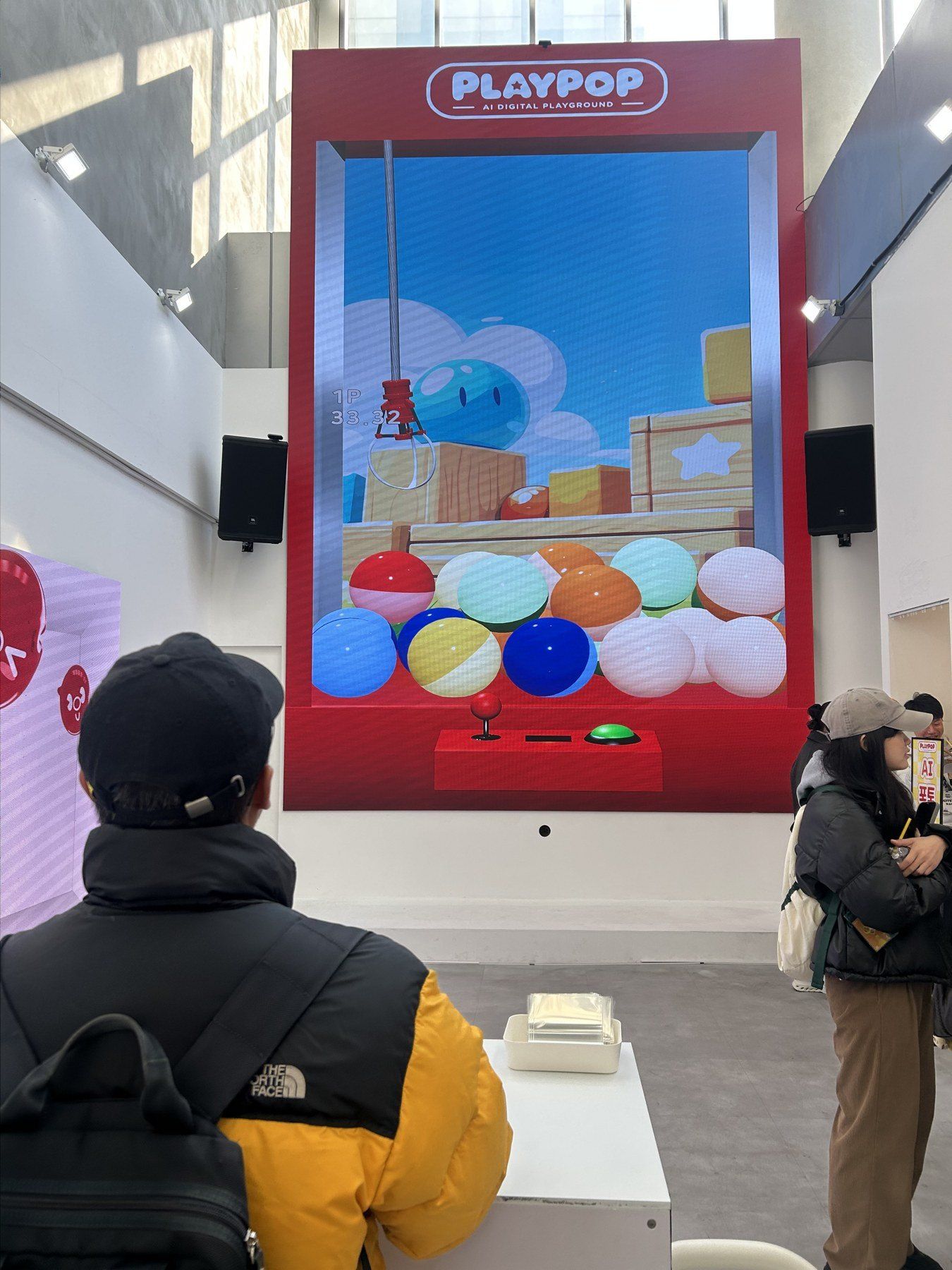
The vertical LED screen that fills the double-height space is a digital claw machine. Players steer the on-screen claw with a joystick and button; a capsule drops, and a winning screen leads to a Lucky Draw where staff hand over the prize after payment. Real-time motion capture and a two-player compatibility challenge were also shown. The modules are built to raise foot traffic, dwell time and fan spending at shopping venues.
| Module | Experience |
|---|---|
| AI Photo & Character ID | Real-time character transformation, instant custom photocard printing |
| Tarot Moment (AI Tarot) | Personalized readings powered by generative AI |
| Music Moment (AI Music) | Custom song generated in under a minute |
| Digital claw machine & Lucky Draw | Claw game on a giant LED screen, scratch-card-style prizes |
| Motion capture & Duo Challenge | Real-time motion recognition, two-player compatibility game |
Source: Millennial Works
First shown in Hollywood: "admission, not merchandise"
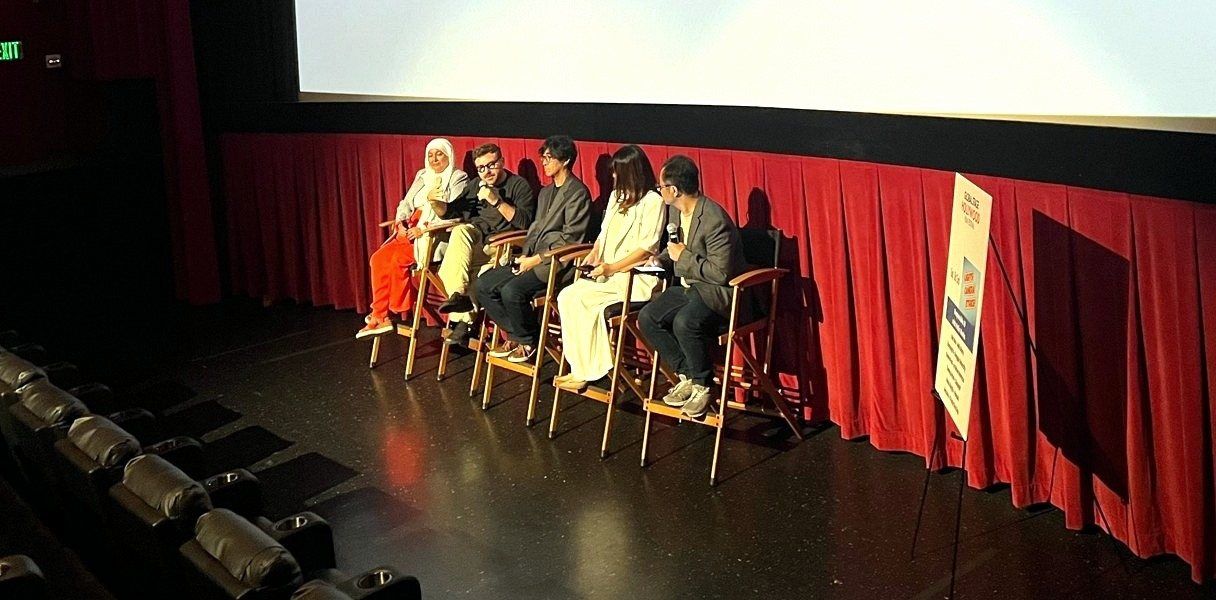
The model the delegates saw in Seoul was first shown on a Hollywood stage a month earlier. On Oct. 3, Song presented the company's AI experience model at the Responsible AI session of the Global Stage Hollywood Film Festival at the TCL Chinese Theatres in Los Angeles. "At a typical pop-up you buy goods and take a photo in front of a podium," she said. "In our space, when a new game or series comes out, fans become the hero of that IP and experience the whole story. So our business model is admission, not merchandise sales."

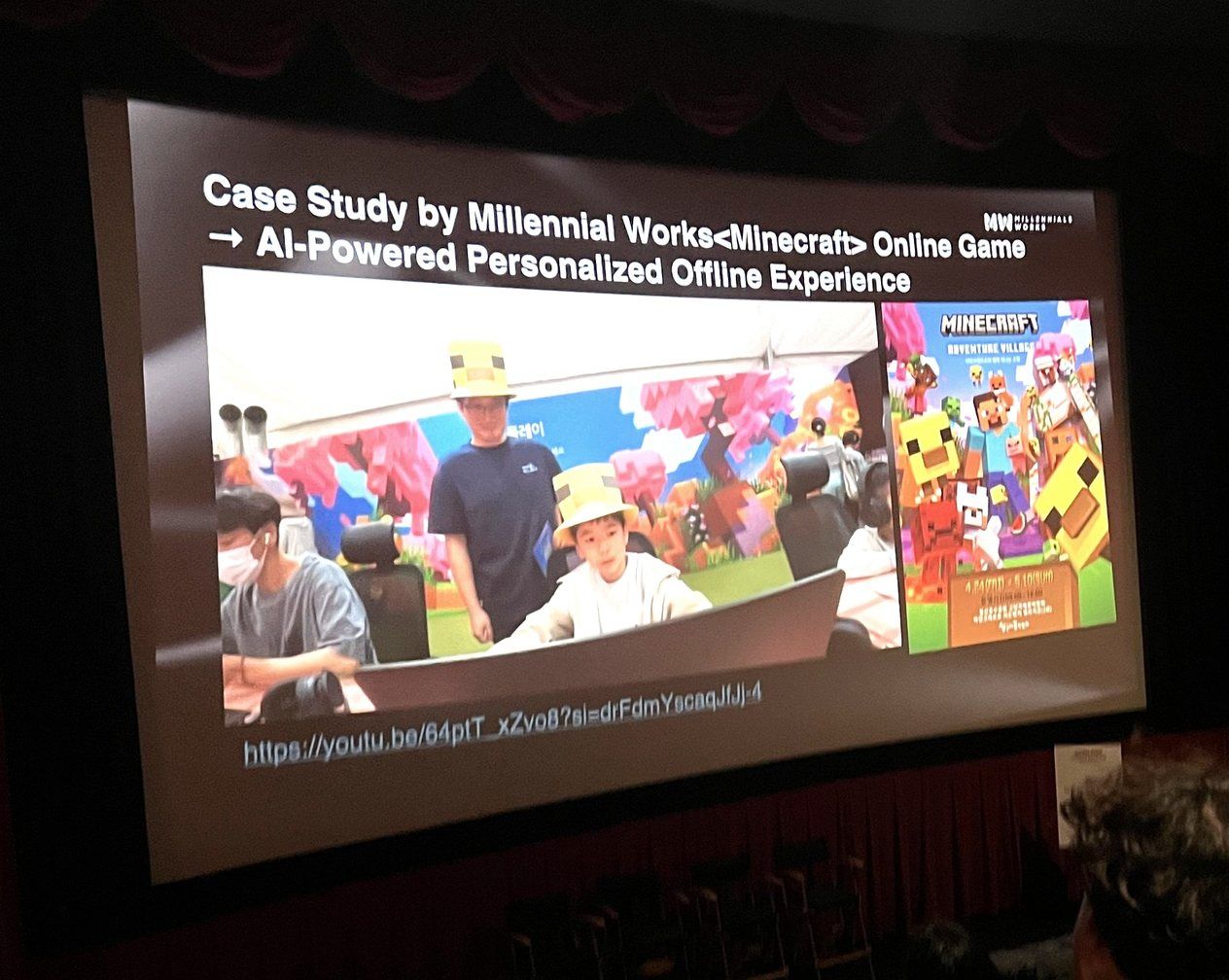
Her lead example was The Next Idol, a pop-up with SM Entertainment's virtual idol nævis at SPACE:V, the company's own venue on the second floor of AK Plaza in Seoul's Hongdae. Visitors went through an idol debut, from 3D capture to an AI-made debut song of their own. Naver Webtoon's first AI pop-up for Solo Leveling ran at SPACE:V in Hongdae and Busan, and the Fumeancats pop-up ran in Hongdae. Each pop-up ran 16 experiences and events, AI included. In Hollywood, Song also showed a Minecraft case that moved an online game into a personalized offline AI experience; the company ran it this year at the Minecraft Adventure Village of the Goyang International Flower Festival.
The AI runs on the company's own models on GPUs built into each kiosk, so more generations do not add cloud fees and variable cost stays low as usage grows. Venue operators can buy kiosks and share revenue, license the software on existing TVs and devices for a subscription, or pay for custom builds. In February, Song said traditional pop-up stores earn operating margins of only 5–15%, while stores with AI experiences doubled purchase conversion to 70%.
Asked how the company would enter the U.S., Song answered, "B2B partners, of course. In the U.S., every cost, starting with rent, is far higher than in Asia." She added, "When you work with IP the whole world knows, there is nothing to explain, and no language or cultural issues. It's the easiest way into a new market." The Taiwan program rests on the same logic: lead with IP the local audience already knows, and share space and operations with local partners.
Global licensing hits $389.8 billion; character and entertainment $161.8 billion, 68% in stores
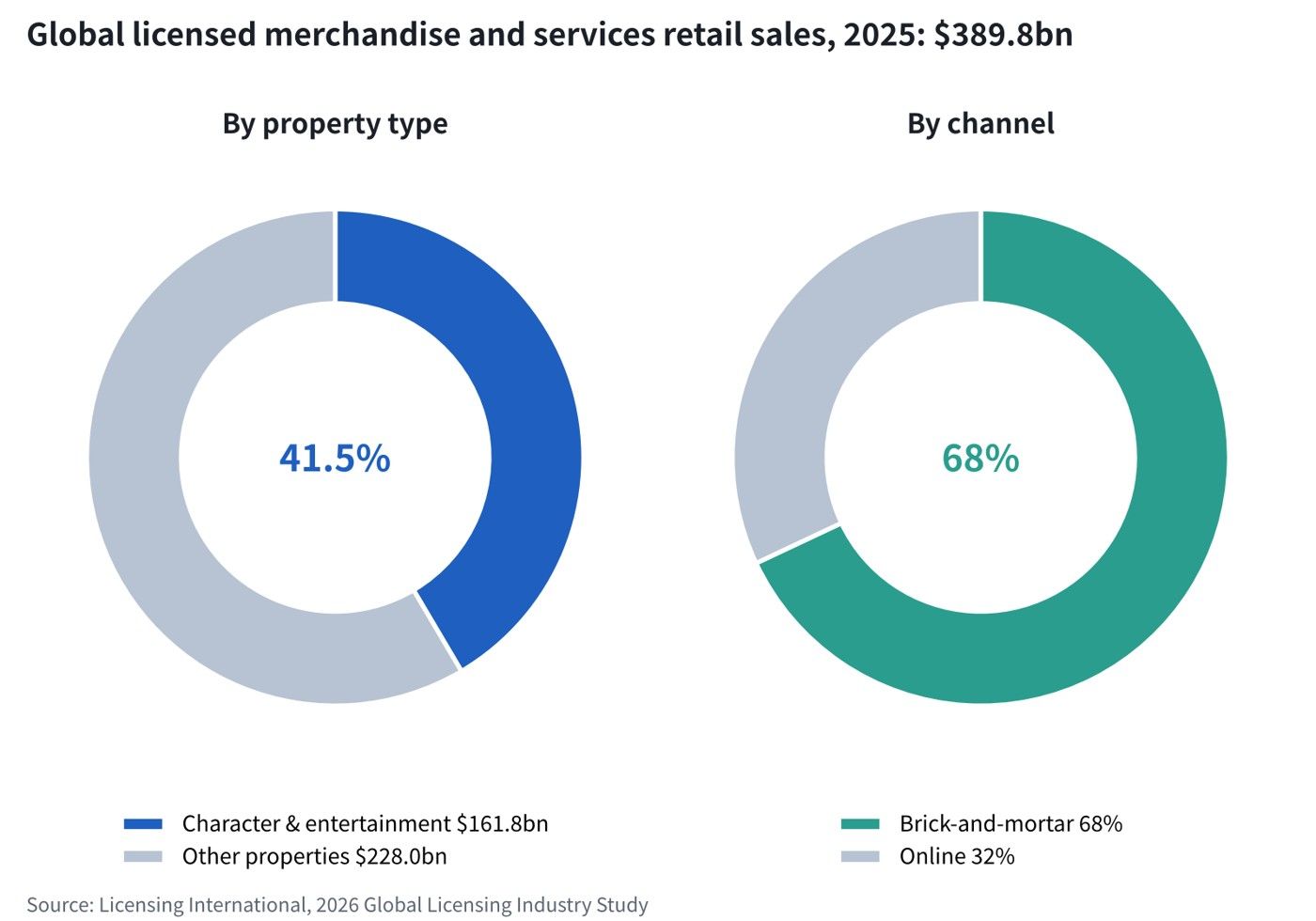
Behind IP venues sits the licensed goods market. Global retail sales of licensed merchandise and services reached $389.8 billion in 2025, up 5.45% and ahead of overall retail growth of 4.52%. Character and entertainment grew 8% to $161.8 billion, 41.5% of the total, led by anime and video games.
Most of it is still sold in physical stores: 68% offline, 32% online. Social media-driven sales, counted for the first time, were 16% of online sales. Fans snap a photo in the store, post it, then buy the goods. Millennial Works' AI photocards and claw machine sit at the start of that path.
1.72 million Taiwanese visitors, spending up 54%: tourism runs both ways
Taiwanese spending in Korea is growing fast. Total card spending by Taiwanese visitors rose 54% from a year earlier. Traffic the other way is up too. Of 8.57 million foreign visitors to Taiwan in 2025, Koreans ranked third after Japan and Hong Kong/Macau, and Korean arrivals topped 1 million again at 1.02 million. With both flows rising, there is demand to run the same IP in Seoul and Taipei at once.
Taiwan's government is also pushing its IP abroad. Taiwan IP Showcase took 10 character brands to the Hong Kong International Licensing Show (HKILS) in April, and the Taiwan Creative Content Agency (TAICCA) held a Taiwan IP Expo in Petaling Jaya, Malaysia, in May. Taiwanese IP holders are looking for offline outlets overseas, and a Korean company with an operating module sat down with Taiwanese founders.
120 IP partners, 92% renewal: targeting 120 AI pop-ups by 2028
Millennial Works started in 2021 in Goyang, Gyeonggi Province, renting out AI photo booths. It moved into AI kiosks, AI pop-up stores and AI theme parks. It raised seed money from CNTTECH and Pacemakers in 2024 and a pre-Series A in 2025 from SM Culture Partners, SM Entertainment's corporate venture capital arm, and began raising a Series A in March. Japan and Taiwan offices opened in 2024, Singapore this year.
The company has worked with more than 120 IPs and brands, has a 92% IP partner renewal rate and has run more than 50 pop-ups, according to its July investor deck. Partners include SM Entertainment's virtual artist nævis, Naver Webtoon's Solo Leveling, Blizzard's Overwatch and Microsoft's Minecraft. In October it opened pop-ups for the webtoon Electronic Game Guardians (전자오락수호대) in Hongdae, Goyang and Bucheon. It expects 3 billion won (about $2.21 million) in revenue this year, with an average project size of 200 million won (about $147,000).
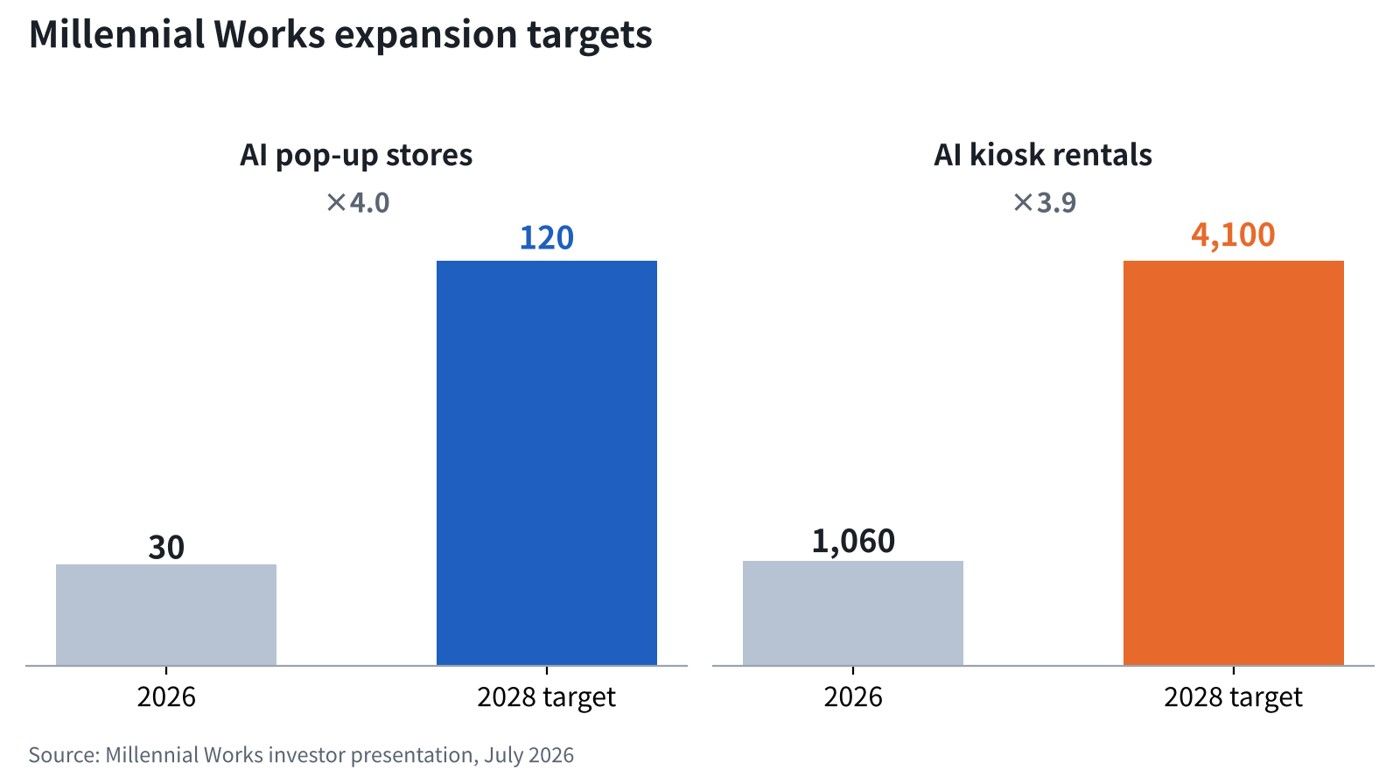
It plans to grow AI pop-up stores from 30 this year to 120 in 2028, and AI kiosk rentals from 1,060 to 4,100, roughly fourfold each. AI theme parks are slated for Seoul in September 2026, Singapore in June 2027, Tokyo in September 2027 and Los Angeles in November 2028.
Taiwanese IP meets Korean operations: rights and data contracts decide the margin
The visit put founders chosen with Taiwanese government money inside a Korean entertainment-tech operation. Many work in mobile platforms and digital content, which makes them potential partners for running Taiwanese IP in Korean venues or placing PLAYPOP modules in Taiwanese malls. With Taiwanese travel to Korea and Korean travel to Taiwan both rising, running one IP in both Seoul and Taipei is now a practical option.
The same math applies to Korean broadcasters and content companies. Put a drama or variety IP into a venue and admission and personalized goods become new revenue. The core contract terms are who owns AI-generated derivative images and how visitors' face and voice data are handled. At last month's Hollywood panel, AI governance researcher Anisa Abeytia said audiences worry less about AI content than about how their personal data is used. Korea's AI Basic Act, in force since Jan. 22, requires generative AI output to be labeled. How much an IP venue earns depends on how carefully those rights and data clauses are written.
Before leaving, the group gathered in front of the LED screen for one more photo. "Welcoming the Global Pathfinders delegation was a meaningful chance to connect with the next generation across borders," Song said. "Our vision is a world where everyone can discover what they love and see that joy become real. We will combine PLAYPOP with Asia's best IP to expand creative and commercial partnerships between Taiwan and Korea."