
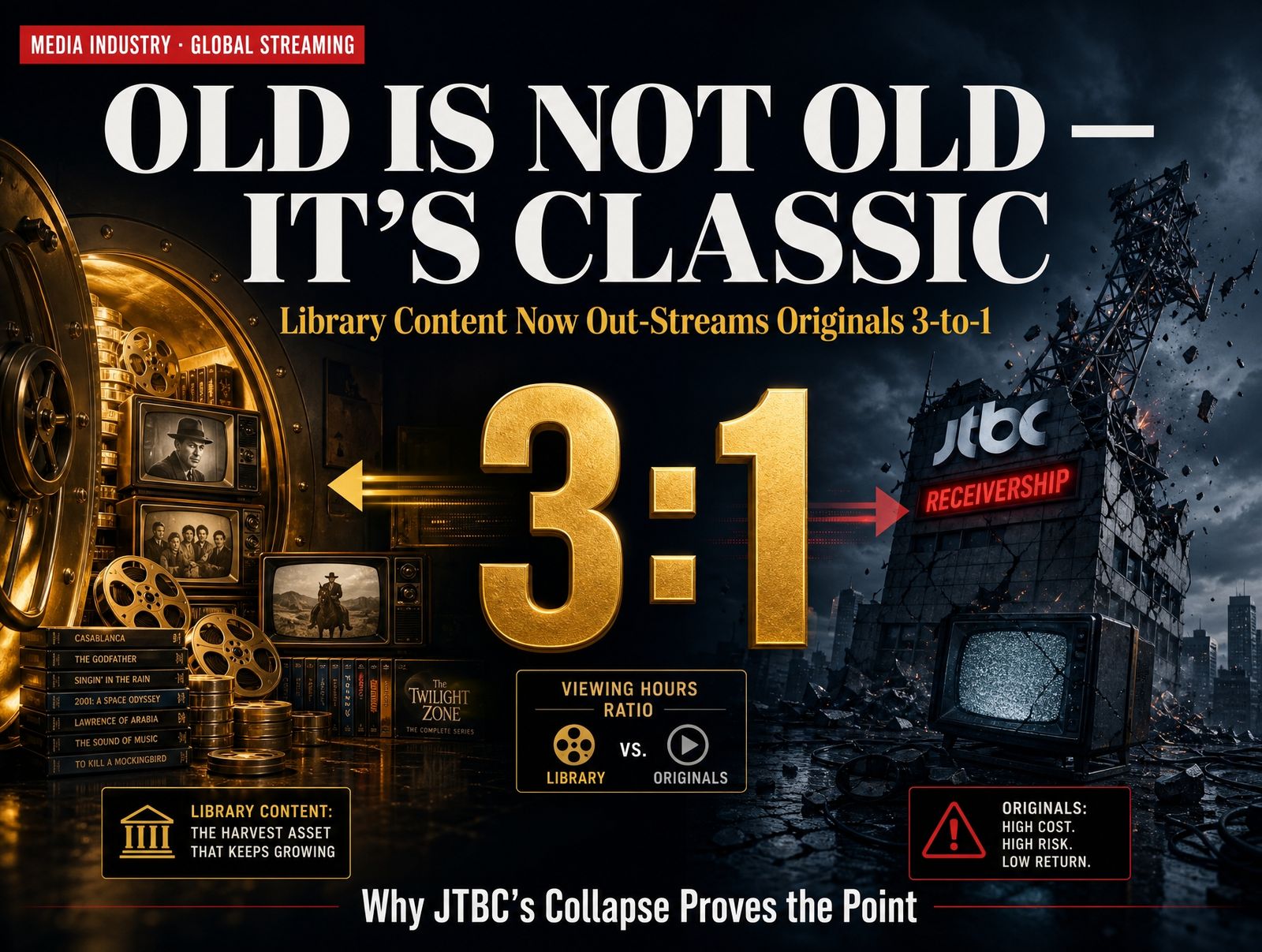
Library is a 'harvest asset.' Korea's SLL Joongang stacked IP through a risk-dispersing studio model but posted three straight years of losses as production costs spiked — and parent broadcaster JTBC has now filed for court receivership.
In the content business, the catalog that endures is being re-rated as the surest asset of all. On U.S. streaming services, viewing of library titles has outpaced new originals by more than three to one in recent quarters, and the gap widens with every passing quarter.
 Jung Han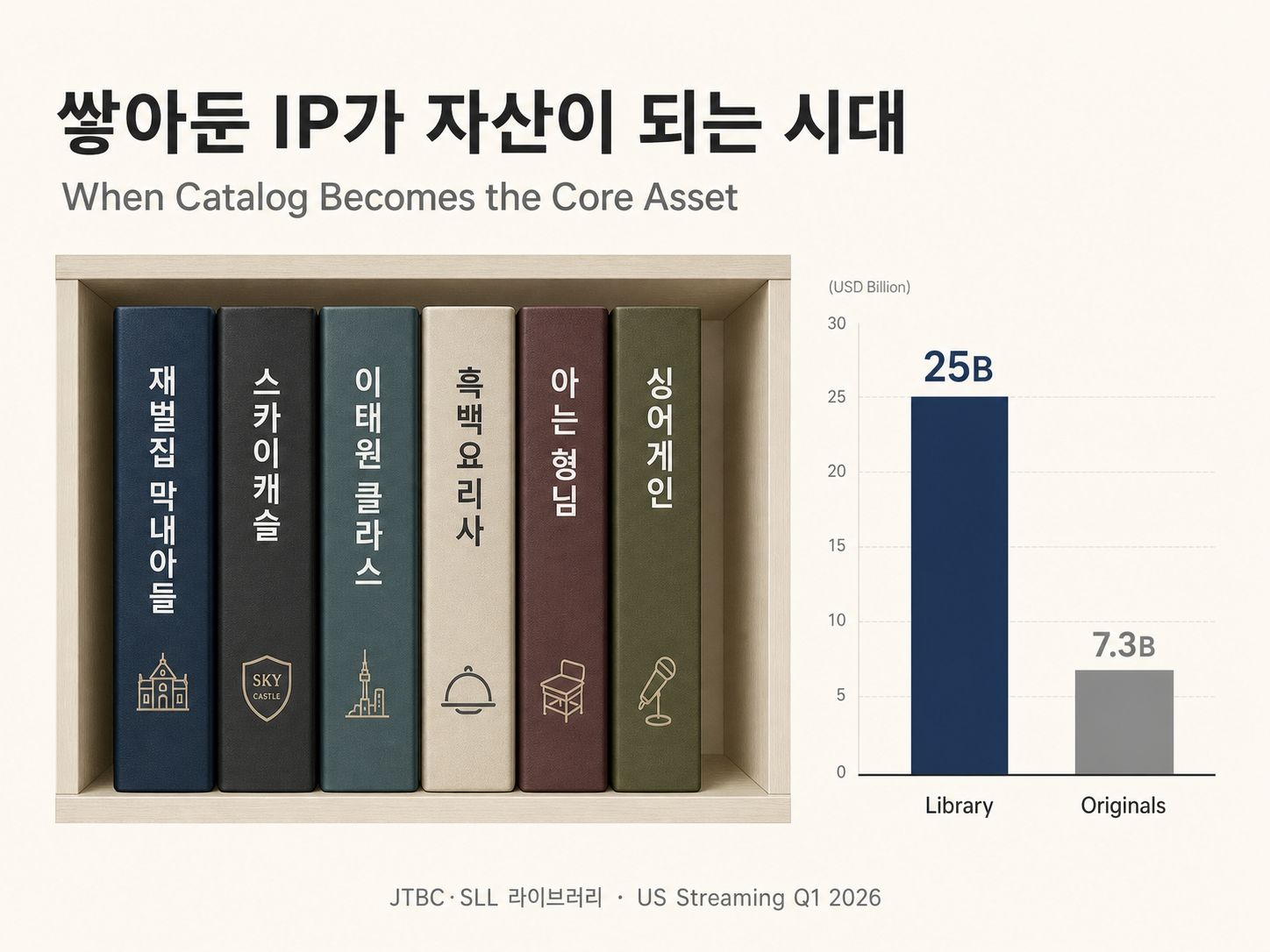
The forces behind it are structural. The production spending that ballooned during the streaming wars has come back as a profitability squeeze, slowing platforms' investment in new shows. On the demand side, viewers are leaning harder into both the 'safe watch' of rewatching what they already know and the discovery of older titles they have never seen.
Old is not old; it is classic. A new hit delivers an explosive payday, but classic IP generates recurring revenue, and the two are meant to run together. That is why legacy studios such as Disney and Warner are licensing dormant originals to Netflix, turning sleeping assets back into cash. Classic IP also builds fandom, and fandom can be guided into spaces where it is willing to pay.