

A previously announced channel plan is tied to BEST carriage, the broadcast app and impression measurement, opening a new U.S. route for Korean content, with conditions still to be met
Sinclair, the U.S. broadcast group, laid out a strategy to use K82, a 24-hour Korean culture channel, to widen the audience for next-generation broadcast TV and build advertising and commerce revenue. Viewers would find K-pop, Korean drama and other Korean content in the TV guide, watch it through the broadcast app, and move on to ads and purchases.
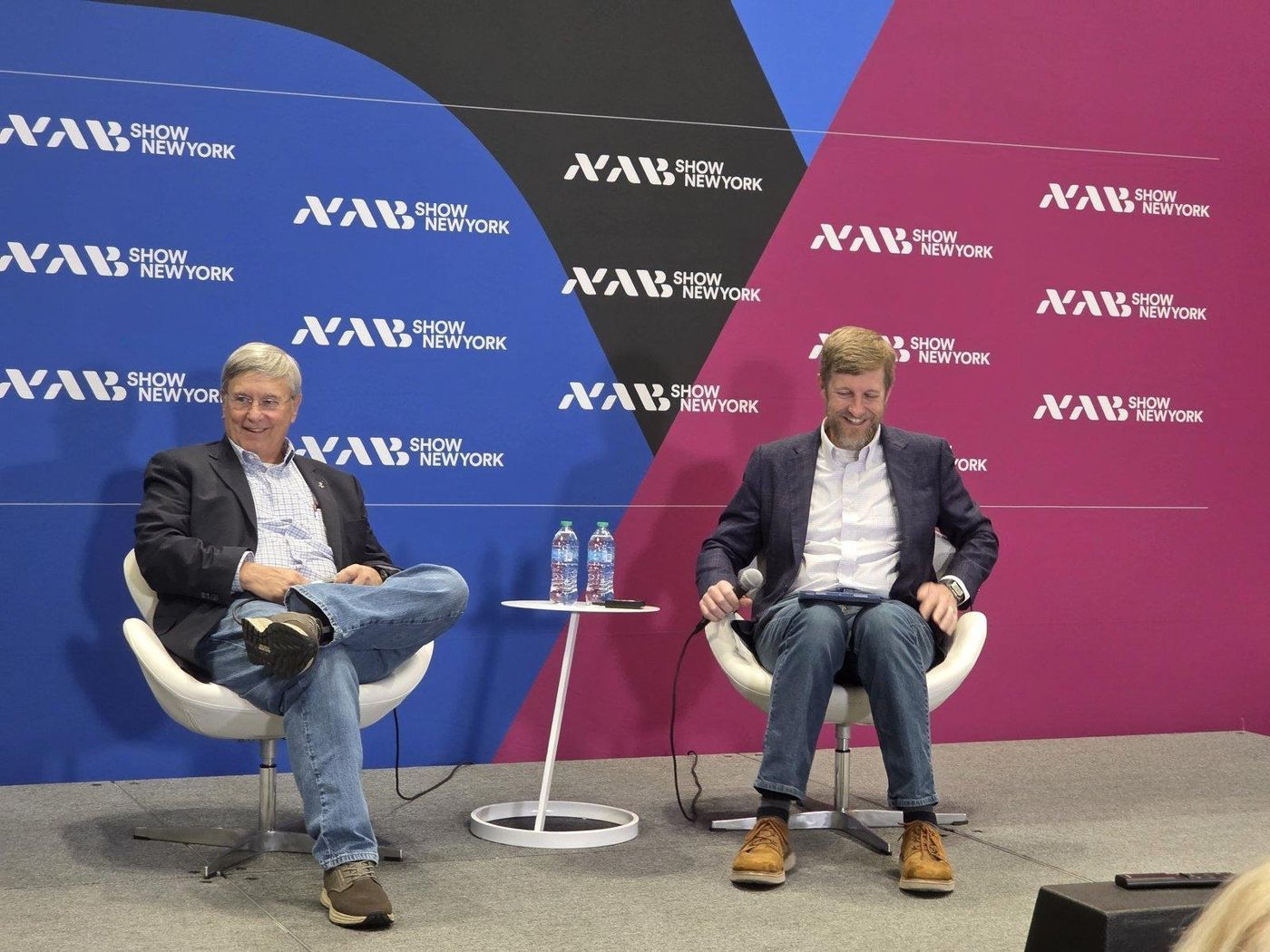
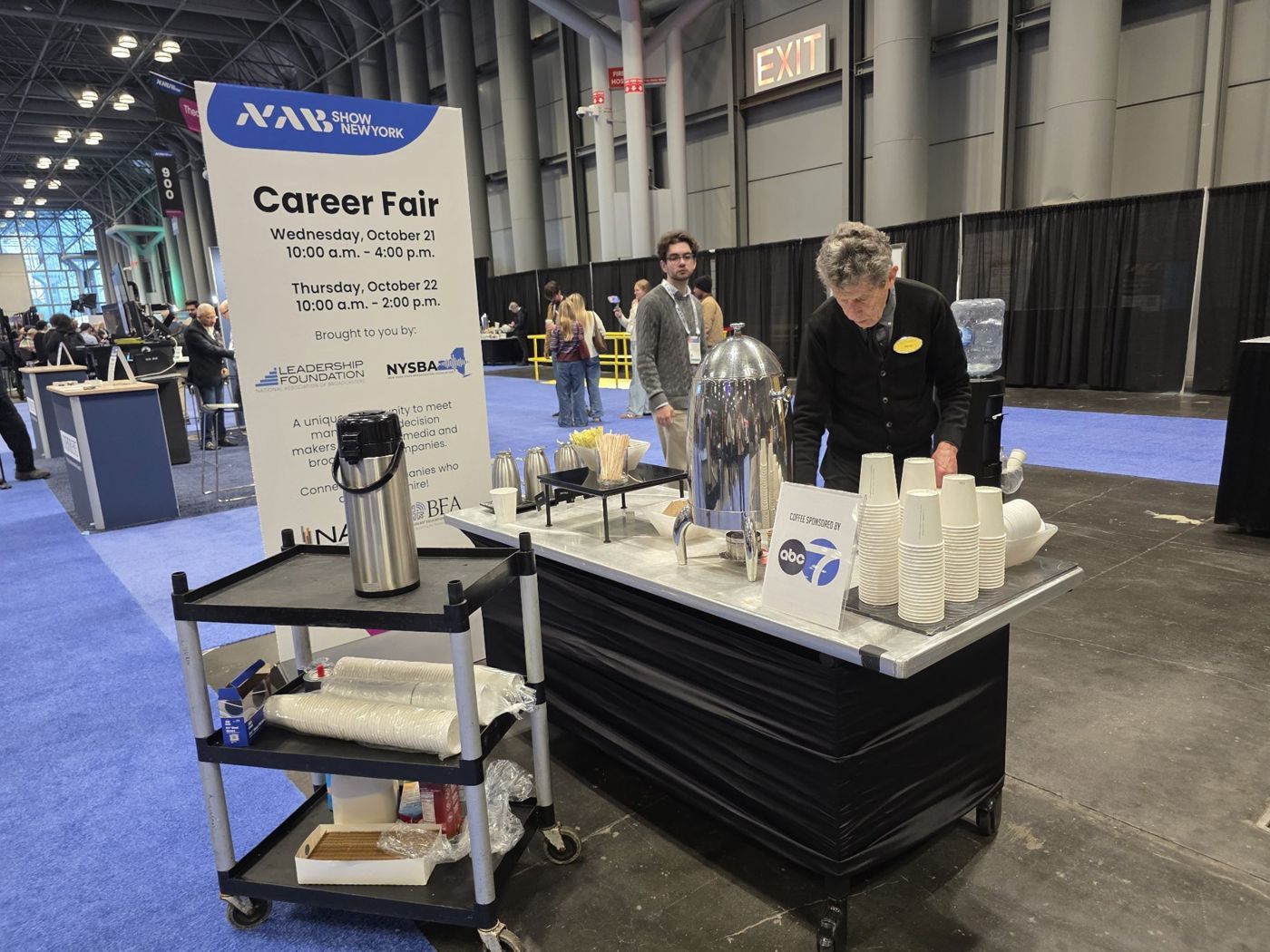
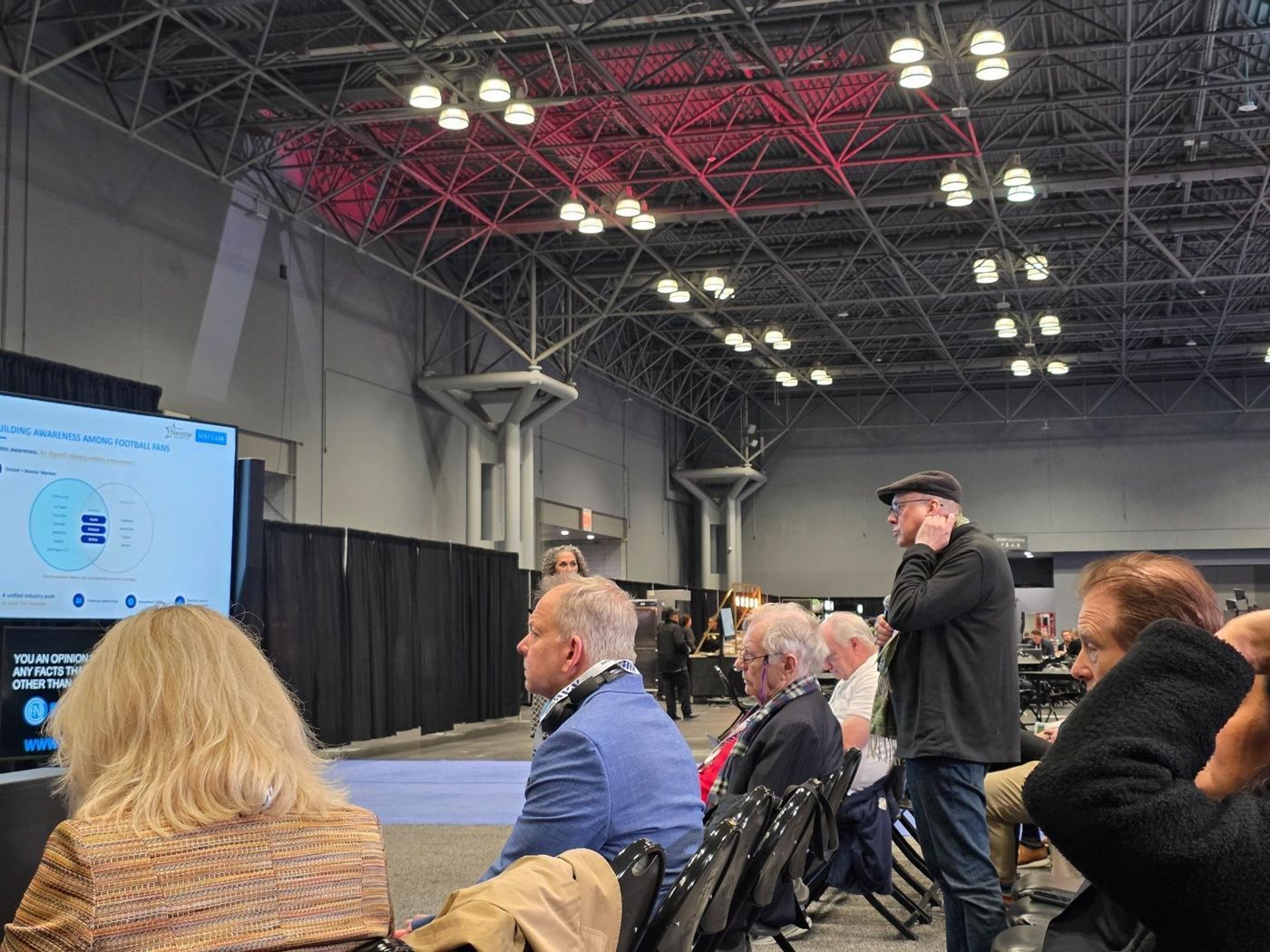
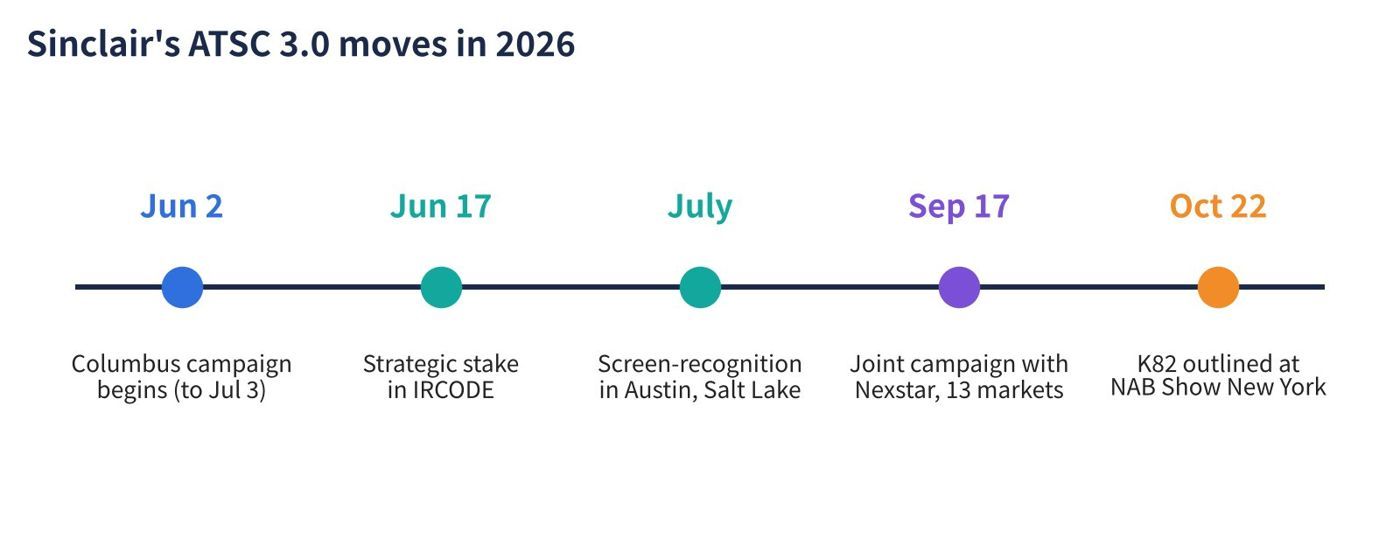
Del Parks, Sinclair's president of technology, explained K82's distribution and monetization plan on Oct. 22 at NAB Show New York 2026 at the Javits Center. He turned a channel plan announced earlier into a business model linked to the broadcast program guide, the broadcast app, ad-impression measurement and screen-recognition shopping.
Sinclair owns and operates local broadcast stations across the U.S. and is the country's second-largest broadcast group. According to its annual report, it operates 185 stations and 641 channels in 86 markets, with signals reaching about 40% of U.S. households. Its stations are local affiliates of Fox, NBC, CBS, ABC and other networks, carrying local news, sports and network programming, and it also runs Tennis Channel and multicast networks such as Comet, CHARGE! and ROAR.
Sinclair is also the most aggressive U.S. backer of ATSC 3.0 (NextGen TV), the next-generation broadcast standard. As of the first quarter of 2024, ATSC 3.0 service was available to 75% of households in its licensed areas. ATSC 3.0 combines the broadcast signal with internet protocol, supporting 4K pictures, immersive audio, household-level targeted ads, datacasting, interactive services and advanced emergency alerts. Through its subsidiaries ONE Media and CAST.ERA, Sinclair is building ad insertion, data services and broadcast-IP integration into revenue models on that network. In September it began a joint NextGen TV campaign with Nexstar in 13 markets, including Washington, D.C., and Baltimore.
K82 is a specialty channel that supplies Korean content into that distribution system. The name joins ‘K’ with 82, Korea's international calling code, and the service is planned as a 24-hour schedule of K-pop, drama, variety, food, beauty and lifestyle.
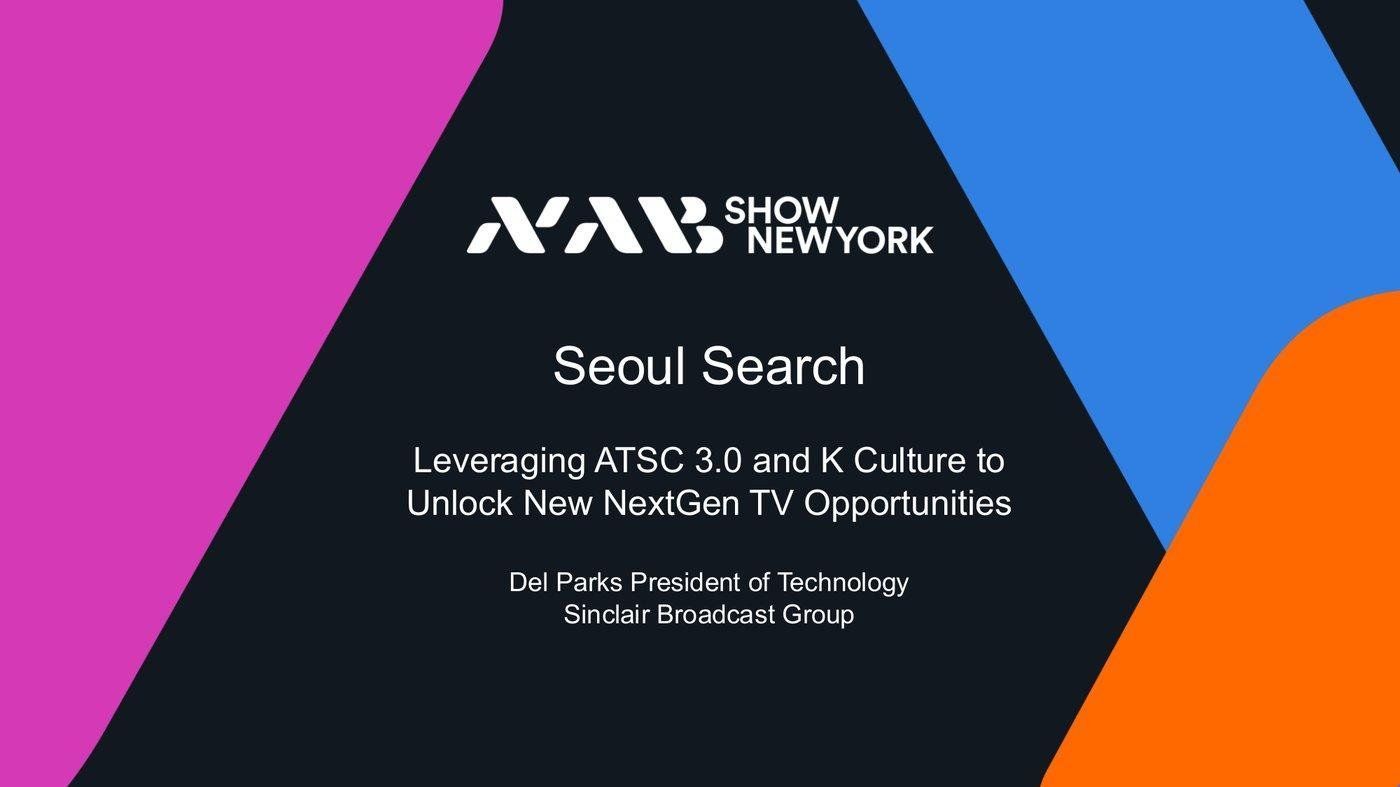
The session was titled “Seoul Search: Leveraging ATSC 3.0 and K-Culture to Unlock New Opportunities” and moderated by John Clark, chief innovation officer of the National Association of Broadcasters (NAB). The focus was less on unveiling the channel than on how Korean cultural content could be turned into new viewing demand and ad revenue for U.S. broadcasters.
K82 on the ground: the NAB short
▶ Play the English integrated short · about 76 seconds
00:00–00:08 NAB setting / 00:08–00:28 K82 and BEST / 00:28–00:43 measurement remarks / 00:43–01:08 shopping, demand and contract terms / 01:08–01:16 execution.
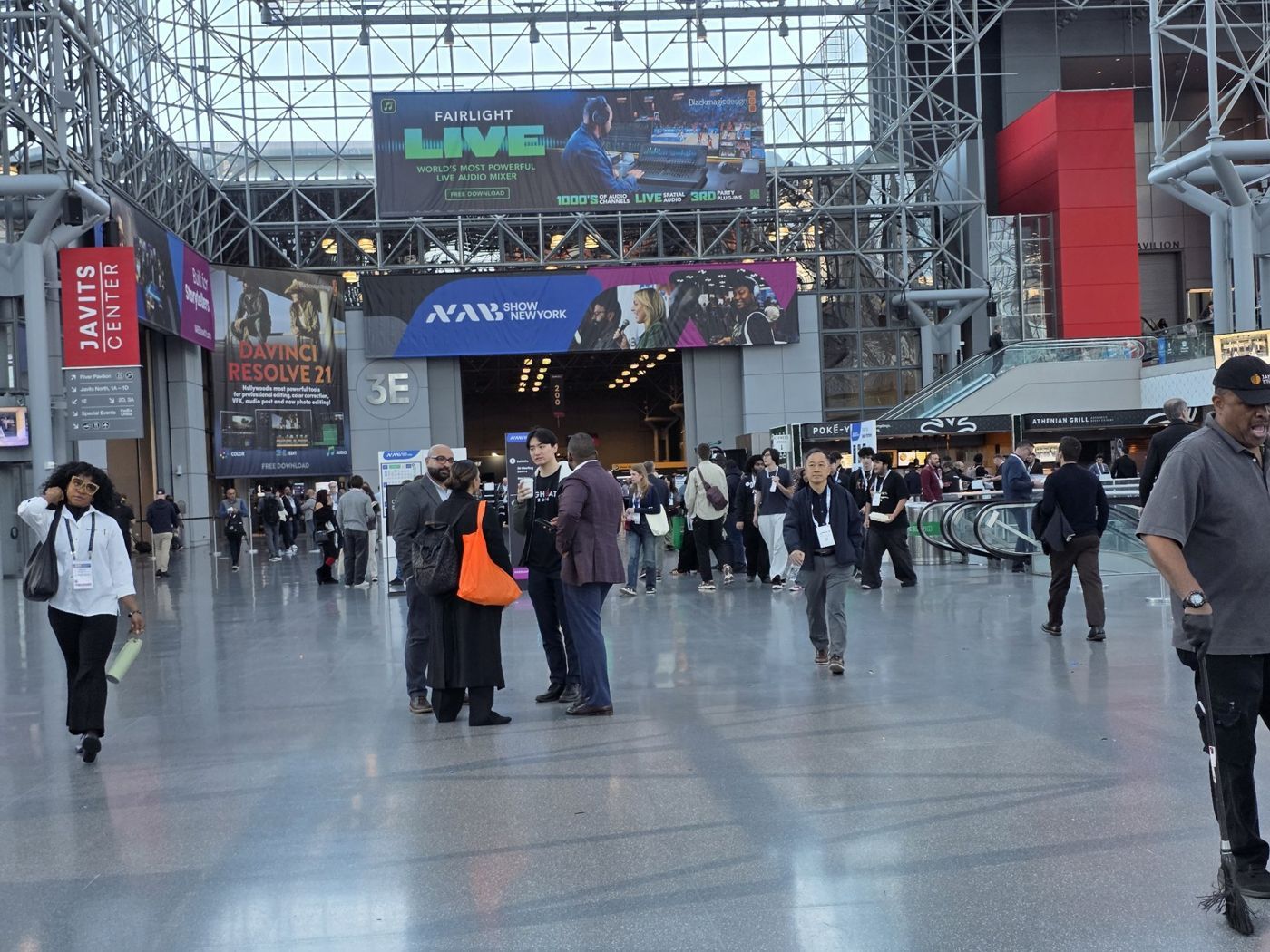
Original NAB footage: NAB 1 · Vertical floor footage | NAB 2 · Exhibition walk-through | NAB 3 · Entrance
What K82 is
K82 goes beyond exporting individual dramas or K-pop shows: it packages Korean culture under one brand and one schedule for U.S. viewers.
Sinclair's deck lists six genres: K-pop, drama, variety, food, beauty and lifestyle. The core audience is 18 to 25, aimed not only at Korean Americans but at local viewers interested in Korean culture.
K82 has been presented as the first K-culture channel to use the national reach of U.S. broadcast TV. The novelty is not Korean programs airing in America but a stand-alone channel built around Korean culture and plugged into a U.S. broadcast group's next-generation TV business. Korean broadcasters supply the content. KBS (한국방송공사) signed a strategic cooperation agreement on March 16 with Sinclair and CAST.ERA Networks, SBS followed on March 19, and MBN signed after that. YTN joined the launch event in Seoul in May. The early schedule is to lean on finished K-pop and drama for revenue stability, then add tourism, fashion and industry content; viewers would watch for free as a TV channel and take part in quizzes, polls and live shopping, according to the plan. English access is to come from Hudson AI's AI dubbing.
The carriage scope was corrected along the way. Korean media reported that the channel would be added on all 185 Sinclair stations, but Sinclair said it would initially be carried as a broadcast-enabled streaming channel on ATSC 3.0 stations and would not be dedicated to any one broadcaster. NAB New York was therefore not the channel's debut; it was where Sinclair explained how a channel already in the works would be distributed and paid for.
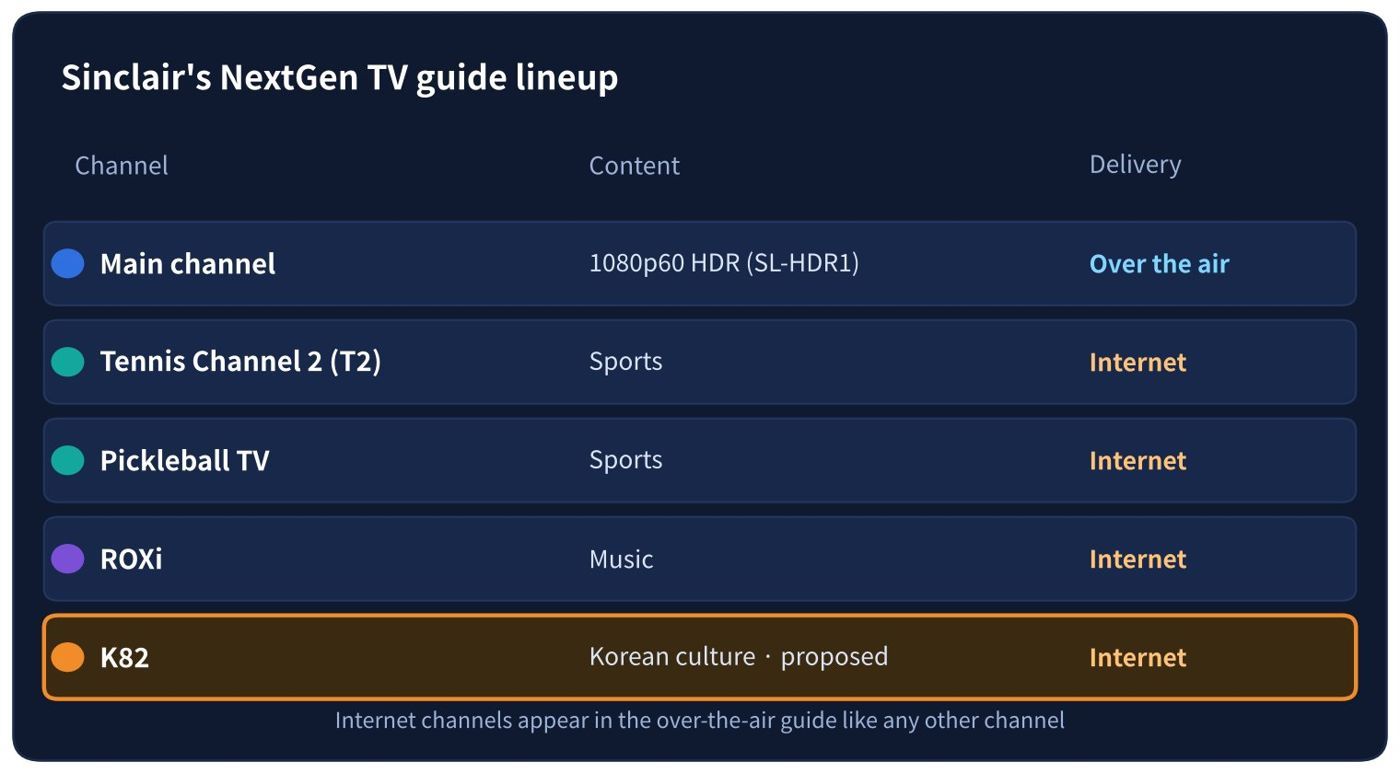
Three viewing routes were presented: linear TV that follows a set schedule, ad-supported free streaming (FAST), and digital services including the broadcast app. The same brand would appear across all three, but actual carriage and availability depend on each distribution deal and technical rollout. The BEST approach in the deck lists an internet-delivered channel in the broadcast program guide of compatible TVs. Appearing in the broadcast guide does not mean all K82 video arrives over the antenna signal.
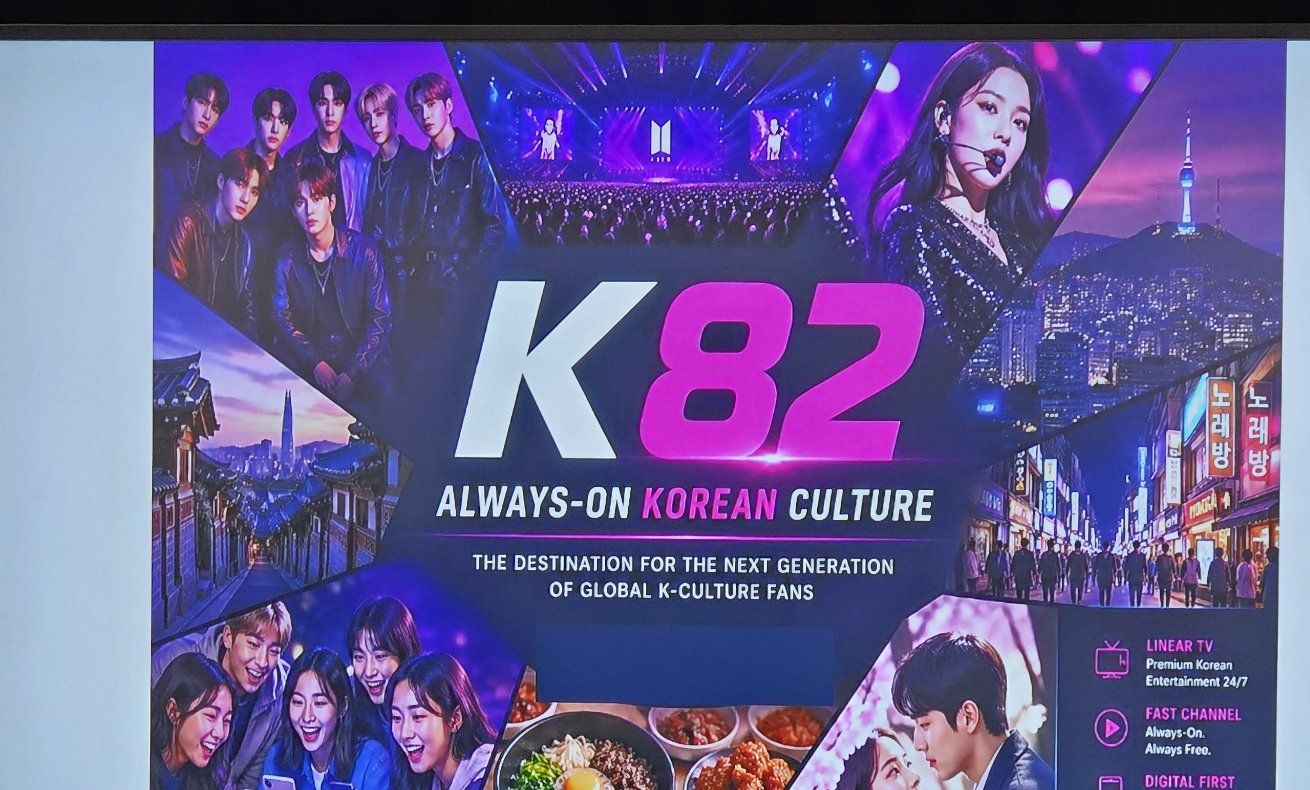
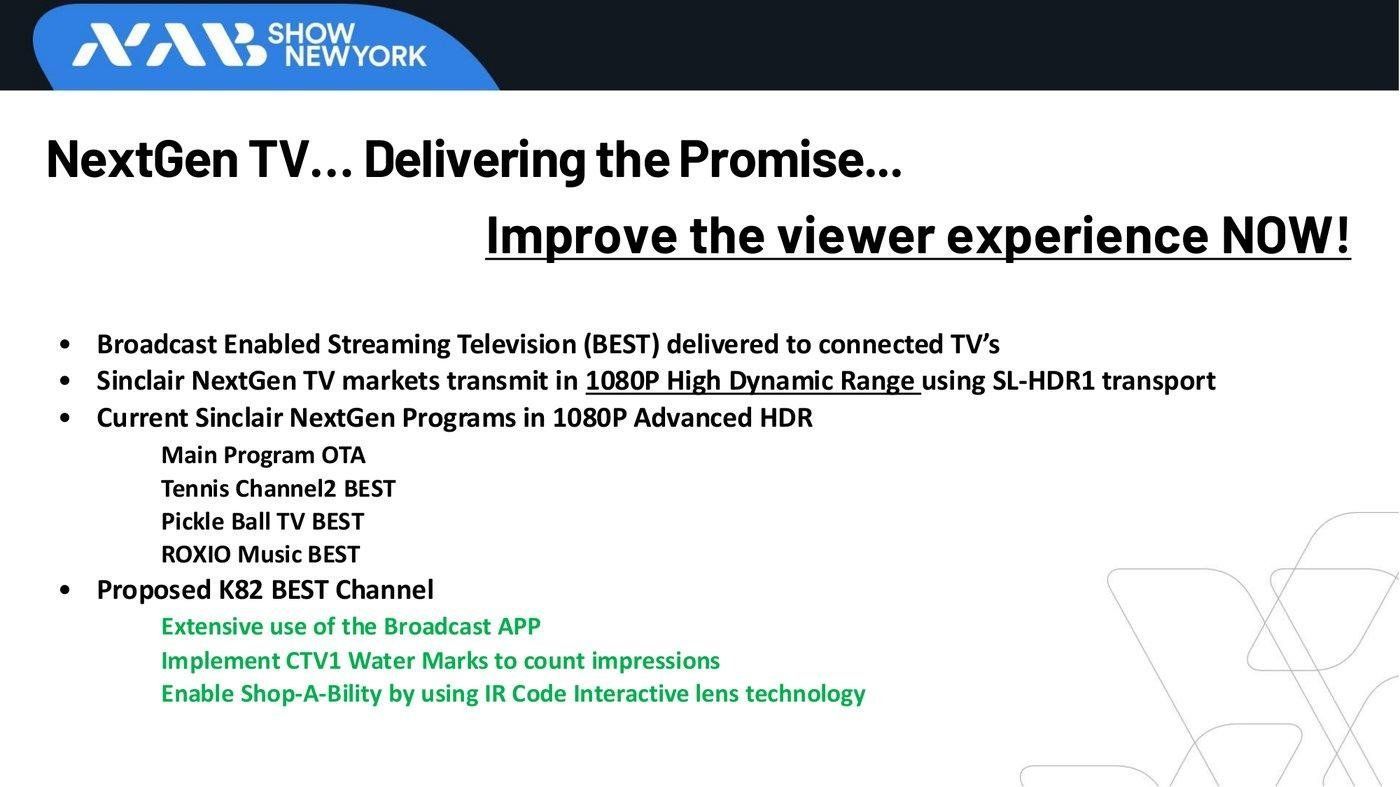
In the deck, Sinclair proposed carrying K82 as a BEST channel; the slide reads “Proposed K82 BEST Channel.” It also proposed making heavy use of the broadcast app, counting ad impressions with CTV1 watermarks and enabling shopping during viewing through IRCODE's screen-recognition technology. The structure is to gather viewers with Korean content, measure their use and carry it into ads and purchases. These are proposals; not all of these features are running commercially on K82.
U.S. broadcasters compete with streaming for viewing time and ad dollars. They keep sports and local news as strengths but need new content and new ways to sell ads. ATSC 3.0 provides the technical base for adding internet services to the broadcast signal. Sinclair is pursuing better pictures to give existing viewers a reason to tune in, specialty channels to widen choice, and a structure that can measure use.
The channel idea itself is not new. What NAB New York added is that the positioning and proposed features of a Korean culture channel were explained to the U.S. broadcast and technology industry in an official session moderated by NAB's John Clark. For Korean companies, it is a chance to consider reaching local viewers at the channel or content level without owning a station. Actual supply and revenue depend on contract terms covering rights, scheduling and ad splits.
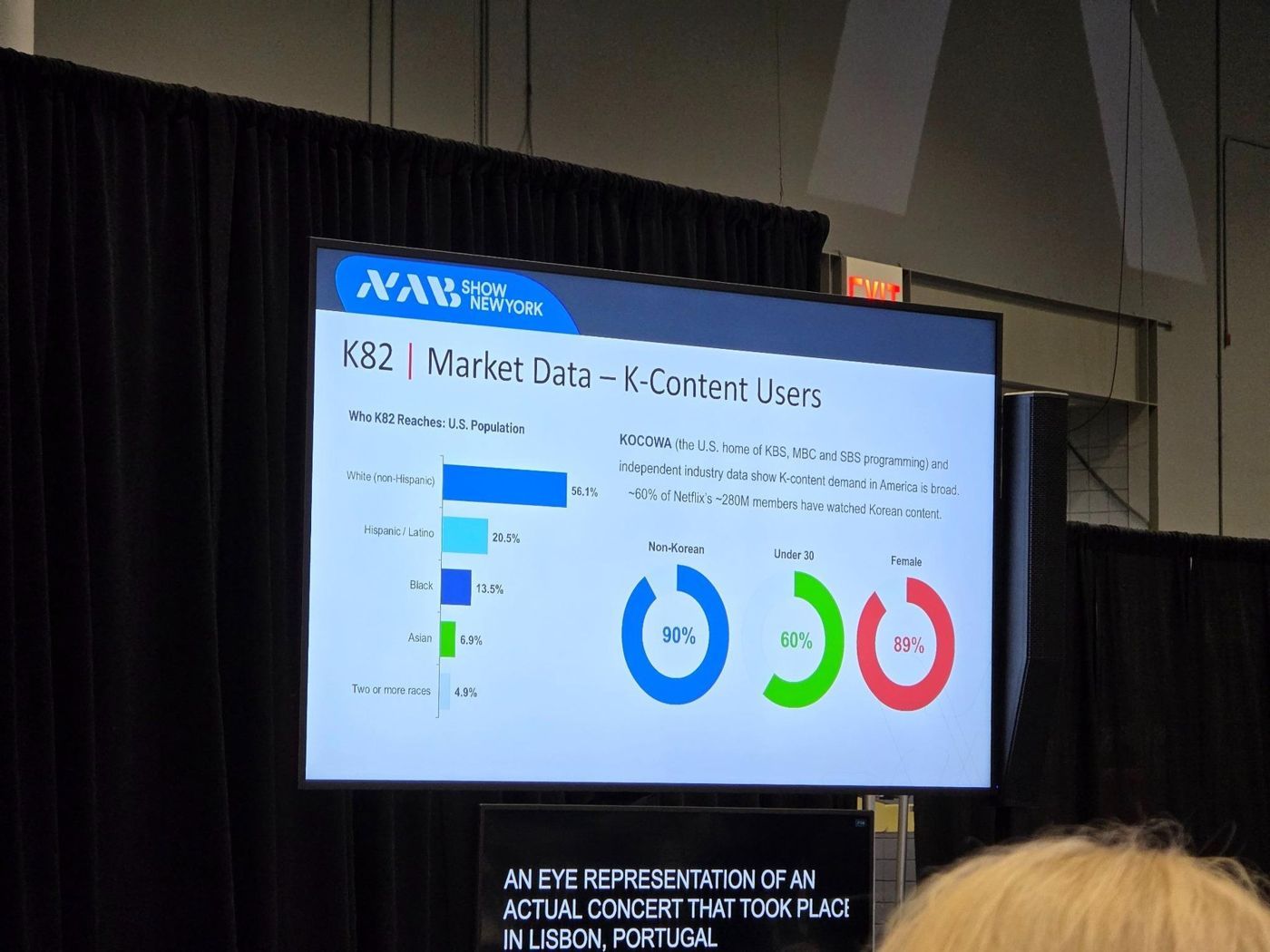
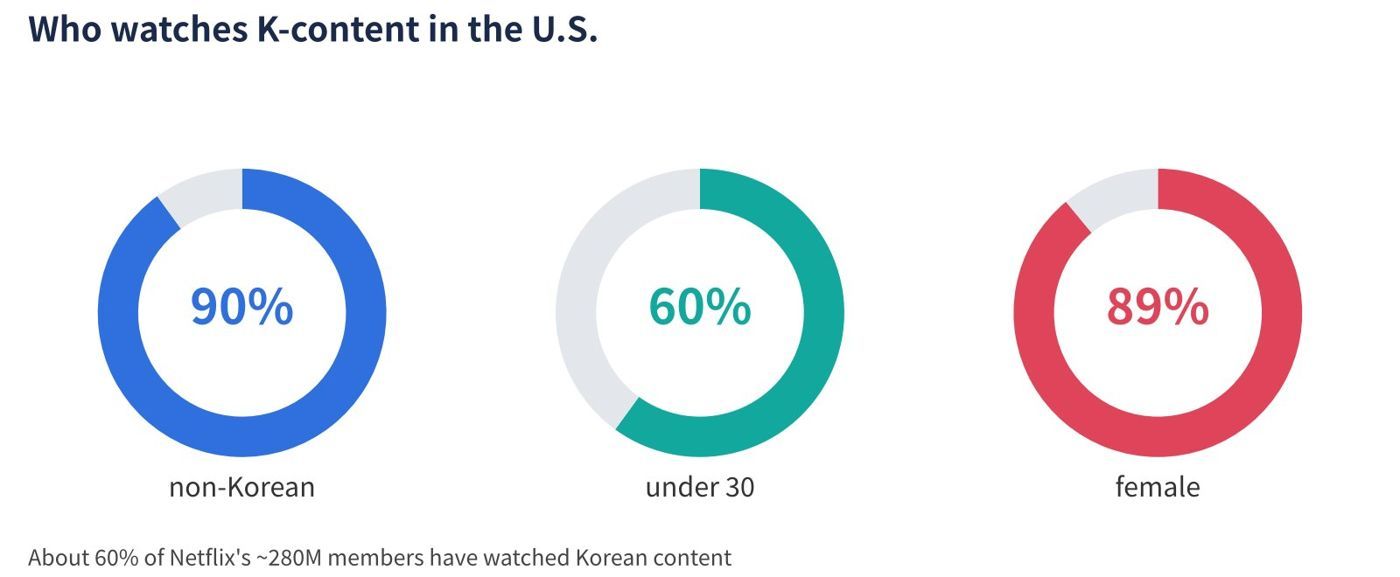
The pitch came alongside Sinclair's work on picture quality and consumer outreach: converting the primary channel of its ATSC 3.0 stations to 1080p at 60 frames per second with HDR, a four-week campaign in Columbus that logged 3.34 million impressions, and a 13-market joint campaign with Nexstar. Citing KOCOWA and industry data, Sinclair said 90% of U.S. K-content users are non-Korean, 60% are under 30 and 89% are female. These are usage figures for existing K-content services, used to justify the channel, not K82 viewing or revenue. What set the NAB talk apart was putting that demand case and the execution tools (broadcast app, watermark, screen-recognition shopping) into a single business case.
Presented in an official NAB session, a plan known mostly through Korean partners became an agenda item for the U.S. broadcast and tech industry: how viewers will find a BEST channel, how use will be measured, and how advertisers and Korean brands will be connected. A conference talk does not guarantee carriage deals or revenue, but the role K82 is meant to play in a U.S. broadcaster's next-generation strategy came into view there.
NAB Show New York's question: turning technology into a business
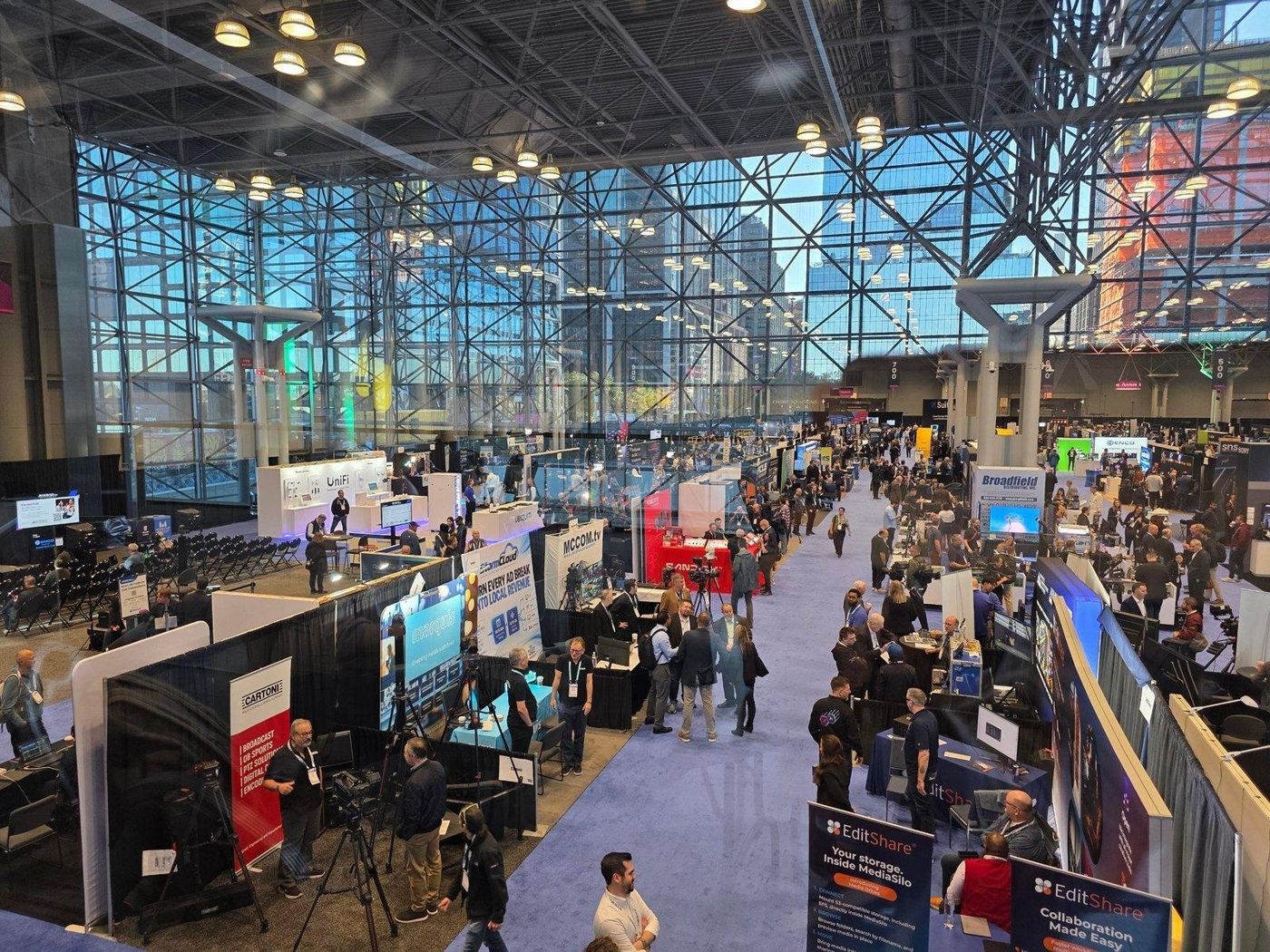
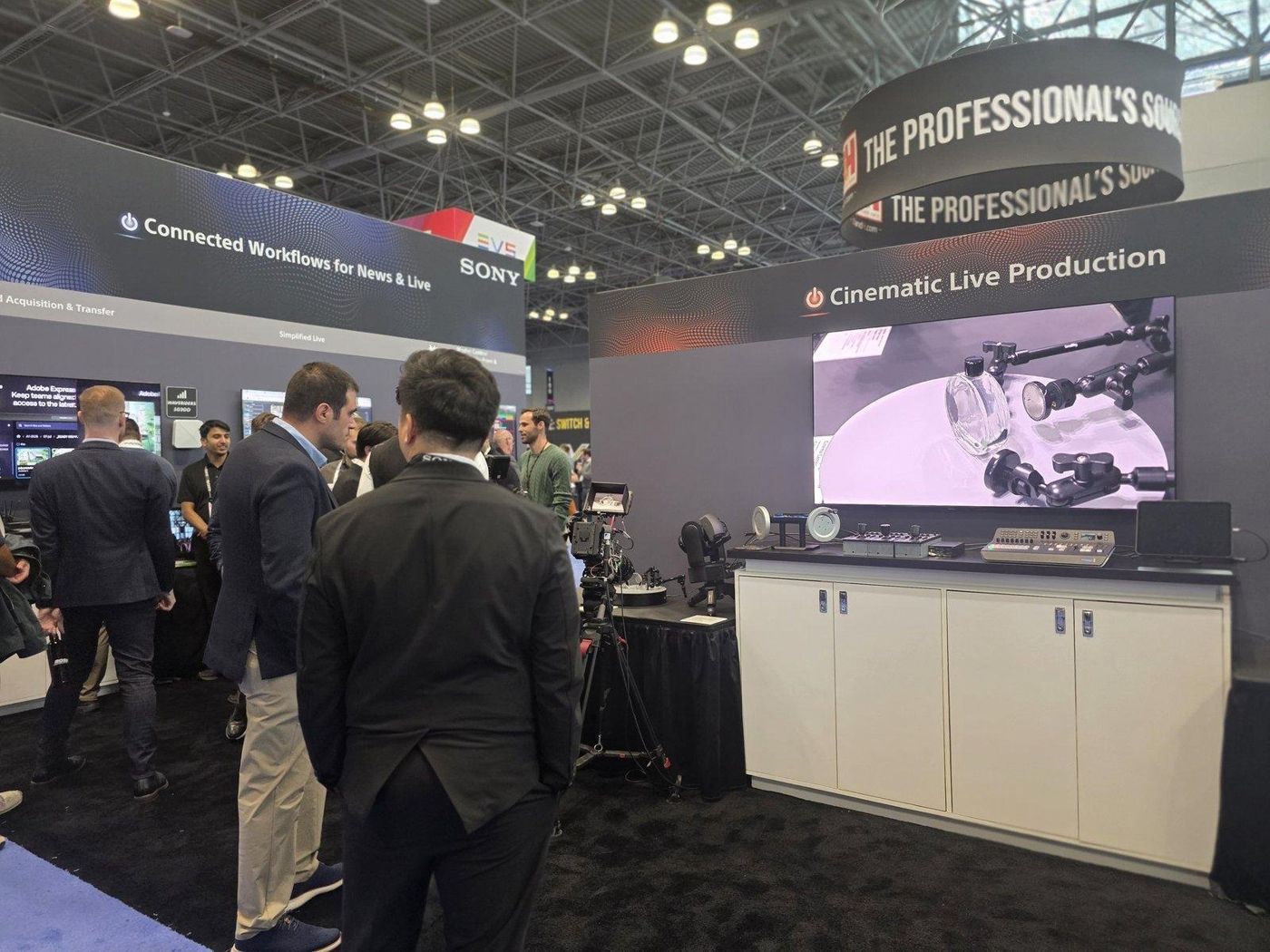
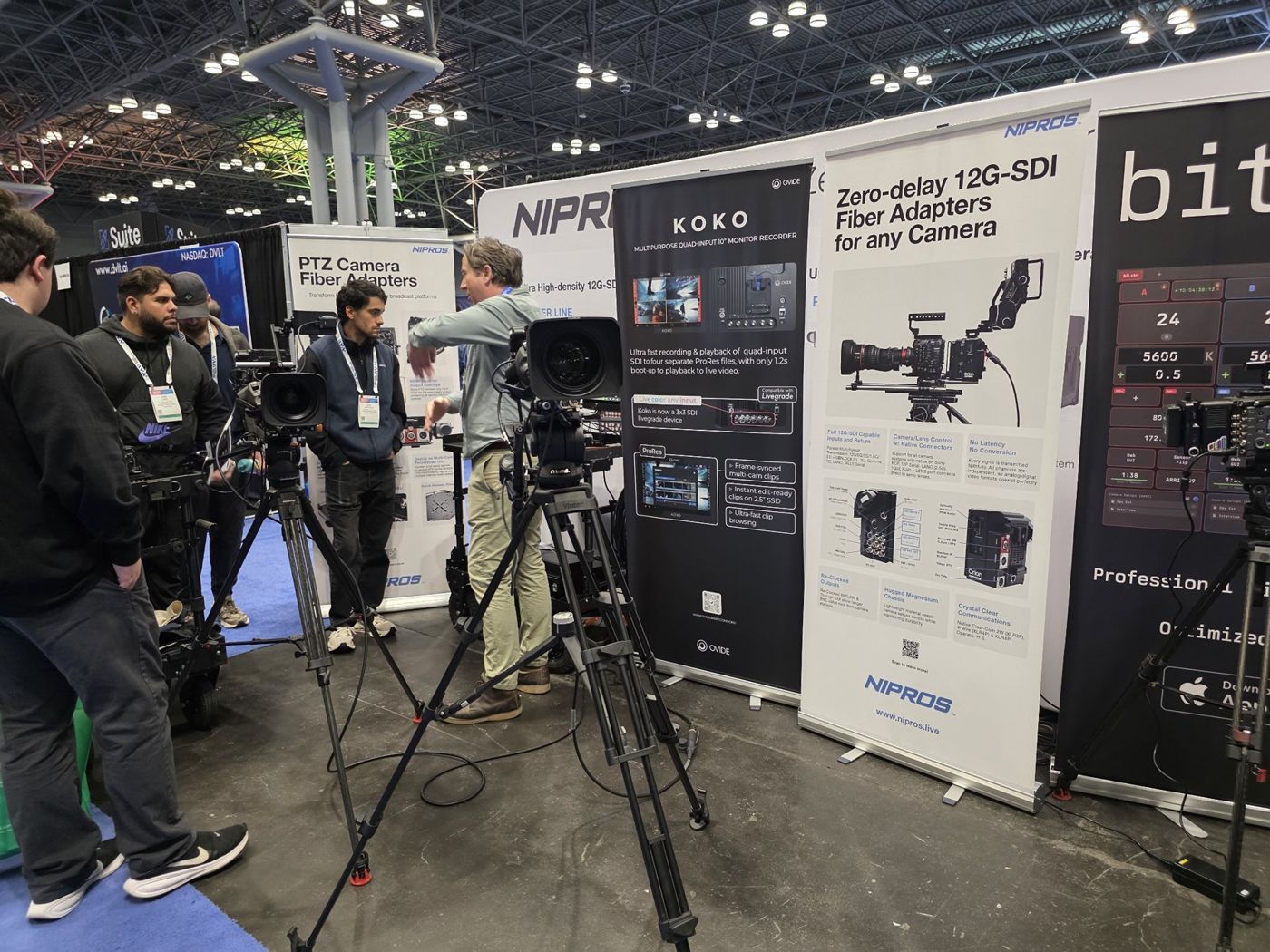
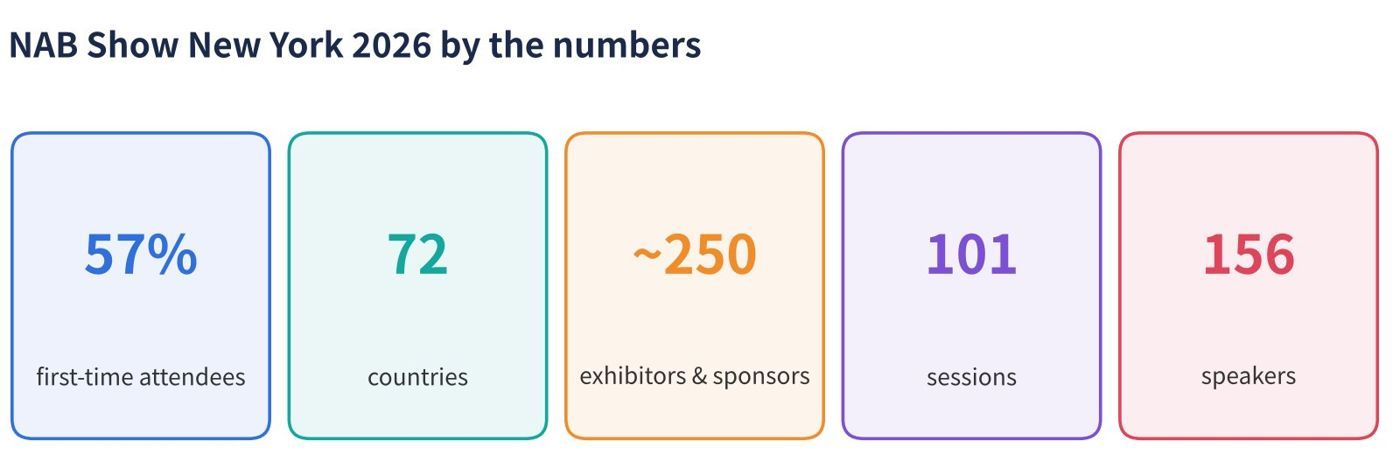
NAB Show New York, held Oct. 21-22, focused on how advances in production technology change the way the business makes money. NAB's closing release put first-time attendees at about 57%, with participants from 72 countries, about 250 exhibitors and sponsors, 101 sessions and 156 speakers. Karen Chupka, NAB's executive vice president of global connections and events, said the event's value lies in bringing content investors, producers and technology developers together to look at business opportunities from different angles.
Sports and AI sessions led to the same issue. NAB President Curtis LeGeyt stressed that big sports rights help fund local news and local programming, and sports commentator Clay Travis urged experiments to reach new viewers. At “The Great Media Reshuffling,” Aaron Sobel, a partner at Apollo Global Management, said AI could cut film production costs by 5% to 20% within a few years. That is a forecast, not a measured saving. The Sinclair session took up how broadcasters can put their distribution network back to work amid those shifts.
Broadcast share falls while antenna-only homes grow
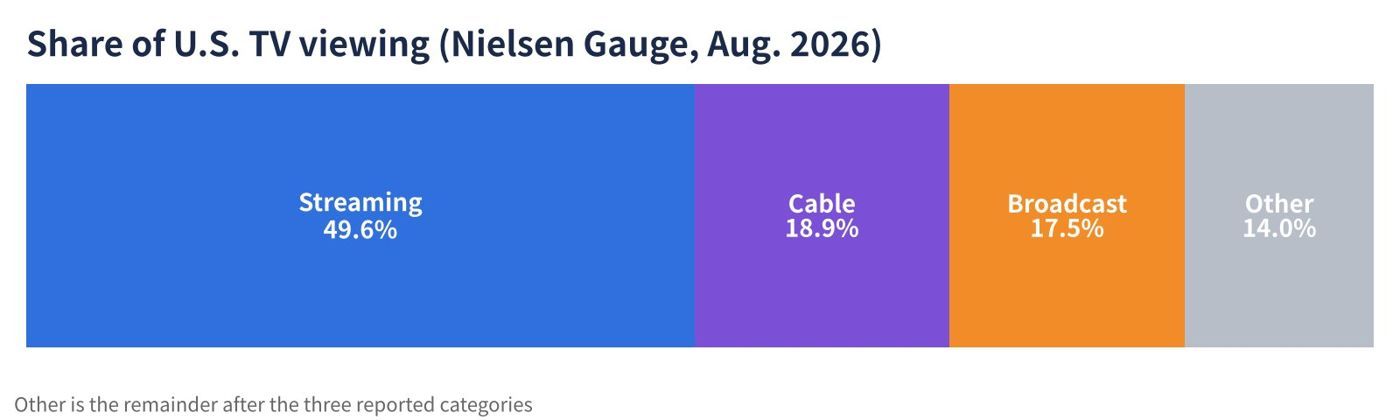
The market U.S. broadcasters face is not a simple decline. In Nielsen's August 2026 Gauge, released Oct. 22, broadcast viewing time fell 14% from July and its share dropped 2.0 points to 17.5%. The gap between the World Cup, which ended in July, and the September start of football weighed heavily. Sports' share of broadcast viewing fell from 30% in July to under 9% in August, which puts numbers behind LeGeyt's point about sports rights as a source of funding for local stations.
The decline was not limited to broadcast. Total TV usage fell 4.4% that month as school resumed, and streaming usage fell 3.2%. Streaming's share still rose 0.6 points to 49.6% because its decline was smaller than TV's overall. Cable was at 18.9%. YouTube viewing rose 6% to 15.8% of all TV time, a record for a single platform; YouTube sits within streaming and cannot be added separately. Viewing by children 6-17 fell with school, but YouTube viewing among adults 50 and older rose 9%. A higher streaming share is not the same as more streaming time, and the move to streaming is not confined to the young.
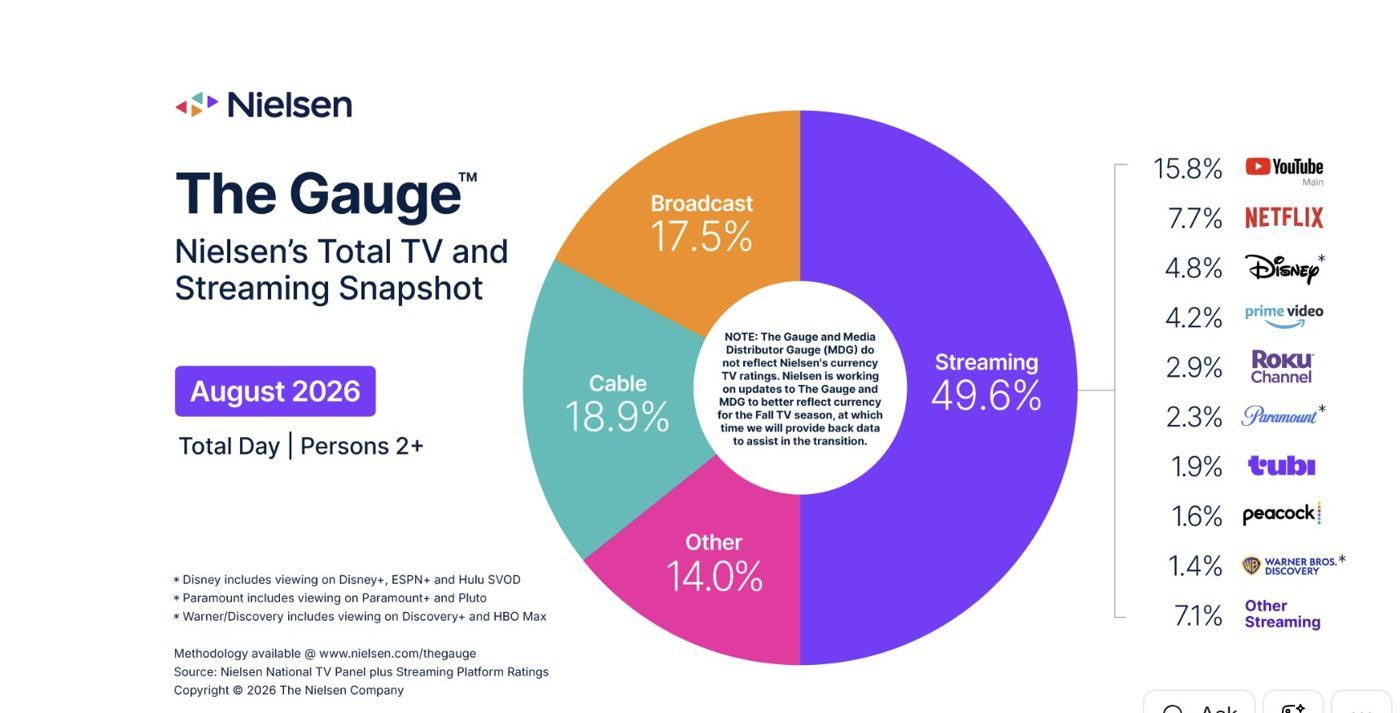
The measurement period ran five weeks, July 27 to Aug. 30, 2026. Nielsen said it will make a one-time methodology adjustment from the September period to align with its ad-currency ratings data and will release September and October together at year-end. Later comparisons need to account for that change, and monthly shares alone cannot estimate demand for K82 or its business results.
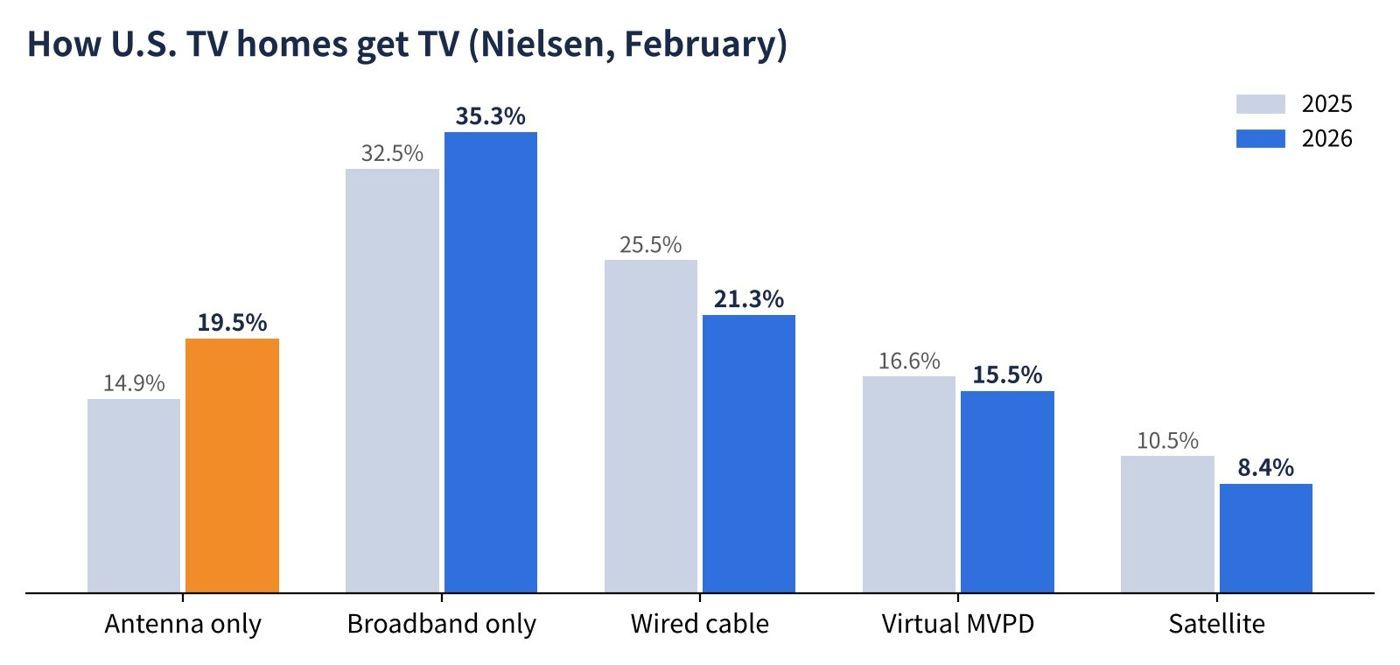
How households receive TV, meanwhile, is moving in the antenna's favor. In Nielsen household estimates published by TVB, antenna-only homes made up 19.5% of U.S. TV households in February 2026, up 4.6 points from 14.9% a year earlier. Over the same period wired cable homes fell from 25.5% to 21.3% and satellite homes from 10.5% to 8.4%. In the latest July data, antenna homes were at 19.0%, a little over a point behind wired cable (20.1%).
MoffettNathanson figures cited by Light Reading put traditional pay-TV subscribers at 40.9 million at the end of the first quarter, down 9.7% from a year earlier. The Advertising Research Foundation's DASH study put antenna-using homes at 17.1% as of mid-2026, up 1 point. Samples and methods differ, so the figures can't be compared directly, but the direction is the same: pay TV is shrinking and antenna reception is growing.
More antenna homes do not mean more ATSC 3.0 users. Most antenna homes still watch ATSC 1.0. Moving them to next-generation broadcasting takes compatible receivers and a reason to watch. Sinclair's answer was to build up better pictures, specialty channels and consumer campaigns in that order.
Redesigning the viewing experience, starting with the picture

Parks likened ATSC 3.0's current state to being “in neutral,” stuck going neither forward nor back. On paper, 3.0 signals reach about 70% of U.S. homes, but in practice several broadcasters commonly share one transmitter in a “lighthouse” arrangement. When five or six 3.0 signals crowd onto one facility, each broadcaster has less capacity, making it hard to add new channels or higher-quality services.
Sinclair's answer was the task “Improve the viewer experience NOW!” It decided about a year ago to deliver a better picture before new services, on the view that adoption moves only if viewers see a difference the moment they switch on a 3.0 receiver. “NextGen TV must deliver a better picture to consumers, and we're doing it with HDR and 1080p60,” Parks said.
Few programs are produced natively in 1080p60 HDR. Sinclair upconverts 720p and 1080i sources to 1080p60 and sends HDR information using SL-HDR1. SL-HDR1 carries HDR reconstruction metadata on top of standard dynamic range video, so HDR sets show HDR while older sets show standard pictures. Sinclair applies the method to more than 150 ATSC 3.0 channels in the U.S.
According to Parks, the work was led by Matthew Goldman, a former president of SMPTE (the Society of Motion Picture and Television Engineers), who is Sinclair's vice president of strategic and technology initiatives. Delivering 1080p60 HDR is different from producing and transmitting in 4K. Sinclair's strategy is to lift perceived picture quality through brightness and color rather than resolution.
Turning the broadcast guide into a streaming storefront
BEST stands for Broadcast Enabled Streaming Television, a term first coined by Mark Aitken, president of Sinclair's technology subsidiary ONE Media. The station sends only channel information in its ATSC 3.0 signal. That information shows up in the TV's program guide like any channel, and when a viewer selects it, the video plays over the internet. Viewers therefore need a TV that receives the NextGen TV signal by antenna and is also connected to the internet. The guide belongs to broadcast; delivery is handed to streaming networks. The structure adds streaming's scheduling flexibility to free broadcast access and lets broadcasters short of spectrum add channels.
Sinclair has extended the model to public broadcasting and sports and music channels. In October 2024 it carried Nebraska Public Media's PBS and local programming as the first free BEST channel on its Fox affiliate in Omaha. In March of that year it announced Tennis Channel's T2 as a free virtual channel across all of its then 43 NextGen TV markets. In July 2025 it launched the interactive music channel ROXi in 31 of its markets, with Pearl TV supporting expansion beyond Sinclair markets. The NAB deck lists the over-the-air primary channel and the BEST channels T2, Pickleball TV and ROXi, all in 1080p HDR. In the session those were described as already on air in Sinclair's next-generation markets, with K82 set apart as a proposed addition.
K82 targets global K-culture fans
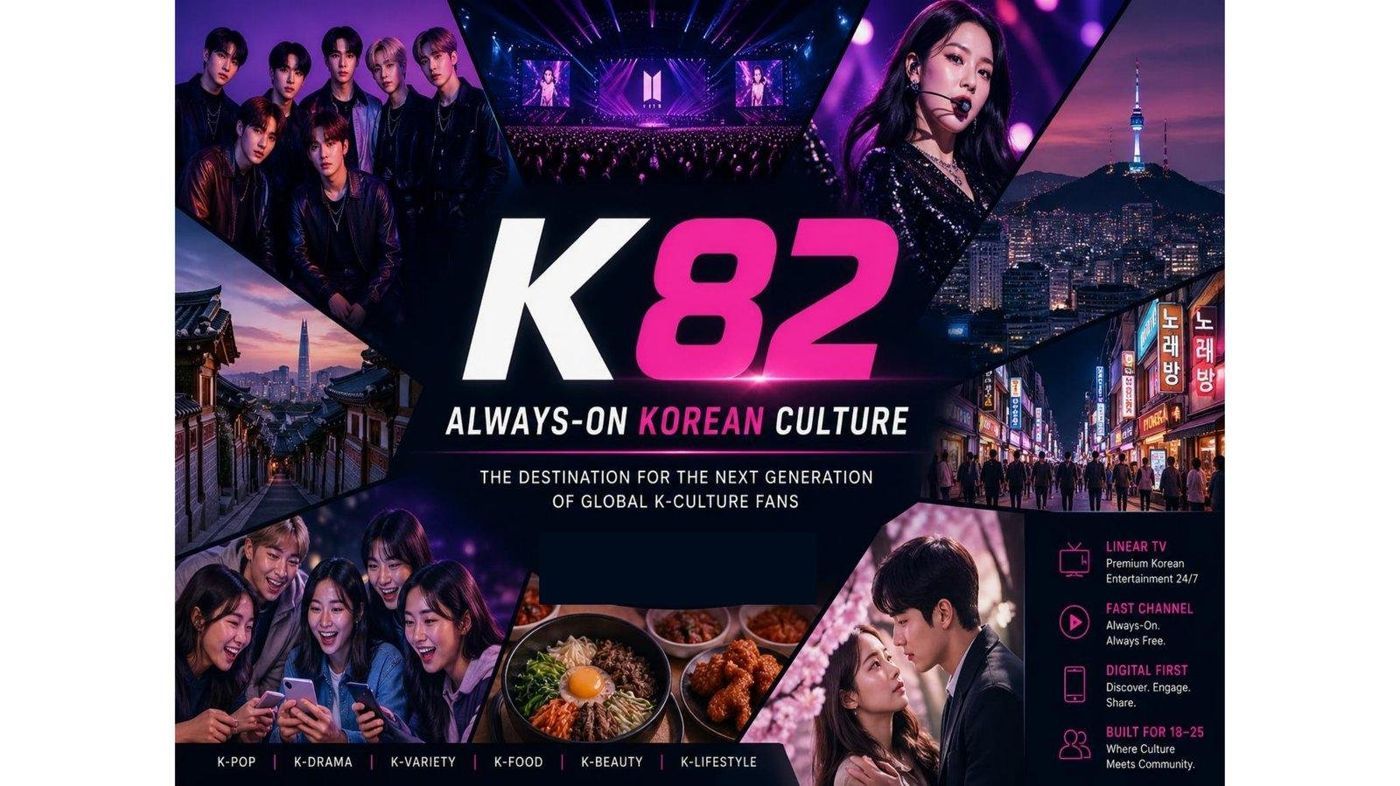
K82's key art promises “Always-On Korean Culture” and a destination for the next generation of global K-culture fans. The service comprises 24-hour linear TV, free ad-supported streaming TV (FAST) and digital services built around discovery, engagement and sharing. Ages 18 to 25 are the core target, not a separate service. The plan weaves K-pop, K-drama, K-variety, K-food, K-beauty and K-lifestyle together to link broadcast programming with online fan activity.
Parks credited Sinclair colleagues in Korea and Jung Han, CEO of K-EnterTech Hub, as the starting point of the plan. It extends the relationships Sinclair built through its datacasting business in Korea into content distribution.
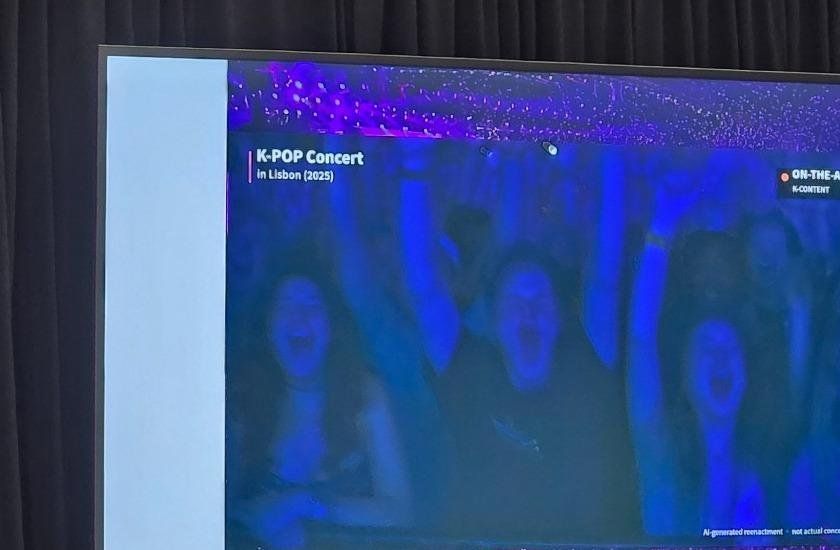
The session also screened a generative-AI re-creation of a 2025 K-pop concert in Lisbon, distinct from real footage. Parks said about 20,000 mostly non-Korean fans at the actual show sang along in English and Korean and used Wi-Fi-synced light sticks. He added that his grandchildren knew the K-pop stars well and cited K-pop classes in the U.S. as background for a plan that pairs a linear channel with on-demand video in the broadcast app.
What the demand data can and cannot show
KOCOWA, which Sinclair cited, streams KBS, MBC and SBS programs in the U.S. The deck's figures (90% non-Korean, 60% under 30, 89% female) support the business hypothesis that demand reaches beyond the Korean diaspora. But the deck gives no detail on sample, survey date or method, so the numbers can't be taken as a definitive breakdown of all U.S. users. The accompanying claim that about 60% of Netflix's roughly 280 million members have watched Korean content is also a deck citation, not a current subscriber figure.
The deck also showed the U.S. population mix: 56.1% non-Hispanic white, 20.5% Hispanic or Latino, 13.5% Black, 6.9% Asian and 4.9% two or more races. Race and ethnicity categories can overlap and the shares don't sum to 100%, so they are hard to read as a single exclusive breakdown. Sinclair's message is that K82 is not meant only for viewers of any one heritage.
A Washington, D.C., pilot and a FAST expansion planned for 2027
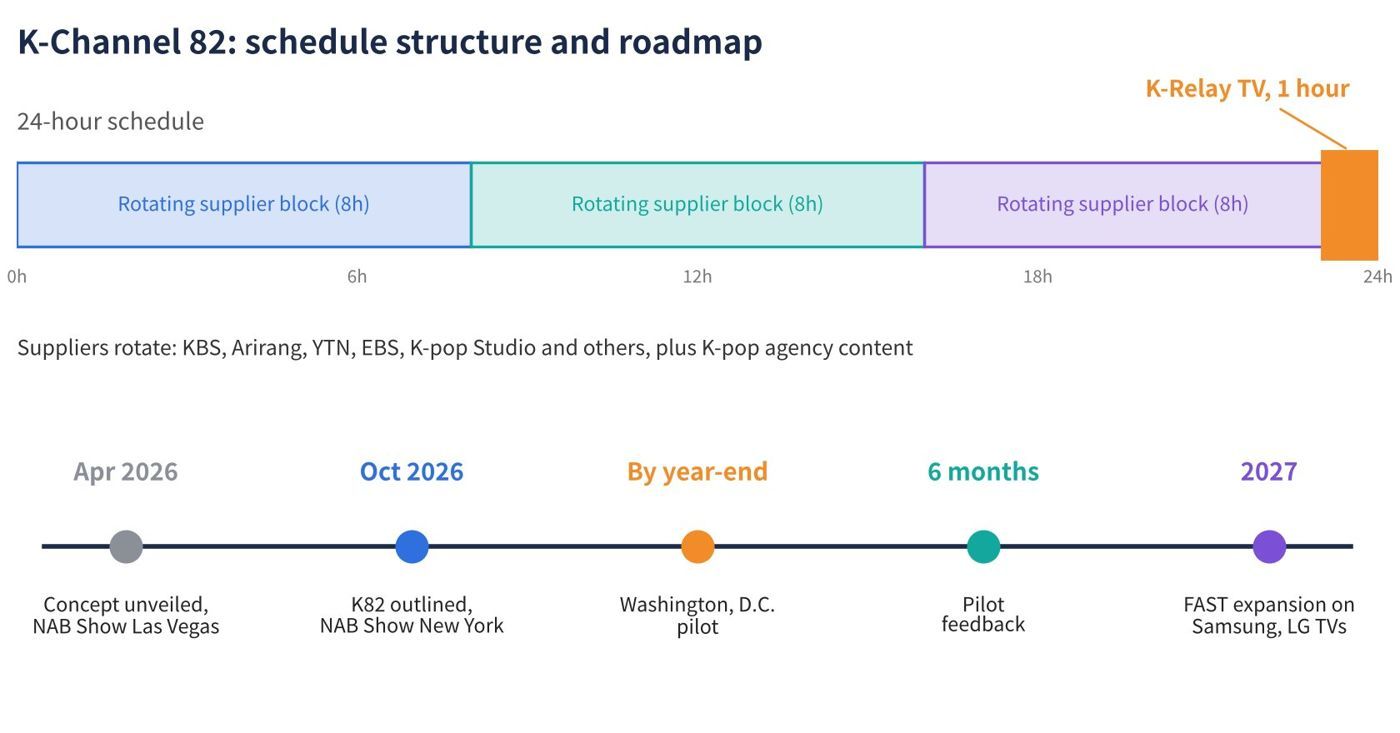
The channel's full name is K-Channel 82. According to K-EnterTech Hub, which is driving the project, the plan was first introduced to the U.S. broadcast industry at a NAB Show session in Las Vegas in April. Jung Han of K-EnterTech Hub moderated that session, and Las Vegas, Baltimore and Washington, D.C., were floated as launch markets for the 24-hour channel. Six months later in New York, Sinclair formally listed K82 for the first time as a proposed addition to its BEST channel lineup. In April the backers set a Sept. 14 launch target, but as of October public reports have not confirmed a first transmission.
The April programming plan rotates supplier content in eight-hour blocks. KBS, Arirang TV (아리랑TV), YTN, EBS and K-pop studios and agencies were named as candidate suppliers. K-EnterTech Hub plans to produce and schedule a daily one-hour “K-RELAY TV” covering Korean culture and companies, food and beauty, startups and entertainment tech, and U.S. local news and interviews. K-EnterTech Hub would also connect the channel to outside demand: datacasting clients, Korean local government campaigns and exhibitors at Las Vegas and Los Angeles trade shows. This is the backers' programming plan, not confirmed contracts or carriage with each supplier.
Washington, D.C., is the likely first market. The backers are working toward a D.C. pilot this year and plan, after six months of viewer feedback, to expand in 2027 as a FAST channel on Samsung Electronics and LG Electronics smart TVs. D.C. also stands out in Sinclair's deck: broadcast-app use there rose 59.62% from August to September, and it is one of the markets in the joint NextGen TV campaign with Nexstar. The pilot start date and platform launch timing are not final.
Designed to link ad measurement and purchases
Sinclair's deck lists K82 features as use of the broadcast app, CTV1 watermarks for impression counting, and shopping through IRCODE's interactive lens. Sinclair made a strategic investment in IRCODE on June 17 and says it launched related services in Austin and Salt Lake City in July. Viewers point a station app's camera at the TV screen to reach products, information or polls. For K82, it was proposed as a way to turn K-beauty and K-food viewing into purchases.
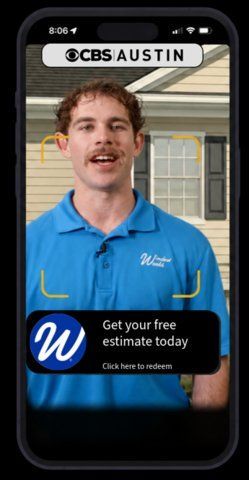
The watermark plan aims to make linear ads easier to trade by the impression, like digital ads. Parks pointed to how hard linear TV is for agencies to buy and previewed industry cooperation to bring in equipment and component suppliers. Having impression-counting tools in place does not by itself prove purchase conversion or ad revenue. To be judged as a business, K82 will need results that separate viewing, impressions and response.
Consumer response tested in Columbus
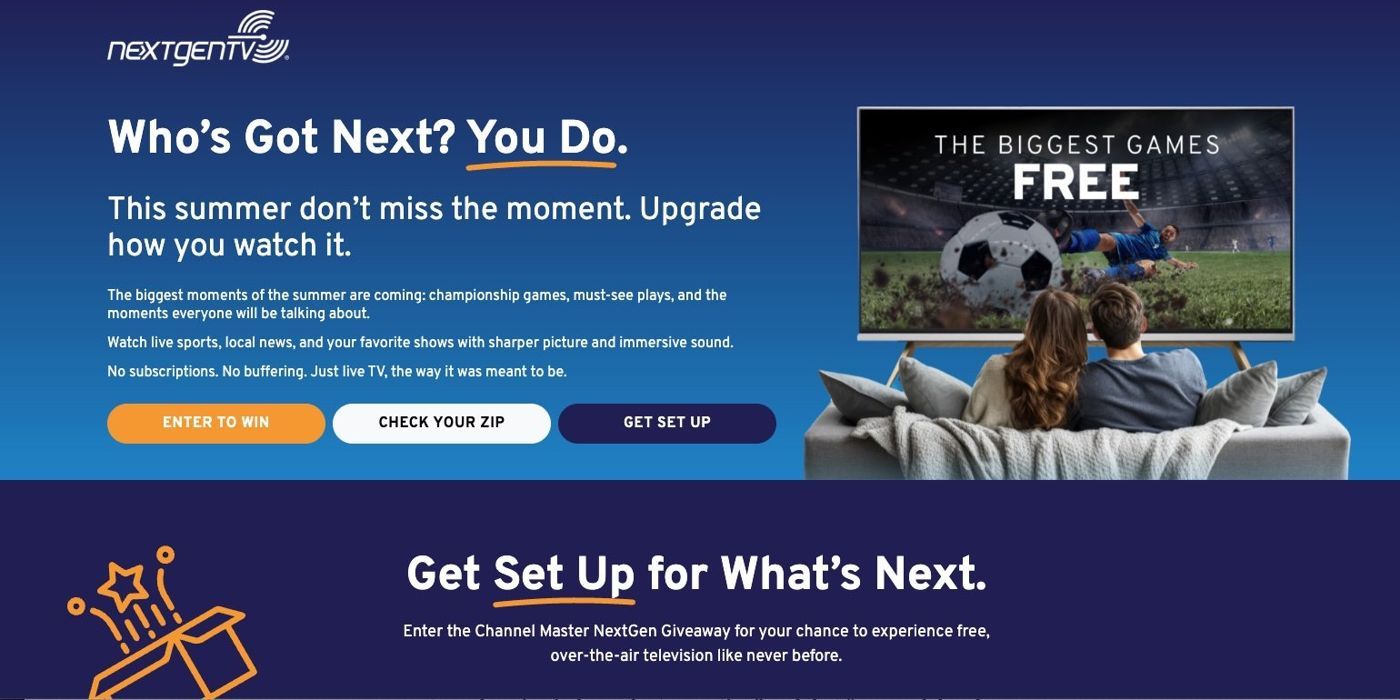
After the picture upgrade, Sinclair turned to consumer marketing. The Columbus pilot ran four weeks from early June to July 3. Built around the 2026 FIFA World Cup and the NBA and Stanley Cup Finals, it combined promotion on local Fox, ABC and CW stations, influencers, paid digital ads, an education site, a Columbus Dispatch partnership and antenna and converter giveaways. The campaign's information site let viewers check reception by ZIP code, TV compatibility and setup steps. It was a test of explaining both how to receive the signal and why it is worth it in a sports-hungry market.
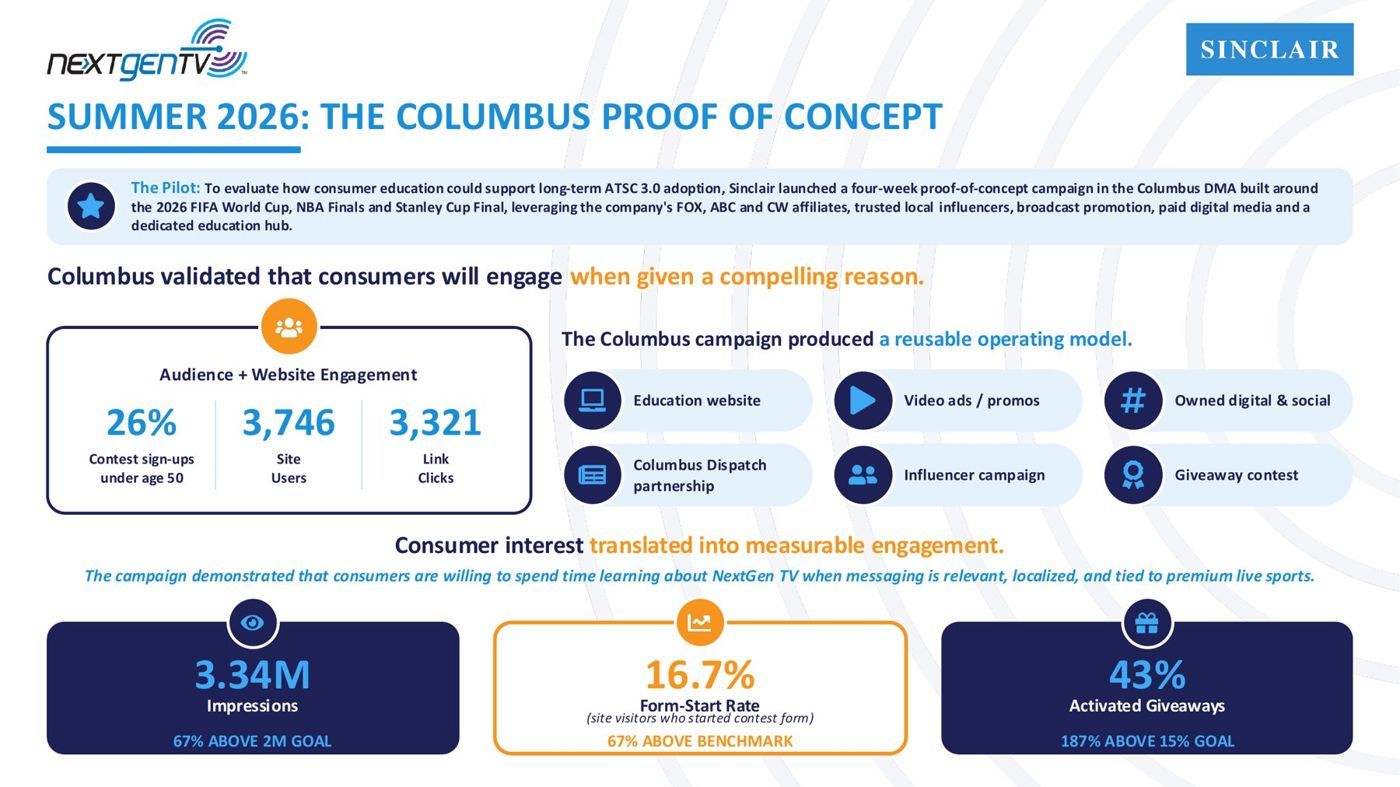
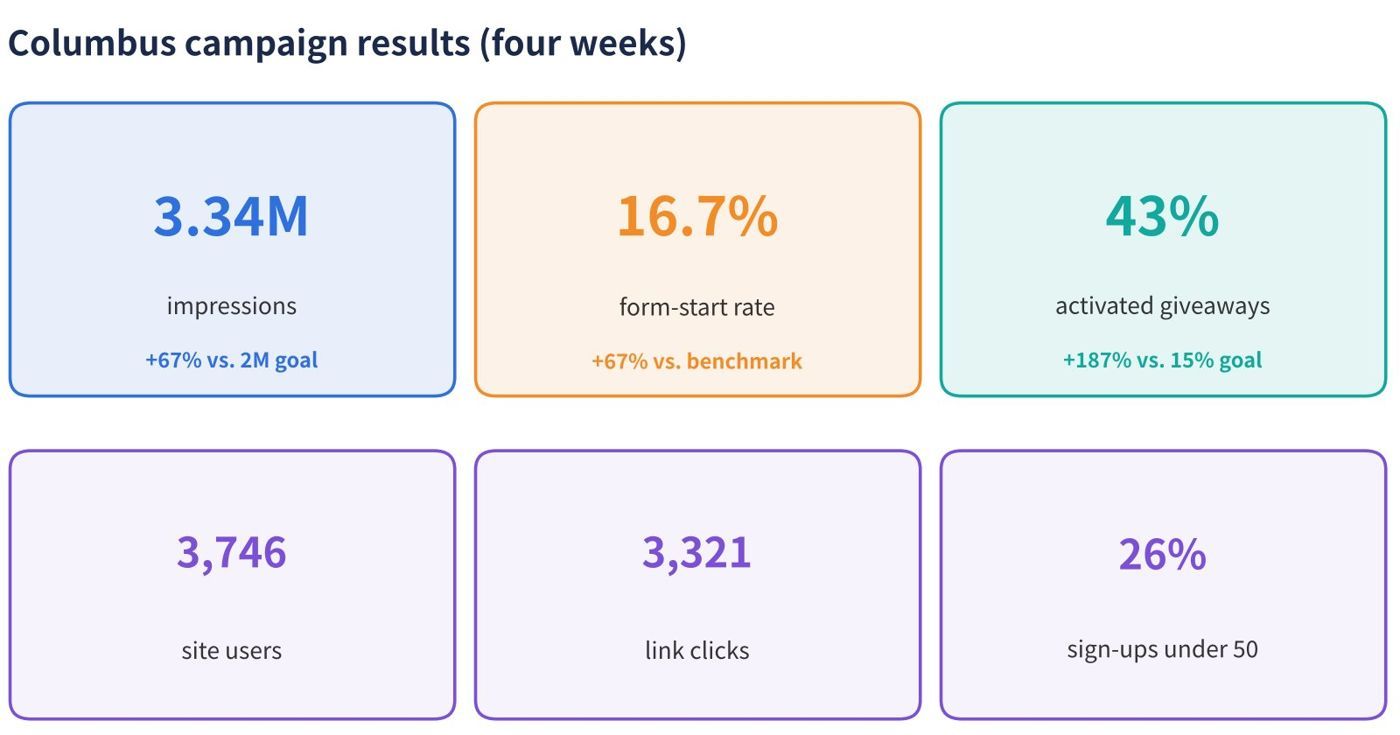
The deck reports 3.34 million impressions, 3,746 site users and 3,321 link clicks. Impressions beat the 2 million goal by 67%. The share of site visitors who started the entry form, 16.7%, was 67% above benchmark, and the giveaway activation rate of 43% exceeded the 15% goal by about 187%. Twenty-six percent of entrants were under 50. Parks also said Sinclair bought 100 Zinwell set-top boxes and distributed them through a Channel Master giveaway.
The results show consumers respond to education and promotion. But 3.34 million impressions cannot be read as viewers or new users. Sinclair says it gained a campaign model it can reuse market by market. The next test is how much of that outreach turns into actual reception and repeat use.
| Metric | Reported | Goal or comparison |
|---|---|---|
| Impressions | 3.34M | +67% vs. 2M goal |
| Site users | 3,746 | As reported |
| Link clicks | 3,321 | As reported |
| Form-start rate | 16.7% | +67% vs. benchmark |
| Giveaway activation | 43% | +187% vs. 15% goal |
| Entrants under 50 | 26% | Separate from 18-25 usage |
The Columbus campaign told sports fans how to receive the signal and about the better picture; K82 is a channel aimed at K-culture fans aged 18 to 25. That 26% of entrants were under 50 does not prove K82 can draw young viewers. The next task is to turn NextGen TV contacts made around sports into discovery and repeat viewing of Korean content.
Football drives the rise in broadcast-app use
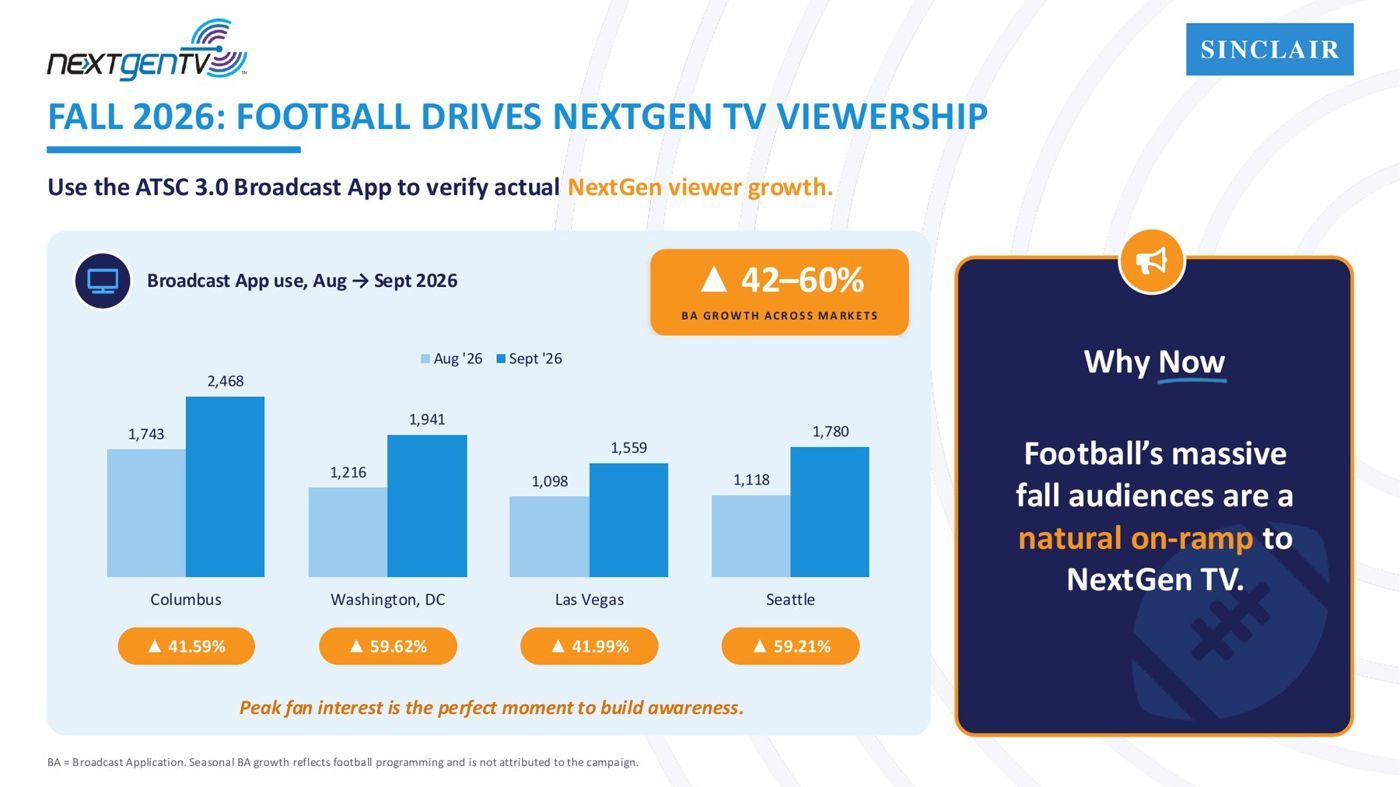
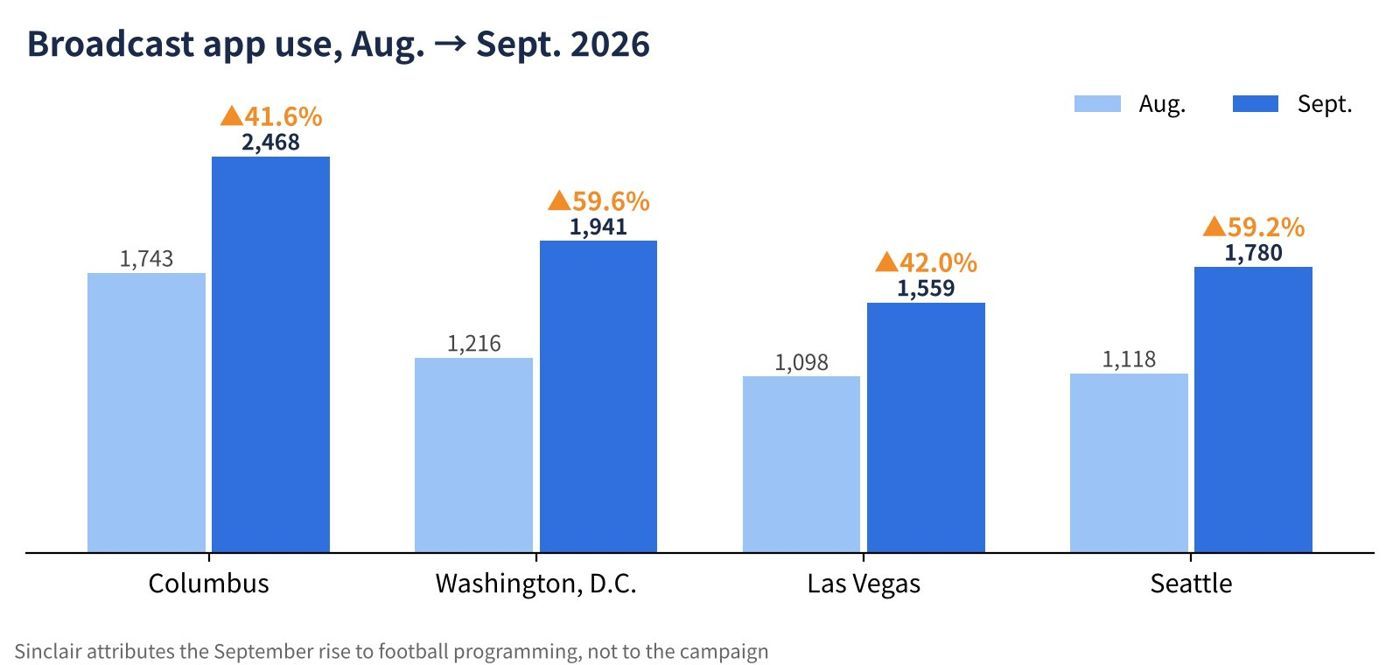
Broadcast-app data is how Sinclair checks actual ATSC 3.0 use. The app runs on internet-connected NextGen TVs and shows when viewers tune in and what TV models they use. The deck's August-to-September figures for four main markets were Columbus 1,743 to 2,468, Washington, D.C., 1,216 to 1,941, Las Vegas 1,098 to 1,559 and Seattle 1,118 to 1,780, increases of 41.59%, 59.62%, 41.99% and 59.21%; recalculating gives the same results.
Two caveats apply. The source labels the figures only “Broadcast App use,” without saying whether they count unique viewers, homes or hours. And a footnote in the deck says the rise is seasonal, reflecting football programming, and not attributable to the campaign. In fact the Sinclair-Nexstar “Go NextGen TV” campaign only began on Sept. 17. The 42%-60% increases say more about sports' pull on broadcast viewing than about marketing. Parks also named college football, the NFL and local news as broadcast's strengths. The broadcast app adds search, on-demand and emergency information to that programming.
NFL demand remains solid this season. In Sports Media Watch's Oct. 22 tally, regular-season games averaged 18.5 million viewers through Week 6 of 2026, up 2% from 18.2 million a year earlier and third-highest at that point behind 2015 (18.7 million) and 2010 (18.6 million). In Week 6, CBS's late-afternoon window drew 26.37 million and NBC's “Sunday Night Football” 24.66 million. These are total-TV figures over a different period than the app data (August-September), not ATSC 3.0-only audiences.
| Market | Aug. 2026 | Sept. 2026 | Change |
|---|---|---|---|
| Columbus | 1,743 | 2,468 | 41.59% |
| Washington, D.C. | 1,216 | 1,941 | 59.62% |
| Las Vegas | 1,098 | 1,559 | 41.99% |
| Seattle | 1,118 | 1,780 | 59.21% |
Widening the test to a 13-market joint campaign
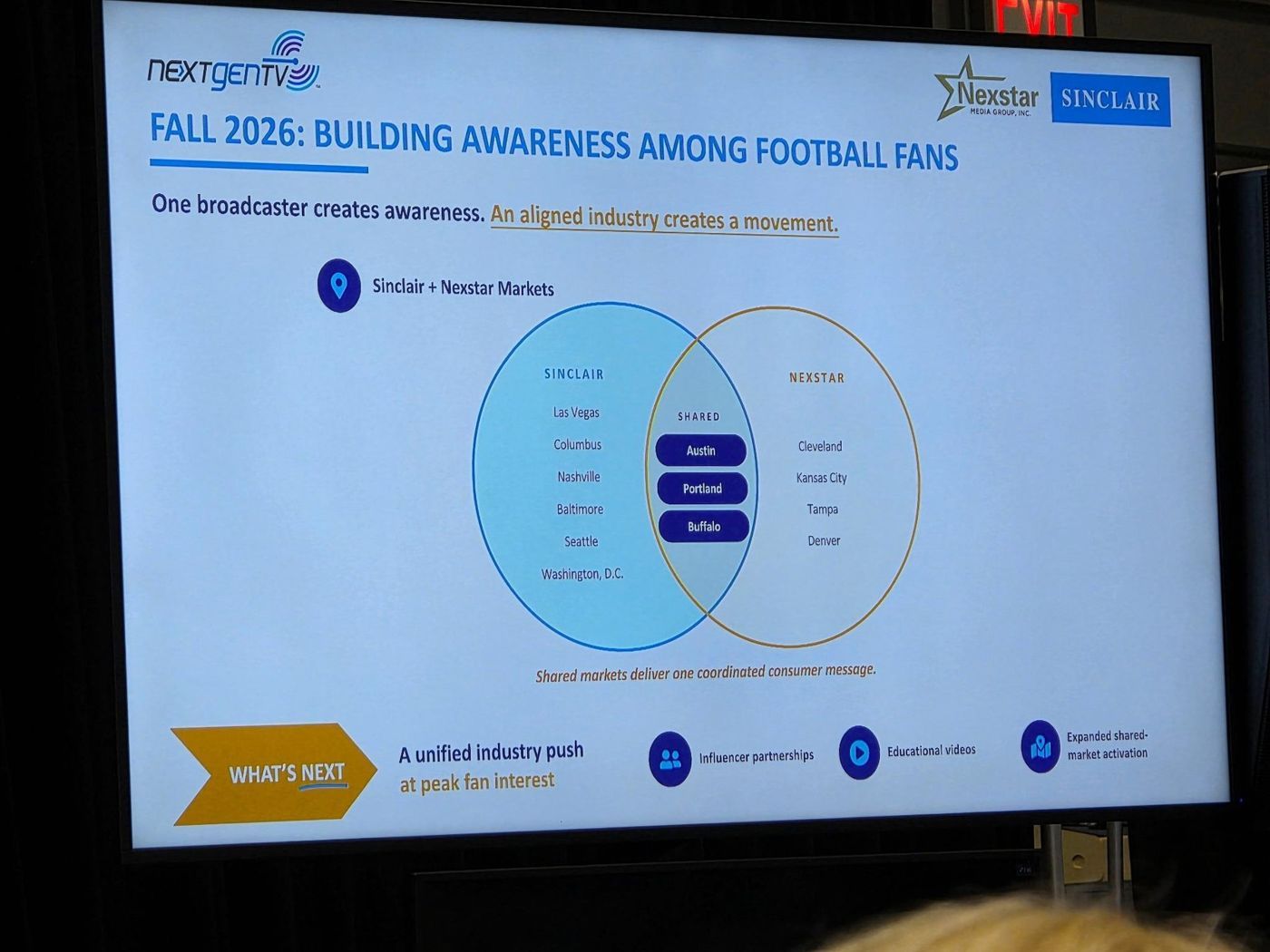
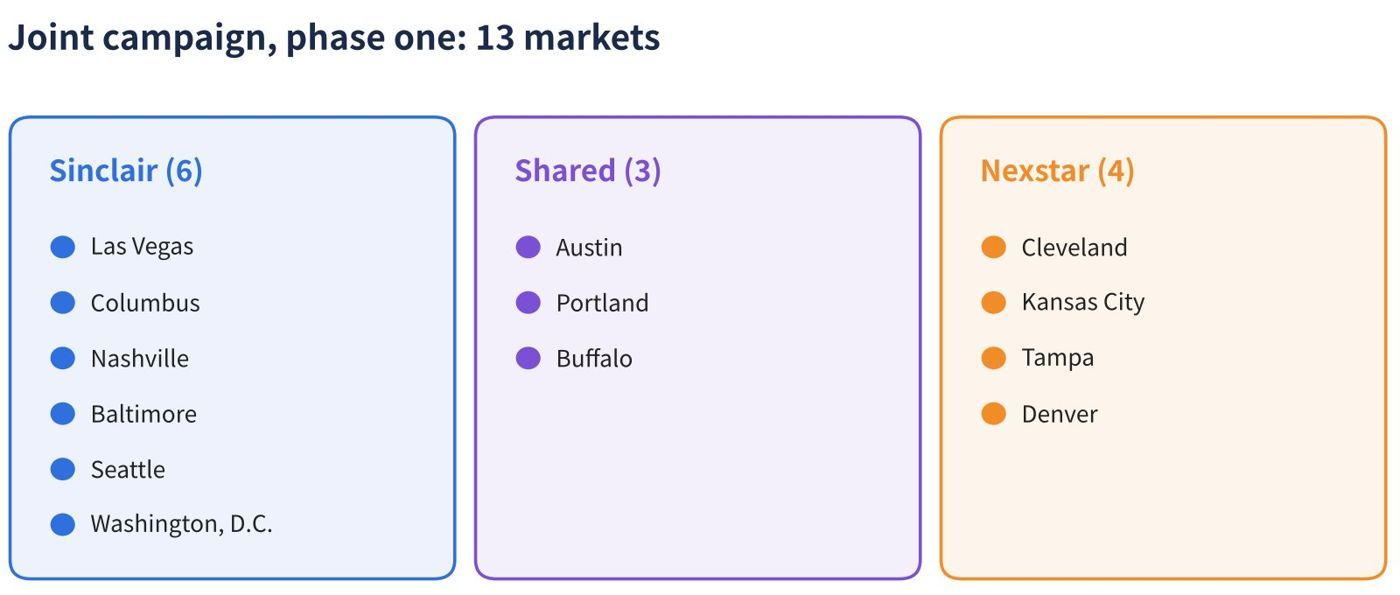
Sinclair and Nexstar launched their joint “GoNextGenTV” campaign on Sept. 17. The deck lists 13 markets: six Sinclair-only (Las Vegas, Columbus, Nashville, Baltimore, Seattle, Washington, D.C.), four Nexstar-only (Cleveland, Kansas City, Tampa, Denver), and three, Austin, Portland and Buffalo, where both companies run the same consumer message.
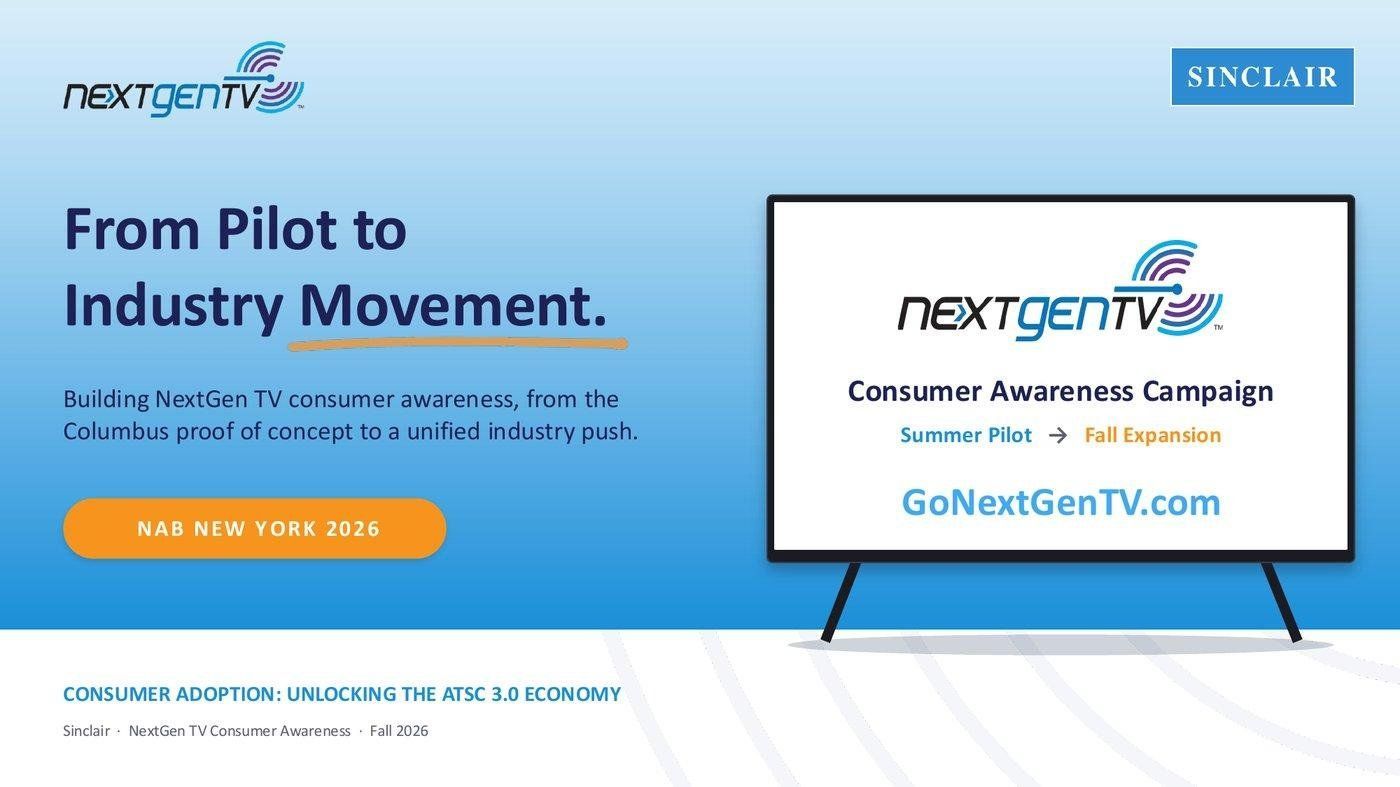
Parks said the companies will compare broadcast-app data from single-company and shared markets before deciding whether to expand. Next steps are influencer partnerships, educational videos and more shared-market activity. GoNextGenTV.com is modular so other broadcast groups can swap in their own logos, widening individual promotion into industry-wide reception education.
He said he had also shown the campaign materials to the FCC. After years of explaining what the technology can do, broadcasters now have to invest in service and promotion themselves. The joint campaign's value lies in checking actual consumer behavior, not only in promoting a technical standard.
Regulatory interpretation and receiver adoption remain variables
The rules for the transition are still being written. In October 2025 the FCC issued a Fifth Further Notice of Proposed Rulemaking. It tentatively proposed ending the ATSC 1.0 simulcast requirement and letting stations set their own transition timing market by market, and sought comment on mandating 3.0 tuners in new TVs, encryption of free signals and pay-TV retransmission. Broadcasters and consumer electronics makers disagree on a tuner mandate. How far existing broadcast rules apply to internet channels shown in the broadcast guide, as with BEST, also needs interpretation.
Pearl TV said native HDR sports and entertainment broadcasts will expand this year, the first 4K broadcasts will come in 2027, and low-cost converter boxes will arrive in early 2027. More than 1,600 commercial stations are due to transition. Anne Schelle, Pearl TV's managing director, stressed the need for affordable receivers so viewers can keep using free broadcast TV. ONE Media's Mark Aitken described common standards for emergency information screens. Price, access and consistent emergency information matter as much as picture quality in the transition.
What Korean content companies need: well-designed distribution contracts
South Korea started the world's first ATSC 3.0 terrestrial UHD service in May 2017. Nine years on, Sinclair's case shifts the question from who secured the technology first to how to turn it into real use and revenue. Korea, with a thin over-the-air base, and the U.S., where antenna homes are growing, are different markets. Even with the same standard, distribution strategy has to fit each market's consumers rather than be copied.
Korea's ad base is weakening. In the 2025 broadcasting industry survey, domestic broadcasting revenue for 2024 fell 0.7% to ₩18.832 trillion (about $14.24 billion), a second straight decline. Terrestrial ad revenue was ₩835.7 billion (about $632 million). A separate ad spending survey put total advertising at ₩17.1263 trillion (about $12.95 billion), with broadcast ads at ₩3.2191 trillion (about $2.43 billion, 18.8%), down 5%, and online at 59%. The surveys cover different scopes, so broadcasting revenue and ad spending are not the same measure.
K82 gives Korean content one more point of contact with U.S. viewers. BEST offers a route besides owning a station or buying airtime: linking an internet channel to the broadcast guide. Video travels over broadband, but the broadcast signal and guide drive discovery. KOCOWA's paid subscriptions and K82's free exposure could complement each other, but whether the same title can go to both depends on rights and exclusivity by territory, window and platform.
Broadcasters' content libraries and Korean beauty and food companies' products could find different revenue opportunities on K82: licensing and ad splits for content, screen-triggered shopping for products, and impression and response measurement for tourism and local government campaigns. It is too early to count any of that as revenue. What Korean companies need to pin down is less the volume of airtime than who sells the ads, how revenue is split, the scope of rights, access to measurement data and how purchases are attributed.
Receiver compatibility, internet connectivity, regulatory interpretation and platform listing terms are also preconditions. Targeting 18- to 25-year-olds doesn't bring them in automatically. Only when a pilot shows who actually finds the channel, how long they watch and whether they come back will there be a basis for supplying content and expanding the business.
The technology and ad measurement behind K82
Parks's remarks on picture quality and ad measurement, captured in session video, underpin the business plan. He named resolution as the improvement viewers have noticed most and explained upconverting 720p and 1080i video to 1080p. That was background on improving the NextGen TV experience, not a K82 launch announcement, and it reads alongside the deck's SL-HDR1 and 1080p HDR material.
His comments on ad measurement are the business model's other pillar. Parks stressed the need to count impressions and described moving linear broadcasting toward impression- and audience-based measurement. In that context, the watermark proposed for K82 is a way to create a tradable ad unit, going beyond supplying content and scheduling a channel to measuring viewing in units advertisers can buy and evaluate. These were remarks about direction, not evidence that a K82 ad-measurement system is running or earning revenue.
After NAB, the test is execution
Sinclair is trying to tie together a better picture, specialty channels, ad measurement and shopping. Parks said Sinclair is discussing the next step in resolution with ABC and CBS and that broadcast has to improve its viewing experience to compete with streaming. The next task is turning technology into benefits viewers can feel.
K82 has put an already-known channel plan into the U.S. broadcast industry's conversation about making money. The next things to check are whether the proposed BEST carriage is implemented, whether the D.C. pilot launches, how usage data is defined, and what ad and shopping results look like. At that stage, securing rights scope, revenue splits and data access becomes important for Korean suppliers. The Columbus campaign and broadcast-app data describe the groundwork, but they don't prove K82 will succeed in advance. The industry's next stops are NAB Show in Las Vegas, April 3-7, 2027, and NAB Show New York, Sept. 29-30, with the SMPTE Summit held alongside on Sept. 28-30. Future announcements will be judged less by repeating the plan than by how far actual service and deals have moved.
Note: Quotes are from on-stage remarks at NAB Show New York on Oct. 22, checked against the transcript and session video. Schedules, suppliers and programming outside the deck are identified as the backers' plans. Broadcast-app figures are not converted to viewers or homes because the source does not state the unit.
Note: Currency conversions use the Oct. 23, 2026 close of ₩1,322.82 per U.S. dollar.
Disclosure: K-EnterTech Hub has had a services contract with Sinclair related to its Korea market entry and K82, and is pursuing the K-Relay TV block on K-Channel 82.
Sources
· NAB Show New York session page
· Sinclair presentation, “Seoul Search: Leveraging ATSC 3.0 and K Culture to Unlock New NextGen TV Opportunities,” Del Parks, Oct. 22, 2026 (p. 2 BEST, HDR and K82 features; p. 3 K82 positioning; p. 4 demand data; p. 7 Columbus results; p. 8 broadcast-app use and footnote; p. 9 joint campaign markets)
· NAB closing release, Oct. 22, 2026
· Sinclair annual report (SEC 10-K)
· Herald Economy (헤럴드경제), KBS-Sinclair strategic cooperation, March 16, 2026
· Herald Economy (헤럴드경제), SBS-Sinclair agreement, March 19, 2026
· YTN, Sinclair launches K-82 with Korean broadcasters, May 12, 2026
· ZDNet Korea (지디넷코리아), the K-Channel 82 blueprint, March 20, 2026
· Unicorn Factory (유니콘팩토리), Hudson AI-Sinclair AI dubbing, Jan. 22, 2026
· RBR, Sinclair clarifies K-Channel 82 carriage
· K-EnterTech Hub, April NAB Show K-Channel 82 coverage
· Sports Video Group, NAB Show New York 2026 preview, Oct. 16
· Nielsen, August 2026 Gauge, Oct. 22, 2026
· TVB, Nielsen over-the-air household estimates, February and July 2026
· Light Reading, MoffettNathanson Q1 pay-TV subscribers, 2026
· The Desk, ARF DASH mid-2026 study, Aug. 19, 2026
· TVNewsCheck, The Big Secret About NextGen TV, Sept. 28, 2026
· TV Technology, HDR: Simply Better Pixels
· TVREV, BEST channels and NextGen TV
· ATSC, Sinclair and Nebraska Public Media free BEST channel, October 2024
· Sinclair release, Tennis Channel T2 virtual carriage, March 20, 2024
· Business Wire, ROXi launches on U.S. broadcast TV, July 30, 2025
· TV Technology, Sinclair and Pearl TV ROXi rollout
· The Desk, Sinclair invests in IRCODE, June 17, 2026
· The Desk, Sinclair Columbus NextGen TV campaign, June 2, 2026
· TV Technology, Sinclair Columbus campaign, June 4, 2026
· TV Technology, Sinclair and Nexstar launch awareness campaign
· The Desk, Sinclair-Nexstar joint campaign, Sept. 16, 2026
· Sports Media Watch, NFL Week 6 ratings, Oct. 22, 2026
· Wiley, FCC tees up Next Gen TV transition, Oct. 9, 2025
· TV Technology, FCC vote on ATSC 3.0 transition, Oct. 7, 2025
· Business Wire, Pearl TV converter box announcement, October 2026
· Newsis (뉴시스), 2025 broadcasting industry survey, Dec. 31, 2025
· Journalists Association of Korea (기자협회보), ad spending survey, Jan. 8, 2026