
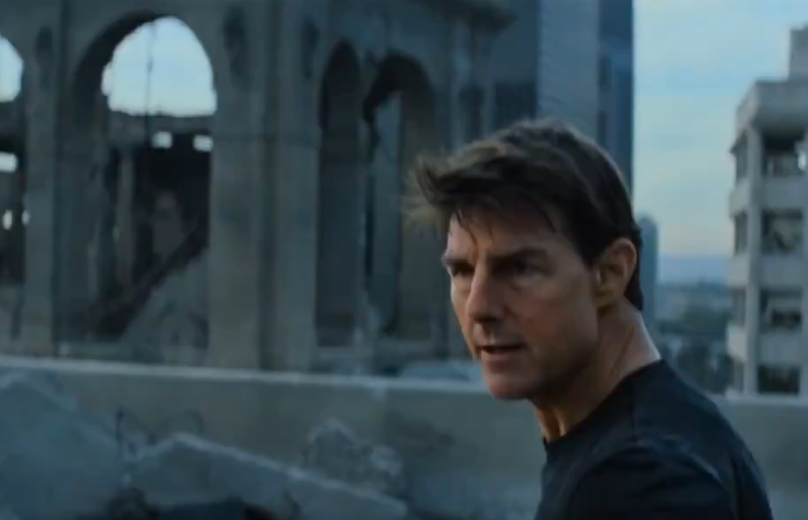
Viral AI Video of ‘Tom Cruise’ Fighting ‘Brad Pitt’ Triggers Hollywood’s Full-Scale War on ByteDance’s Seedance 2.0
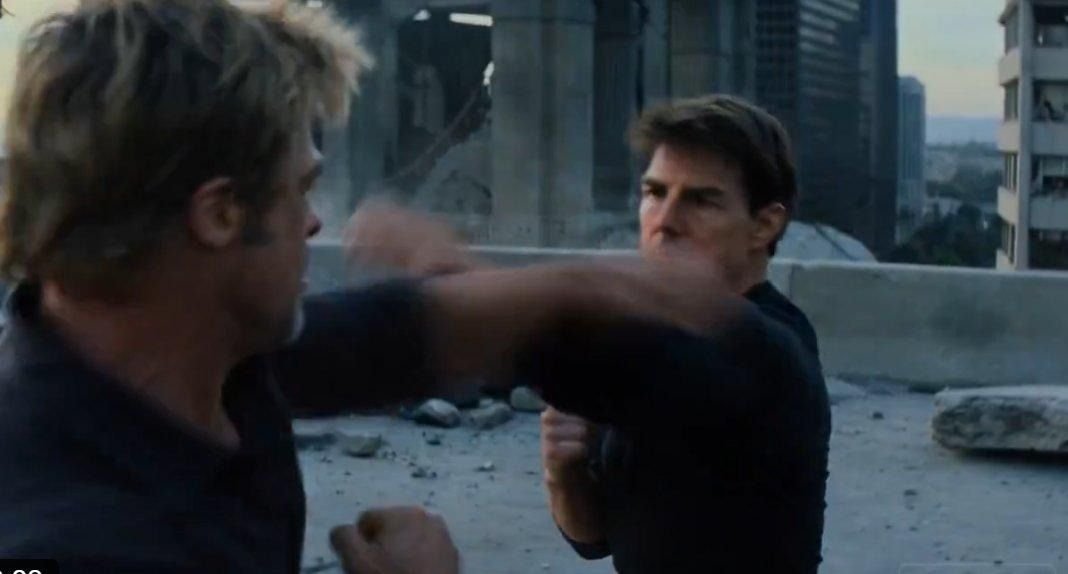
[Photo] AI-generated rooftop fight scene between deepfakes of Tom Cruise and Brad Pitt, created with just a two-line text prompt in Seedance 2.0. The video went explosively viral on social media. (Source: Ruairi Robinson/X)
“You killed Jeffrey Epstein, you animal! He was a good man!” — Brad Pitt throws a punch at Tom Cruise’s face mid-swing. A cinematic action sequence on a rooftop, with flawless lighting and camera work. But this is not a trailer for a new blockbuster.
It is the product of two lines of text typed into Seedance 2.0, ByteDance’s new AI video generation model. Within a single day of its Thursday launch, hyper-realistic AI videos exploiting Hollywood IP flooded social media. The Motion Picture Association (MPA) immediately issued a formal condemnation, and Disney fired off a cease-and-desist letter to ByteDance the following day, opening a legal front. Even Elon Musk weighed in: “It’s happening fast.” The collision between AI video generation and copyright protection has now escalated into all-out war.
 Jung Han
Seedance 2.0: A Replay of the DeepSeek Shock
Developed by ByteDance, the Chinese parent company of TikTok, Seedance 2.0 is described as a “substantial leap in generation quality” over its predecessor. The model supports multimodal inputs spanning text, image, audio, and video, and gives creators granular control over elements such as lighting, shadows, and camera movement.
Business Insider drew a direct parallel to the shockwave caused by DeepSeek, the Chinese AI company that unveiled a reasoning model in January last year rivaling OpenAI’s ChatGPT, stunning Silicon Valley and intensifying the U.S.-China AI race. Seedance 2.0, the outlet noted, is “another shot across the bow of American AI companies.”
Viral Videos That Shook Hollywood: From Epstein Dialogue to Walter White
The most talked-about video was created by Ruairi Robinson, an Irish filmmaker and commercial director. In the clip, a deepfake Brad Pitt punches Tom Cruise while shouting, “You killed Jeffrey Epstein!” Cruise responds, “He knew too much.” The production quality is so high that the clearest tell that it was AI-generated is the slightly unnatural dialogue. Robinson revealed on X (https://x.com/RuairiRobinson/status/2021394940757209134) that the entire scene was generated from a two-line prompt in Seedance 2.
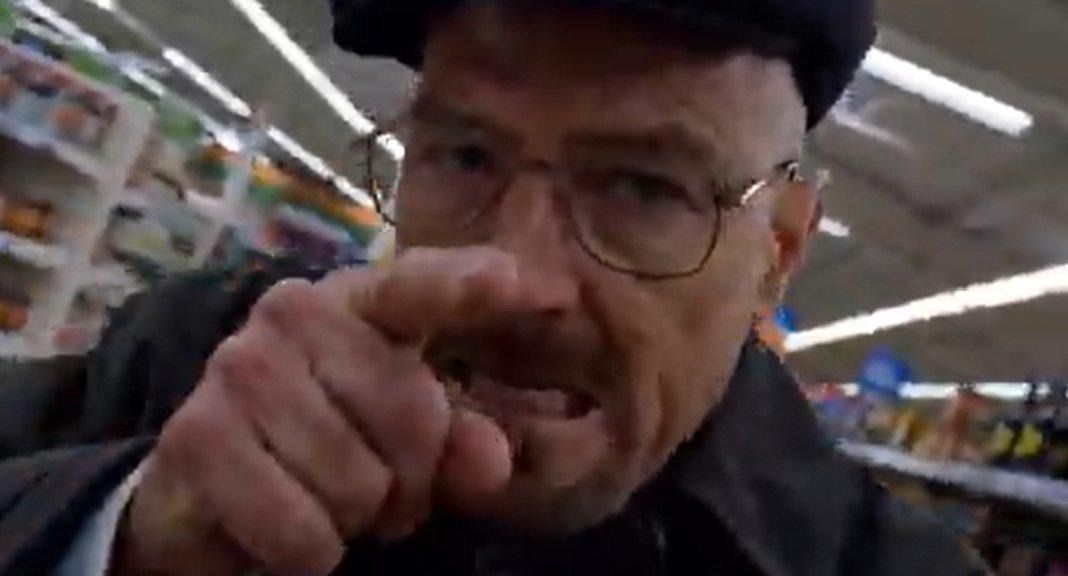
[Photo] Seedance 2.0 deepfake of ‘Breaking Bad’ character Walter White pointing directly at the viewer and saying, “You think you’re in control.” Business Insider described the line as feeling “less like dialogue and more like a taunt.”
In another viral clip, a deepfake Walter White from Breaking Bad points directly at the viewer and says, “You think you’re in control.” Business Insider described the line as feeling “less like dialogue and more like a taunt.”
Elon Musk responded to a Seedance-generated video with “It’s happening fast,” a nod to the accelerating pace of AI advancement. Another X user simply wrote, “We’re cooked.” Online, Seedance-generated videos now feature characters and scenes from Spider-Man, Titanic, Stranger Things, Lord of the Rings, Shrek, the Avengers, and more — a sprawling catalogue of unauthorized Hollywood IP.
Rhett Reese, writer of the Deadpool franchise, offered a bleak assessment in a comment on the Cruise-Pitt video: “I hate to say it. It’s likely over for us. In next to no time, one person is going to be able to sit at a computer and create a movie indistinguishable from what Hollywood now releases.” When Robinson faced backlash over the video, he posted: “Today’s question is: should I be killed for typing 2 lines and pressing a button.”
MPA Issues Formal Condemnation
MPA Chairman and CEO Charles Rivkin released a statement on Thursday declaring that “in a single day, the Chinese AI service Seedance 2.0 has engaged in unauthorized use of U.S. copyrighted works on a massive scale.” He continued: “By launching a service that operates without meaningful safeguards against infringement, ByteDance is disregarding well-established copyright law that protects the rights of creators and underpins millions of American jobs.” The MPA demanded that ByteDance “immediately cease its infringing activity.”
Disney Sends Cease-and-Desist Letter to ByteDance
In an exclusive report by Axios, The Walt Disney Company on Friday sent a cease-and-desist letter to ByteDance — the most serious action a Hollywood studio has taken since Seedance 2.0’s launch.
In the letter addressed to ByteDance Global General Counsel John Rogovin, Disney’s outside attorney David Singer accused ByteDance of pre-packaging its Seedance service “with a pirated library of Disney’s copyrighted characters from Star Wars, Marvel, and other Disney franchises, as if Disney’s coveted intellectual property were free public domain clip art.”
Singer wrote: “ByTeDance’s virtual smash-and-grab of Disney’s IP is willful, pervasive, and totally unacceptable.” He added: “We believe this is just the tip of the iceberg — which is shocking considering Seedance has only been available for a few days.”
The letter included multiple examples of infringing Seedance videos featuring Disney’s copyrighted characters, including Spider-Man, Darth Vader, Grogu (Baby Yoda), and Peter Griffin from Family Guy, as well as evidence of their widespread distribution on social media.
Industry-Wide Mobilization
Beyond Disney and the MPA, the broader entertainment industry has rallied against Seedance 2.0. The Human Artistry Campaign, a coalition of dozens of creative organizations including SAG-AFTRA and the Directors Guild of America, declared on Friday: “Authorities should use every legal tool at their disposal to stop this wholesale theft.” SAG-AFTRA issued a separate statement condemning ByteDance: “Seedance 2.0 disregards law, ethics, industry standards and basic principles of consent. Responsible A.I. development demands responsibility, and that is nonexistent here.” Business Insider summed up the predicament: “Like with so many of AI’s latest tools, it can be hard to put the genie back in the bottle.”
Precedent: The OpenAI-Disney Licensing Model and Aggressive IP Defense
The MPA issued a similar rebuke when OpenAI launched Sora 2 last fall. Business Insider noted that OpenAI’s Sora also raised copyright concerns by enabling AI-generated versions of actors and characters. OpenAI responded by implementing safeguards that made it significantly harder for users to violate studio copyrights.
Disney subsequently struck a comprehensive deal with OpenAI, licensing 200 characters for use on Sora 2 and making a $1 billion equity investment in the company. Disney became the first major content licensing partner on Sora, OpenAI’s social video platform, establishing what many viewed as a potential template for the industry.
Disney has been consistently aggressive in defending its IP from AI companies. In September, it sent a cease-and-desist letter to Character.AI, which subsequently changed how it used Disney’s intellectual property. In December, a similar letter was sent to Google, and shortly after, Google removed dozens of AI-generated videos depicting Disney characters without permission. Last June, Disney and NBCUniversal became the first major studios to sue a generative AI company by filing a complaint against Midjourney. They later teamed with Warner Bros. Discovery to sue Chinese AI firm MiniMax, alleging large-scale piracy.
ByteDance’s Response Remains Unclear
Whether ByteDance will adopt a cooperative approach similar to OpenAI’s remains highly uncertain. A copyright dispute between U.S. studios and a Chinese tech giant is complicated by geopolitical tensions that could make resolution far more difficult. Copyright holders may be compelled to file takedown notices and infringement lawsuits. ByteDance has not responded to requests for comment from any of the reporting outlets.
Implications: The Genie Is Out of the Bottle
If DeepSeek set the U.S.-China AI race ablaze in the reasoning domain last year, Seedance 2.0 is delivering the same shockwave in AI video generation. But this crisis transcends mere technological competition — it is the opening salvo in a global power struggle over who writes the rules for content IP in the age of AI.
First, the ‘cooperative licensing’ model has reached its limits. The Disney-OpenAI deal — a $1 billion investment paired with a 200-character license — worked between American companies operating under the same legal framework. The same formula is unlikely to hold with a Chinese firm operating across jurisdictional boundaries. How to protect IP from overseas AI companies operating beyond the reach of domestic copyright enforcement is an urgent, unresolved challenge.
Second, AI copyright has become a new front in the U.S.-China tech rivalry. Following the TikTok forced-sale debate, the clash has now spilled into AI-generated video, binding content IP protection to trade and national security concerns. The DeepSeek-to-Seedance trajectory of China-originated AI disruptions is shaking the very premise of American technological primacy.
Third, the genie cannot be put back in the bottle. As Business Insider observed, once these AI tools are unleashed, controlling them is extraordinarily difficult. The Deadpool writer’s warning — that a single person with a two-line prompt will soon produce films indistinguishable from Hollywood’s output — raises existential questions about a production model that employs thousands of people per project. This is not merely a technological disruption; it demands a fundamental redefinition of what creativity and creative labor mean.
As Disney wields both the carrot of licensing and the stick of litigation to lead the charge in AI-era IP protection, ByteDance’s response — or lack thereof — will serve as a defining test for the future of the global AI-content ecosystem. For the Korean content industry, the implications are equally pressing: the time to develop proactive global protection strategies for K-content IP is now.