
Consolidation, the post-election advertising gap and AI share the agenda as Korea’s public broadcaster weighs FAST, targeted ads and the rights it needs to retain
NAB Show New York 2026 opens Oct. 21 at the Javits Center for two days of discussions about how broadcasting makes money. The National Association of Broadcasters has put media consolidation and the post-election outlook for local television on the opening-day agenda, followed by creator businesses, the future of streaming and newsroom AI on the second day. Different as those subjects appear, they converge on one question: how will broadcasters turn their content and audiences into revenue?
The same question faces the Korean Broadcasting System (KBS), South Korea’s national public broadcaster. On Oct. 20, a day before the show opened, its board nominated former Content Wavve chief Lee Tae-hyun as its 28th president.
Lee has pledged to stop losses in his first year, identifying North American free ad-supported streaming television (FAST), supported by AI localization, and household-targeted TV advertising as new income sources. More outlets and new technology alone will not deliver that pledge. The outcome depends on who sells KBS programmes, what the broadcaster receives after costs and which rights it retains.
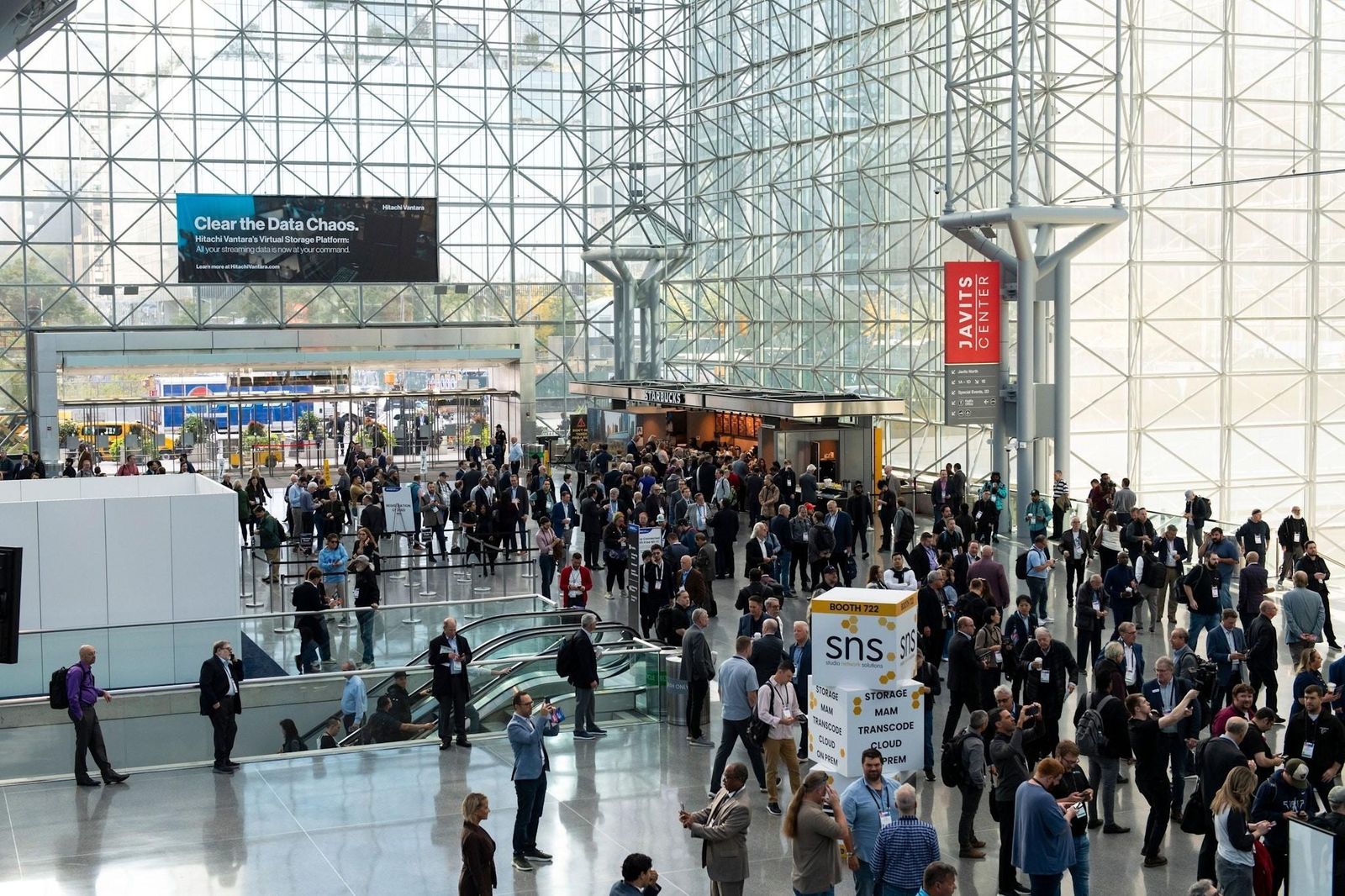
Visitors in the Javits Center lobby at NAB Show New York. Photo supplied by NAB.
NAB Show New York 2026 programme
A first-year turnaround needs a business-by-business account

The board’s decision advances the appointment process, but a hearing in the National Assembly—South Korea’s legislature—and presidential appointment remain. His start date is therefore not settled. Lee joined KBS as a producer in 1994, later led its content business division and went on to run Content Wavve, the company behind Korean streaming service Wavve. His proposals draw on experience spanning production, distribution and platform management.
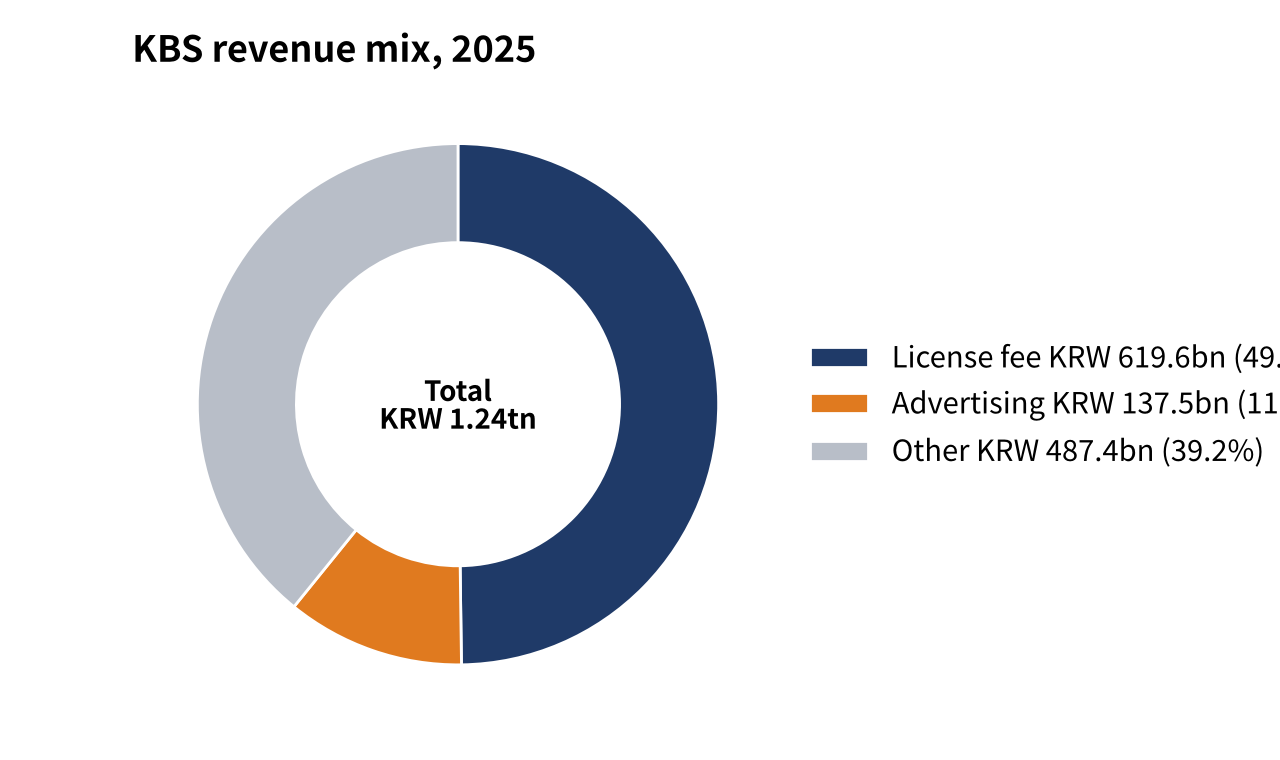
The starting point is KBS’s funding structure. Its 2025 accounts showed total revenue of KRW1.2445 trillion, including KRW619.6 billion in television licence fees, or 49.8%. Advertising fell 18% to KRW137.5 billion, and the broadcaster recorded a KRW99.6 billion operating shortfall. The licence fee is a statutory public-broadcasting charge associated with television reception, not a streaming subscription that KBS can simply expand to replace lost advertising. Closing the deficit therefore requires separate financial targets for additional content sales, new advertising and cost reductions.
In his Oct. 17 policy presentation, Lee proposed concentrating resources on drama and entertainment and considering completion and repeat viewing when allocating investment. He also outlined a “Spark Cell”: a team of five to ten people responsible for taking a project from concept to launch within 14 weeks. Its effectiveness would depend on budget and decision-making authority, with direct access to rights clearance, localization, advertising sales and analytics. A small team may launch faster without establishing profitability any sooner if those functions remain out of reach.
The turnaround pledge also needs to distinguish income growth from savings. A one-off asset sale or lower investment can improve an annual result without creating a recurring business. Separate revenue forecasts, implementation costs and break-even dates for FAST and targeted advertising would show whether the proposed improvement can last.
Local TV’s advertising gap is also a sales problem
NAB has evolved beyond an equipment exhibition into a forum for television stations’ response to streaming. This year’s New York event makes the local advertising market after the midterm elections a central subject. U.S. local stations have long relied heavily on election cycles and regional sports. Even global streaming leaders such as Netflix have not displaced local broadcasters across their full range of news and live local coverage. Local service remains a core source of differentiation.
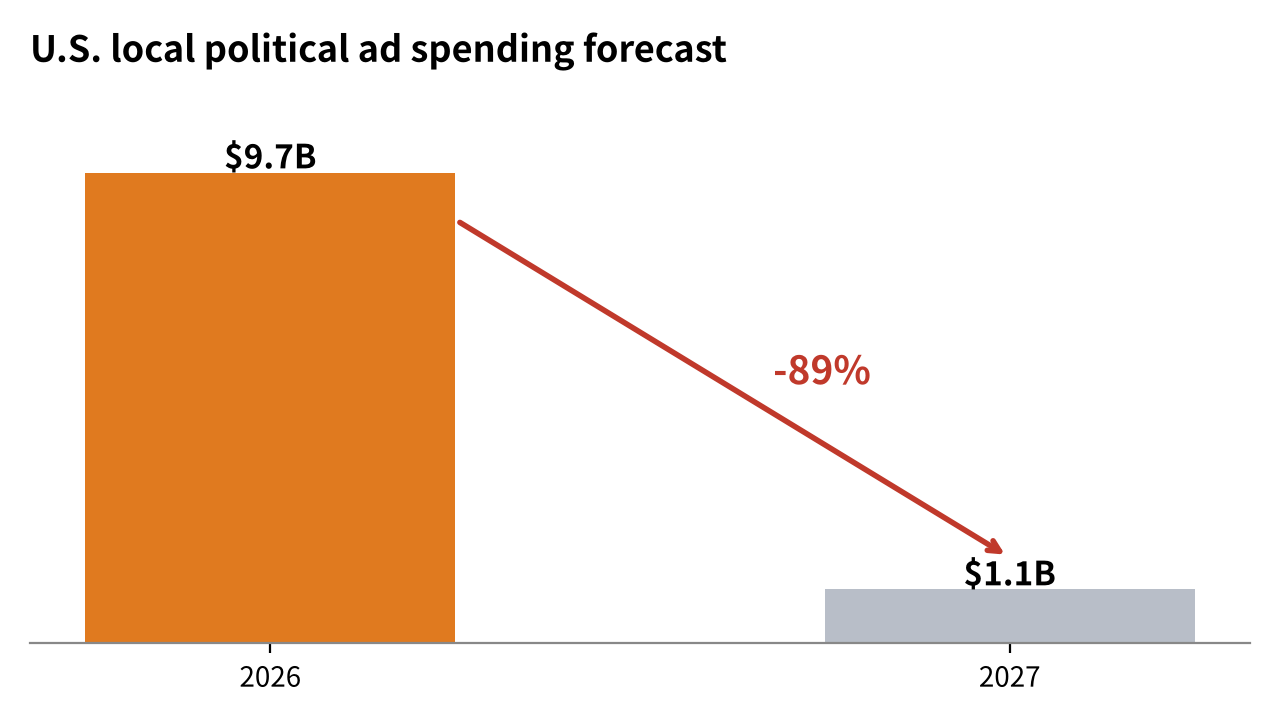
That base is under pressure. BIA projects political advertising across U.S. local media to fall from $9.7 billion in 2026 to $1.1 billion in 2027. These are cross-media totals, not television-only revenue. Over the same period, the overall local advertising market is forecast to remain almost unchanged, moving from $186.1 billion to $186.5 billion. Growth in commercial advertising may support the market as a whole, but stations with substantial election exposure still need products that can attract replacement budgets.
Korean broadcasting has no equivalent election-driven advertising cycle. Elections and major sports events do not provide a comparable market-wide windfall. Broadcast advertising was KRW3.2191 trillion in 2024, with a decline to KRW2.7744 trillion estimated for 2025. This is not simply a temporary gap: viewing time and advertising budgets have been moving outside broadcast television.
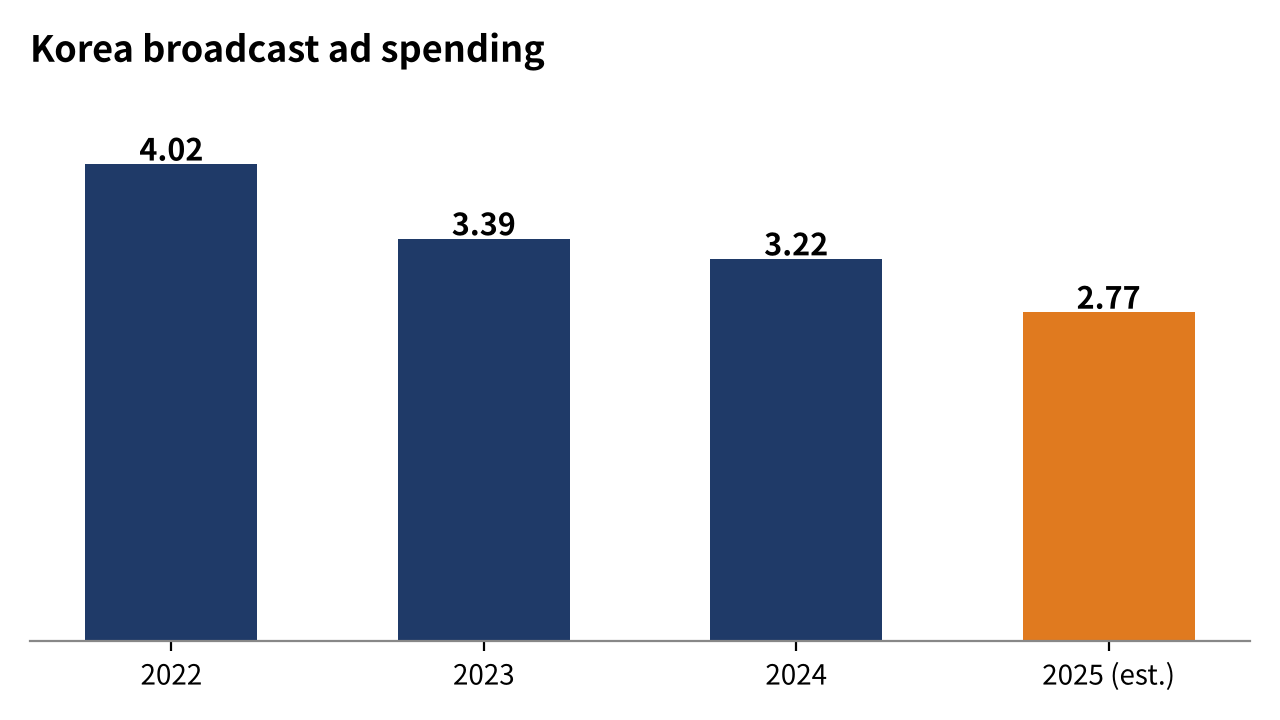
Korean broadcast advertising expenditure. Source: the Korea Communications and Media Commission and the Korea Broadcast Advertising Corporation (KOBACO). The 2025 figure is an estimate.
For KBS, the useful question in New York is consequently not when U.S. local station revenue might recover. It is how broadcasters are improving sales by packaging linear television and streaming inventory together, giving advertisers a reason to buy both. Lee’s targeted-ad proposal would begin with that change in the sales structure, rather than an expectation that the old television advertising market will return.
North American FAST begins with rights and settlement terms
The ability to sell television and streaming together would face an early test in North American FAST. Lee’s proposal would schedule KBS programmes into free, ad-supported channels for viewers in that market. But the market is already being served by Korean suppliers.
Participants in the Global K-FAST Alliance, led by South Korea’s Ministry of Science and ICT and the Korea Association for ICT Promotion (KAIT), used AI dubbing to localize about 1,200 Korean programmes and build 20 channels. Newsis reported that the channels had been distributed through Samsung TV Plus and LG Channels in 22 countries, including the United States, Canada and Mexico, since December 2025. Reported cumulative viewership reached about 100 million by the end of April 2026. That audience measure is not evidence of the net revenue returned to individual suppliers.
Smart Media Rep (SMR), a digital advertising sales representative affiliated with Korean terrestrial broadcasters, also plans international distribution of Series-K, a global FAST offering grouping popular dramas from KBS, MBC and SBS by genre and using AI dubbing. The three networks are Korea’s principal nationwide terrestrial broadcasters.
At an event in Los Angeles in September, SMR chief Seung-hoon Jeon said demand for Korean content in North American FAST had been established, but the commercial connections needed to turn it into business remained insufficient.
KBS therefore needs a structure for recovering its share of the value, beyond access to the market. Dividing titles between those supplied to Series-K and those reserved for channels KBS operates would help avoid conflicts between distribution routes. Overseas territories, music, performer agreements, archive footage and subtitling and dubbing rights all require title-level clearance.
FAST need not compete with conventional licensing in every case. At K-EnterTech Hub’s Oct. 11 roundtable in Cannes, former Rakuten TV executive and distribution specialist Karina Rompa described FAST as a discovery stage for Korean content. Free channels provide a low-friction introduction for viewers unfamiliar with the programmes; an audience established there can support a premium subscription window later.
That approach allows a deliberate sequence: older titles whose paid exclusivity has expired, or which remain unsold, can enter FAST while new releases retain paid windows. Whether free exposure leads to subsequent licensing also needs to be measured separately.
AI localization can make that model more practical. LG Electronics released English, Spanish and French AI-dubbed versions of the Korean period drama The Tale of Lady Ok on LG Channels and said production time was cut by more than 60% against conventional dubbing. The Cannes discussion nevertheless highlighted differences in translation and performance quality across languages.
A subscription tool used without human review has a different cost base from a managed service in which native speakers check each production. Young-jin Park, co-founder of U.S. market-entry company Parkstar Media, said Korean producers sometimes spend heavily on animation but economize on English dubbing, leaving the result below the expectations of local broadcasters and parents. Review spending needs to reflect both the advertising a title might earn and its potential for later sales.
The contract ultimately determines the return. Who sells the advertising, whether revenue shares apply to gross receipts or a sum after deductions, and how much viewing and advertising data the supplier receives all shape the economics.
Rompa identified an agent with local knowledge as a starting point for European entry, while warning that some still work with methods dating back two decades. A partner needs to understand new technology and bundled sales. She also pointed to higher cost-per-thousand-impression (CPM) rates for television advertising sold by experienced local sales representatives than for FAST inventory, suggesting a channel-led entry followed by local ad-sales representation.
In North America, the commercial model likewise varies depending on whether a platform sells the inventory or KBS or SMR takes a direct sales role. Fill rates—the proportion of available ad slots sold—realized prices and payment cycles can differ. A limited launch by title and genre can establish net returns before expansion. The relevant result is higher recovery from the content portfolio, rather than another outlet on the distribution list.
Consolidated buyers make retained rights more valuable
NAB Show New York has assigned a major opening-day session to consolidation and the race for scale. For content suppliers, the expansion of U.S. media groups quickly becomes a question of negotiating terms. Paramount Skydance completed its roughly $111 billion acquisition of Warner Bros. Discovery on Oct. 6, placing HBO Max and Paramount+ under common ownership. That does not immediately merge every buying team or negotiation process.
Over time, however, purchasing power could become more concentrated and the bundle of rights sought in each transaction could widen: more territories, longer exclusivity or use across several services. That is a potential consequence of consolidation, not a statement that every buyer has already adopted those terms.
KBS’s content business consequently needs to be assessed by what remains after a sale as well as by the sales amount. Broad rights packages can increase current-year revenue while narrowing the options for formats, remakes, later seasons and broadcaster-operated channels. A central rights register would make the title-by-title position visible. Production, scheduling, content sales and digital teams need a common view of the sale sequence and retained rights before investment, rather than counting the same rights in separate revenue plans.
Diversifying buyers matters alongside retaining rights. At the Cannes roundtable, European distribution specialists described changing gatekeepers. Rompa said the French market was moving beyond a structure in which Canal+ had held a dominant distribution position: producers were becoming gatekeepers in parts of the market, while telecommunications operators were selecting content with subscriber data in mind. She noted that Canal+ already distributes Korean programming and that Deutsche Telekom’s group was examining the category.
This points to alternatives to a single worldwide agreement with one U.S. platform. Dividing rights among regional telecommunications, pay-TV and FAST partners could preserve more pricing options as large buyers consolidate. Such a structure still depends on the costs and capabilities needed to manage multiple markets.
Lee’s Wavve experience belongs in this discussion. KBS is a shareholder in Wavve, a Korean streaming service rooted in terrestrial broadcasting, but is also a seller of its own programmes. The proposed integration of Wavve and TVING, a separate Korean streaming platform associated with CJ ENM, remained incomplete after conditional regulatory approval and shareholder disagreements.
A larger domestic platform could widen distribution, while the price and exclusivity of KBS supply would remain separate negotiating issues. If appointed, Lee would need a clear basis for reconciling KBS’s interests as a shareholder and as a content seller. Whether platform scale translates into cash available for KBS production would then be a result to establish, rather than an assumed benefit.
Creators and sports reshape the content investment case
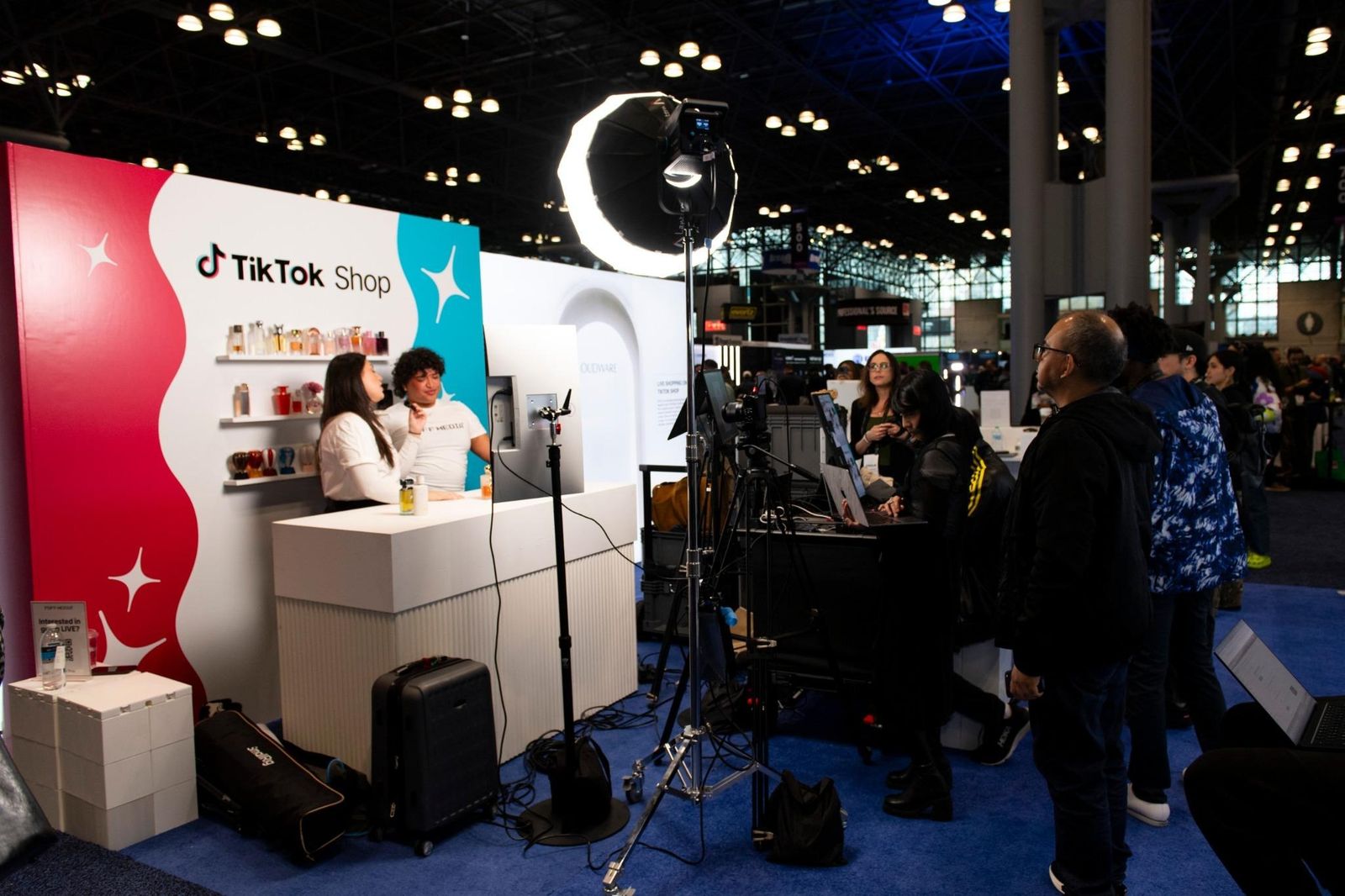
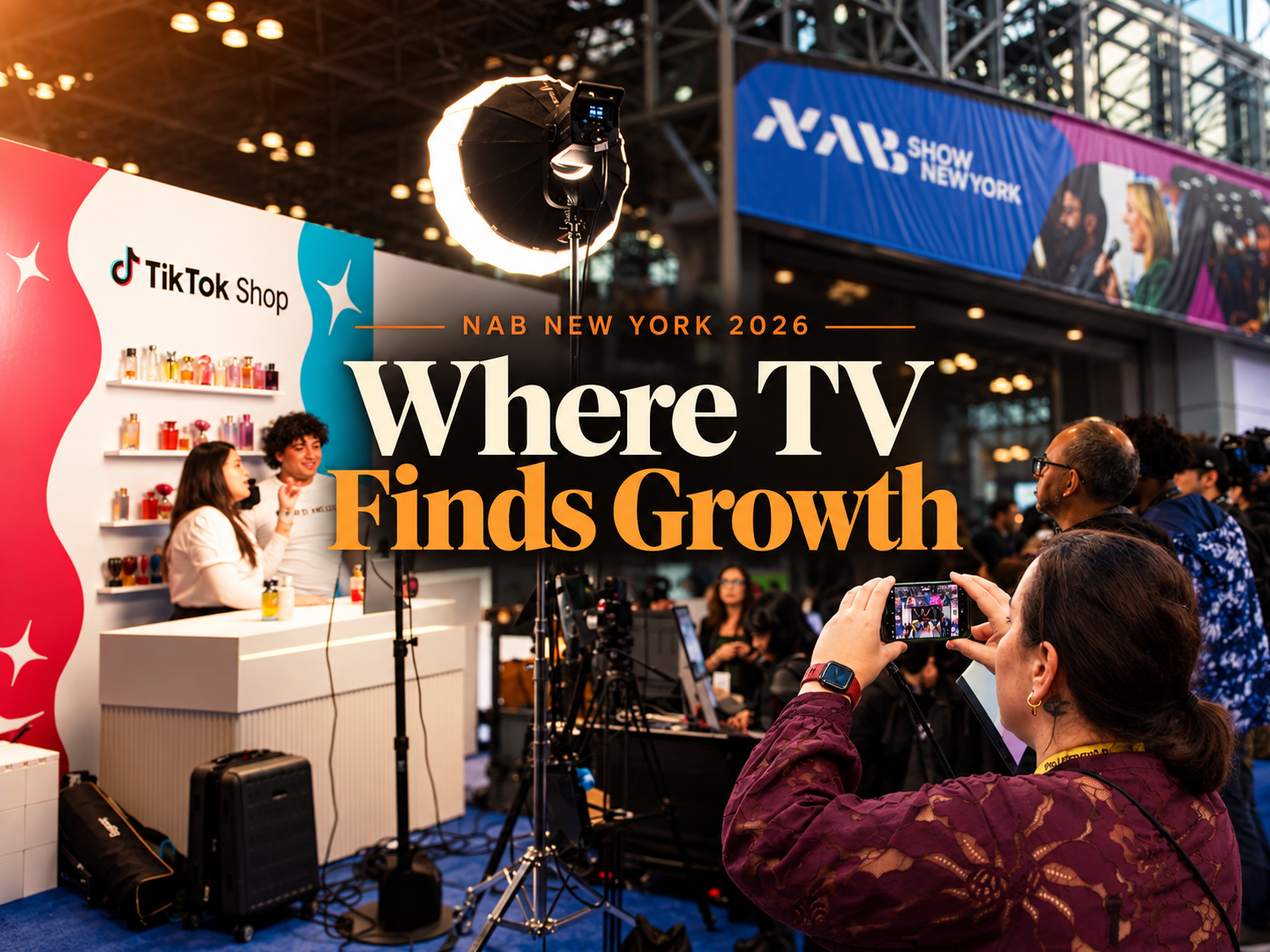
Visitors examine a TikTok Shop demonstration and production equipment at NAB Show New York. Supplied photograph; capture year unconfirmed.
The second-day creator-business session features Michael Kassan, Jarret Myer and Love Island USA personality Chelley Bissainthe. Advertising budgets help explain why creators have become a central subject at a broadcasting event. IAB’s November 2025 forecast put U.S. creator advertising at $37 billion for 2025, up 26%. This is brand advertising spent on creator content, not the entire creator economy. Buyers are allocating budgets to personalities and stories with sustained audience relationships, alongside channels and time slots.
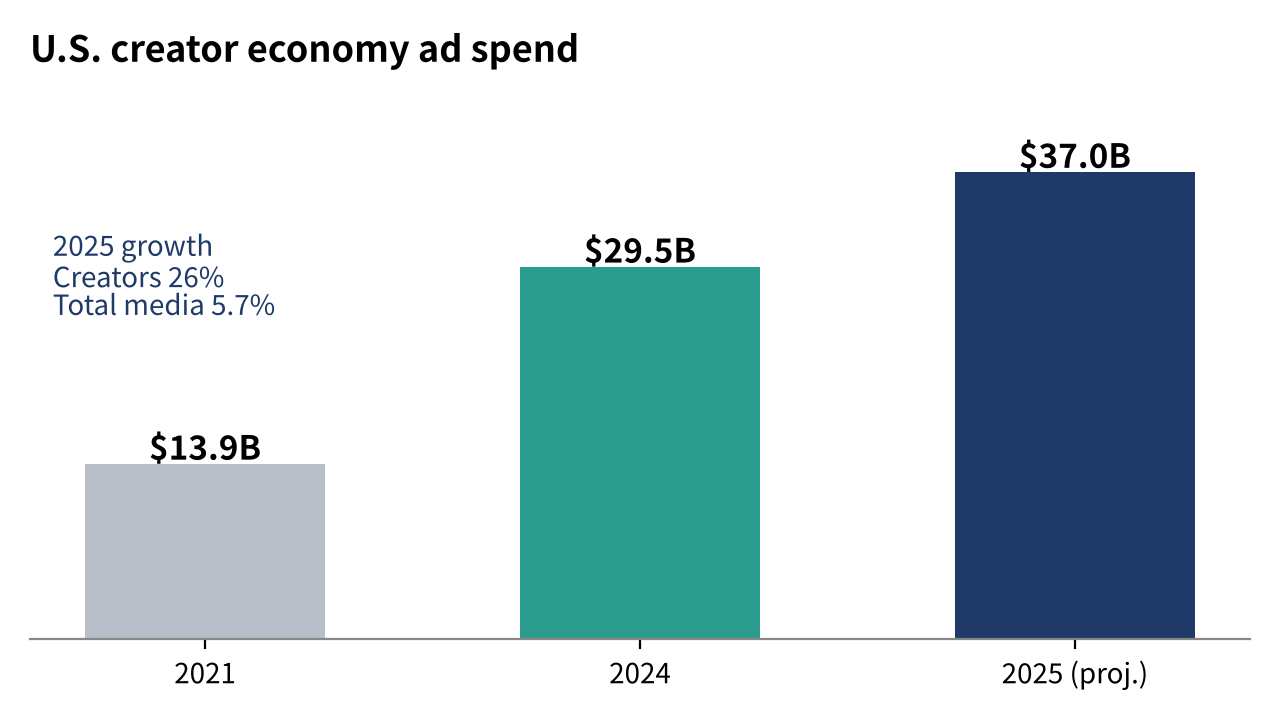
U.S. creator advertising expenditure. Source: IAB’s 2025 forecast.
Creators are both competitors to broadcasters and suppliers entering the television screen. Dhar Mann, honoured with The Ankler’s Future of Entertainment Award at MIPCOM in Cannes on Oct. 11, illustrates the convergence. At MIPCOM, his account of the studio’s development described a business that had funded production through YouTube advertising before Samsung TV Plus became its first premium originals partner. Deals with Disney and Fox Entertainment and multilingual dubbing have extended its reach. FAST and localization are bringing creator studios into the television business; they also place those studios among the competitors Korean broadcasters encounter in North America.
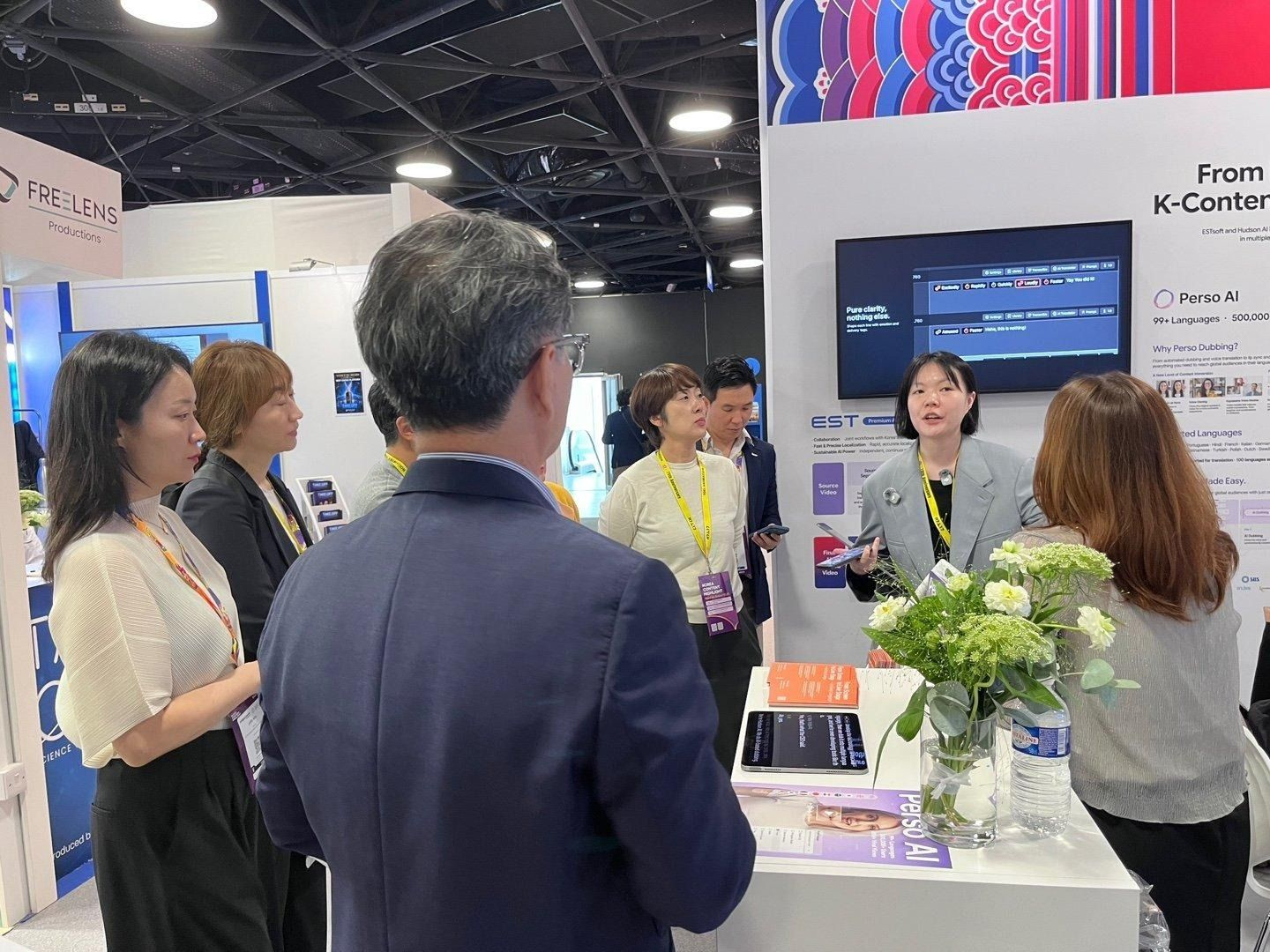
For KBS, the response extends beyond cutting programmes into short clips for YouTube. Programmes, talent and production teams can support recurring audiences, with advertising, licensing and related rights designed together from the outset. Co-production with creators or carrying creator programming on KBS outlets are possible routes.

There is demand to examine. Inga Alika, a Latvia-based digital strategy consultant, told the Cannes roundtable that European telecommunications and pay-TV operators struggle to reach younger viewers, and that Korean content and K-pop attract interest at precisely that point. KBS’s music and entertainment properties could therefore offer overseas distributors access to audiences they find difficult to reach. Completion and repeat viewing can help assess that response, but become investment measures only when considered with revenue, production costs and rights recovery.
Korean market figures require care. Creator-industry revenue of KRW5.3159 trillion in 2023 cannot be placed alongside broadcast advertising and read as an equivalent transfer of money from one to the other. Industry turnover and advertising expenditure have different scopes. The practical question is which audiences KBS is losing by programme and genre, and through which products it could reach them again.
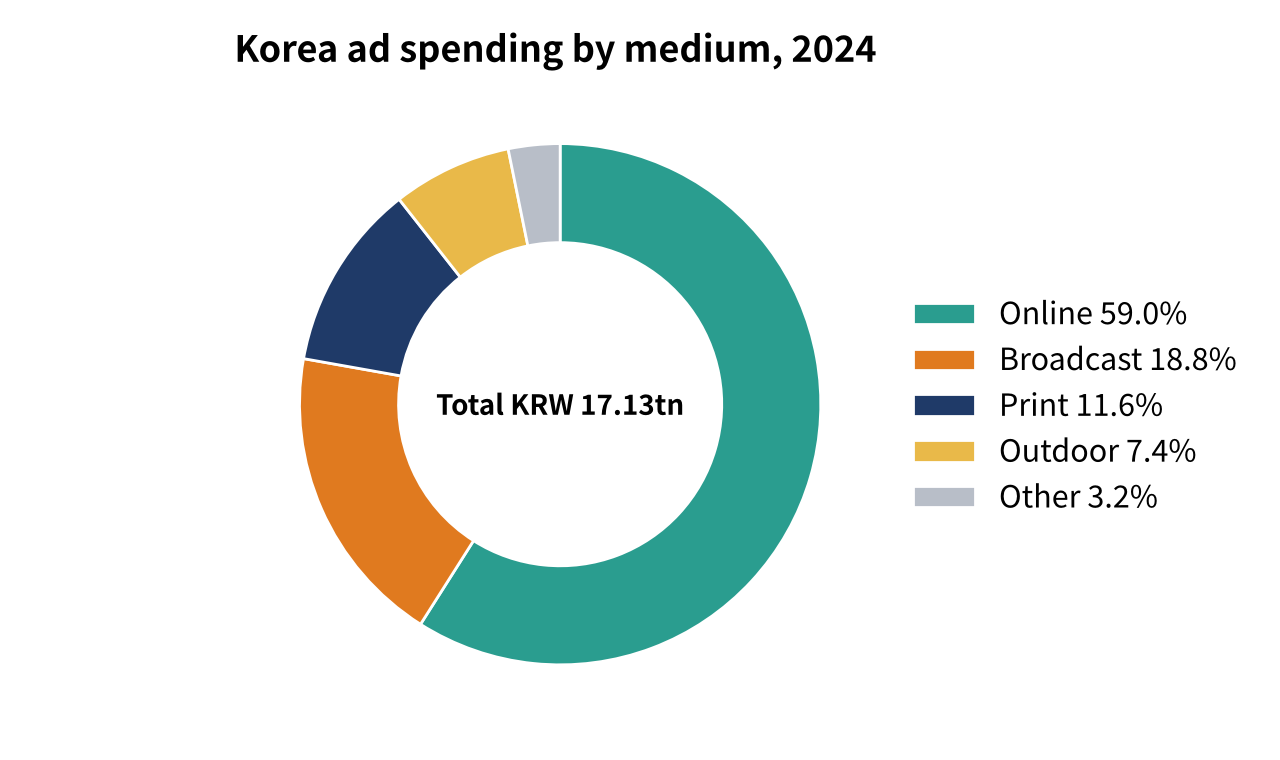
Korean advertising expenditure by medium in 2024. Source: the Korea Communications and Media Commission and KOBACO.
Sports also demands a distinct investment case. On the opening day, FanDuel President Christian Genetski, New York Islanders co-owner Jon Ledecky and media host Clay Travis join a discussion spanning rights, betting and team ownership. Ampere Analysis projects global streaming sports-rights spending at $14.2 billion in 2026. In Korea, TVING’s return to quarterly profit during the KBO baseball season illustrates how sports can support both usage and revenue. KBO is the Korea Baseball Organization, which runs the country’s top professional baseball league.
Localization can widen the market for sports as well. K-EnterTech Hub’s Cannes reporting describes Hudson AI’s live AI dubbing of KBO coverage for distribution in the United States, New Zealand and Australia, while Polish agency Media Spurs had begun distributing five sports channels that had not been localized. These examples show that rights access and language strategy are separate decisions within sports distribution.
A subscription platform’s results cannot be transferred directly to KBS, whose income combines licence fees, advertising and content sales. As streamers compete for sports rights, the cost of securing them is also under pressure. KBS’s calculation includes production, delivery and the opportunity cost of programmes displaced from its schedule as well as the rights fee.
Where overseas rights are available, AI localization may support additional sales, but the contractual scope comes first. More fundamentally, free public access to major events and commercial recovery through advertising or licensing serve different purposes. Applying one financial recovery threshold to every programme could push essential public services out of the investment portfolio.
AI returns depend on review and decisions, not the number of tools
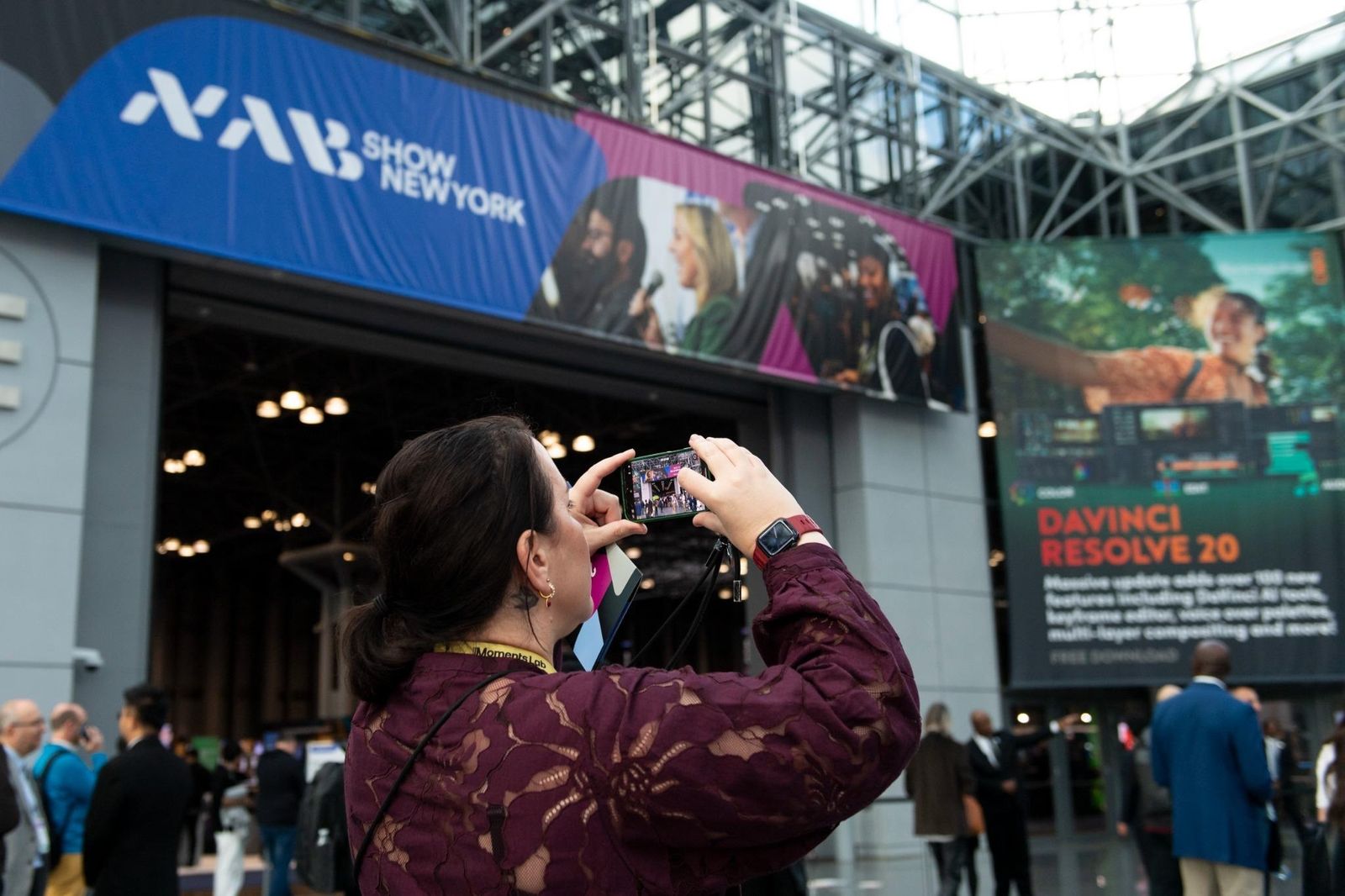
A visitor photographs signage at the NAB Show New York entrance. Supplied photograph; capture year unconfirmed.
The New York exhibition brings production, cloud, streaming and AI systems together, with practical newsroom AI sessions on the second day. The operating issue is where a technology fits within existing production, editing and delivery. Faster translation may leave the release date little changed if rights approval, quality review and transmission preparation proceed at their old pace. Bottlenecks often sit on either side of the tool.
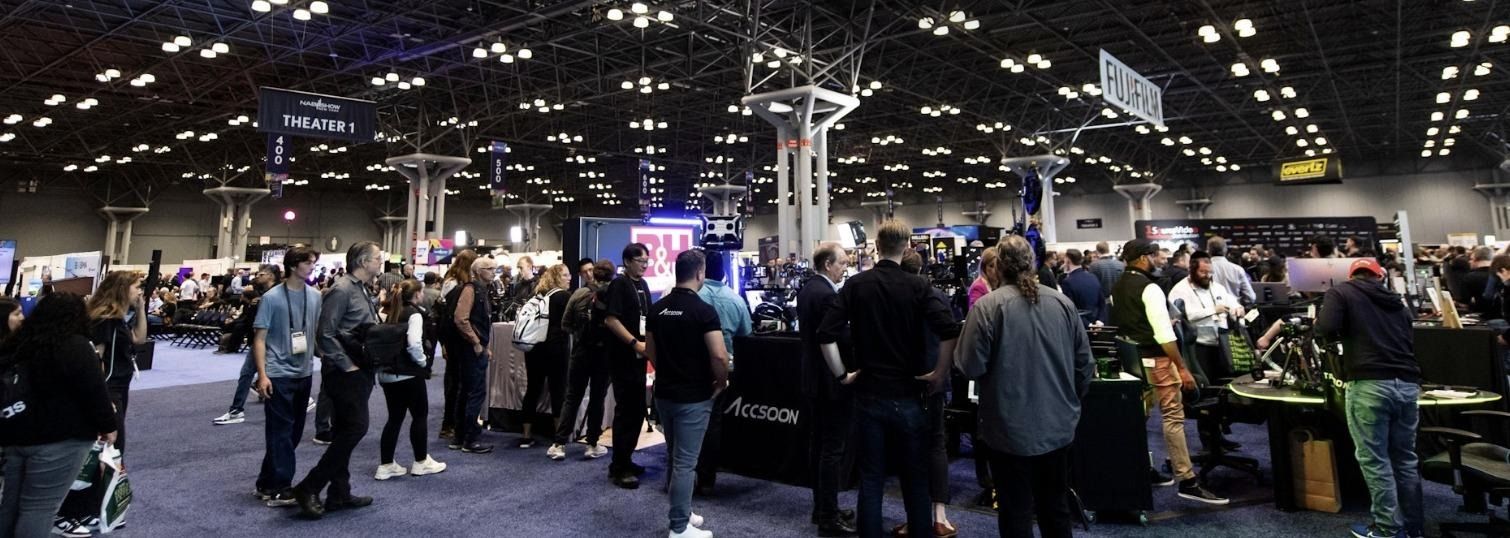
A limited trial can make those constraints visible. At the Cannes roundtable, European distribution specialists and Hudson AI agreed to begin with approximately ten-minute test dubs in Latvian and Polish before discussing contracts. Alika identified inadequate support for smaller languages as a recurring problem with AI dubbing suppliers. A language listed in a vendor’s catalogue does not establish the quality a programme will achieve in the intended market.
For KBS, processing time needs to be measured alongside human review, correction rates, outsourcing savings and delivery performance. Those results distinguish processes worth expanding from businesses that should be stopped.
News and documentaries require a higher standard. Awkward phrasing in a drama can be corrected; mistranslated names, places or numbers in news can damage a public broadcaster’s credibility. Internal rules need to identify where AI was used and who takes responsibility for final verification, with disclosure to viewers where appropriate. The wider newsroom AI debate concerns operating principles that protect efficiency and trust together.
Collaboration with Korean technology companies needs the same discipline. Trials using KBS’s real production environment can give vendors evidence to show overseas buyers. Contracts also need to define data use and output rights so archive footage and voices do not enter model training beyond the agreed scope. Standard file formats and data-return terms preserve the ability to change suppliers. A publicly supported trial that produces dependence on one vendor could weaken the broadcaster’s negotiating position.
This connects with Lee’s proposed small execution teams. A Spark Cell can test tools quickly, but it also needs authority to stop ineffective projects and funding to expand processes that work. The relevant organisational capability is to measure, discontinue and scale, rather than simply accumulate tools.
NAB Show New York and Las Vegas compared
The test is how much revenue returns to broadcasting
NAB Show New York offers no single answer for Korean broadcasting. U.S. elections and regional sports support a different advertising environment, while Korean broadcasters face a structural movement of viewing and budgets outside television. Their investment capacity is also very different from that of global platforms. Yet the New York agenda exposes a common test: content and technology produce income through sales, settlement, data and rights arrangements.
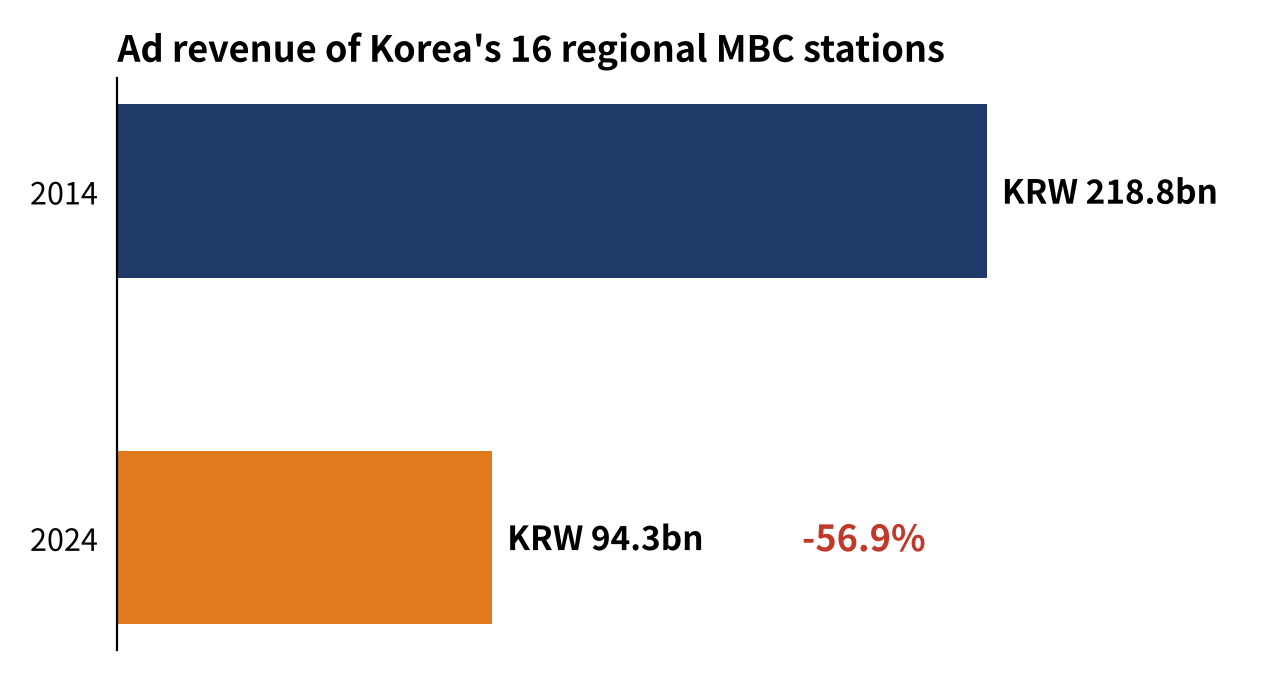
The test extends beyond KBS. Korean terrestrial broadcasters are preparing Series-K through SMR, while the government-backed K-FAST effort has built 20 channels serving 22 countries. Regional broadcasters, including MBC companies whose advertising has more than halved over a decade, are also seeking new income. Channels, territories and reported cumulative audiences have expanded. The next question is how much each participant recovers after costs, and how much returns to production.
The Cannes discussions point to fragmented national markets in which local-language versions and local partners remain important. Separate overseas initiatives can duplicate costs and create conflicting claims on the same titles. Joint channels and individual broadcaster channels therefore need clearly differentiated roles, supported by a shared understanding of rights and distribution windows.
Business plans can make that distinction measurable. FAST and international distribution can be evaluated through net revenue targets; targeted advertising through genuinely incremental sales; AI through realized savings and error rates. Principles for rights management and local sales-partner selection matter across the industry. Government support programmes, too, would reveal more about sustainable performance by measuring returns to broadcasters and producers alongside channel launches.
Public and regional broadcasting carry an additional condition. Emergency coverage, local news, education and free access to major sporting events require funding that cannot be defined solely through commercial returns. Blurring that boundary risks allowing sales targets to displace public obligations. The figures through which KBS’s next management demonstrates its first-year turnaround will therefore provide an early test of a wider proposition: whether Korean broadcasting can convert its content strength into a more durable revenue model without eroding the services that distinguish it.
U.S. and Korean reference indicators