
Five in-house tools at Inter BEE 2026 show how subscription-based remote production and enterprise AI services can reach customers beyond television
Japan's TBS Television is expanding the business of selling technology developed on its own production floors to outside customers. Alongside monthly subscriptions for remote video transmission software, it is targeting general business customers with AI narration and proofreading tools. The broadcaster is seeking to turn production expertise into software and service revenue as it broadens its income base beyond advertising.
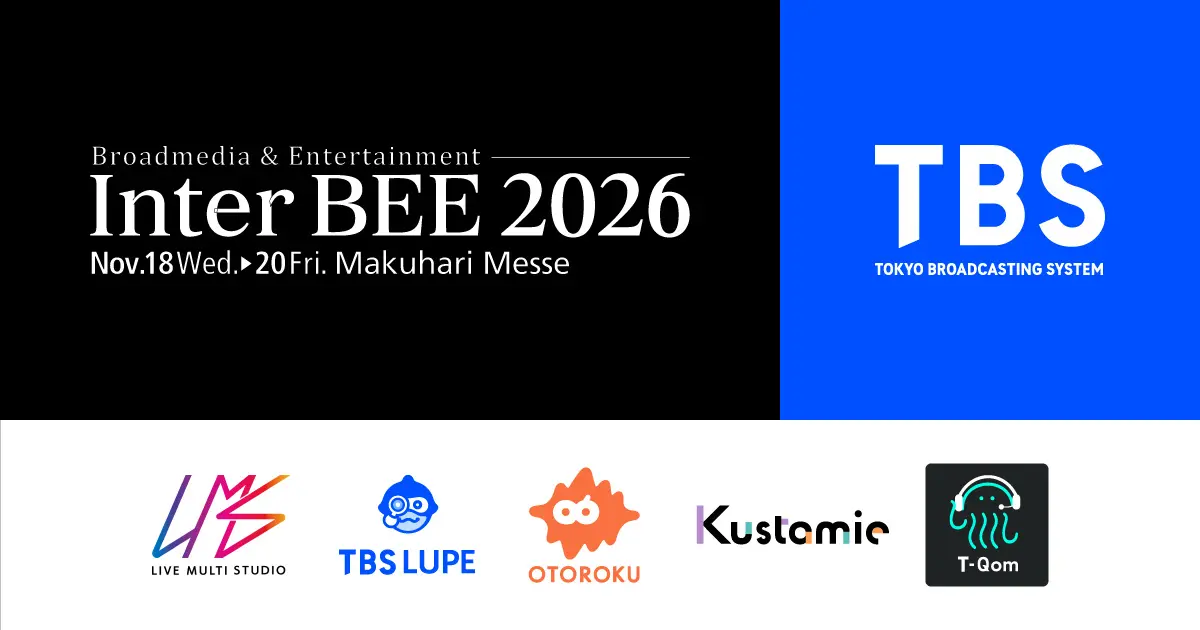
Inter BEE 2026, taking place November 18–20 at Makuhari Messe in Chiba, will provide a view of that strategy. At booth 7304 in Hall 7, TBS will demonstrate five proprietary technologies using actual equipment: Live Multi Studio (LMS), Otoroku AI (音六AI), TBS LUPE, T-Qom and Kustamie. Together they cover video transmission, voice production, proofreading, crew communications and audience participation.
The intended customers and sales models indicate the direction of the expansion. In a November 11 announcement, TBS presented Otoroku AI for advertising and in-store announcements, and TBS LUPE for proofreading web articles, point-of-purchase materials and press releases. Alongside LMS, already offered to outside customers on monthly plans, these products extend tools tested inside the broadcaster into other business settings.
LMS packages remote production as a monthly service
LMS is transmission software jointly operated by TBS and WOWOW Entertainment. It carries video, audio and camera-control signals over the public internet and uses PCs and iPhones in place of dedicated transmission equipment. The approach reduces the equipment and connectivity burden of remote production. Its official website lists deployments in news, international sports and music events.
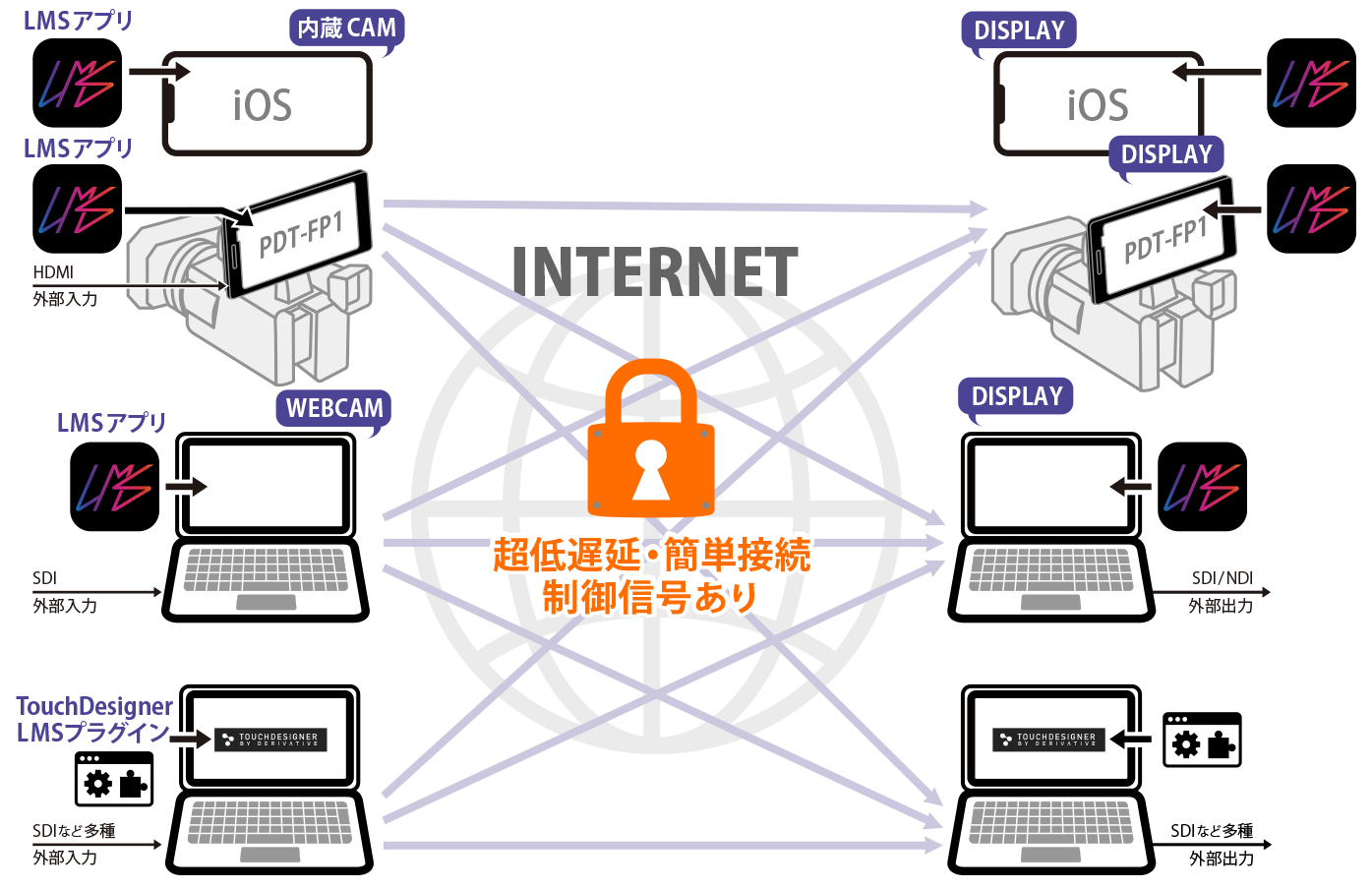
The booth will feature an ultra-small referee-camera live feed using 5G and LMS, an LMS 8K live transmission and remote camera operation. The Roland-Garros Junior Series by Renault 2026 used LMS's VPN and patented MultiLatency technology for remote production. Japanese B.League basketball club Alvark Tokyo also combined LMS with a private 5G network at its venue, working with Sony Wireless Communications to develop a spectator service.
The common objective is to reduce equipment and staffing requirements on location. News crews can use a Sony PDT-FP1 terminal for both transmission and monitoring, while sports productions can remotely control the zoom and iris of tripod-mounted iPhones. Seminar productions use wireless return video and tally signals. LMS says some configurations can be delivered at less than one-tenth the cost of conventional broadcast equipment. That is a supplier claim; actual costs depend on the equipment and network configuration.
The sales model also differs from a large upfront equipment purchase. The free plan provides up to 30 minutes of 720p video and prohibits commercial use. The commercial plan costs ¥6,000 a month, approximately ₩51,000, for 1080p and NDI output. The professional plan costs ¥16,500, approximately ₩140,000, for 4K and SDI/NDI output. A dedicated PDT-FP1 plan also costs ¥16,500 monthly, with connectivity charged separately. The plans create a path from free trials to paid production.

Integration with third-party equipment extends its applications. HOMRA 4K, an LMS-compatible transmission device announced by Shiftall and TBS on November 5, can accept four video feeds without a PC, transmit to as many as four destinations simultaneously and record to an SD card, according to TechnoEdge. It will make its exhibition debut at Inter BEE.
Blackmagic integration links video with production control
LMS is extending beyond video transport into production-control signals. A Blackmagic Design integration demonstration published on its official YouTube channel on November 10 illustrates the approach. The 14-minute, 47-second video was excerpted from the sixth LMS webinar in September. LMS's Ishimura and Blackmagic Design's Okano demonstrated remote tally transmission. A tally signal tells camera operators and presenters which camera is on air.
In the demonstration, tally signals from an ATEM switcher passed through a LAN-connected GPI & Tally Interface and a D-Sub–USB cable to a Windows PC. The LMS tally application then sent the signals over the internet to iPhones and Android phones, extending a local production signal to remote camera locations. Okano said the interface can deliver tally to cameras from other manufacturers. He also noted that its GPI functionality is for the VideoHub matrix router rather than ATEM.
Dedicated connection components are required. LMS supplies D-Sub–USB and XLR–USB cables tailored to switcher manufacturers' different pin assignments. The cables implement commands specific to the LMS application and cannot be replaced with generic retail cables. The tally transmission application is a development version supplied to selected customers ahead of general release. Prospective users therefore need to check compatible cables and supported equipment as well as the software.
One application transmits six tally channels simultaneously. With channels numbered 101–106, each operator enters the number assigned to their camera on a phone. In the demonstration, the corresponding iPhone's tally activated when the ATEM switched feeds. Ishimura said that internet and Wi-Fi transmission introduced some delay but remained adequate for wireless tally use. Okano described remote tally transmission as unusual compared with distribution within a venue.
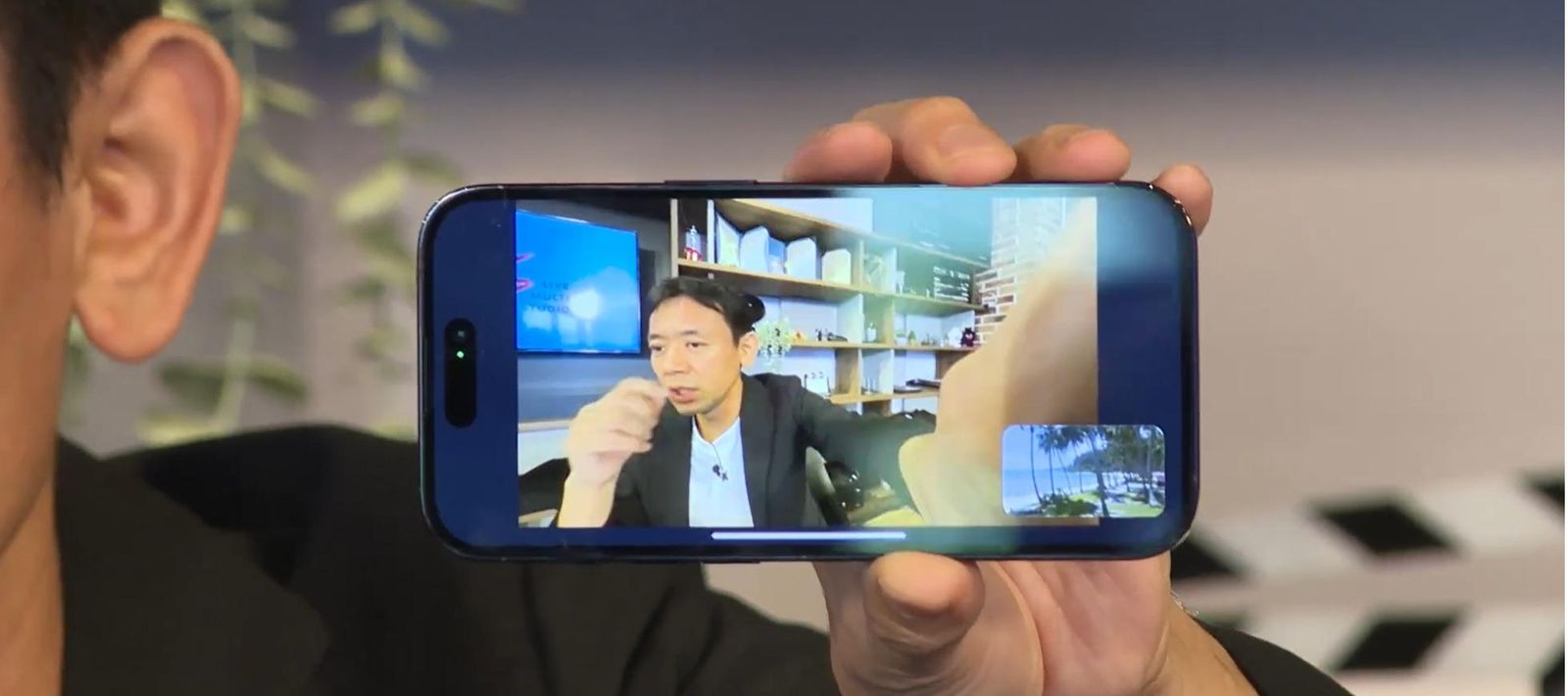
An iPhone can serve as a camera, return monitor and tally indicator in the same setup. While transmitting through LMS, it displays return video at the bottom of the screen. When its feed goes on air, the screen border turns red and the LED beside the rear camera acts as a tally light. Ishimura said the functions require no additional setup after installation. Mounted on a camera, the phone allows both the operator and the presenter to see the signal.
Sony's portable PDT-FP1 data transmitter also works with LMS. Although Android-based, it is closer to a transmission device than a phone. It has an HDMI input and two USB ports for charging and video input, allowing it to receive a broadcast camera's HDMI output and transmit it directly. Mounted on a camera, it handles transmission, return monitoring and tally reception. Ishimura described it as a smaller counterpart to a large mobile transmission system.
The webinar also highlighted the expanding iPhone accessory ecosystem. Okano introduced Blackmagic Camera ProDock, an adapter that connects headphones, microphones and SSDs to an iPhone and accepts timecode and reference signals. A bullet-time setup using 60 iPhones to capture the same moment from multiple angles was presented as an application. The unit costs about ¥50,000, or approximately ₩425,000. Okano said it can reduce costs compared with using 60 genlock-equipped cameras.
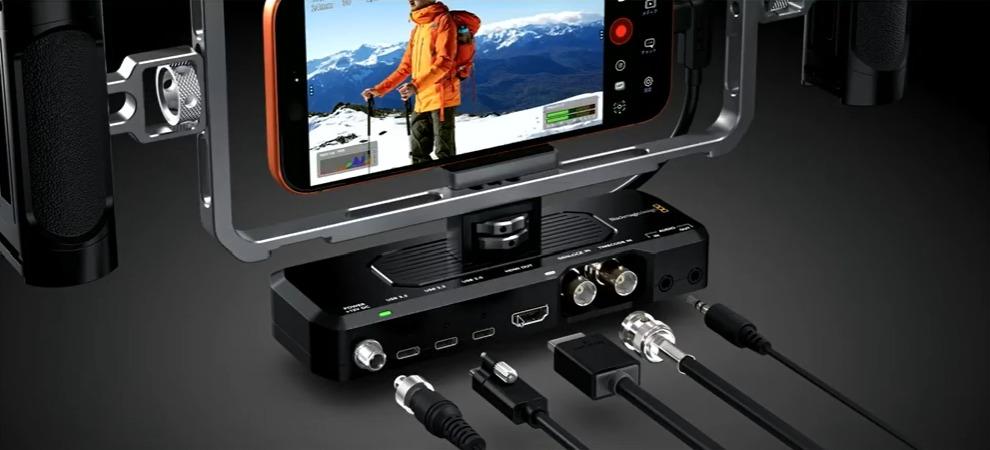
ProDock integration with LMS has not been confirmed. Ishimura acknowledged some overlap between the Blackmagic Camera and LMS applications and said the company would examine whether ProDock could be incorporated into an LMS setup.
Narration and proofreading tools target general business customers
While remote production reduces equipment requirements, AI tools focus on time spent on repetitive tasks. Otoroku AI, jointly developed by TBS Television and TBS Glowdia, converts scripts into narration. It supports multiple languages and translation, and can fit delivery to a duration specified in seconds. Its applications extend from terrestrial news to YouTube videos and event announcements.
TBS LUPE demonstrates how a broadcaster's accumulated data can underpin a product. It combines TBS's database of typographical errors with generative AI to flag not only known mistakes but also contextual inconsistencies and potential factual errors. Launched with TBS Glowdia in May, it is expanding from broadcast captions to web articles, in-store promotional materials and press releases. It supports proofreading; users still need to make final factual and editorial judgments.
Smartphone production and audience participation broaden the offering
T-Qom turns a smartphone into a broadcast intercom. Using an internet connection, a smartphone or tablet can handle crew communications, return audio and video, and tally reception. A PC can connect it to existing broadcast intercom equipment. It targets small productions and remote locations where an outside-broadcast truck is difficult to deploy.
Kustamie addresses the viewing experience after production. It enables real-time interaction between performers and audiences at live broadcasts, performances and events, with options for viewer-selected camera angles and shopping functions. TBS is presenting both production-cost tools and services that expand audience engagement, broadening its proposition for outside customers.
Inter BEE places AI and production transformation on the agenda
TBS's commercialization strategy aligns with the exhibition's broader agenda. The event began in 1965 when the Japan Commercial Broadcasters Association (JBA) held a broadcast equipment show with 12 exhibitors at Hatsumei Kaikan in Toranomon, Tokyo. A predecessor of the Japan Electronics and Information Technology Industries Association (JEITA) joined as co-organizer the following year and took over organization in 1968. Now in its 62nd edition, the show has expanded from equipment to business opportunities across production, transmission and services.
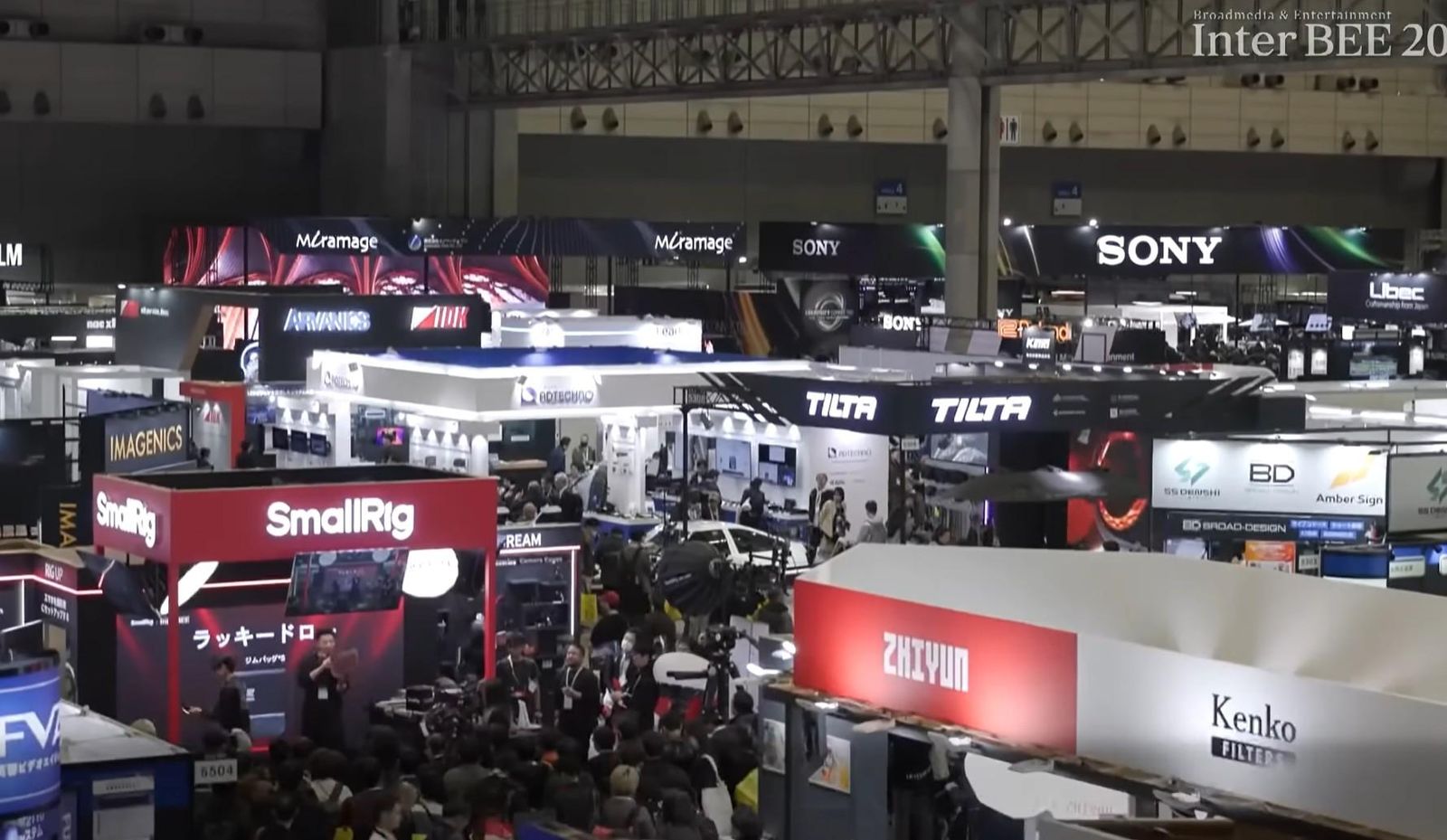
The exhibition now covers video, broadcasting, film, audio, lighting and live entertainment. Its four sections are professional audio; entertainment and lighting; video production and broadcast equipment; and media solutions, where TBS will exhibit. JEITA positions the event as a place to connect content production, transmission and audience experience with new business opportunities. Supporters include Japan's communications and economy ministries, NHK and JBA.
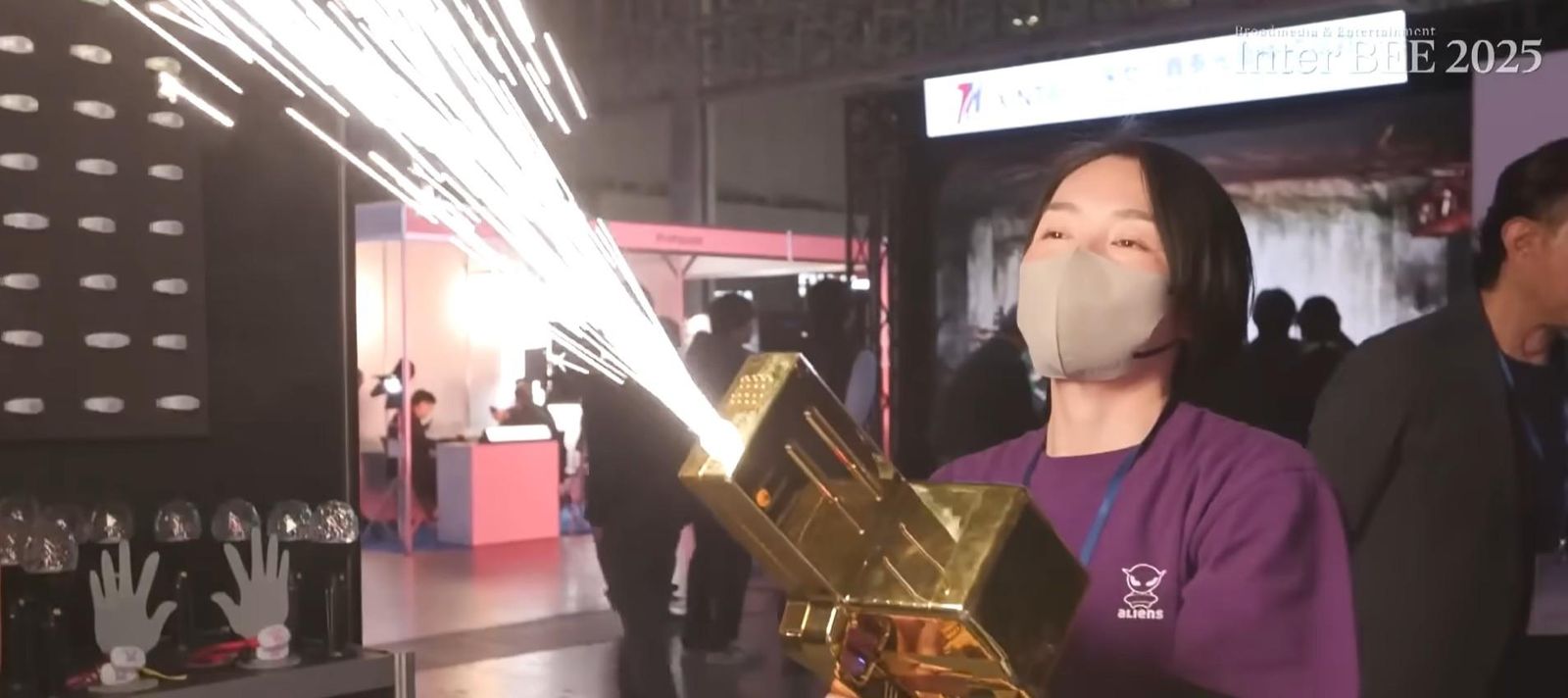
Last year's exhibition featured 1,079 companies across 1,985 booths and attracted 34,072 visitors over three days, up from 33,853 a year earlier. According to the organizer's exhibition guide, 80.7% of visitors were involved in decisions to adopt new technology or products, and 68.0% spent more than four hours at the venue.
This year's themes are AI, the transition to IP-based production and media-industry sustainability. INTER BEE IGNITION × DCEXPO takes the theme of AI moving into the real world, covering collaboration among broadcasters, startups and universities and AI-enabled content creation. Inter BEE Forum will feature international speakers on global media technology and sustainability. The emphasis is on how technology is applied to production and business, beyond initial adoption.
The Inter BEE MoIP area, organized by the Media over IP Consortium, will examine next-generation production through interoperability tests and broadcaster and equipment-vendor perspectives. Broadcasters will also conduct actual remote-production demonstrations at the venue. Other areas include a WMAS wireless multichannel audio demonstration, Creative for video, Cinema for filmmaking and Media Business for broadcasting, film and animation. The third Inter BEE Award will be judged on November 18, with winners announced that evening. JBA's 63rd Broadcast Technology Symposium takes place during the same period.
Opening hours are 10 a.m.–5:30 p.m. on November 18–19 and 10 a.m.–5 p.m. on November 20. Admission is free with advance registration. A standard exhibitor booth measuring 2.97 × 2.97 meters costs ¥319,000, approximately ₩2.71 million.
Equipment makers focus on remote production and workflow integration
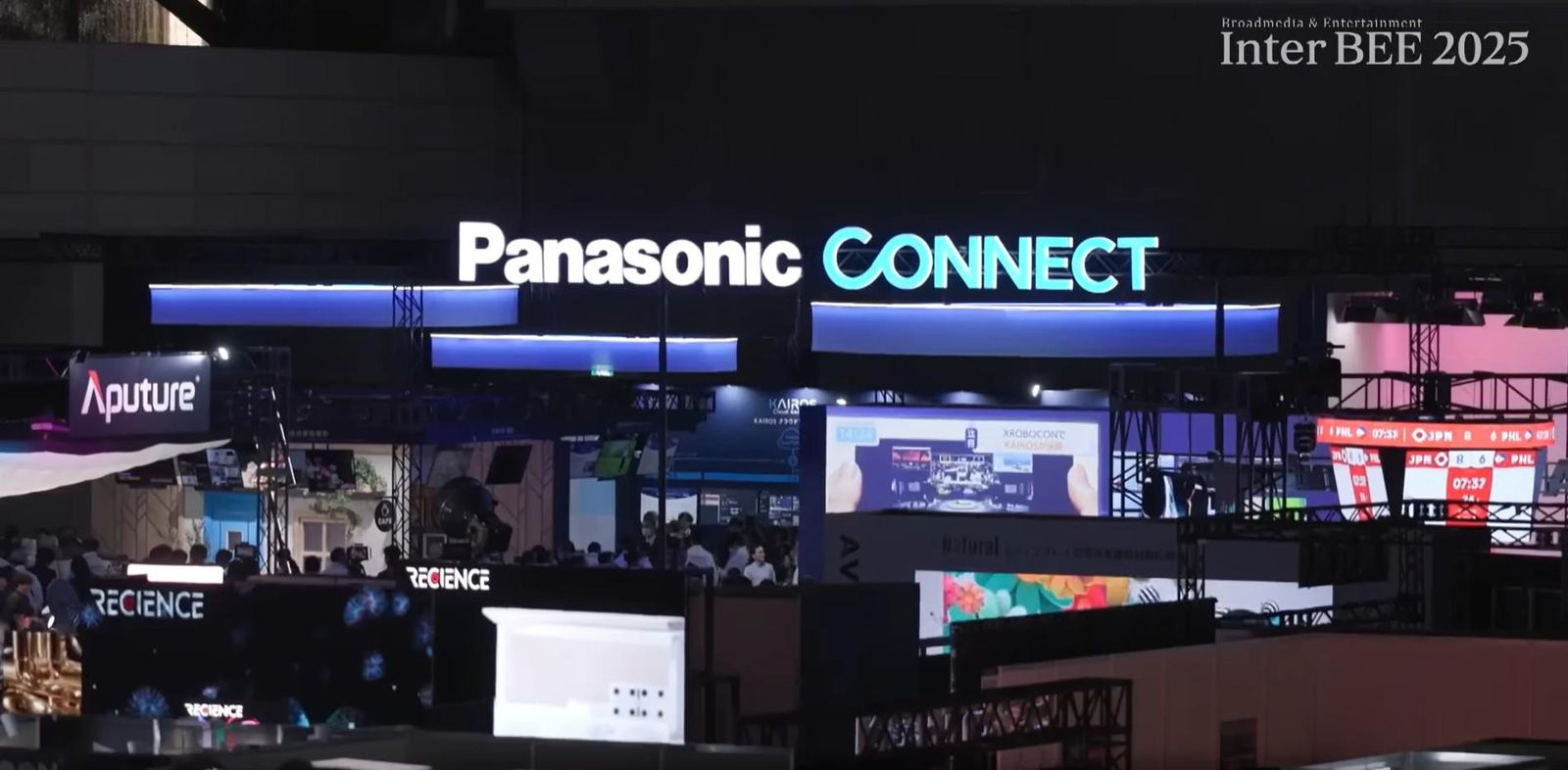
Panasonic Connect's Hall 4 main stage takes the theme “AI × Smart Broadcasting.” It will demonstrate remote equipment control via tablets and smartphones and AI-assisted production intended to reduce staffing and equipment at both venues and broadcast centers. Features include real-time separation of people from backgrounds without a green screen and AI assistance to flag potential advertising-compliance issues. The third-generation midsize KAIROS Core 210 adds JPEG XS transmission support. Technical staff from TV Kanazawa, TV Hokkaido and Yomiuri Telecasting will present KAIROS remote-production cases.
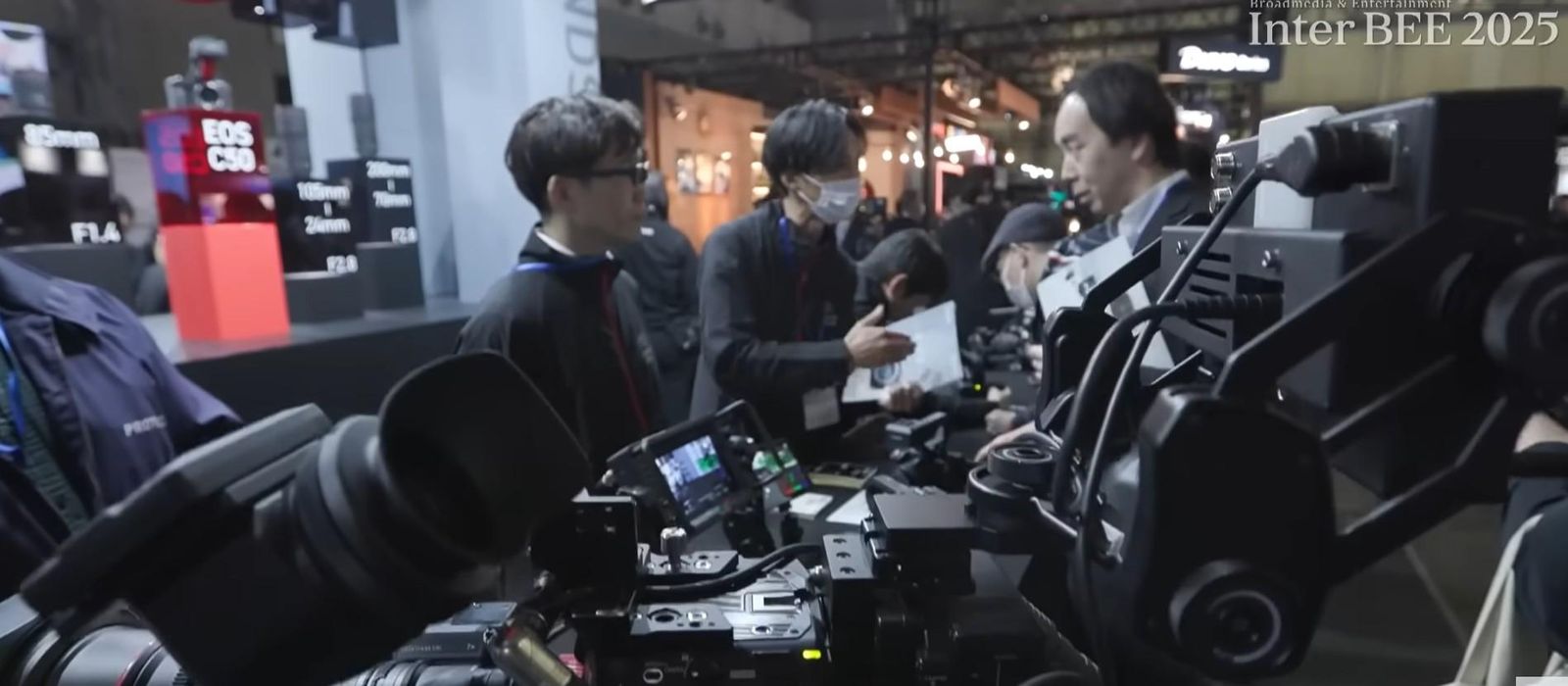
Canon will exhibit the EOS C50 cinema camera with a 7K full-frame sensor and the CN30×40 IAS J/R1 broadcast zoom lens covering 40–1,200mm. Nikon and its subsidiary RED Digital Cinema will show the Z CINEMA range and RED Cine-Broadcast Module configurations for broadcast and live production at booth 8319 in Hall 8. Intercom and signal-transmission specialist Riedel will exhibit at booth 6001 in Hall 6.
For Korean suppliers, integration into Japanese workflows is critical
Korean exhibitors also face the question of how easily their products fit into local production workflows. Content AI company 4BY4 will introduce the macOS version of AI PIXELL PRO and plugins for DaVinci Resolve and Nuke on November 18 at booth 6110 in Hall 6. Broader operating-system and post-production support creates more entry points into existing editing pipelines. Last year, 4BY4 said Fuji Television had assessed PIXELL's upscaling output as meeting broadcast transmission standards and begun considering internal deployment. The validation was conducted through the National IT Industry Promotion Agency's global AI business cooperation support program.
Broadcast graphics specialist Visual Research (VRi) will show KarismaCG3 at Japanese partner Japan Material's booth 5401 in Hall 5. Sold as Tornado3 in Korea, the system generates and transmits real-time 3D graphics for news, sports and elections without prerendering. The company is approaching Japan's broadcast production market through its local partner.
The official exhibitor list places Korean manufacturer KSYS at booth 7512 in Hall 7's media solutions section, alongside TBS in the same hall. KOREA E&EX, organizer of Korea's KOBA broadcast equipment exhibition, will be at booth 3129 in Hall 3. Seoul-based soundproof-booth brand MUSICUS will exhibit in Hall 2's professional audio section at booth 2518. Samsung R&D Institute Japan will present HDR10+ and Eclipsa Audio at booth 8305 in Hall 8.
Arts Korea Lab will exhibit art projects using AI, XR and interactive technology with five Korean companies at booth 4309 in Hall 4. The IGNITION × DCEXPO area includes the Gyeongsangbuk-do International AI & Metaverse Film Festival (GAMFF) and Nemoz Lab, which has worked with SM, YG and JYP. KOCCA CKL TOKYO is also listed among the area's exhibitors.
Korean broadcasters need a business model beyond development
Commercializing production technology is also an issue for Korean broadcasters. Domestic broadcasting revenue fell for a third consecutive year to ₩18.6495 trillion in fiscal 2025, while broadcast advertising revenue declined 12.3%. Terrestrial broadcasters posted a third straight year of operating losses. Terrestrial advertising totaled ₩310.4 billion in the first half of this year, against ₩1.1164 trillion for the full year of 2011; the periods differ, so the figures cannot support a direct percentage-decline calculation. Meanwhile, miniseries production costs have risen from ₩600 million–₩800 million per episode to around ₩1.5 billion. In Japan, Nikkei reported that program production spending by five commercial broadcasters in fiscal 2025 was 12% below its level nine years earlier. Under pressure on both revenue and production capacity, TBS is expanding external sales of its internal tools.
KBS developed AI Tactical Notes to visualize commentators' tactical explanations during live coverage and highlights of the North American World Cup, replacing workflows that previously required expensive foreign graphics systems or multiple manual steps. It launched the internal KAIROS AI portal in July. MBC established AI subsidiary DOST11 in 2024 to develop broadcast AI solutions. In June it was selected with NC AI, NHN Cloud and Datamaker for the government's AX One-Stop Voucher program to develop AI that interprets video context during editing. SBS has created the SBS AI brand and an AI partnership team.
These initiatives cannot be compared uniformly with TBS: the publicly disclosed business scope, customers and development stages differ. TBS nevertheless provides concrete examples of what external sales require. LMS has free trials and paid tiers, joint operations with WOWOW Entertainment and expanding connections with Shiftall, Sony and Blackmagic equipment. Joint webinars and dedicated cables support actual deployment. TBS Glowdia participates in developing and commercializing Otoroku AI and TBS LUPE. Korean broadcasters likewise need to design pricing, sales responsibility, compatibility and customer support alongside technical performance.
Demand need not be limited to major broadcasters. In July, Korea's broadcasting and media communications commission selected eight broadcasters and eight programs for regional AI production demonstrations. For regional stations and smaller production companies with limited staffing and budgets, smartphones and internet connections could offer an option for covering local festivals and amateur sports. The cost models proposed by tools such as LMS and T-Qom need to be tested against actual field conditions.
The use of broadcaster-owned data is another part of commercialization. TBS LUPE began with the broadcaster's own database of errors. The damages claim KBS, MBC and SBS filed against OpenAI in February over the use of their news for AI training illustrates that broadcast data is also subject to rights protection and licensing negotiations. At the same time, properly licensed proofreading data and production expertise can support proprietary tools. External sales of generative services such as AI voice also require attention to applicable disclosure obligations and data-use rights.
4BY4's path—from government-supported validation with a Japanese broadcaster to a second consecutive Inter BEE appearance—is instructive. It connects validation against local transmission standards, integration with editing tools and meetings with prospective customers. A standard Inter BEE booth costs ¥319,000 and visitor registration is free. Technical validation and follow-up sales before and after the exhibition matter as much as participation costs.
From an efficiency tool to a product customers will buy
According to an NHK Broadcasting Culture Research Institute study covering the situation as of January 2026, Japanese broadcasters began introducing AI for operational efficiency around 2022 and rapidly expanded its use in program production from the second half of 2024. TBS's approach points to the next step: winning outside customers. Developing proprietary technology and building recurring revenue are separate tasks. Pricing and sales channels, compatibility with existing equipment and proof of value in customer workflows all need to follow. At this year's Inter BEE, the key question is how broadcasters turn production experience into products and lasting customer relationships.
Won equivalents use ¥100 = ₩851 as of November 2, 2026.