
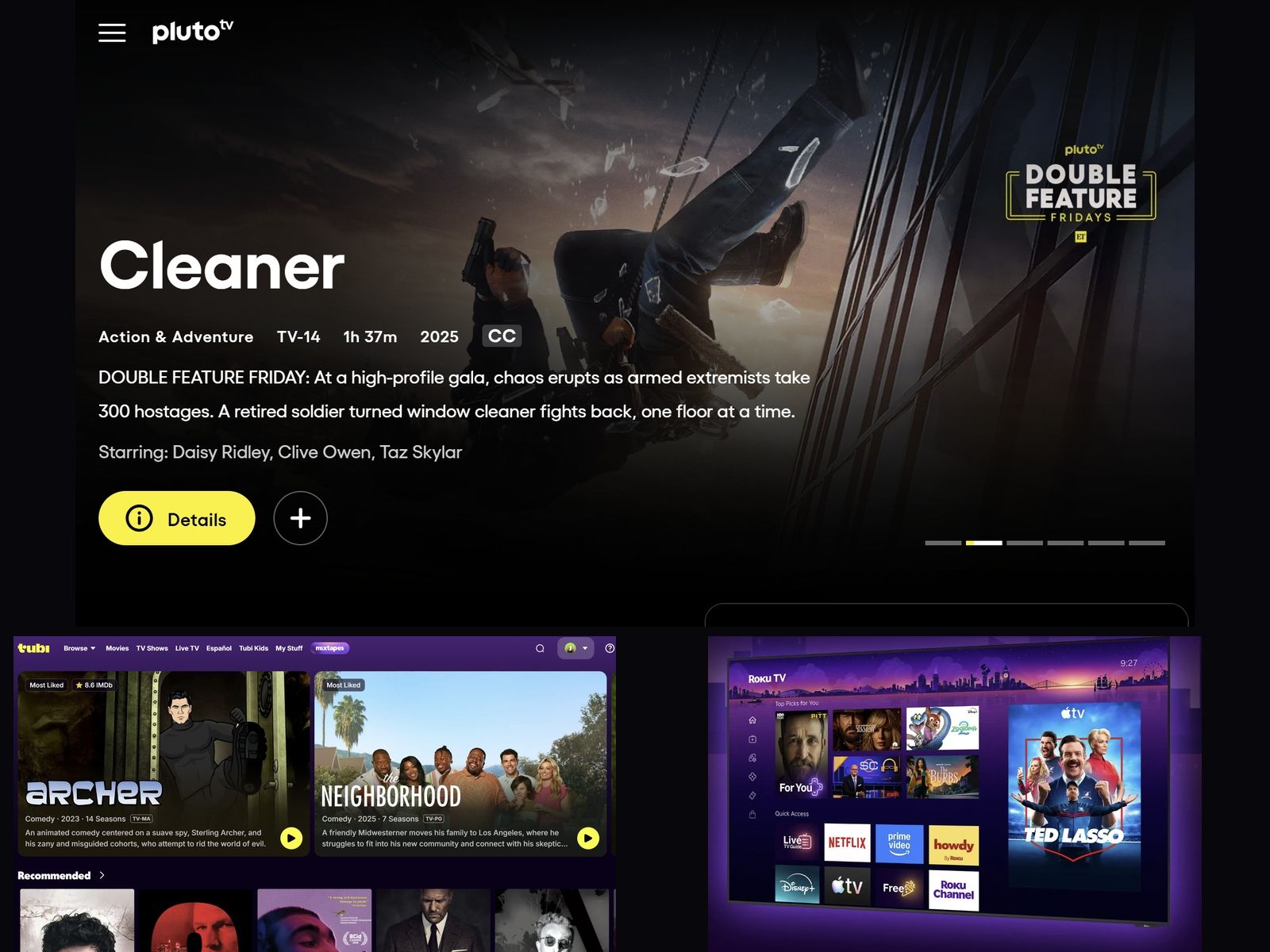
Pluto TV loses users as Samsung TV Plus scales up and expands Korean programming.
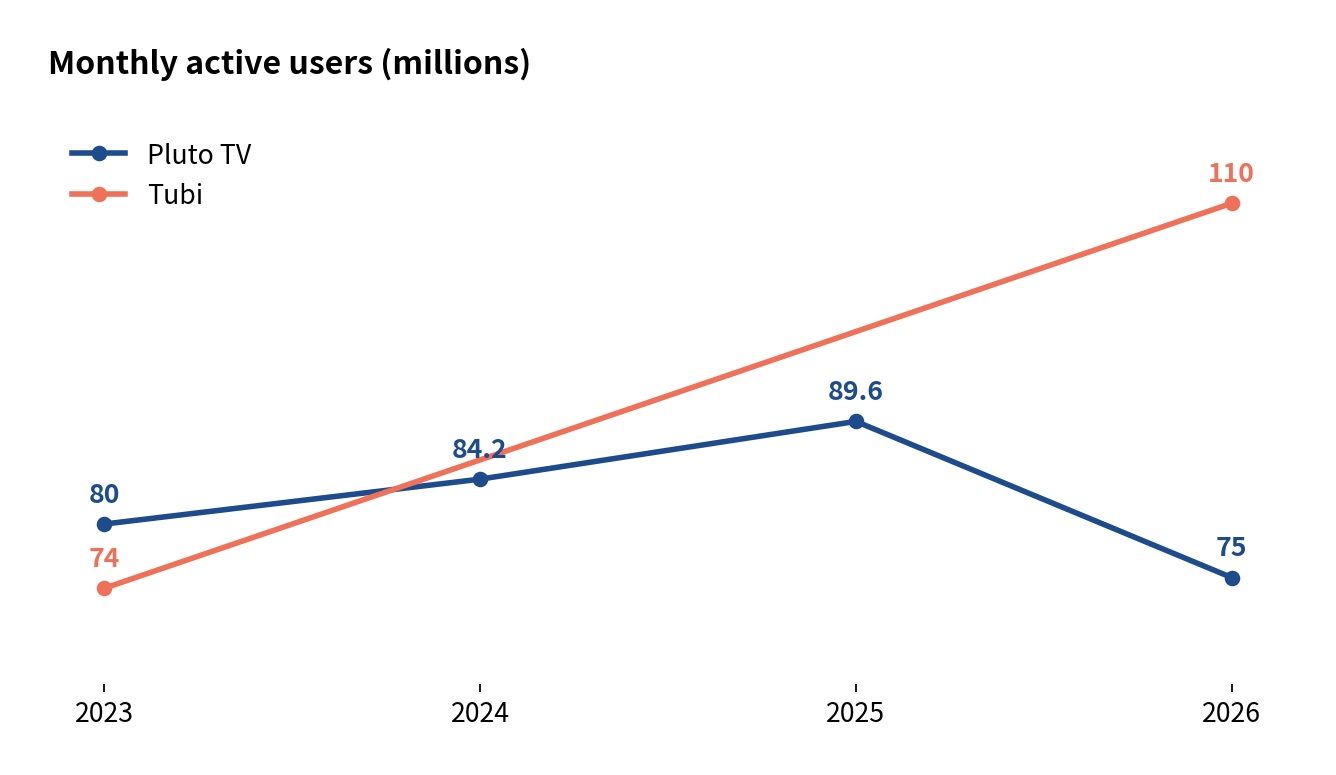
Pluto TV, a pioneer of free ad-supported streaming television (FAST), is losing users as rivals expand. In its third-quarter shareholder letter released on November 9, Skydance put Pluto TV’s monthly active users (MAUs) at approximately 75 million.
Samsung TV Plus, meanwhile, announced in January that it had surpassed 100 million monthly active users worldwide. Its established TV distribution and growing Korean lineup provide a concrete route for K-FAST to reach audiences.
That is 14.6 million, or 16%, below the 89.6 million reported for 2025, and below the 80 million the company celebrated as a milestone in May 2023. As competing services gain users and viewing share, control over the television home screen is becoming a defining advantage in FAST distribution.
For Korean FAST suppliers, the next task is turning channel launches into sustained viewing.
Why Pluto TV lost ground: a mismatch in viewing habits and distribution
Pluto TV’s weakness lies less in demand for free television than in how it retains existing viewers and acquires new ones. It changed a familiar channel-led experience while rivals expanded through on-demand viewing and TV home screens. Interface friction is a possible near-term factor; the timing of its VOD response and its distribution position are structural explanations for the growth gap.
The most direct criticism concerns the redesign. Two Paramount employees interviewed by Business Insider suggested that September’s shift toward on-demand discovery may have contributed to the decline. Replacing an experience that opened into a playing channel with one centered on choosing content changed the routine of habitual channel surfers.
A second issue is the timing of its response to on-demand competition. Pluto built its identity around scheduled channels while Tubi and YouTube grew around viewer choice. Pluto’s comprehensive home-screen, search and recommendation rebuild arrived in September 2026. Reported VOD growth shows demand for that offering, but more VOD use among some viewers is a different outcome from restoring the service’s total monthly audience.
Third is audience acquisition. Roku, Samsung and LG can give their services visibility through devices or operating systems. Without its own TV operating system, Pluto depends more on third-party placement and viewers actively choosing its app. This is a distribution disadvantage in discovery and repeat visits, rather than evidence of a measured cause of every lost user.
Technology integration adds context. Skydance said bringing Pluto and Paramount+ together took about 18 months, committing product and engineering capacity to a shared foundation while competitors kept developing their offerings. Management says that foundation reduces costs and accelerates development; integration itself has not been established as a cause of the audience decline.
The central issue is therefore the execution of a transition: preserving effortless channel viewing while improving VOD and recommendations and finding new viewers on the TV screen. Published data do not isolate each factor’s contribution or track the same users before and after the redesign. September’s changes cannot explain the entire decline on their own. For K-FAST, distribution agreements must be followed by a plan for discovery, return visits and viewing conversion.
Tom Ryan and Ilya Pozin founded Pluto TV in 2014, bringing cable-style channel surfing to free internet television. Viacom acquired it in January 2019 for $340 million in cash. The service passed through ViacomCBS and Paramount before becoming part of Skydance.
Rivals have moved in the opposite direction. Fox-owned Tubi increased its monthly audience from 74 million in September 2023 to 110 million in August 2026.
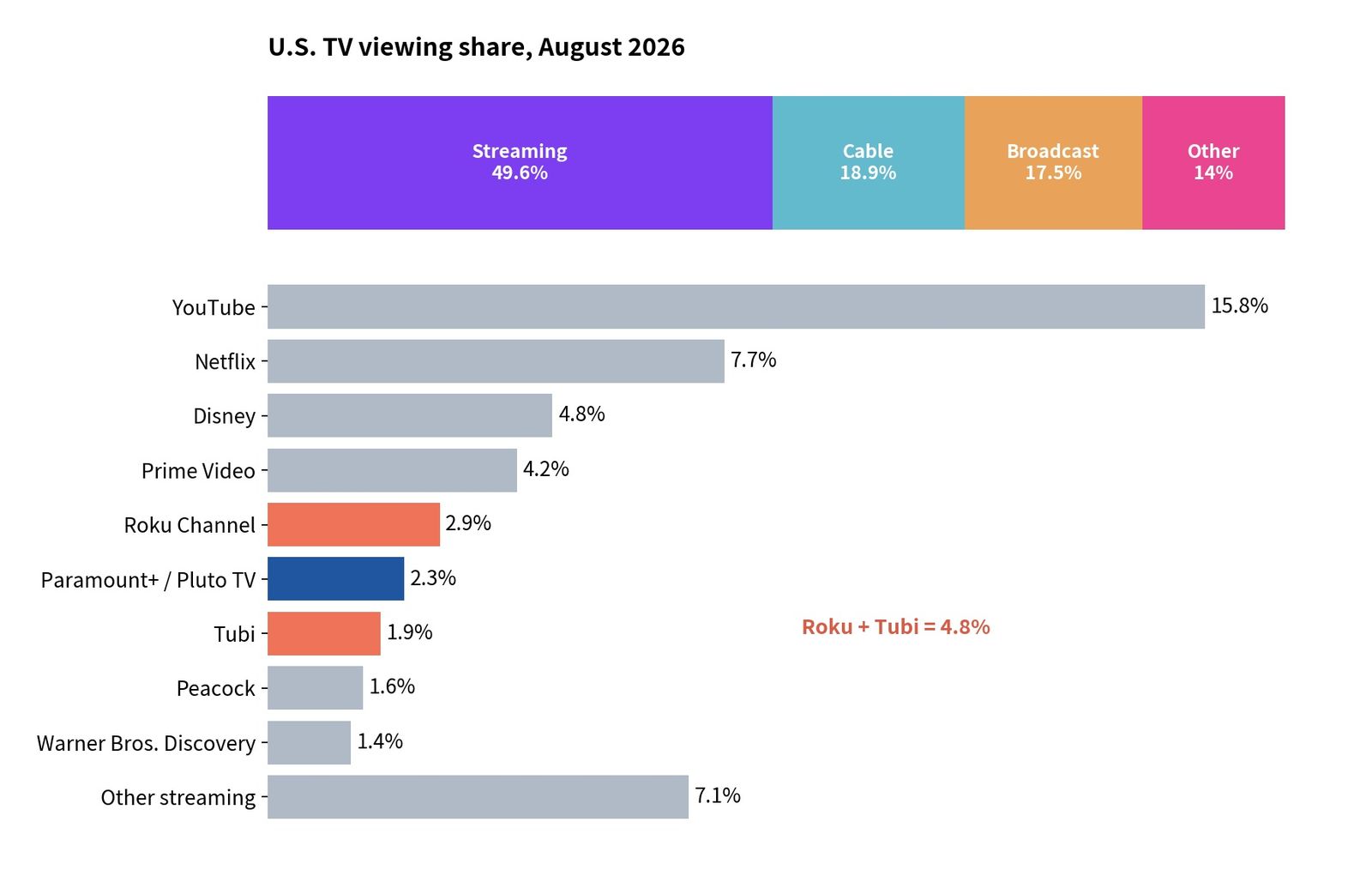
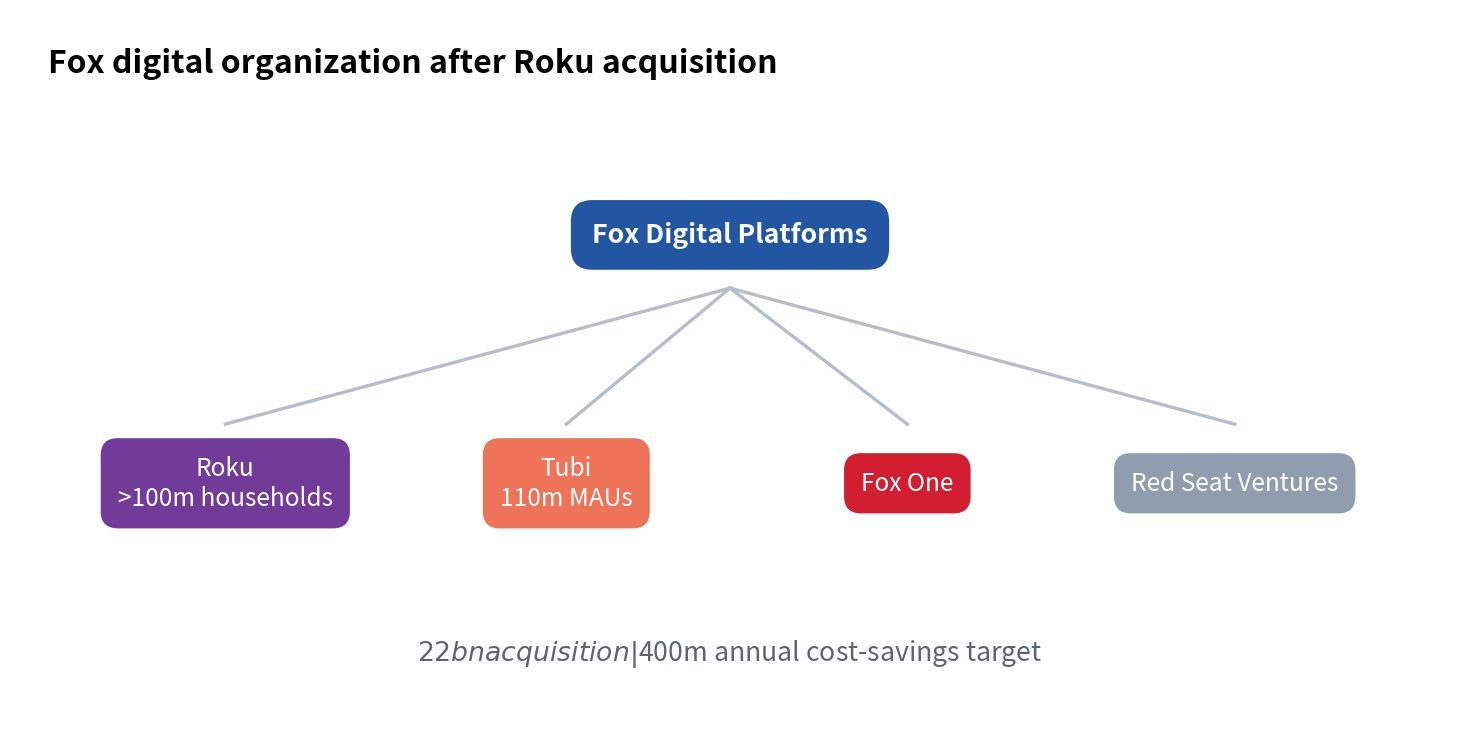
The Roku Channel captured 2.9% of U.S. TV viewing, placing fifth among streaming services behind YouTube, Netflix, Disney and Amazon Prime Video. Fox completed its $22 billion acquisition of Roku, approximately KRW 31.46 trillion, on November 6.
The distinction is how these services reach viewers. Pluto TV has no television hardware or operating system of its own.
Roku can give The Roku Channel prominent placement across a device and operating-system footprint exceeding 100 million households. By adding Roku to Tubi, Fox has combined content with access to the TV screen.
Samsung TV Plus and LG Channels, distributed through their manufacturers’ televisions, also rank among the leading U.S. FAST services. Skydance is responding by sharing technology with Paramount+ to reduce costs and adding Warner Bros. television hits, including Two and a Half Men, following its Warner Bros. acquisition.
Nearly 35% of streaming users surveyed by Nielsen subsidiary Gracenote said an increasing number of subscription services had led them to spend more time watching FAST. Platform performance is diverging even as demand for free viewing expands.
The FAST pioneer reaches a turning point
Pluto TV’s early appeal was simplicity: open the app and a round-the-clock channel would play without registration or login. Nielsen first measured its U.S. TV viewing share at 0.8% in July 2022.
Its share continued rising after reports in July 2024 that Paramount had discussed a sale, reaching a peak of 1% in February 2025. Nielsen subsequently began reporting Pluto TV together with Paramount+.
Integration and a search for new leadership
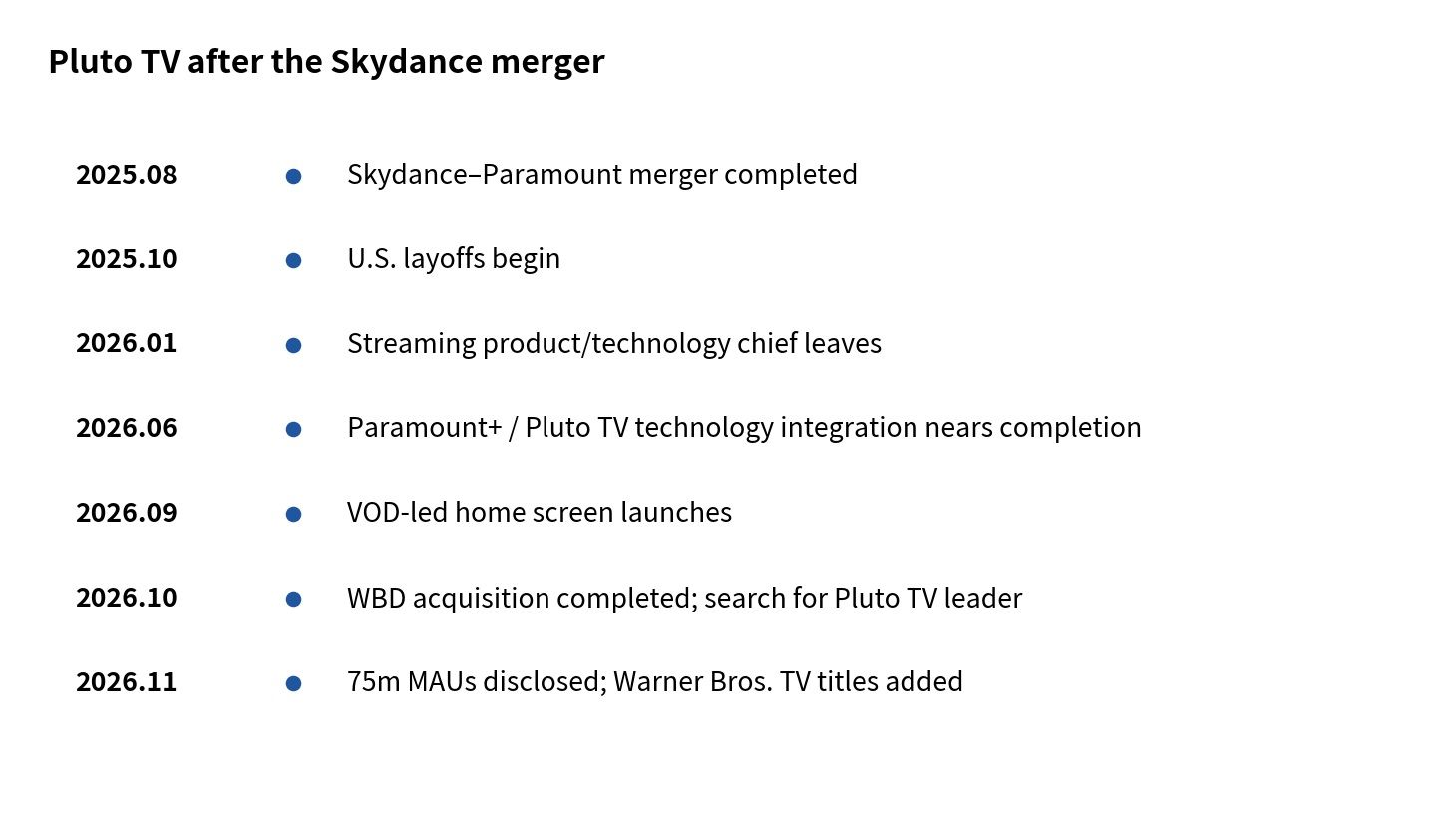
Pluto TV’s direction changed after its parent’s merger. Skydance completed its combination with Paramount in August 2025 and placed former Netflix executive Cindy Holland in charge of both Paramount+ and Pluto TV.
The company set a $2 billion cost-reduction target, approximately KRW 2.86 trillion, and began U.S. layoffs in October. Vibol Hou, chief product and technology officer for streaming, left at the end of January 2026.
June reports said the two services’ technology integration was progressing toward a launch within the year. The services would remain separate, with product staff redeployed after completing the integration.
Their quality-assurance teams would also be combined to support AI-based automated testing. Management was reorganized after the October 6 completion of the Warner Bros. Discovery acquisition.
Announcing a new structure on October 30, Skydance television co-chair JB Perrette said the company was searching internally and externally for a leader for Pluto TV and its AVOD business. Perrette and DTC chief operating officer Josh Walker oversee the service pending an appointment.
A VOD redesign amid an audience decline
An audience timeline published by Business Insider on November 11 illustrates the slowdown. Paramount described reaching 80 million monthly users in May 2023 as a milestone.
Materials presented at an internal town hall by Paramount Streaming finance chief Elizabeth Wright in April this year showed 89.6 million users in 2025, an increase of 5.4 million in one year. That implies approximately 84.2 million in 2024.
The materials did not specify whether the figures were annual averages or year-end totals. The latest 75 million figure was disclosed officially by the company.
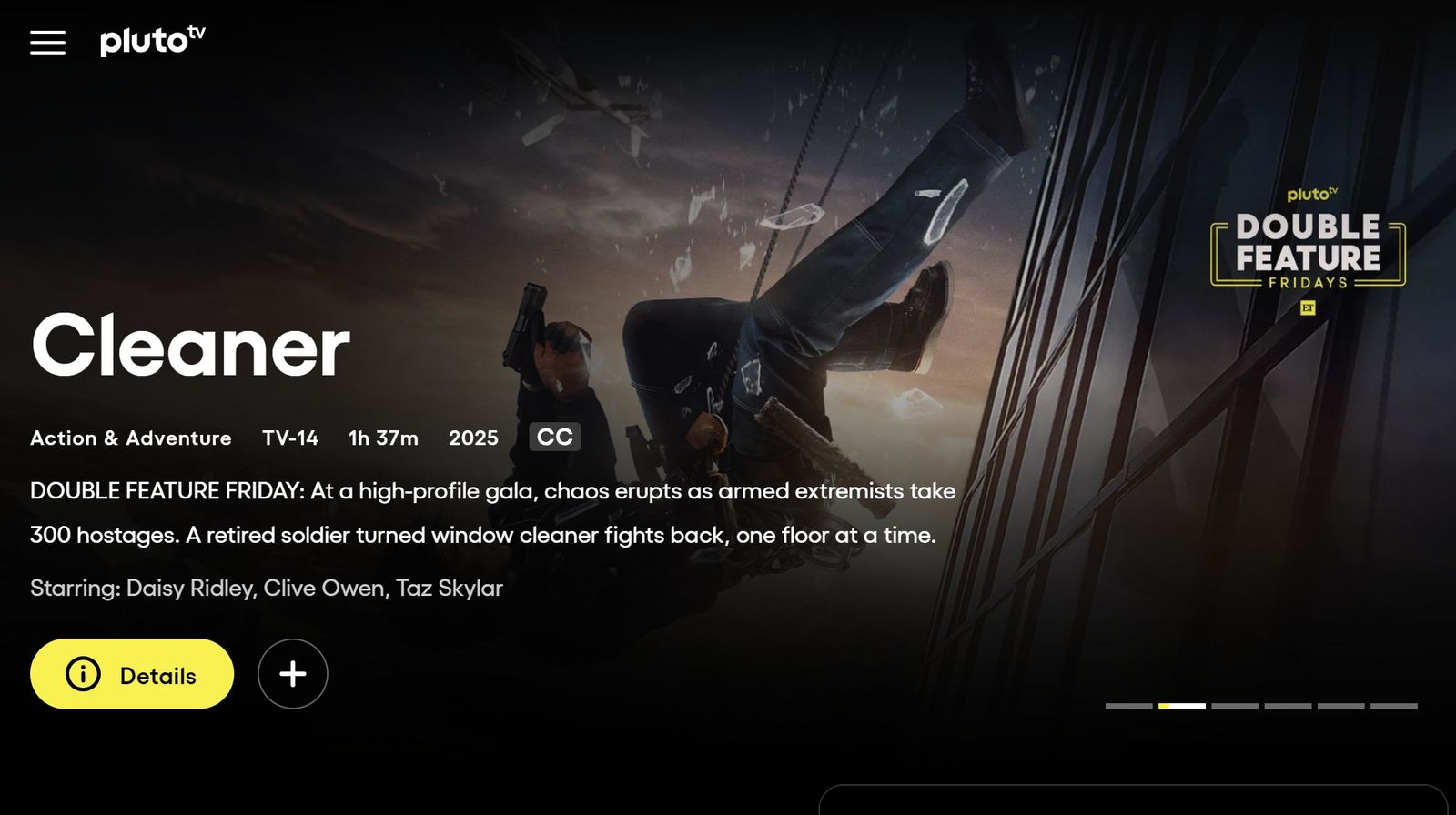
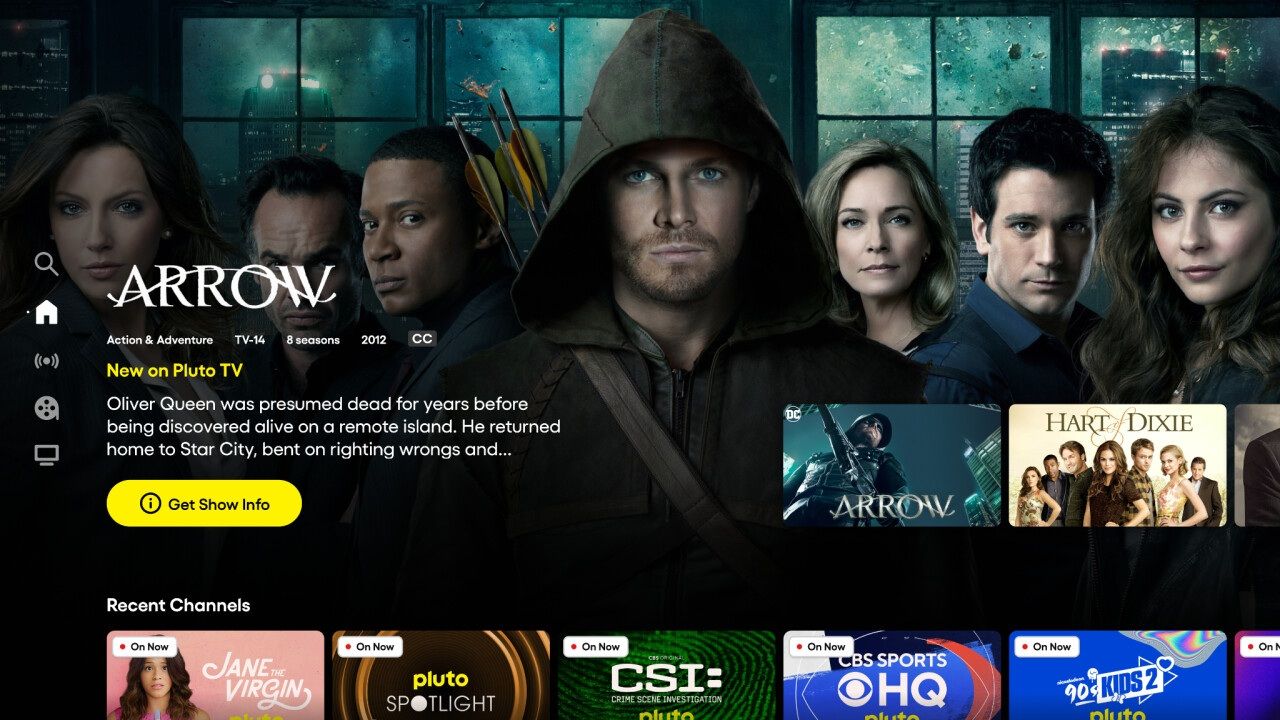
On September 23, Pluto TV launched a service rebuilt on Paramount+ technology, describing it as its largest technology investment since its 2014 founding. The redesigned home screen puts on-demand films and series ahead of round-the-clock linear channels, adds dedicated movie and series menus, and allows viewers to move directly from the program guide to VOD.
Skydance DTC chair Cindy Holland said viewers overwhelmed by choice needed proven popular titles and a product that made them easy to find. Skydance’s shareholder letter said the redesign and improved personalization were already enhancing the experience.
Two Paramount Streaming employees, however, told Business Insider that the interface change may have contributed to the audience decline.
The distribution advantage of the home screen
Devices and operating systems are the distribution infrastructure connecting FAST content to audiences. Pluto TV is an app on Roku, Samsung and LG devices, but the device companies determine what viewers see when the television turns on.
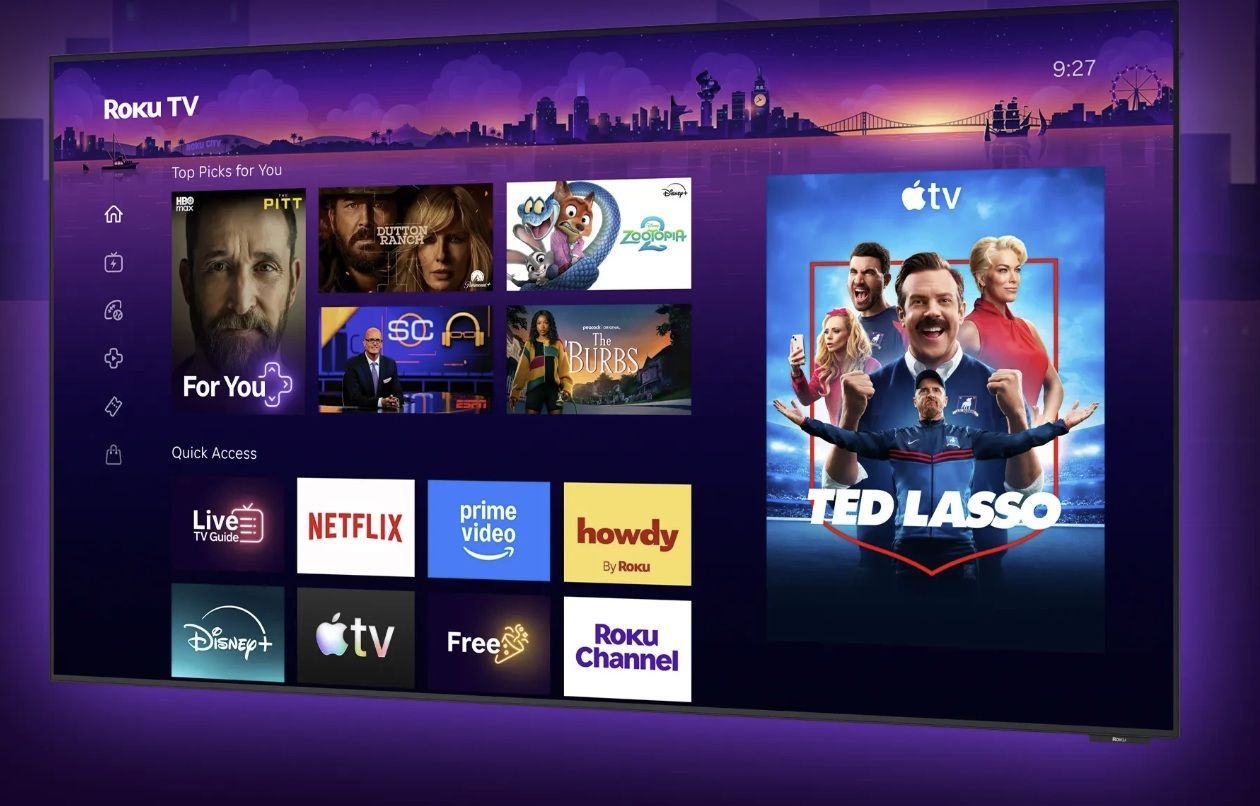
Roku places its own channel on the operating-system home screen; Samsung and LG preload their FAST services. Fox gained a comparable distribution base through Roku.
Pluto TV must rely on visibility within external platforms and viewers choosing its app.
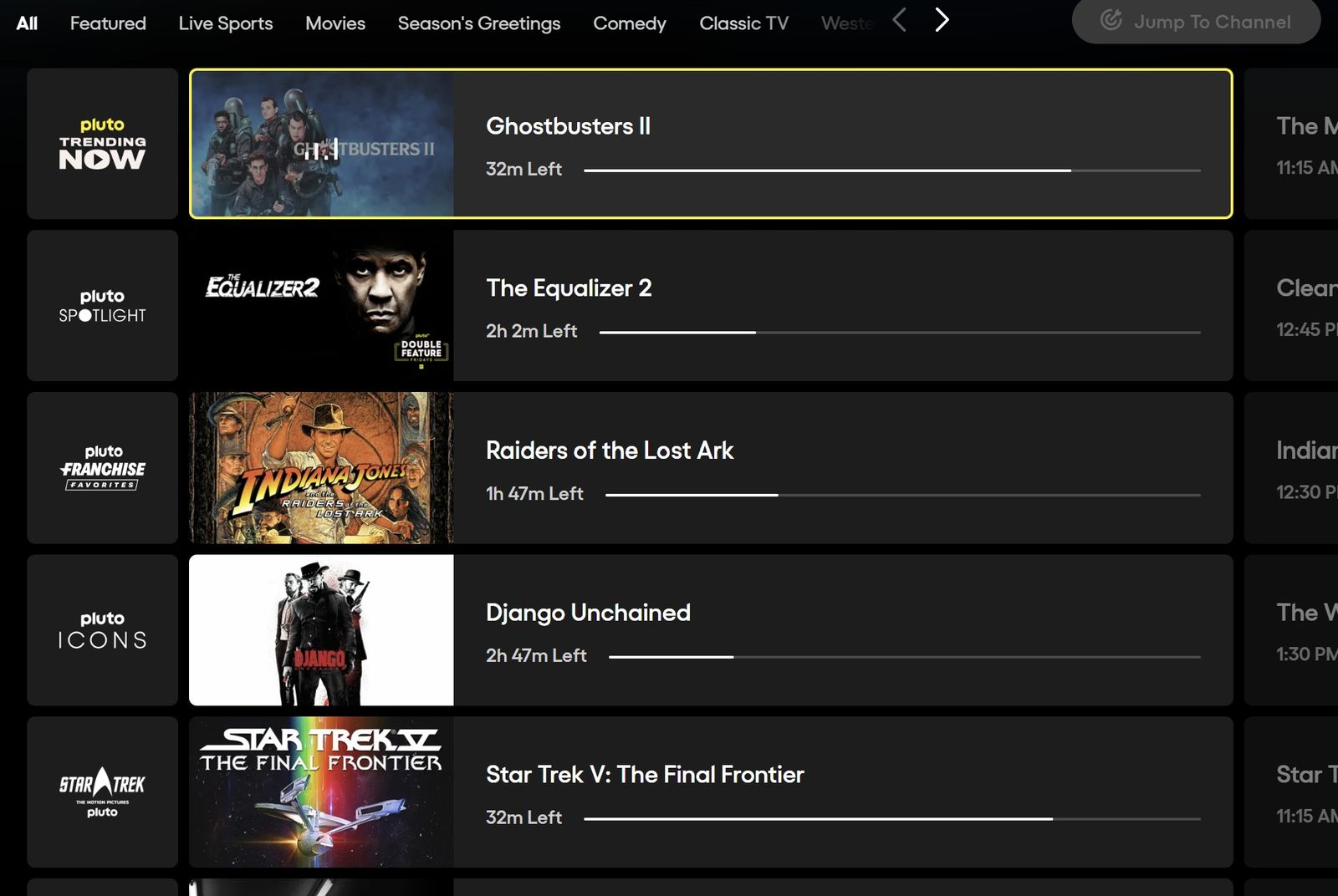
Changing viewing habits present another challenge. Pluto TV grew through cable-style, round-the-clock channel surfing, whereas Tubi emphasized an on-demand film and drama library.
YouTube, the leader in TV viewing share, is also centered on on-demand viewing. Pluto TV shifted its home screen toward VOD in September 2026.
The company says monthly VOD viewing increased 70% in 2026, while VOD viewing time among 18–34-year-olds rose 91%. It expanded externally licensed content by 63% year over year, acquiring titles from NBCUniversal, Disney, Warner Bros. Discovery, Sony, MGM and Lionsgate.
Repeated ownership changes also meant a lengthy technology transition. Following Viacom’s 2019 acquisition, Pluto TV went through the ViacomCBS merger, the Paramount name change, reported sale discussions in 2024, the Skydance merger in 2025 and the Warner Bros. acquisition in 2026.
Developers were assigned to the Paramount+ integration after the Skydance merger. On the third-quarter earnings call, CEO David Ellison said migrating Pluto TV and BET+ onto Paramount+ technology had taken approximately 18 months.
During that period, the streaming product and technology chief departed, and the search for a new Pluto TV business leader remains underway.
A shared foundation for free and paid streaming
Skydance began combining the technology behind Paramount+ and Pluto TV before acquiring Warner Bros. Discovery (WBD), an effort known internally as “convergence.” Co-CEOs David Ellison and Ynon Kreiz said in the shareholder letter that the first phase was largely complete and Pluto TV now ran on the same technology as Paramount+ across major streaming devices.
The aim is to lower operating costs, accelerate product development and allow the free and subscription services to share personalization and advertising capabilities.
Advertising trends diverged between streaming and traditional television. According to The Desk, Skydance’s third-quarter direct-to-consumer (DTC) advertising revenue rose 13.2% to $542 million, approximately KRW 775 billion.
Television advertising revenue fell 8% to $1.34 billion, approximately KRW 1.92 trillion. Nielsen’s combined share for Paramount+ and Pluto TV was 2.3% in August, unchanged from March 2025.
Warner Bros. hits join the free library
Warner Bros. television titles are central to the content push. Variety reported on November 13 that Pluto TV would offer Two and a Half Men on free streaming for the first time under an output pact with Warner Bros. Television.
All 262 episodes across 12 seasons arrive on November 20, alongside 64 episodes from three seasons of Veronica Mars. November 15 additions include 100 episodes of The Jamie Foxx Show, 132 of Martin and 101 of The Wayans Bros. Pluto TV described the package as the first batch of Warner Bros. Television titles.

Pluto TV previously added 14 FAST channels built around Warner Bros. titles including Nip/Tuck, Third Watch and Whose Line Is It Anyway. The company says it added more than 25 library titles this year and increased advertising-supported on-demand (AVOD) viewing by 70%.
Will Gurman, Pluto TV’s senior vice president of content partnerships and programming, said free streaming was the industry’s fastest-growing segment and curated libraries were bringing viewers to the service. He said the company was pleased that the strategy was working.
Pluto TV sees progress in on-demand engagement despite losing monthly users.
Rivals gain a larger share of TV viewing
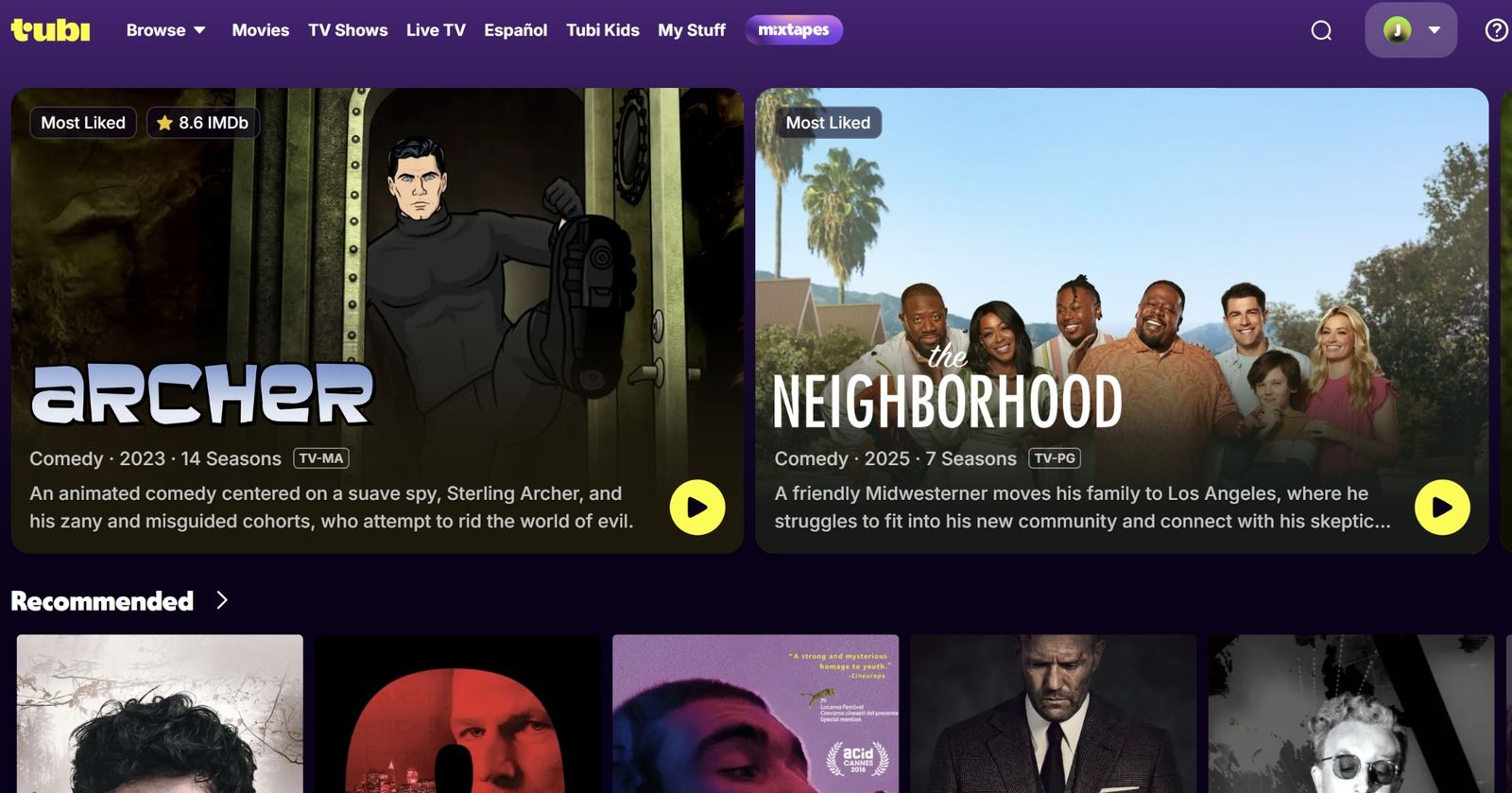
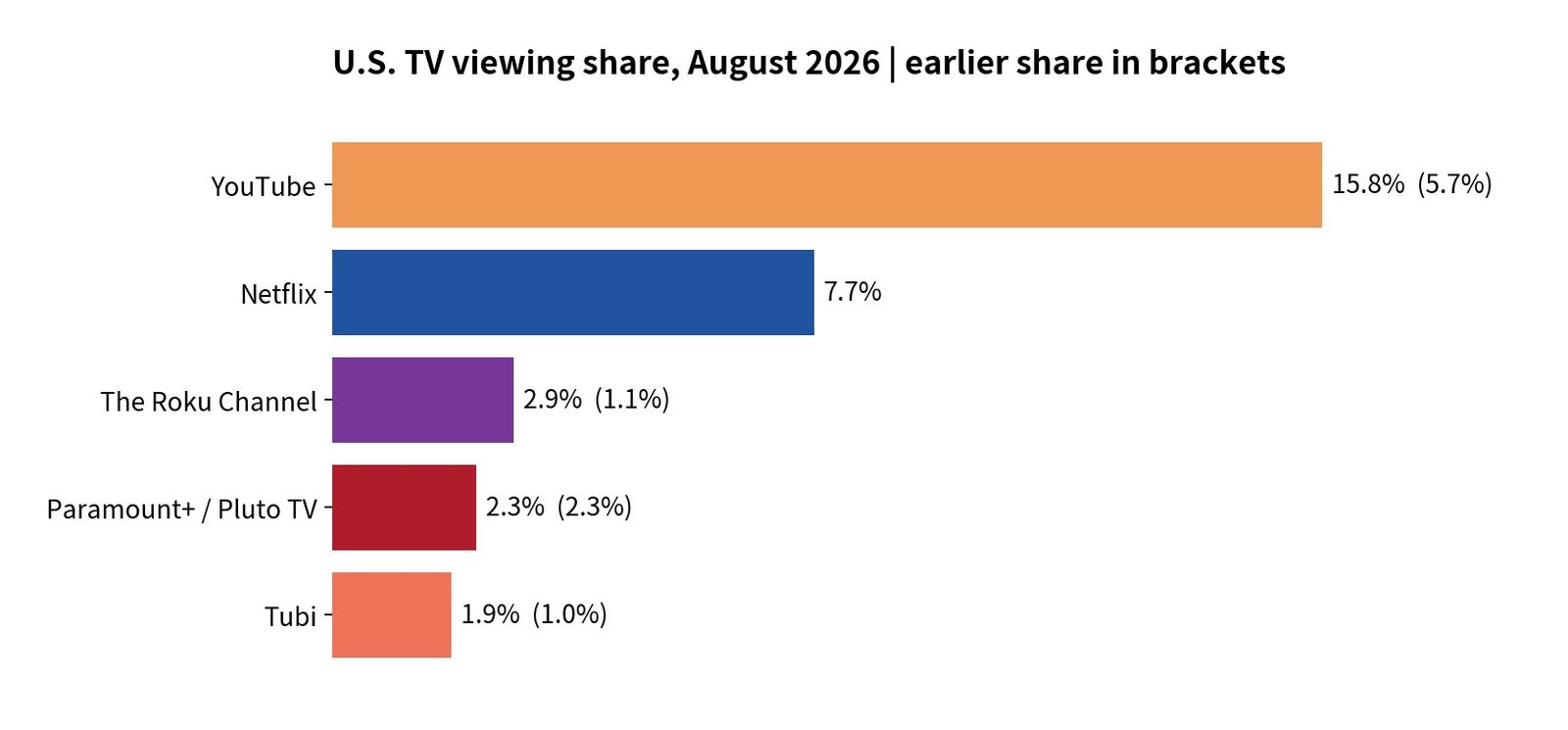
Competitors have steadily gained TV viewing share. Nielsen puts Tubi at 1.9% of U.S. TV viewing in August, up from 1% in February 2023.
The Roku Channel rose from 1.1% in May 2023 to 2.9%. YouTube climbed from 5.7% in May 2021 to 15.8%, making it the most-watched streaming service on television.
Second-place Netflix accounted for 7.7%.
FAST is already a mainstream viewing option in U.S. households. Parks Associates’ first ranking of U.S. FAST services, released in May, placed Tubi, The Roku Channel and Pluto TV first through third.
Samsung TV Plus ranked fourth, Xumo Play fifth and LG Channels sixth. Some 46% of U.S. internet households regularly use FAST.
eMarketer estimates 131.4 million U.S. FAST users in 2026, equivalent to 54% of connected-TV users.
Nielsen’s August figures, released October 22, put streaming at 49.6% of U.S. TV viewing time, versus 18.9% for cable and 17.5% for broadcast. Total TV usage fell 4.4% from July following the World Cup.
Streaming usage declined 3.2%, but its smaller drop lifted its share by 0.6 percentage points. YouTube viewing time increased 6%, taking its share to a record 15.8%; viewing among adults aged 50 and above rose 9%.
Disney and Paramount streaming each gained 0.1 percentage points to 4.8% and 2.3%, respectively. NBCUniversal’s Peacock fell one percentage point to 1.6% after Telemundo’s World Cup coverage and the Love Island USA season ended in July.
The Roku Channel and Tubi together accounted for 4.8%, equal to Disney.
Subscription fatigue meets the discovery problem
Subscription pressure is helping expand FAST viewing. Gracenote’s 2026 State of Play report surveyed 3,000 streaming users in August across six countries: the United States, United Kingdom, Germany, France, Mexico and Brazil.
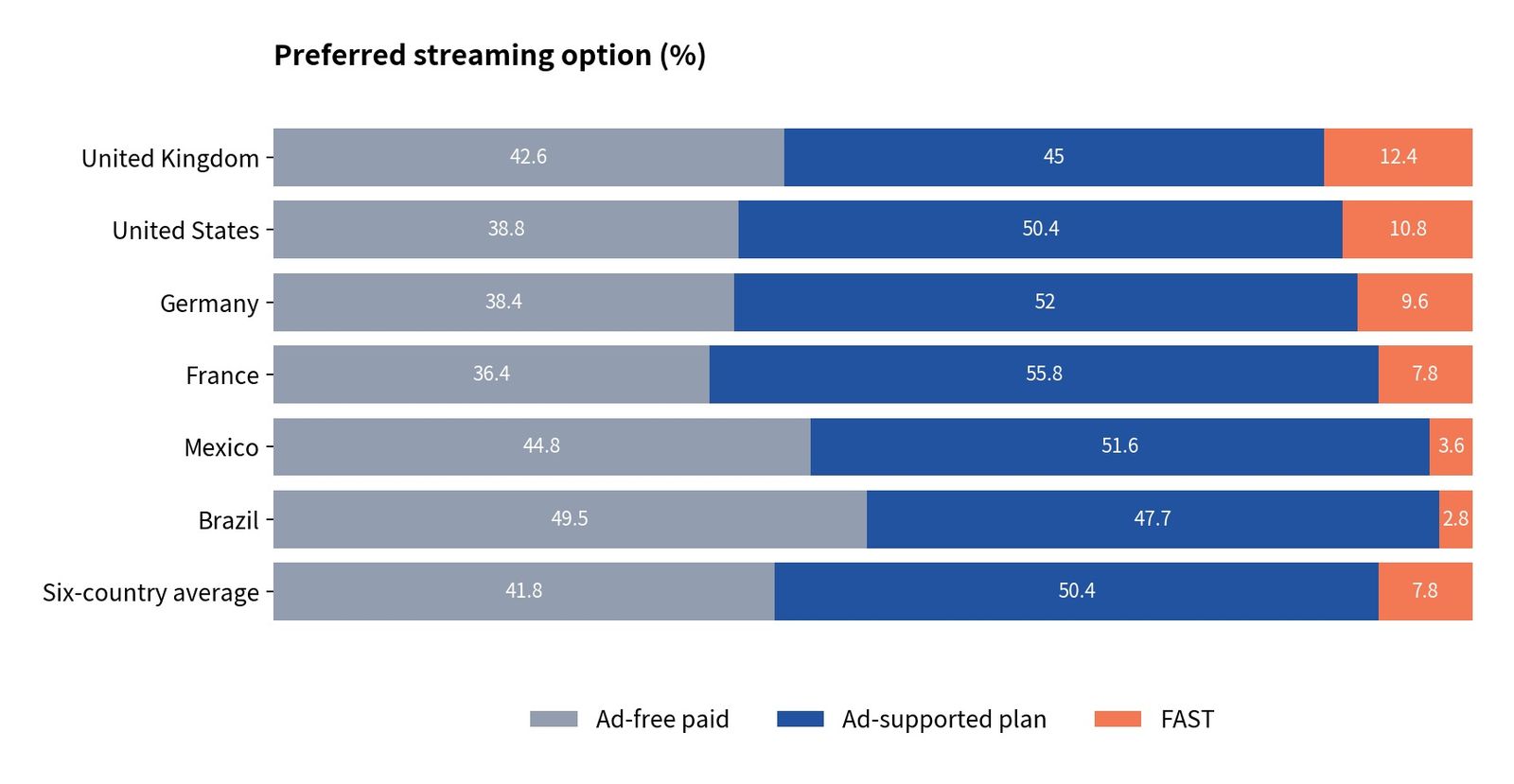
FAST was the most-preferred streaming option for 12.4% of U.K. respondents and 10.8% of U.S. respondents, above the six-country average of 7.8%. Ad-supported plans were preferred by an average of 50.4%, compared with 41.8% for ad-free paid plans.
Dataxis found that advertising overtook subscriptions in North American streaming revenue in the first and second quarters of 2026, accounting for 51.1% and 50.5%, respectively.
News is also expanding FAST demand. Gracenote counted 4,500 news programs on FAST channels in August 2026, up 45% from 3,100 in August 2025.
Adweek reported in August that the audience for CNN’s FAST channel, CNN Headlines, had increased 192% in a year. Gracenote collects program information for approximately 2,100 FAST channels worldwide.
Ease of discovery matters alongside the size of a library. Respondents spent an average of 12 minutes choosing something to watch; those aged 18–24 spent 15 minutes.
Some 46.8% said they rewatched familiar titles rather than finding new ones. The proportion willing to cancel because they could not find something to watch rose to 51.6%, from 48.5% a year earlier.
User experience influenced service-retention decisions for 87.4%. These findings help explain Pluto TV’s focus on personalized home screens and familiar hits.
Fox brings content and the TV platform together
Fox’s Roku acquisition brings FAST and a TV platform into the same organization. Announced in June at $160 per share and an enterprise value of approximately $22 billion, the deal closed November 6, ahead of its original first-half 2027 timetable.
Roku shareholders received $95.30 in cash and 0.9799 Fox Class A shares for each share held. Existing Fox shareholders own 74% of the combined company and Roku shareholders 26%.
Fox targets approximately $400 million in annual cost savings, around KRW 572 billion, within two years.
Roku joined Tubi, Fox One and creator business Red Seat Ventures in the new Fox Digital Platforms division. Roku co-founder Anthony Wood joined Fox’s board and became a co-chair of the division, with Paul Cheesbrough serving as co-chair and CEO.
The companies say the combined group ranks third by U.S. TV viewing share. Fox CEO Lachlan Murdoch pledged to preserve the openness of Roku’s platform and viewers’ choice.
The effect is clearer at the media-owner level. In Nielsen’s August Media Distributor Gauge, YouTube ranked first, Disney second at 9.3% and Netflix third at 7.7%.
Netflix led fourth-place NBCUniversal/Versant by just 0.03 percentage points. Paramount ranked fifth at 6.8% and Fox sixth at 5.6%.
The August Fox figure predates the acquisition and excludes The Roku Channel. Simply adding Fox’s 5.6% and Roku Channel’s 2.9% produces 8.5%, the third-largest total behind Disney and YouTube.
Samsung’s 100 million users give K-FAST a route to viewers
Samsung TV Plus illustrates the potential of hardware-backed FAST. In an announcement dated January 21 and published by its U.K. newsroom on January 22, Samsung said the service had exceeded 100 million global monthly active users. Streaming hours increased 25% year over year in 2025.
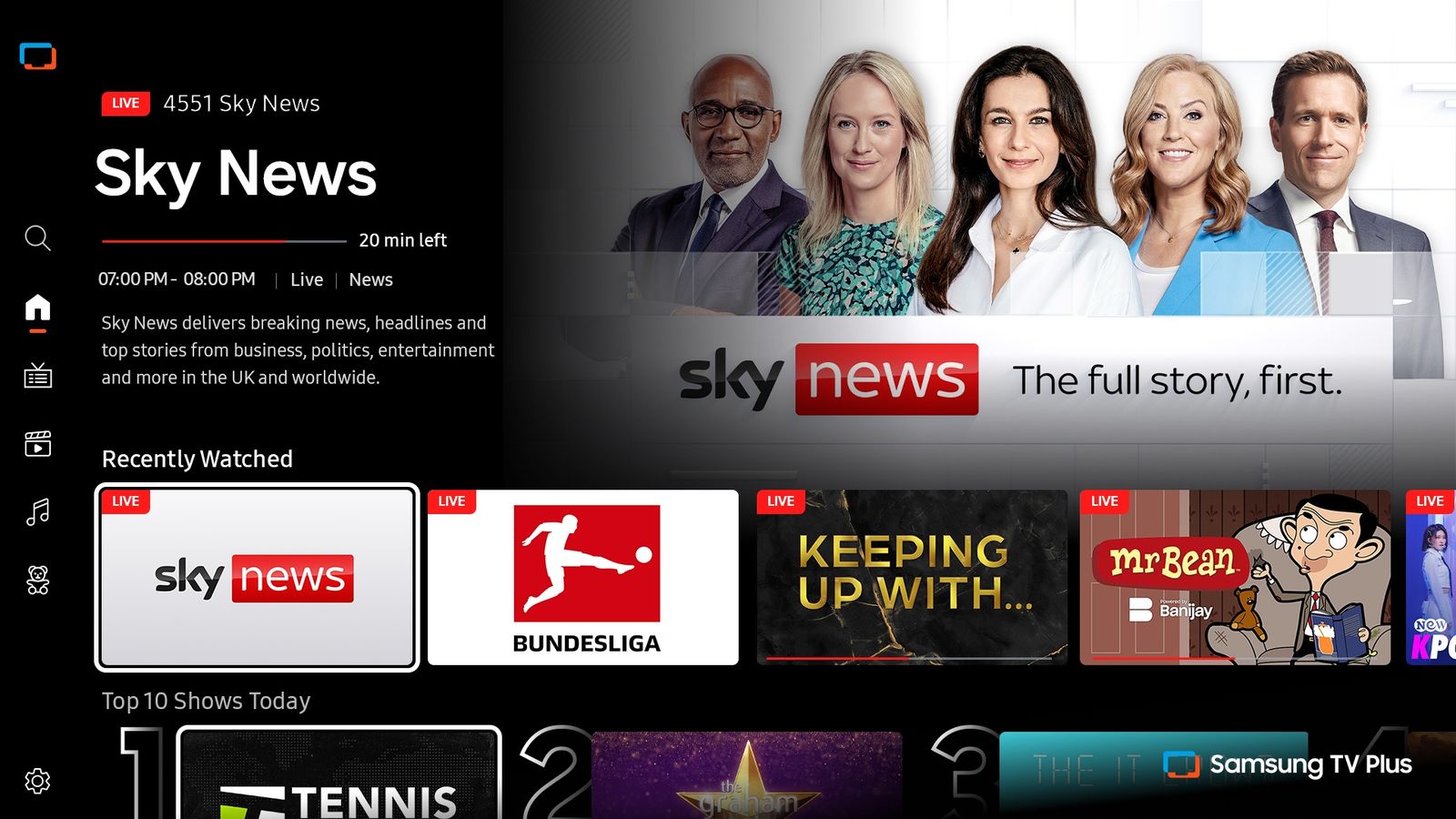
At the time, the service offered more than 4,300 free channels in 30 countries. Access across Samsung TVs, Galaxy phones, Galaxy Tab and Smart Monitor devices extends the relationship beyond the hardware sale into ongoing content viewing and advertising.
Samsung also reported 92% retention. Its proprietary measure refers to fourth-month retention among users who had watched for at least three minutes in each of the preceding three months. The metric highlights the importance of repeat use alongside reach.
Live events and participation offer another reason to return. During a livestream of the Jonas Brothers’ JONAS 20 tour, viewers used their TV remotes to vote for a song to be performed on stage. The FanVote response rate exceeded 13% among CTV viewers of that experience.
Creator partnerships with Mark Rober, Michelle Khare, Dhar Mann and Smosh sit alongside relationships involving Spotify, David Letterman and the NHL, MLB, NBA and NFL. Familiar personalities and established IP give viewers reasons to visit and keep watching.
The Korean-content opportunity is expanding too. On October 27, Samsung announced K-Wave Wednesdays, a weekly Korean-movie slot featuring 10 films through year-end, and a December Lezhin Snack microdrama slate. The short dramas are planned for U.S. VOD and a dedicated Korean channel.
For Korean suppliers, the opportunity is to use a global distribution network already in place. Matching films, entertainment and short-form titles to channels and VOD, then supporting search, recommendations and recurring programming, can turn distribution into repeat viewing.
Samsung TV Plus offers more than 5,000 channels across 30 countries, according to its October 27, 2026 announcement. LG Channels expanded this year to 37 countries and more than 5,000 channels.
Research firm 3Vision forecasts Western European FAST channel revenue rising from $1.9 billion in 2026, approximately KRW 2.72 trillion, to $3.4 billion in 2031. In August 2026, LG Channels led the region with 1,530 channels, followed by Samsung TV Plus with 1,471.
3Vision expects Pluto TV to lead on revenue, with Samsung TV Plus narrowing the gap.
With television sales stagnating, Samsung and LG are developing FAST into a source of advertising and content revenue. Samsung TV Plus introduced a round-the-clock terrestrial news channel in January, a first for domestic FAST services in Korea.
LG Channels is launching a dedicated K-content channel in Poland with FAST operator NEW ID.
November’s FAST shift: from more channels to advertising outcomes
November’s developments connect the TV home screen more closely to advertising response. TV Tech reported on November 12 that Samsung Ads is expanding polls, product carousels and QR formats across TV Plus and Samsung’s home screen this month, enabling campaigns across both.
At its 2026 NewFront, Samsung Ads announced plans to introduce Amazon interactive video advertising later this year, including TV-to-cart and phone actions. This remains an announced rollout plan, not confirmation of availability in every market. K-FAST suppliers should negotiate conversion-data access and revenue sharing alongside ad exposure.
Samsung TV Plus also greenlit Dhar Mann Studios’ four-part original Unlikely Families on October 12, for an exclusive 2027 premiere. The partnership extends beyond repackaging creator videos into channels to commissioning a scripted series.
LG Channels’ November 4 U.S. programming announcement paired seasonal channels with VOD and exclusive free premieres. Its James Bond pop-up runs November 4–December 16, illustrating how time-limited, familiar IP can create a reason to return.
For Korean suppliers, these developments sharpen the negotiation agenda: distinguish linear, VOD and exclusive rights, secure home-screen promotion, and agree on access to advertising-performance data. Public support should extend from localization and market entry to ad-tech integration, rights negotiations and performance verification.
Korean content after the CJ ENM channel closure
Pluto TV’s Korean content partnership began as part of a broader alliance. ViacomCBS and CJ ENM signed a strategic partnership in December 2021, and Pluto TV launched its first Korean content channel, K-Content by CJ ENM, on December 14.
CJ ENM programmed six to eight new drama, film and K-pop titles each month. The alliance also covered exclusive Paramount+ distribution through Korea’s TVING and joint investment in Korean dramas.
The partnership ended in May 2024; Paramount+ left TVING in June and the CJ ENM channel closed. Seven Korean dramas were co-produced during the alliance.
Korean films now circulate as on-demand titles. K-EnterTech Hub’s November 14 search of Pluto TV found Harbin, The Villainess, Deliver Us from Evil, Sea Fog, My Way, Escape from Mogadishu, Along with the Gods, The Great Battle and Dark Figure of Crime available free.
Individual-title licensing remains a route to audiences alongside dedicated linear channels.

Korean suppliers are diversifying their distribution. In October 2024, Samsung TV Plus worked with CJ ENM, NEW ID and KT alpha to offer approximately 4,000 hours of Korean content in the United States.
In October 2025, NEW ID launched five drama, K-pop, film and children’s channels in 17 countries through Samsung TV Plus. LG U+ began supplying 12 channels, including JTBC, MBN and Arirang TV, in September 2025.
K-FAST must turn availability into viewing
Korean broadcasters and channel suppliers need to examine home-screen placement. Samsung TV Plus and LG Channels rank fourth and sixth in Parks’ U.S. FAST ranking and occupy the top two positions by Western European channel count.
U.S. FAST channel numbers expanded from 415 in 2020 to 1,572 in 2026. Launching a channel alone is no longer enough; visibility and recommendations after launch matter.
Samsung and LG, which control home-screen placement, are partners Korean suppliers can work with more closely than Pluto TV or Tubi.
Suppliers should prepare both linear channels and individual VOD rights. Pluto TV has moved toward a VOD-led home screen and distributes Korean films title by title.
Gracenote found that viewers spend 12 minutes choosing something to watch, with nearly half preferring to revisit familiar titles. Combining round-the-clock channels with VOD rights, and improving English-language titles, genres, cast details and other metadata, can increase opportunities to appear in search and recommendations.
Platforms and contracts also need diversification. CJ ENM’s channel launched within a broad ViacomCBS alliance and closed when that alliance ended.
As the U.S. FAST market consolidates around Fox’s Tubi and Roku, Skydance’s Pluto TV, Samsung and LG, parent-company mergers can reshape platform strategy. Supplying multiple platforms and structuring agreements by title and channel can reduce the risk that one terminated alliance cuts off distribution altogether.
News is another area worth examining. FAST news programs increased 45% in one year and CNN Headlines’ audience grew 192%.
Samsung TV Plus introduced Korea’s first round-the-clock terrestrial news channel on domestic FAST in January, while LG U+ supplies JTBC, MBN and Arirang TV channels. Analysts also point to Korea’s low pay-TV prices as a reason FAST adoption may be slower there, making local advertising demand and viewing habits important considerations.
Sustained government support should also underpin K-FAST’s development. Launching an overseas channel is followed by recurring work on subtitles and dubbing, localized metadata, territorial distribution and rights agreements, audience analytics and advertising sales. Support should extend beyond one-off launches and channel counts to help suppliers establish viewing and revenue. Shared localization, legal and advertising-technology capabilities would be particularly useful for smaller content companies. Program performance should be assessed through viewing time, return visits and advertising revenue alongside market entry and channel launches.
The next integration will test Pluto TV’s role
Skydance plans an HBO Max–Paramount+ bundle in early 2027 and aims to combine the two services by 2029. Pluto TV will serve as a free entry point on the shared technology platform.
Whether a VOD strategy strengthened by Warner Bros. hits can restore its audience remains a key question. From the fourth quarter, the company will stop disclosing quarterly subscriber counts and focus reporting on financial results and engagement measures.
Fox must integrate Tubi and Roku advertising sales and achieve its cost-reduction target within two years. Nielsen plans to align its measurement approach with TV ratings from September and release September and October figures together before year-end.
FAST competition increasingly reflects the distribution assets each owner controls: Roku’s home screen and Tubi for Fox, television hardware for Samsung and LG, and shared Paramount+ technology and Warner Bros. libraries for Skydance. Korean suppliers need to design placement terms, content rights and distribution agreements around those differences.
Success should also be measured through viewing time, return visits and advertising revenue, alongside channel counts and countries reached.
Currency conversions use KRW 1,430 per U.S. dollar. Quoted statements are attributed reporting; other passages summarize the cited reporting.